



Guides
Guides and glossary
Step-by-step guides for common property data jobs, and plain definitions of the terms you see in the data.
How-to guides
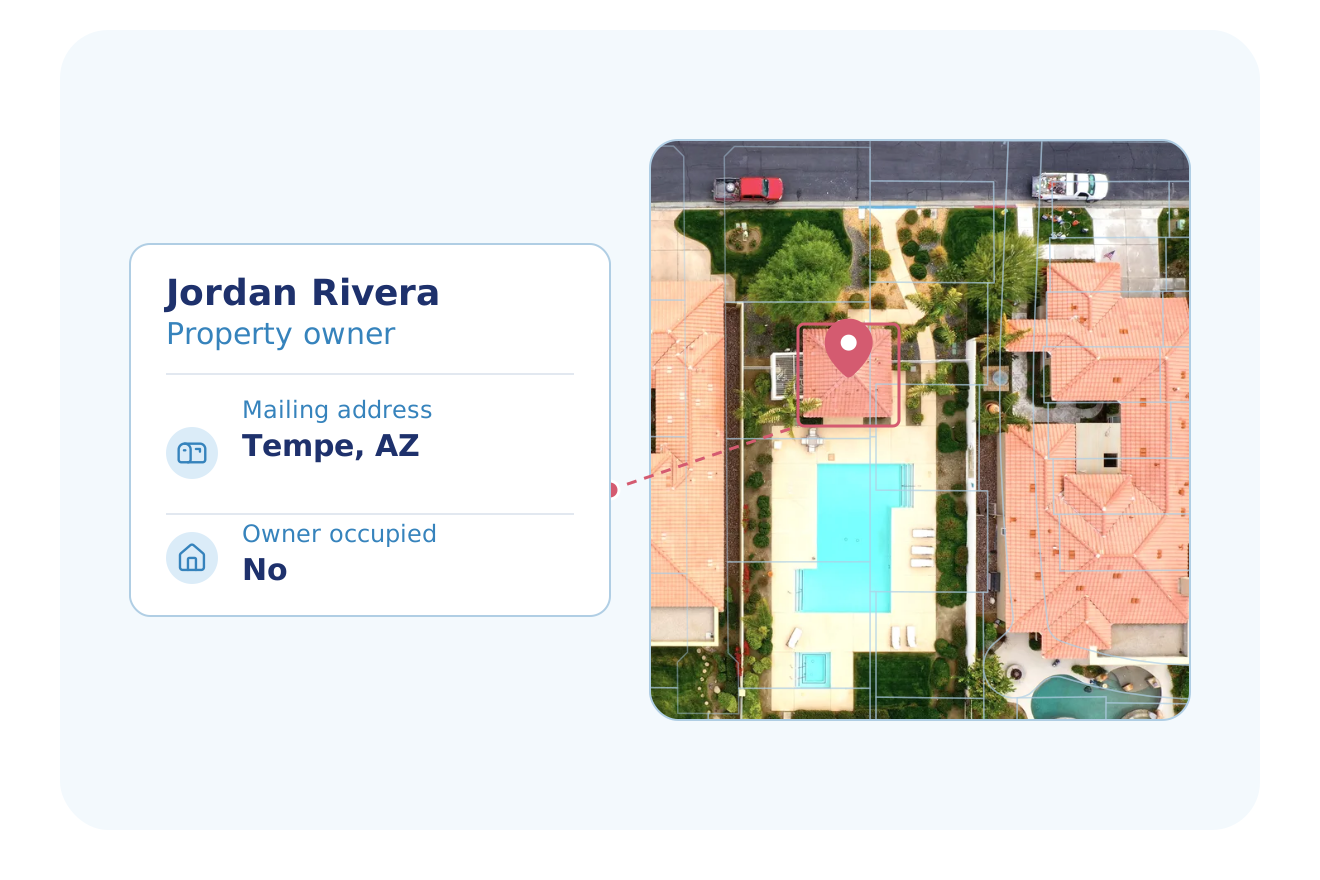
How to Find Property Owners: 3 Proven Methods
Read the guide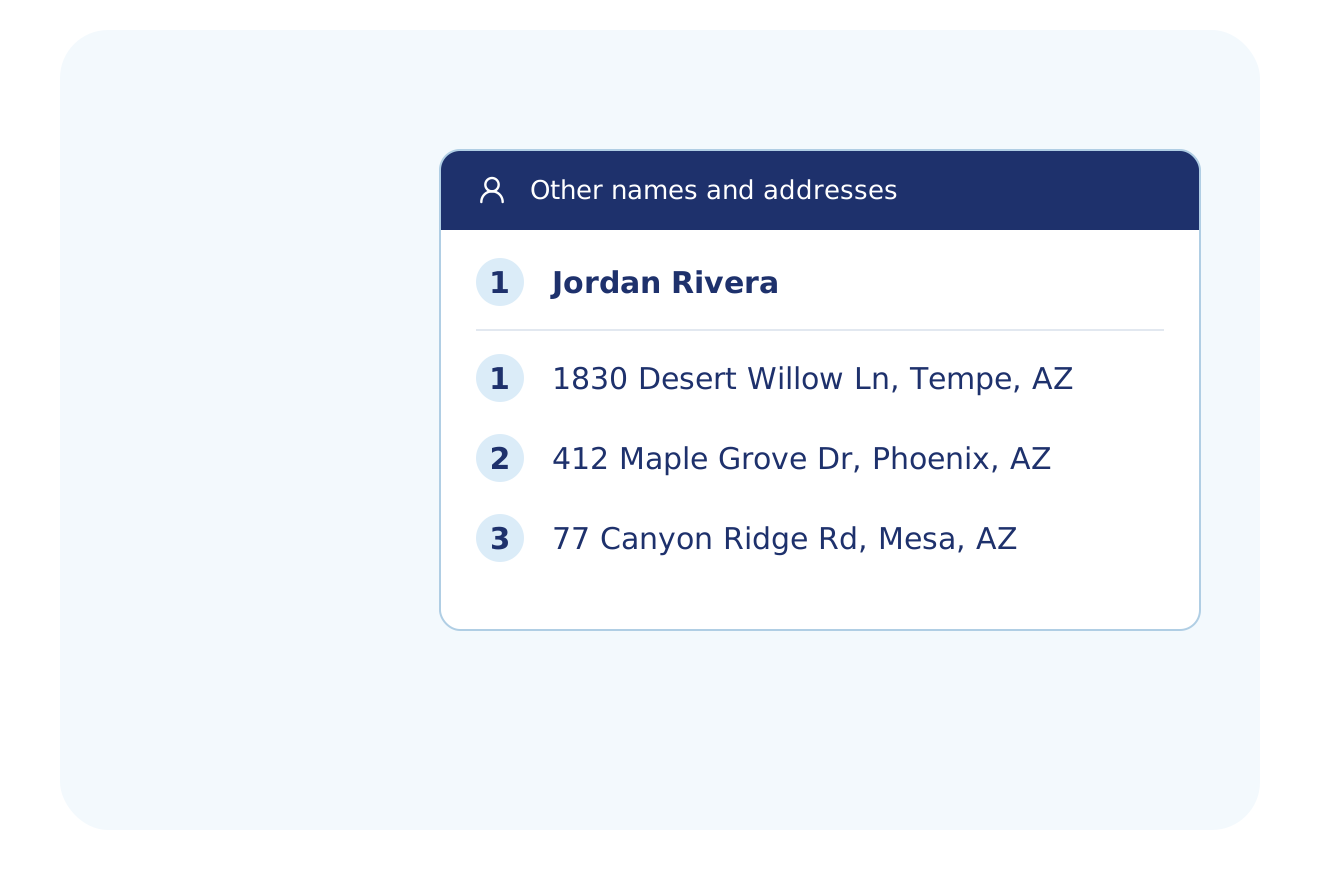
A Professional’s Guide to Finding Addresses for People in 2026
Read the guide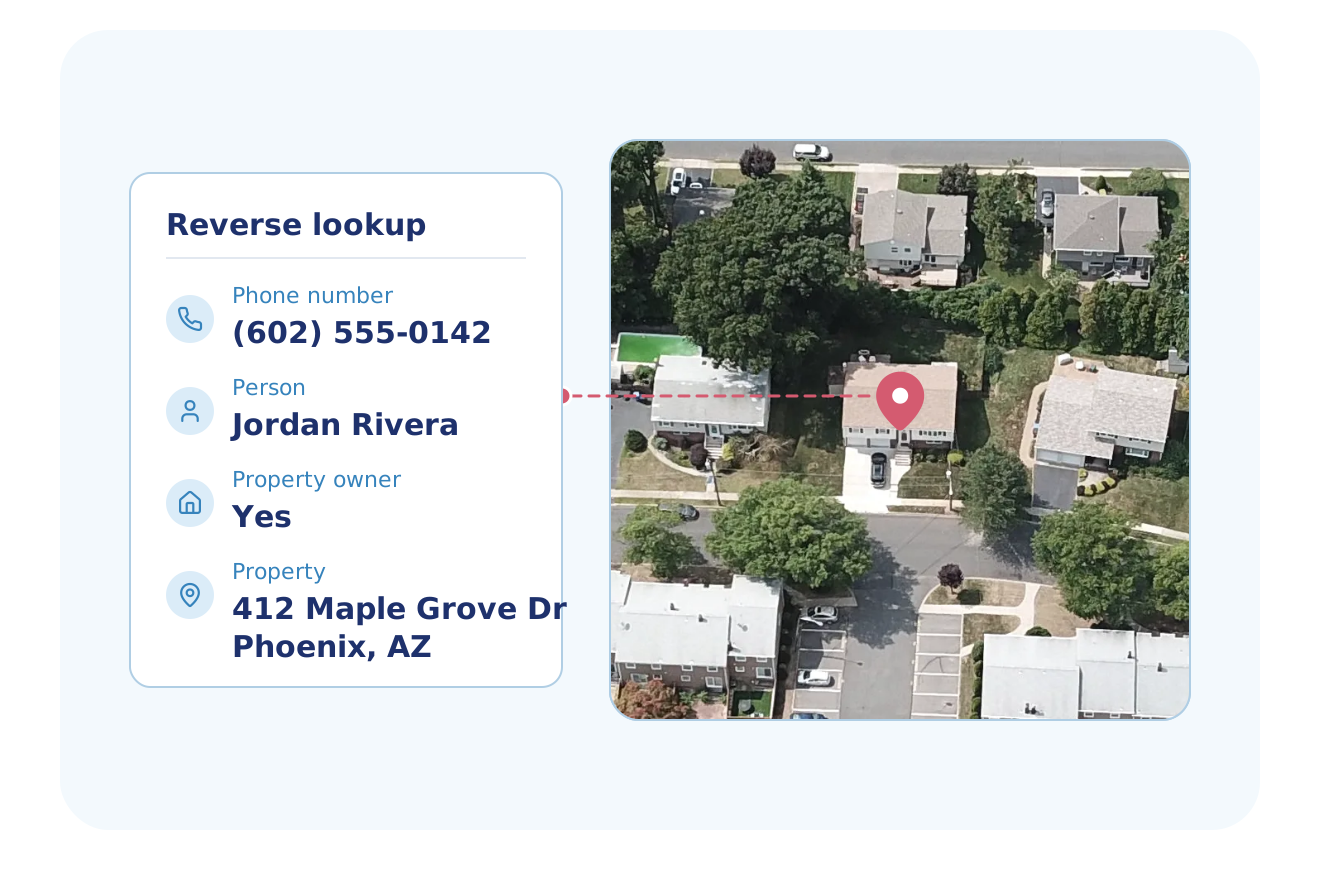
Search for Previous Addresses: A Complete Guide
Read the guide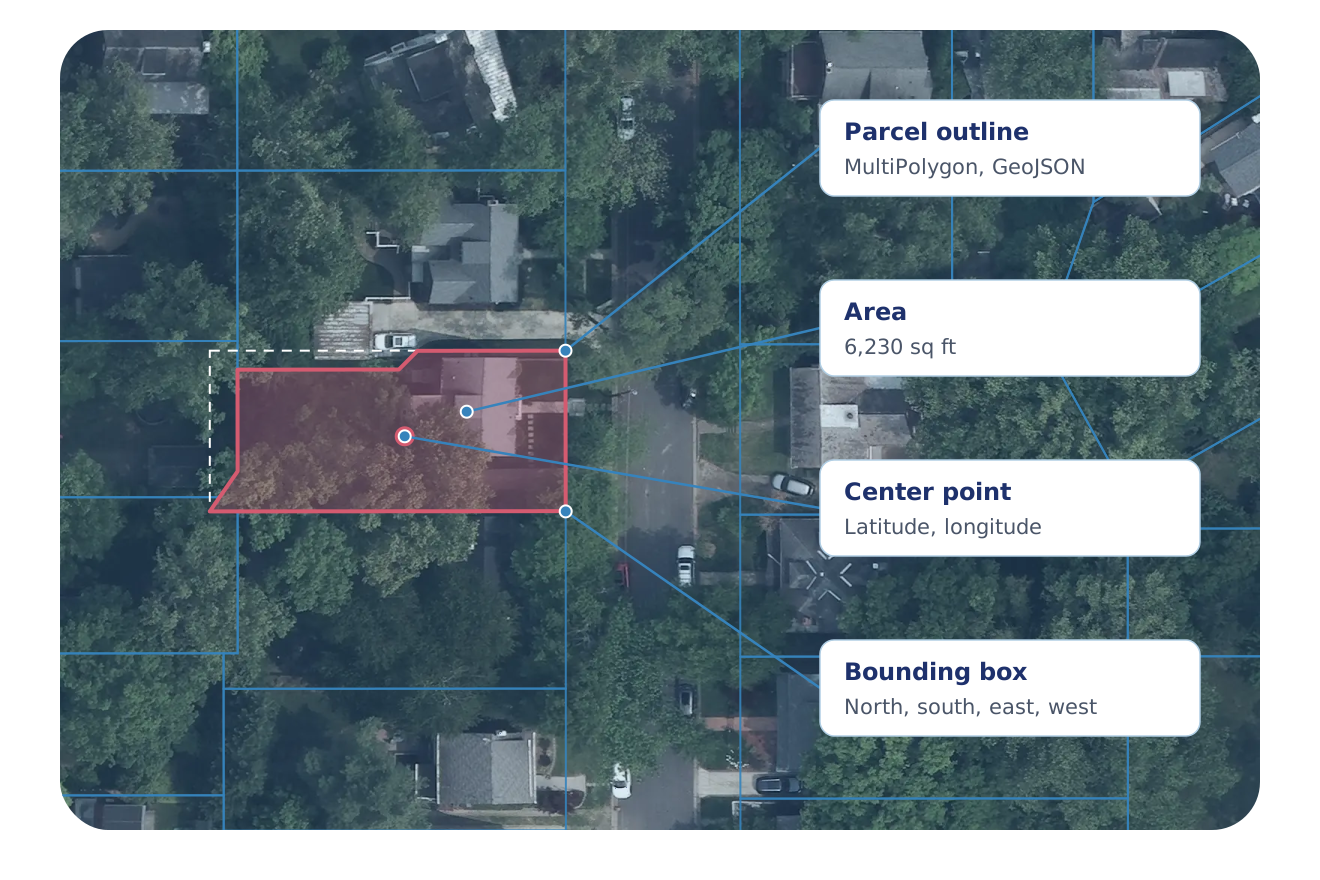
5 Public Records for Easements and Right-of-Way
Read the guide
Phone Number Format Checker
Read the guide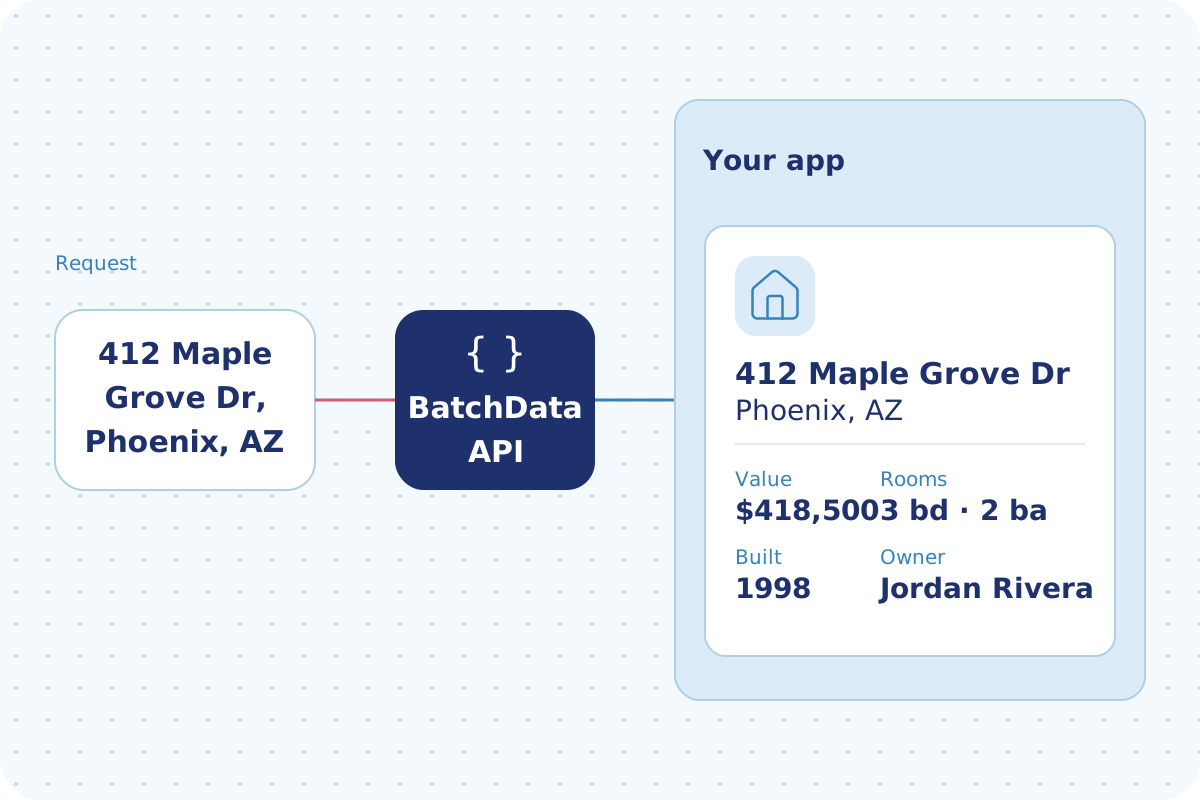
How to Use BatchData's API with Python: Complete Code Examples
Read the guide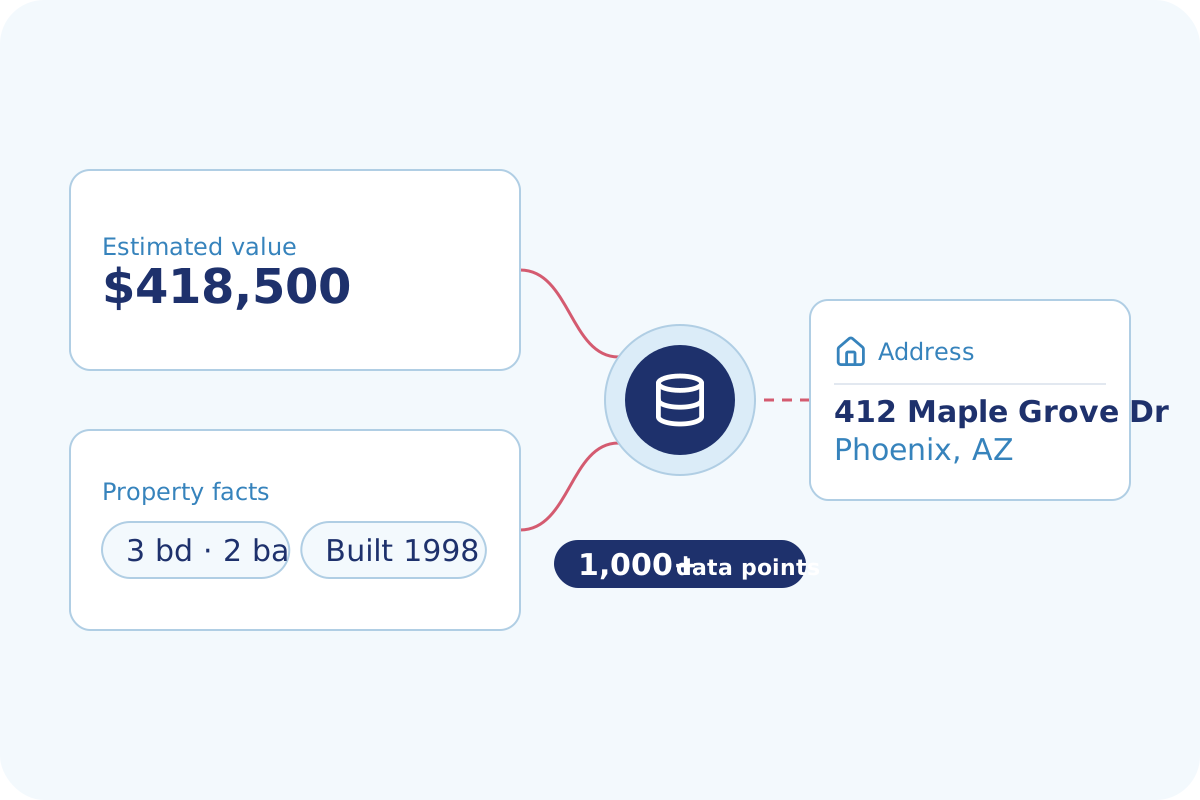
How to Automate Any CRM with BatchData's Property Data Enrichment API
Read the guide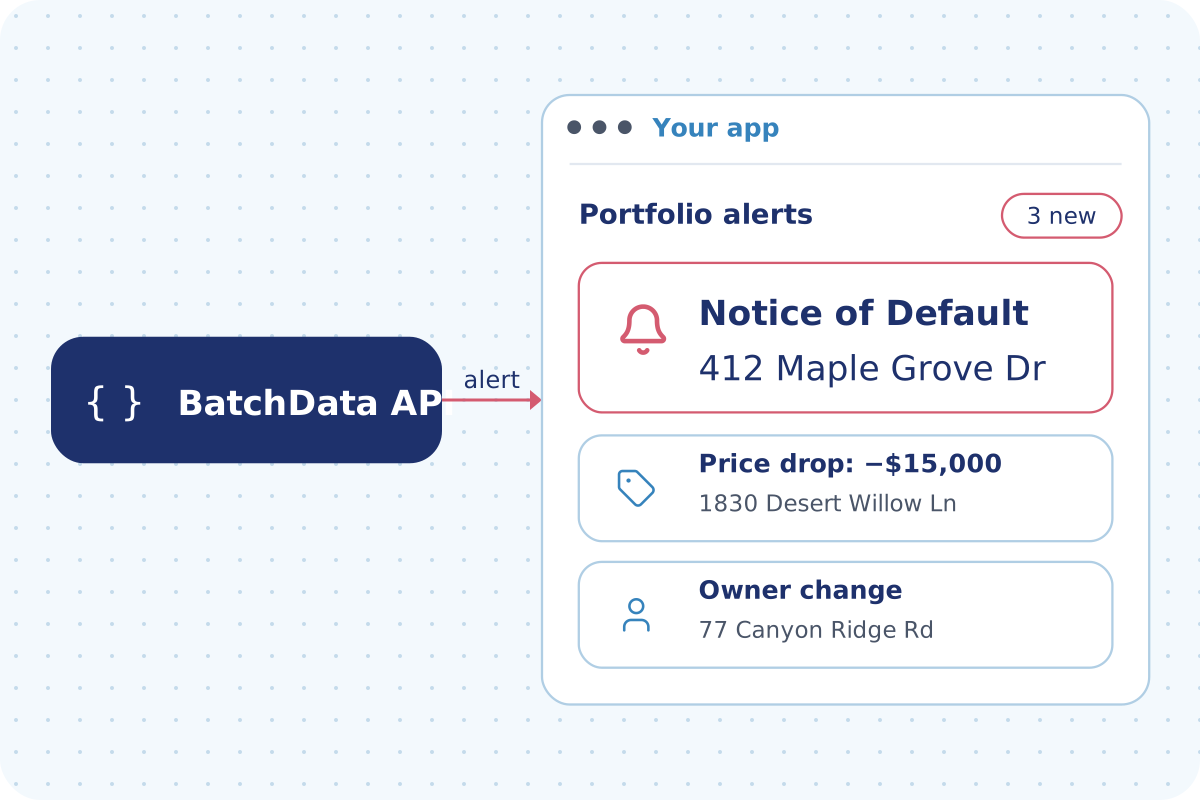
How to Automate GoHighLevel with Property Data Enrichment Using BatchData’s API
Read the guideGlossary A-Z
Each term links to a full guide.
- Address Line 1
- Address Line 1 is the primary delivery address containing only the civic number and the street name.
- Address Verification
- Address verification ensures that a physical address is valid and deliverable by cross-checking it against trusted databases like USPS.
- API Latency
- API latency is the time between sending a request and receiving a response, measured in milliseconds.
- API Rate Limiting
- API rate limiting is the server-side control that caps how many requests a client can send during a defined period.
- AVM
- An Automated Valuation Model (AVM) is an algorithm that uses massive datasets to calculate a property's estimated market value in seconds, a process that takes a human appraiser days.
- AVS
- AVS is one of those acronyms that causes expensive mistakes because it means two very different things in the same property workflow.
- Bulk Skip Tracing
- Bulk skip tracing is simply a system that allows you to skip trace as many people as you want simultaneously.
- Change Detection
- Change detection is the process of identifying differences over time, either by comparing visual data like satellite images or by detecting the exact point when a time series materially shifts.
- Confidence Scoring
- Confidence scoring is the practice of attaching an estimated probability of correctness to a prediction, then testing whether that estimate matches actual outcomes.
- County Code
- A county code is a unique 5-digit numeric ID for every U.S. county, acting as the universal key for all property data.
- Data Compliance
- Data compliance is now an operating requirement, not a legal side task.
- Data Matching
- Data matching identifies records that refer to the same real-world entity across datasets.
- Data Validation
- Data validation is the staged process of checking whether data has the right structure, acceptable values, valid relationships, and business meaning before people or systems rely on it.
- Data-Driven Decision Making
- Data-driven decision making is the discipline of using evidence to choose and validate an action, not relying on instinct alone.
- Demographic Data
- Demographic data is the statistical DNA of a population, breaking down groups of people by measurable attributes like age, income, household size, and location.
- Equity Analysis
- Equity analysis is the process of estimating an asset's value and the owner's residual interest after liabilities.
- Equity in Real Estate
- Equity is the monetary value of your ownership stake in a property.
- First-Party Fraud
- First-party fraud is when a real customer uses their own identity to lie, manipulate, or dispute for financial gain.
- HUD Home
- A HUD home is a residential property with one to four units that the U.S. government acquired after the homeowner defaulted on a Federal Housing Administration (FHA)-insured mortgage.
- Lender's Title Insurance
- Lender's title insurance is a non-negotiable policy that protects your mortgage lender’s financial investment in your property, paid for with a one-time fee at closing.
- Loan-to-Value Ratio (LTV)
- The loan-to-value (LTV) ratio is the single most critical metric lenders use to assess the risk of a mortgage.
- Mortgage Lien
- A mortgage lien is a lender's legal claim on a property, securing the loan and giving them the right to foreclose if the borrower defaults.
- Notice of Default
- A Notice of Default (NOD) is a legal document filed by a mortgage lender when a borrower has failed to make payments, typically for 90 to 180 days, officially starting the foreclosure process.
- Online Skip Tracing
- Online skip tracing takes the physical process out of finding people who might have relocated to different parts of the country for various reasons without notifying the proper people or tying up loose ends before their departure.
- Parcel in Real Estate
- A parcel in real estate is the fundamental, legally recognized unit of land used by cadastral and tax systems.
- Point of Interest (POI)
- A point of interest is a geocoded data record for a specific, useful location, built from coordinates plus attributes such as name and category.
- Political Boundary
- A political boundary is a legally defined line separating geopolitical entities, establishing jurisdiction for taxation, law, and resource control.
- Portfolio Monitoring
- Portfolio monitoring is the continuous, event-driven surveillance of asset-level and loan-level signals, including valuation, LTV, DSCR, ownership transfers, liens, and occupancy.
- Propensity Modeling
- Propensity modeling is a statistical method that uses machine learning to predict the likelihood of a person taking a specific action.
- Property Data Enrichment
- Property data enrichment transforms basic property records into detailed datasets, adding hundreds of attributes like square footage, ownership history, and neighborhood trends.
- Property Tax Assessment
- A property tax assessment is the government's official valuation of your property, executed for the sole purpose of calculating your tax bill.
- Psychographic Data
- Psychographic data is the qualitative and quantitative data that explains why a person makes a decision, focusing on their activities, interests, opinions, and values.
- Skip Search
- A skip search is simply a search that locates someone, a group of people, or entities.
- Skip Tracing
- Skip tracing is the process of finding accurate contact information – like phone numbers, emails, and mailing addresses – for property owners when public records are outdated or incomplete.
- Suppression List
- A suppression list is a first-party do not send database that blocks communication to specific identifiers before delivery.
- Tax Lien
- A tax lien is the government's legal claim against your property for unpaid taxes, and it's the first step toward foreclosure.
- Title Insurance Policy
- A title insurance policy is a one-time premium insurance product that protects real estate owners and lenders against financial losses from defects in the property's title existing prior to purchase.
- Trustee's Sale
- A trustee's sale is a public auction of a foreclosed property, conducted by a neutral third party called a trustee, entirely outside of the court system.
- UCC Search
- A UCC search can reveal a lien problem that never appears in a standard title search, and in commercial real estate that gap can change who controls critical assets attached to a property.
- Underwriting Process
- Underwriting is the formal risk assessment process lenders and insurers use to approve or deny an application, centered on the applicant's ability to pay and the value of the underlying asset.
See every field
The data dictionary defines the fields of each dataset.