



Property Valuation (AVM)
Property Valuation (AVM) Data
An estimated value for a property, with a price range, a confidence score and the date of the estimate, plus equity and loan-to-value: 9 fields. Lenders, investors, agents and software teams can use it to size up a home.
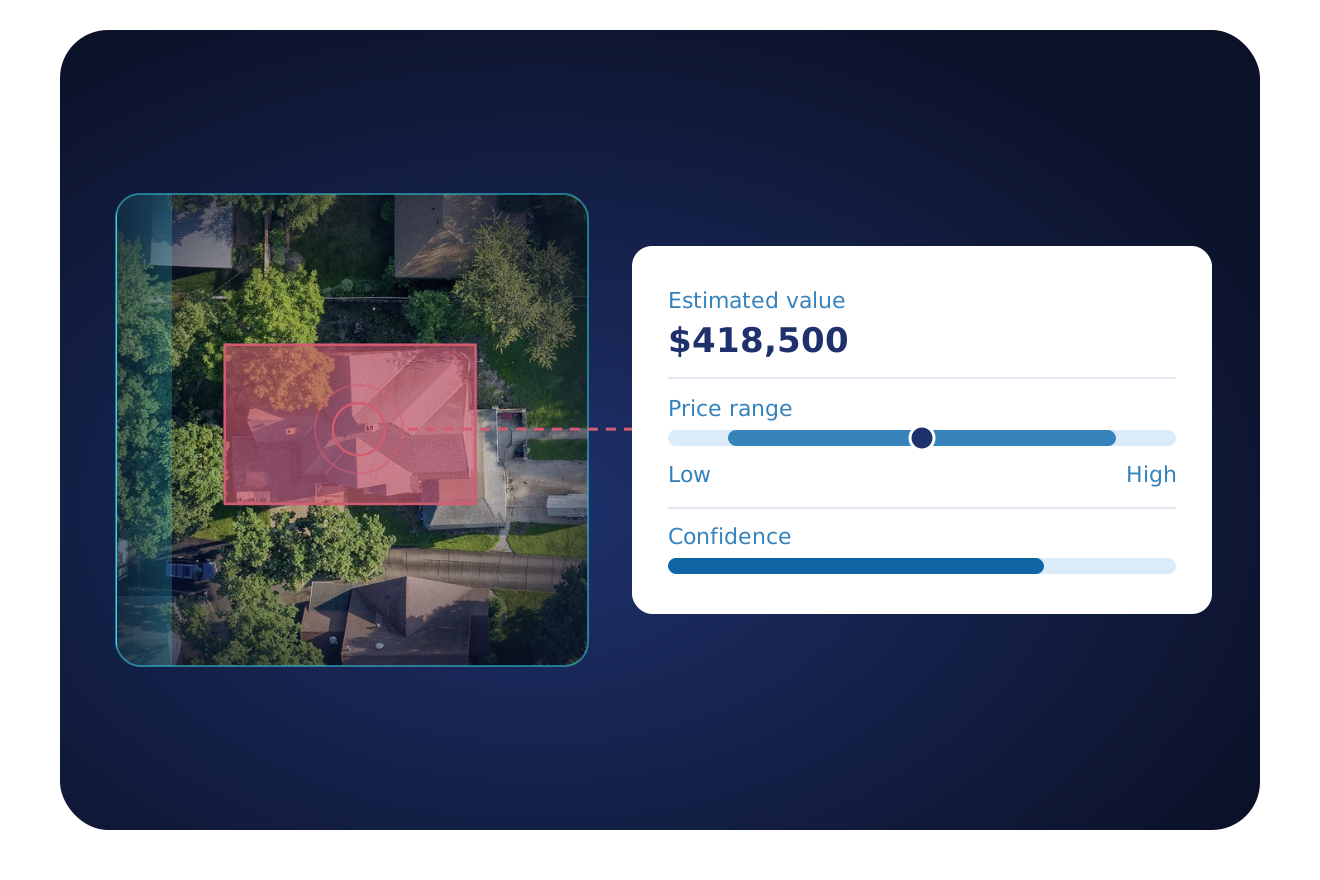
TRUSTED BY LEADING BRANDS

























- 169M+Parcels
- 3,100+Counties
- 131M+Properties
- 190M+Mortgage records
What's included
What is Valuation Data?
An automated valuation model (AVM) estimates the value of a property. BatchData's valuation data gives the estimated value with a price range, a confidence score and the date of the estimate. It also gives the equity in dollars, the equity percent and the loan-to-value ratio. The equity in dollars uses the estimated balances of the open liens. Lenders, investors, agents and software teams can use the value to size up a home, read its equity and judge how firm the number is. Valuation is an add-on to a Property Data plan.
Value
- Estimated value
- Price range, low and high
- Date of the estimate
Confidence
- Confidence score
- Standard deviation of the estimate
Equity
- Equity in dollars
- Equity percent
- Loan-to-value ratio
What valuation data lets you do
Use the estimated value to size up a home and its equity.
Put a value on a property
Read the estimated value, its price range and the date of the estimate.
- The estimated value of the property
- The price range, with its low and high ends
- The date of the estimate
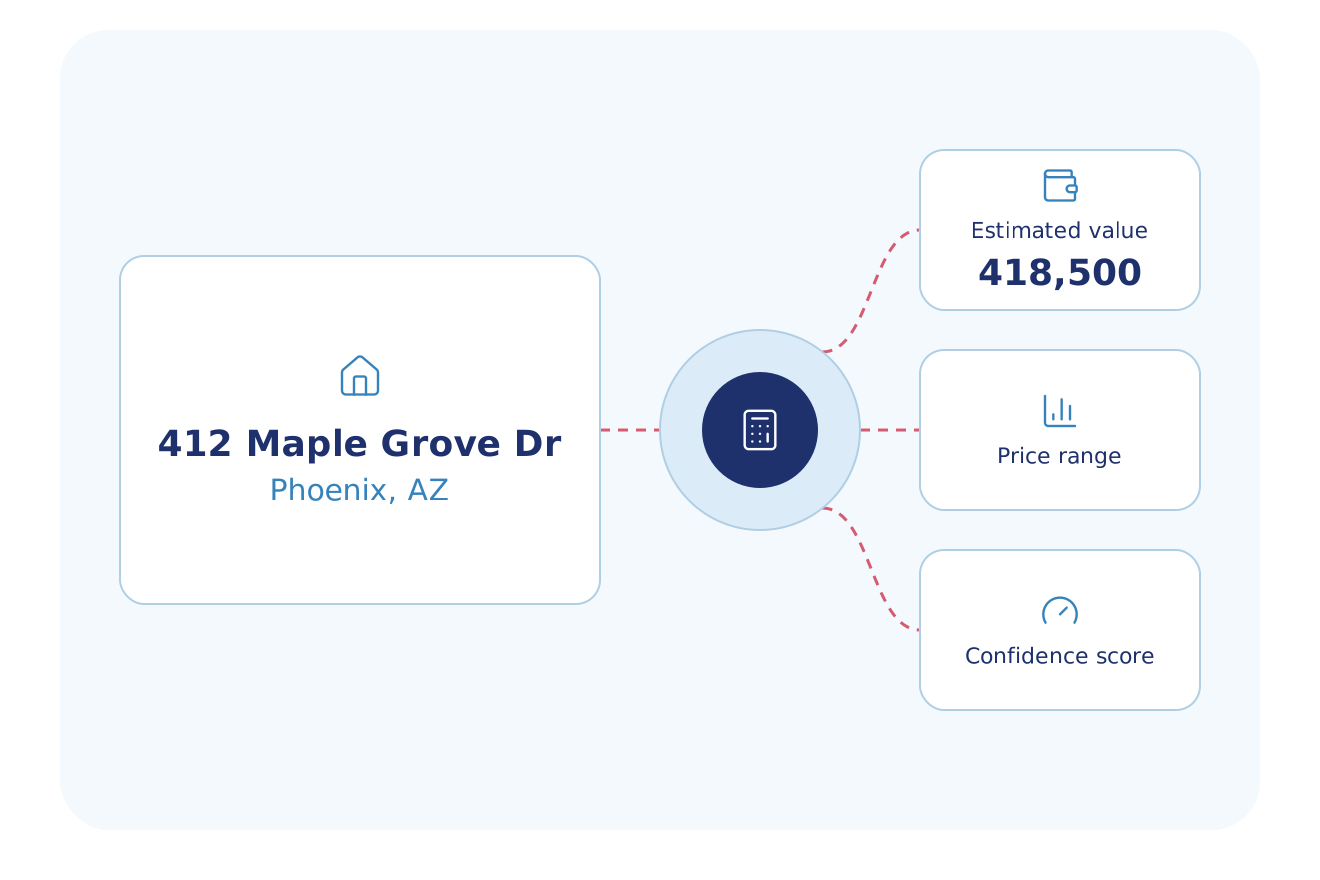
Read equity and loan-to-value
Find homeowners by the equity they hold and the loans against the home.
- Equity in dollars
- The equity percent
- The loan-to-value ratio
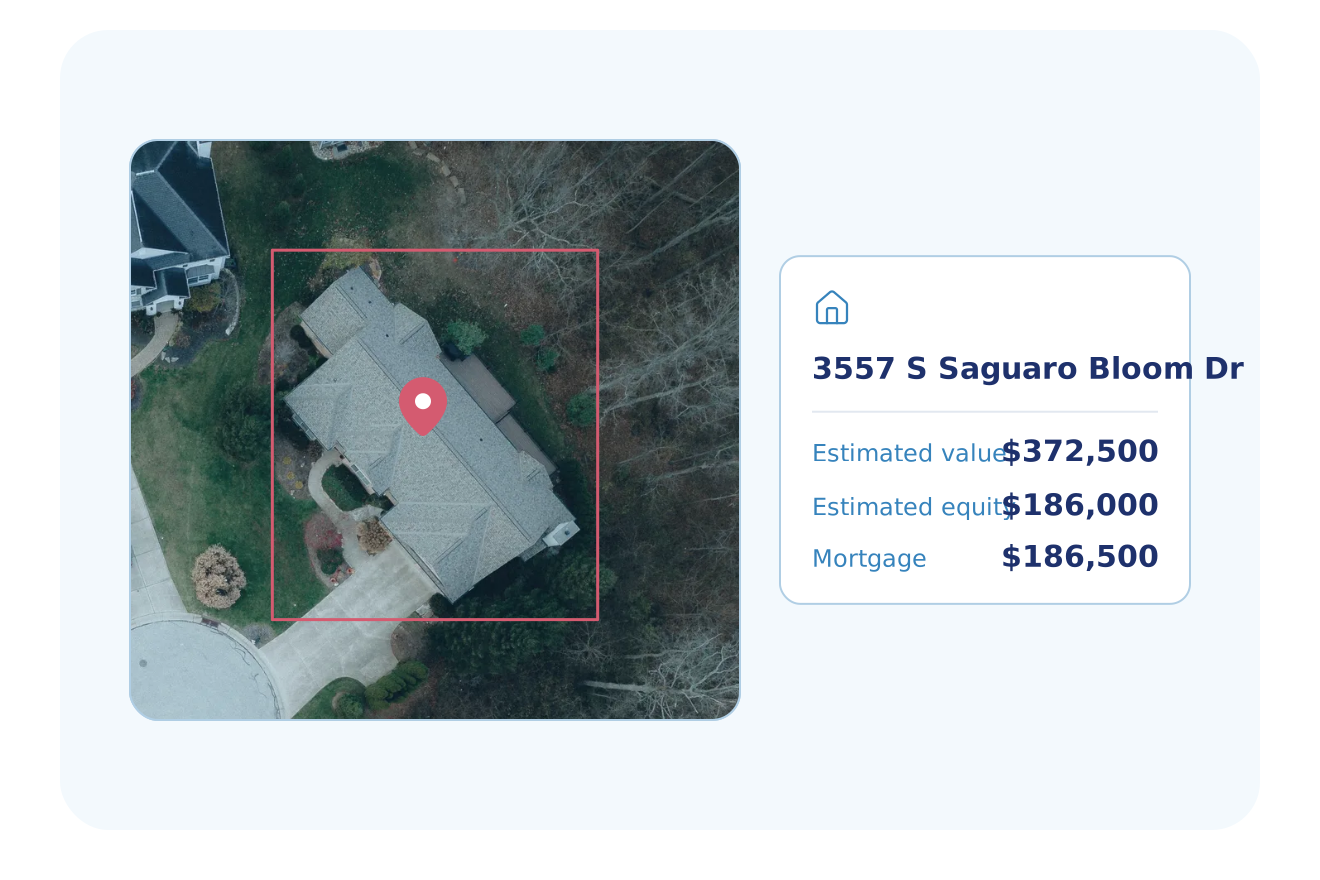
Judge how firm a value is
Read the confidence score and the standard deviation next to each value.
- A confidence score from 0 to 100
- The standard deviation of the estimate
- A price range that is a fixed band, not a confidence interval
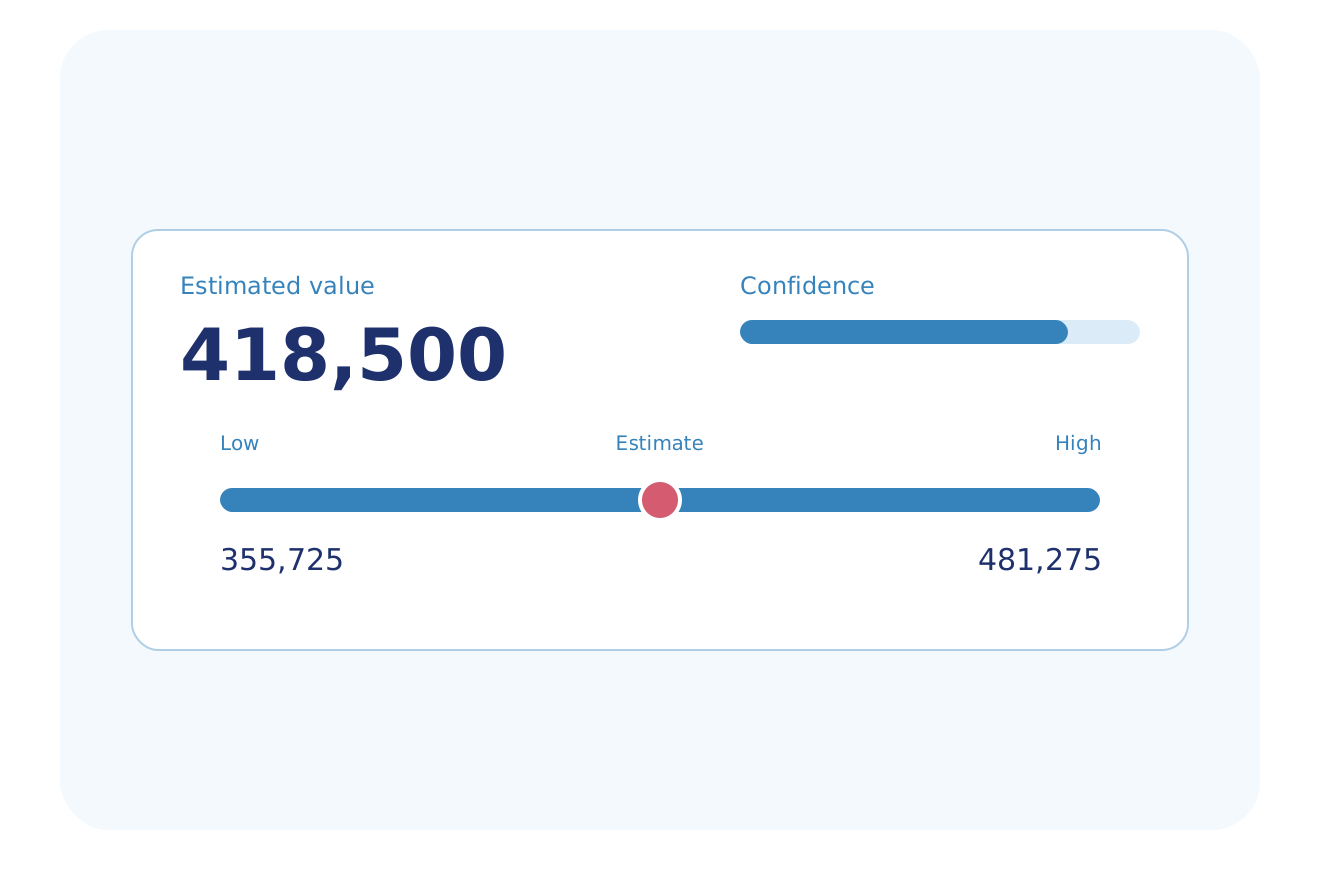
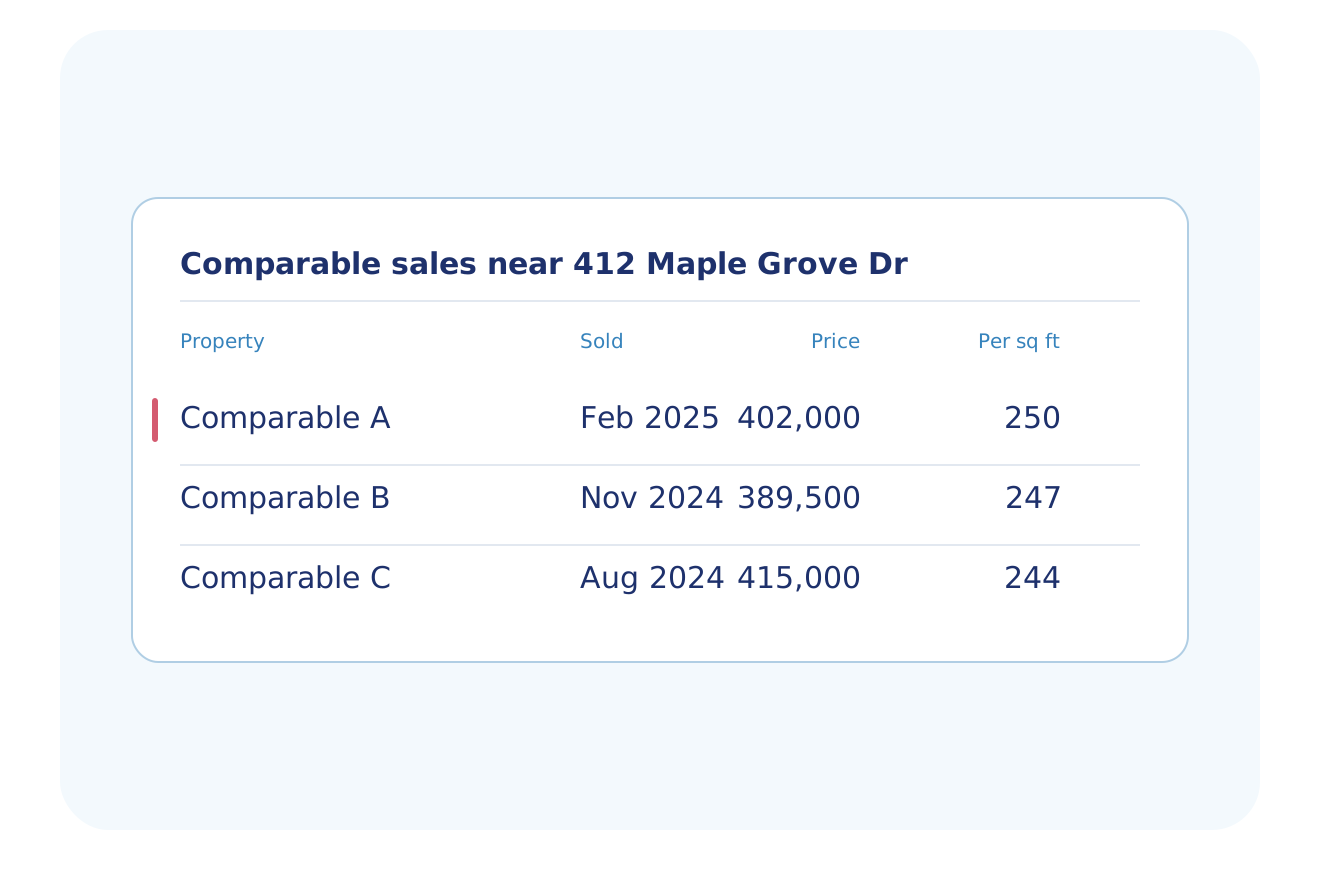
Check a value against comparable homes
Read the estimated value of each comparable home next to its last sale.
- The estimated value and the value band of each comparable
- The last sale price and the sale date of each comparable
- Comparables for a subject address, from Property Search
Built for Your Industry
Lenders, investors, agents and software teams can use estimated values and equity to size up a property.
Mortgage & Lending
Build refinance and HELOC lists from the estimated value, the equity and the loan-to-value ratio. Read the same fields on the homes you finance.
Explore Mortgage & LendingReal Estate Investing
Check the estimated value, the price range and the confidence score of a home, then read its equity.
Explore Real Estate InvestingAgents & Brokerages
Show an owner the estimated value and the price range of a home before the listing appointment.
Explore Agents & BrokeragesPropTech & Software
Show the estimated value, the equity and the loan-to-value ratio of a property in your app from one API call.
Explore PropTech & SoftwareMarketing & Data Resellers
Filter homeowner lists by estimated value and equity.
Explore Marketing & Data ResellersSolar
Read the estimated value and the equity of a home before a proposal.
Explore SolarHome Services
Find homes by estimated value and equity for service offers.
Explore Home ServicesProperty Services
Add the estimated value and the equity to the buildings you serve.
Explore Property ServicesFlexible Delivery Options
Choose the integration method that fits your workflow
Real-Time API
Get the estimated value of a property in the same call as its other subscribed data, or search by value, equity and loan-to-value ratio.
- RESTful JSON API
- Property Search and Lookup return all subscribed datasets in one call
- Async delivery to your webhook for large batches
- Developer docs and no-cost sandbox tokens
Bulk Data
Nationwide valuation files for your data warehouse or data lake.
- Choose the datasets and markets you need
- Amazon S3, SFTP or Google Drive delivery; Snowflake and Databricks through Cloud Delivery
- CSV, JSON and Parquet formats
- Weekly, monthly, quarterly or annual deliveries
- Full refresh or delta files
MCP Server
Your AI assistant can look up the estimated value of a property through the MCP server. Your account sets which datasets the tool returns.
- Your AI assistant calls BatchData tools to look up and search properties
- Connects to Claude, ChatGPT, Cursor and Claude Code with OAuth sign-in
- Runs on the same API, with datasets set by your account admin
Professional Services
Our Professional Services team helps you choose the valuation fields, set up the delivery and match the data to your records.
- Help choosing datasets, delivery cadence and destination
- Account manager help with token and dataset setup
- Support by email and in-app chat
- Upload a CSV or Excel file and get property data back in the same file
Why BatchData
What You Get With BatchData
One source for property, owner and contact data, by API or by file.
169M+ U.S. Parcels
Coverage of 169M+ U.S. parcels and 131M+ properties.
1,000+ Data Points
Owner, value, mortgage, tax, permit and listing data, with 1,000+ data points for each property.
API or File Delivery
Call the API, or get files in Snowflake, Databricks, Amazon S3, SFTP or Google Drive.
Frequently asked questions
Is there an AVM API with a confidence score?
Yes, BatchData's valuation (AVM) data is an add-on to a Property Data plan that you get through the API. Each estimate has a confidence score from 0 to 100 and a standard deviation, so you can judge how firm the value is.
What is in BatchData's property valuation (AVM) data?
BatchData's valuation data holds 9 fields for each property, including the estimated value and the confidence score. The fields also cover the price range low and high, the standard deviation and the date of the estimate. They also cover the equity in dollars, the equity percent and the loan-to-value ratio.
How do I judge how firm an AVM value is?
Read the confidence score and the standard deviation next to each value to judge how firm it is.
How is home equity calculated for a property?
BatchData's valuation data works out the equity in dollars from the estimated value and the estimated balances of all open liens.
Can I search by value and equity?
Yes, BatchData Property Search filters on the estimated value, the loan-to-value ratio, the equity percent and the equity in dollars. Ready-made lists mark high equity, low equity, unknown equity and free-and-clear homes.
Which property types does the AVM cover?
BatchData valuation data covers 99.25% of single-family homes, 99.02% of condos and 96.27% of multi-family homes. Coverage is 87.34% for manufactured homes and 46.75% for commercial properties. Multi-family coverage counts homes with 1 to 4 units.
What is an automated valuation model (AVM)?
An automated valuation model (AVM) estimates the value of a property, and BatchData's valuation data returns that estimate. Each estimate comes with a price range, a confidence score and the date of the estimate.
Start with valuation data
Talk to a data expert about the valuation fields and the delivery that fit your team.