The right Google Address Validation API alternative depends on the job, not the brand. Use USPS when U.S. postal standardization is the priority, UPS or FedEx when validation must support a carrier workflow, Loqate when global address capture matters, and BatchData when an address needs to connect to property, ownership, mortgage, or contact intelligence.
The ten options below aren't interchangeable. They differ in postal authority, carrier alignment, international coverage, checkout capture, batch processing, retention, pricing visibility, and enrichment depth. A validation-only API stops being the right tool when your workflow needs to identify a property, resolve an owner, monitor a portfolio, or reach a contact.
- U.S. mailing: USPS, Smarty, Lob, and Melissa
- Global capture and enterprise data quality: Loqate, Precisely, and Experian
- Carrier-linked fulfillment: UPS and FedEx
- Property-record enrichment: BatchData
Address validation should also report more than a formatted string or map pin. Google's response can parse, normalize, geocode, and return quality signals through a POST request, but production teams still need to compare component parsing, unit detection, postal deliverability, correction behavior, latency, pricing, retention rights, and bulk support in their own workflow. Google's Address Validation reference provides the baseline. The providers below show where a different baseline works better.
1. USPS Addresses API
USPS Addresses API is the strongest Google alternative when the requirement is authoritative U.S. postal formatting and deliverability preparation. It standardizes domestic addresses to USPS conventions and supports ZIP+4 output, making it the correct first choice for U.S. mail and parcel workflows tied directly to postal operations.
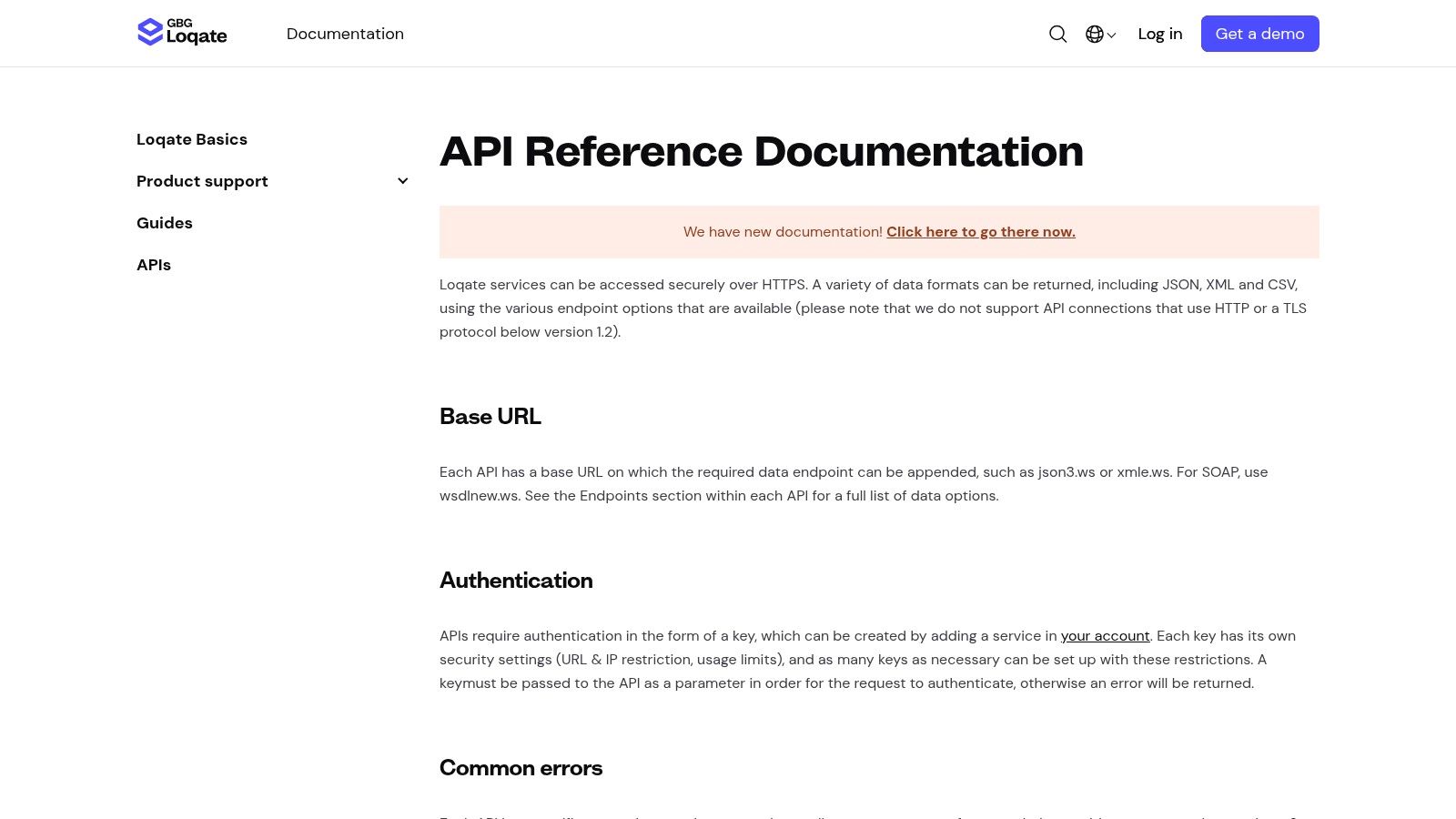
The API is available through the USPS developer portal, with access requiring registration and compliance with USPS usage terms. It replaces the legacy Web Tools approach with the modern USPS API Gateway. That matters for teams building a new integration, but the licensing boundary matters more than the transport layer.
USPS is not a general-purpose address master for every business dataset. Its focus is U.S. postal use, so it isn't the right standalone foundation for international onboarding, property identity resolution, or broad location intelligence.
Where USPS fits
Use it when you need:
- Postal formatting: Normalize addresses for USPS mailing and shipping.
- ZIP+4 output: Improve coding precision for U.S. delivery workflows.
- First-party postal reference: Evaluate addresses against the source most closely tied to USPS delivery.
- Operational compliance: Prepare records for mail and parcel processes governed by USPS requirements.
For U.S. address validation, DPV provides a more useful result than a binary valid or invalid flag. Y confirms the primary address and secondary unit as deliverable, D confirms the primary number but indicates a missing required unit, S means secondary information is present but unconfirmed, and N or an empty value means the premise number isn't DPV-confirmed. Google's DPV response guidance documents these distinctions.
Practical rule: A valid street address isn't enough for a condominium, office, or multifamily property. Store the unit-level result separately.
USPS is a poor fit when you need property matching, owner enrichment, international validation, or a durable customer identity dataset. Review USPS address verification alternatives for developers before treating postal standardization as the whole problem.

2. Smarty US Address Verification
Smarty is the practical choice for fast, developer-friendly U.S. verification with rich metadata. It fits checkout, logistics, property, and data-cleansing workflows that need more than a formatted address but don't need a full enterprise data platform.
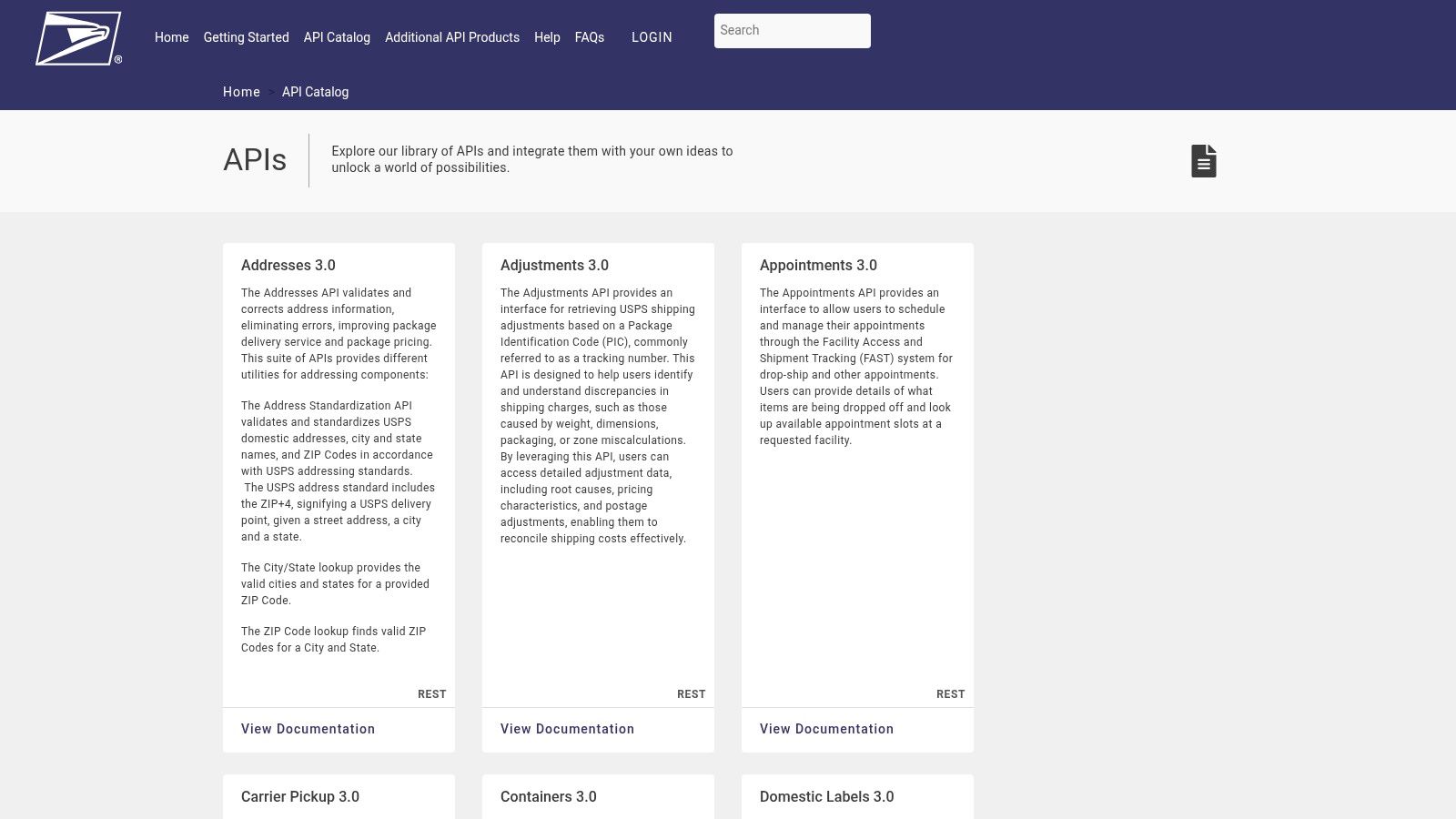
The Smarty pricing page presents a self-serve access model, published tiers, and a 42-day free trial with 1,000 lookups. Those figures are useful for evaluating the integration before procurement, but pricing alone shouldn't decide the architecture. The important question is whether the response gives your application enough evidence to accept, correct, or review a record.
Smarty's U.S. verification product can return metadata such as DPV match status, residential delivery indicators, carrier route, and vacancy information. That makes it more useful than a geocoder for routing, list hygiene, and property-related workflows.
What Smarty does well
- Developer onboarding: Documentation, API playgrounds, and straightforward request patterns reduce implementation friction.
- High-throughput processing: The Pro offering is described as supporting up to 25,000 lookups per second in the provider's published material, which makes it a candidate for demanding U.S. workloads.
- Operational metadata: DPV and residential or business signals support downstream segmentation and fulfillment logic.
- U.S. depth: The service is strongest when the address population is domestic and the team wants predictable verification behavior.
Smarty's main limitation is scope. International verification is a separate product or bundle, and advanced compliance requirements may depend on usage tier. It also won't identify the owner of a property, expose mortgage or lien history, or replace a property data platform.
Test incomplete addresses, unit records, rural routes, new construction, and nonstandard formatting separately. A provider that returns a plausible match for every input may be less trustworthy than one that clearly exposes unresolved records.
3. Lob Address Verification API
Lob is the best fit when address validation sits beside a print-and-mail workflow. It offers a clean API, real-time U.S. and international address validation, and autocomplete, so teams can connect data capture with physical mail operations without building two unrelated systems.
The Lob developer documentation supports a modern integration path with published plan thresholds and request-based access. Lob's pricing model includes plan allowances and extra-request rates, which gives finance and engineering teams a defined structure to model. Verify the current terms before procurement because service packaging can change.
Why Lob works for mail-heavy teams
Lob is useful when the same application needs to:
- Capture addresses during entry: Autocomplete is included across plans, with U.S. autocomplete specifically documented in the available product material.
- Validate before mailing: Standardize and verify the destination before sending a letter, postcard, or document.
- Keep implementation focused: Use a straightforward API rather than adopting a broader data quality suite.
- Support international records: Validate U.S. and international addresses through the same product family.
The trade-off is cost and coverage nuance. International autocomplete may not be available in every plan or workflow, and per-lookup economics can be less attractive than a postal-source integration at very large volumes. Lob also isn't a carrier rating engine, a property database, or an owner-contact service.
The difference between capture and validation matters at checkout. Inline assistance can prevent malformed records before submission. Research attributed to Luke Wroblewski and Etre reported 22% higher success rates, 22% fewer errors, and 42% faster completion for inline validation compared with submit-time validation, as summarized by CheckoutWC's checkout UX analysis. Treat those figures as a UX benchmark, not a universal result. Run your own experiment.
For broader implementation context, compare address verification software for operational workflows.
4. Melissa Global and U.S. Address Verification
Choose Melissa for the jobs Google's address API does not cover well. It fits teams that need address verification tied to postal compliance, batch cleanup, and broader contact-data operations, not just a checkout field check. That includes U.S. mailing programs, multinational customer records, and customer master cleanup where address quality sits alongside NCOA, geocoding, property, phone, email, and name matching.
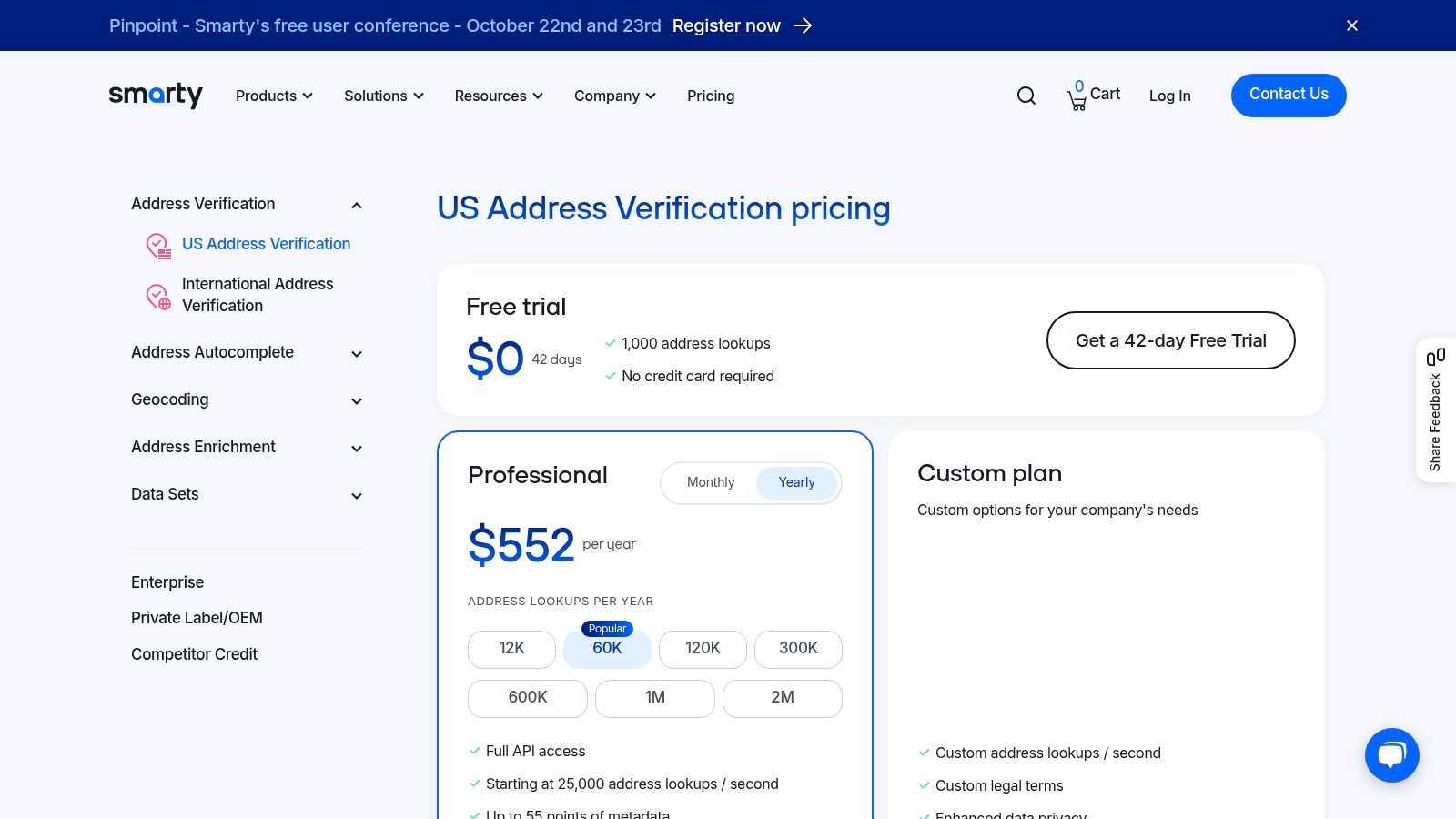
Its packaging tells the same story. The Melissa pricing page is built around a larger product catalog, with credits and sales-led bundles instead of one simple validation meter. That can be the right trade if multiple departments will use the platform. It is a poor trade if engineering only needs a lightweight U.S. verification endpoint.
The practical way to assess Melissa is by workflow.
For U.S. postal standardization, Melissa is a strong fit. CASS processing, DPV checks, and ZIP+4 output matter when bad records turn into returned mail or operational rework. For international records, Melissa gives one vendor path across countries instead of forcing a U.S.-only stack into a global database. For batch cleansing, it makes more sense than a checkout-first API because CRM, MDM, and ETL pipelines need correction, standardization, and exception handling at volume.
It also has limits. A small product team validating a shipping form may find Melissa heavier than necessary. The extra breadth is useful only if the business will use the surrounding enrichment and governance features.
Evaluation should stay concrete. Check whether the response returns standardized fields, DPV status, ZIP+4, residential or business indicators when available, and clear failure reasons. USPS's CASS and DPV overview explains why address standardization and delivery-point confirmation answer different questions.
5. Loqate by GBG Address Capture and Verify
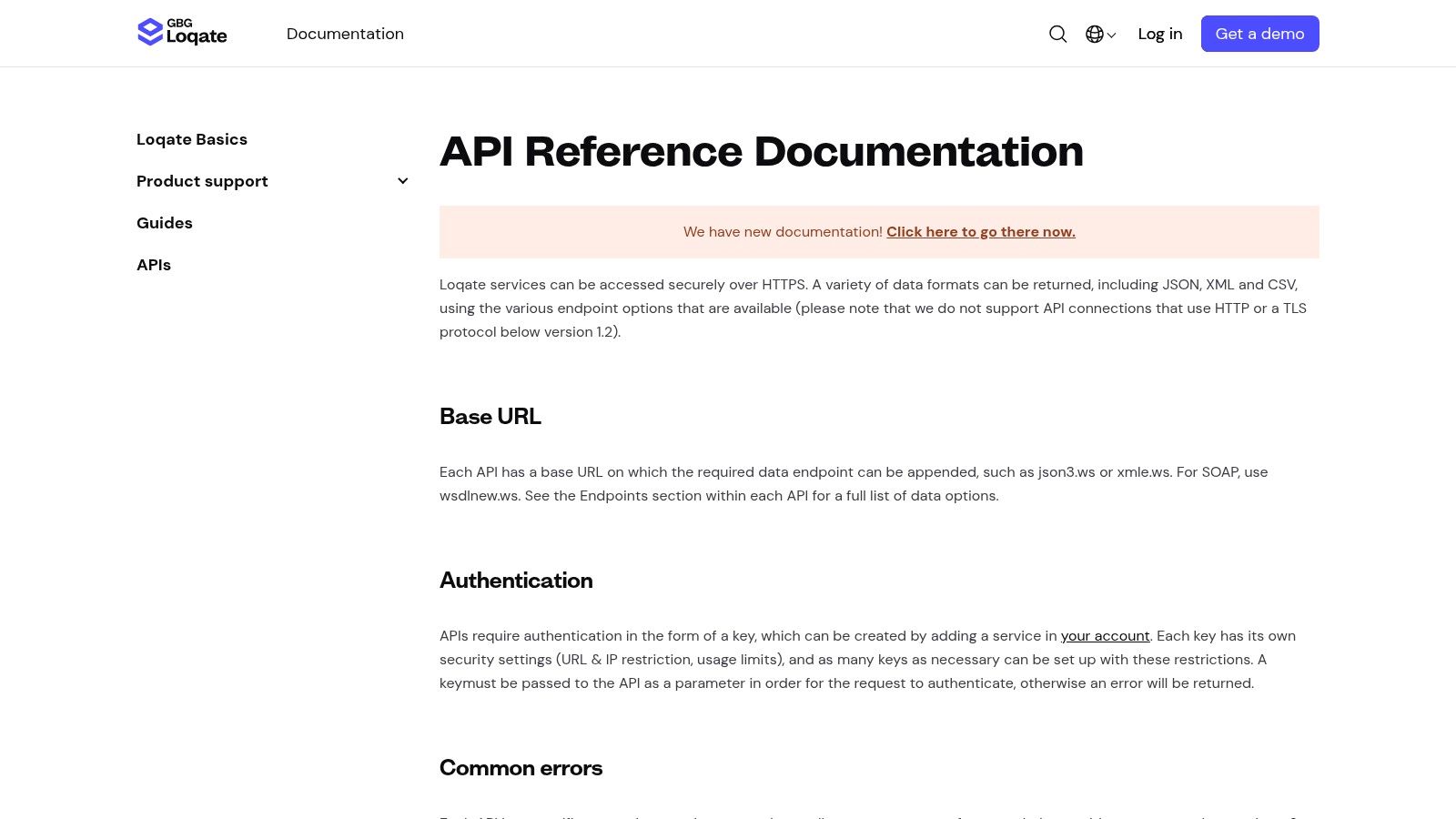
Loqate fits teams that need global address capture at the point of entry, not just post-entry cleanup. That is the job to evaluate here. If users are typing addresses across many countries, formats, and scripts, Loqate is designed to catch problems before they hit checkout, onboarding, or CRM imports.
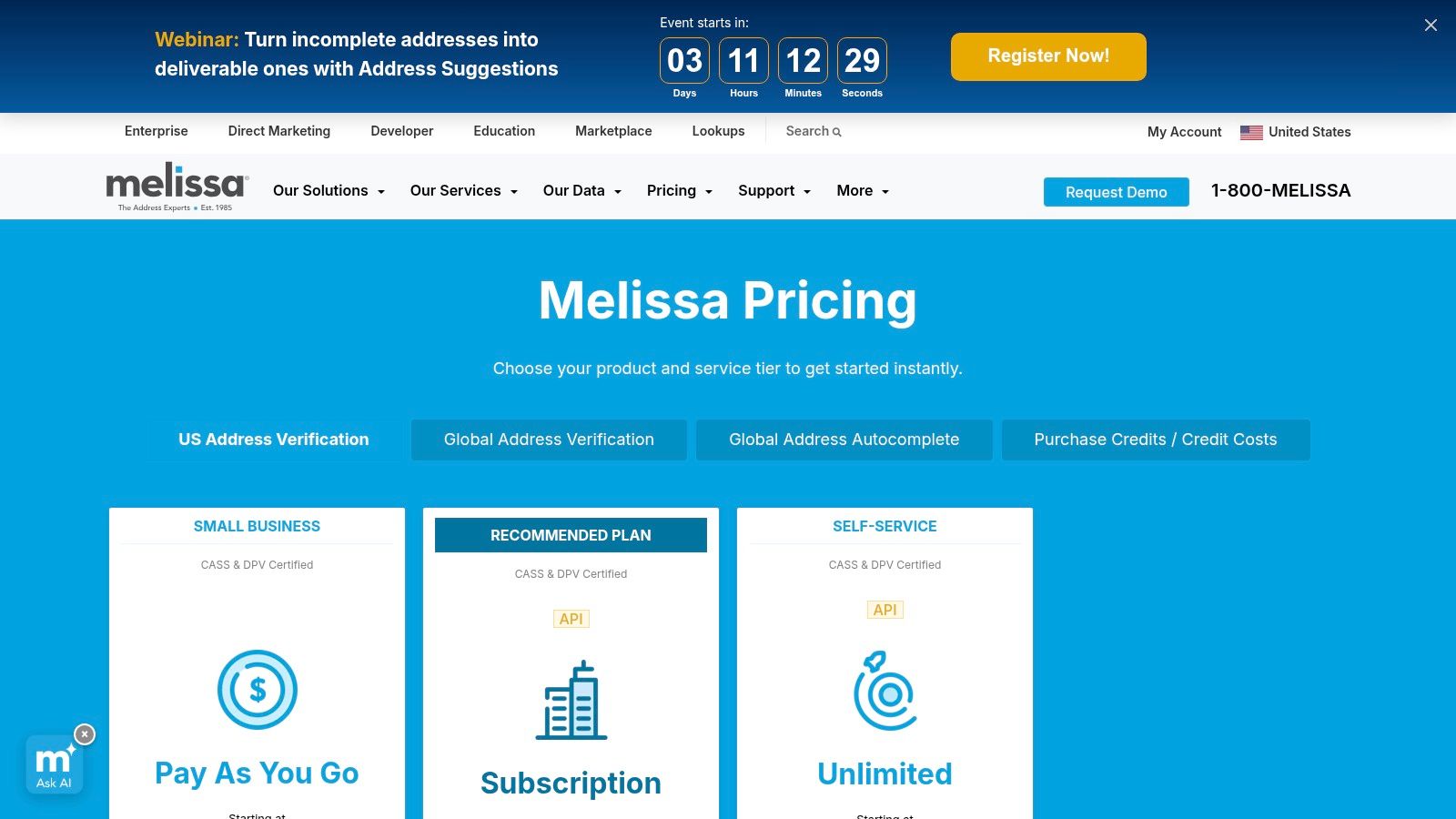
The Loqate developer API is built around capture and verification together. You can use type-ahead suggestions, parse and standardize the result, and inspect accuracy signals in the same product family. It also supports cloud, private cloud, and on-premises deployment patterns. For organizations with regional hosting rules or stricter control over where address processing happens, that deployment choice is a real differentiator.
The honest limit is that Loqate is not a property-data product. It does not answer ownership, mortgage, parcel, or owner-contact questions. It is also not the lightest option if your only requirement is basic U.S. postal verification.
What it does well is front-end address capture. A global ecommerce team, an insurer onboarding customers across markets, or an operations team standardizing international records can use one integration instead of maintaining country-specific field logic. That is where Loqate earns its place.
Coverage still needs to be tested at the locality level. Google's coverage documentation makes the same point from another angle. Country availability does not guarantee strong premise-level validation everywhere. Test apartment handling, transliteration, incomplete locality data, and non-Latin input before committing.
Cost and tuning matter too. Per-lookup pricing can add up, and matching behavior may need adjustment by country or use case. Teams comparing Google Validate Address alternatives should judge Loqate on capture quality, international format handling, deployment control, and whether the workflow starts with user input. The product view and feature set shown in Loqate by GBG, Address Capture and Verify align with that use case.
6. Precisely Address Verification
Precisely fits teams that treat address verification as a governed data-quality workflow, not just a checkout field check. If the actual job is routing records by confidence, documenting why a record passed, and feeding that decision into geocoding or stewardship processes, Precisely is a serious option. If the job is lightweight U.S. checkout validation with fast self-serve onboarding, it is usually more tool than you need.
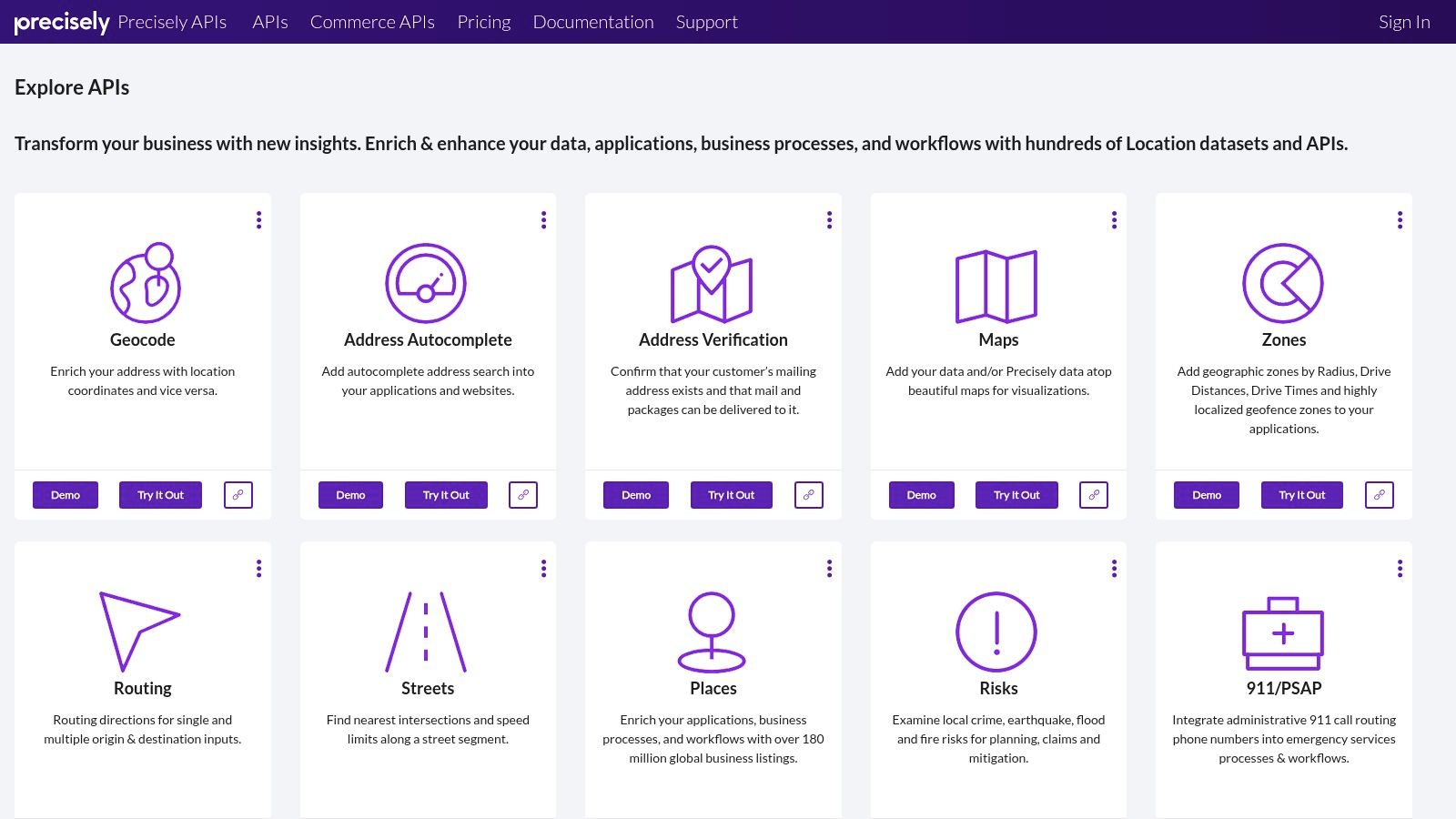
The Precisely developer portal shows the shape of the product clearly: documented APIs, SDKs, demos, and trial access inside a broader platform. That matters because Precisely is rarely purchased as a single narrow utility. It is usually evaluated as part of a wider data integrity stack, which changes both implementation scope and buying friction. Pricing is generally sales-led and tied to credits and API usage, so teams need a realistic workload model before comparing it with simpler per-call services.
The feature that stands out is AVC, Precisely's Address Verification Code. It gives operations, compliance, and data stewardship teams something better than a pass or fail. They can inspect quality signals, define acceptance rules, and send records down different paths: auto-accept, correct, review, or reject.
That makes Precisely a strong fit for a few specific jobs.
Use it when configurable matching matters, because a single global threshold can create bad approvals in one workflow and unnecessary rejects in another. Use it when auditability matters, because stakeholders need to explain why a record was accepted. Use it when Precisely is already in the stack, because the integration value increases once address verification connects to location and governance tooling.
Its limits are practical. Small product teams often do not want the heavier integration or the commercial process that comes with enterprise software. And a polished, standardized output still does not guarantee the address is operationally correct for delivery, underwriting, or identity resolution. Track the original input, normalized result, changed components, confidence indicators, and downstream outcome.
7. Experian Aperture Address Validation
Experian Aperture is for governed customer data, not lightweight checkout cleanup. If the job is to keep addresses aligned across CRM, ERP, and batch remediation workflows, it earns a place on the shortlist. If the job is a fast U.S. postal check with minimal setup, it is usually more system than a product team wants.
The Experian Aperture address validation documentation shows why. The service is split into search, validate, lookup, and format, which matters in enterprise workflows because capture, acceptance, and storage are often owned by different teams. The same documentation also notes tunable suggestion behavior, with a default of 7 suggestions and support for up to 100. That is useful for address capture, but only if you tune it against real form behavior. A long suggestion list can help a call center agent. It can slow down a consumer checkout.
That split maps well to a specific set of jobs:
- Global address capture when users need suggestions before they finish typing.
- Validation and formatting when acceptance rules should stay separate from how an address is displayed or stored.
- Enterprise system alignment when Salesforce, Microsoft, SAP, and other operational tools all need the same cleansed record.
- Batch correction when the problem is already sitting in customer or supplier data, not just at the point of entry.
The honest limit is commercial and operational overhead. Teams usually need sales engagement, and the product surface is broader than necessary for simple U.S. normalization. I would not choose Aperture for a developer-led project that wants self-serve signup, quick testing, and production rollout without much procurement work.
Choose it for governed cleansing across business systems. Skip it for carrier-linked checkout validation, lightweight postal standardization, or workflows that only need a single, easy endpoint. Measure accepted address rate, ambiguous-match handling, latency, and downstream delivery results, not just how many suggestions the UI can show.
8. UPS Address Validation APIs
UPS fits one job well: carrier-linked checkout and shipment preparation inside a UPS workflow. If the business rule is "can UPS price, classify, and move this package without address friction," UPS is a strong alternative to Google for that step. If the job is building a neutral customer address record that must survive across carriers, CRMs, mail, and identity systems, it is the wrong center of gravity.
The UPS Developer Kit gives you the integration path, but the product context matters more than the endpoint list. UPS validation sits close to rating, label creation, and service selection. That is the core advantage. A warehouse team, shipping platform, or checkout stack using UPS can validate near the moment a bad address turns into a bad label, a surcharge, or a failed handoff.
That makes UPS useful for a narrow set of decisions:
- Rate calculation when address quality affects shipping options or charges.
- Label creation when you want errors caught before the parcel enters the carrier flow.
- Residential or commercial classification when service choice depends on how UPS interprets the stop.
- UPS-specific fulfillment checks when the shipment will move through UPS.
The limit is just as clear. UPS is not your general-purpose address authority. It can approve an address in UPS operational terms without answering broader questions about postal standardization, cross-carrier consistency, or property-level enrichment. Teams get into trouble when they treat a carrier response as the canonical customer record and then wonder why other systems disagree.
My rule is simple. Keep a canonical address from the provider that matches your data-quality job. Use UPS downstream, where carrier acceptance and shipping economics matter.
A carrier-specific validation result belongs in the fulfillment layer unless the carrier format is also the system of record.
Choose UPS for shipping execution tied to UPS. Skip it for broad postal normalization, enterprise master data, or workflows that need one address record to work everywhere.
9. FedEx Address Validation API
Use FedEx when the job is FedEx shipping execution. That is the narrow, correct use case.
The FedEx Address Validation documentation makes the scope clear. The API validates and corrects recipient address details, flags deficiencies and changes, and sits inside the current REST-based FedEx workflow for teams migrating off older SOAP services. You need a FedEx account and you have to work within the FedEx developer program.
That makes FedEx a good fit for a specific failure path. If the problem is bad shipment data before label creation, carrier-side correction costs, or operational delays in the FedEx flow, this API belongs close to checkout, shipping, or warehouse execution. It is strongest when the package will move through FedEx and you want FedEx's interpretation before the label is printed.
I would not use it as the system of record for customer addresses. A FedEx-valid address is a carrier-operational result, not a universal identity record.
That distinction matters in messy stacks. A retailer can ship an order successfully with a FedEx-approved correction and still have the same address fail a property match, disagree with postal formatting rules, or create inconsistencies across billing, CRM, and claims systems. The failure is architectural, not technical. The wrong tool is holding the canonical field.
The safer pattern is to store four things separately: the customer-entered address, your canonical normalized address, the FedEx-validated response, and the final shipment outcome. Then compare what FedEx changed against real delivery results instead of letting carrier edits overwrite master data.
For multi-carrier operations, FedEx should be one validation layer in fulfillment, not the only one. Use a postal or global address provider upstream for standardization. Use FedEx downstream where carrier acceptance is the actual decision.

10. BatchData versus Smarty for Property Data
If the job is property resolution, Smarty is the wrong endpoint. Smarty verifies a U.S. address well. BatchData is built for the next step: turning that address into a property, owner, and risk or opportunity record.
That distinction matters more than feature lists. In real-estate, lending, insurance, and property marketing workflows, a clean street line is only useful if it joins to the right parcel or property entity. BatchData's own comparison says the platform covers 169M+ U.S. property records and 1,000+ attributes, with daily updates, through the BatchData property data comparison. Those numbers describe scope. They do not mean every field is equally complete on every record.
Here is the practical split.
Use Smarty for postal-grade U.S. address verification, fast API calls, and metadata that helps decide whether an entered address is valid enough for mailing, checkout, or CRM cleanup. It fails when the business question changes from “is this a valid address?” to “which property is this, who owns it, what is attached to it, and should we act on it?”
Use BatchData when the address is just the lookup key. Teams use it to connect tax, assessment, market, ownership, mortgage, lien, permit, listing, and pre-foreclosure data. They also use it for operational access patterns that a pure validator usually does not target, including real-time APIs and bulk delivery into S3, Snowflake, or flat files for analytics and machine-learning work. Owner contacts, contact enrichment, skip tracing, phone verification, Smart Property Search, Portfolio Monitoring, and BatchRank fit the same pattern. The product is trying to answer property and portfolio questions, not postal ones.
That makes the trade-off simple. A lender may need to tie an address to a parcel, ownership record, mortgage details, equity or valuation signals, lien history, and contact paths. An insurer may care more about property characteristics and risk-related attributes than mailing format. An investor may want monitoring and acquisition signals. In those workflows, Smarty is too narrow.
BatchData has clear limits. It is U.S.-centric. It is too much product for a small mailing list, a basic ecommerce form, or an international checkout flow. For those jobs, Smarty stays cleaner, faster to reason about, and closer to the actual requirement.
Decision rule: Choose Smarty for U.S. postal validation. Choose BatchData when the address needs to resolve into a property record and downstream action depends on what is attached to that property.
Top 10 Alternatives to Google Address Validation, Comparison
| Provider | Core features | Quality / UX (★) | Value & Pricing (💰) | Target audience (👥) | Unique selling points (✨) |
|---|---|---|---|---|---|
| USPS, Addresses API | USPS‑compliant standardization (ZIP+4), REST API | ★★★★ authoritative formatting | Free after registration 💰 (usage terms apply) | 👥 Mailers, shippers, postal ops | ✨ Gold‑standard deliverability & ZIP+4 |
| Smarty, US Address Verification | Fast lookups, ~55 metadata points (DPV/RDI), high throughput | ★★★★ very fast & dev‑friendly | Published pricing + 42‑day trial 💰 | 👥 Ecommerce, logistics, dev teams | ✨ High throughput & rich DPV/RDI signals |
| Lob, Address Verification API | Real‑time US & international validation, autocomplete | ★★★☆ clear docs & quick start | Clear plan tiers; per‑lookup costs 💰 | 👥 Print/mail, commerce devs | ✨ Autocomplete on plans; simple pricing |
| Melissa, Global/US Address Verification | CASS/DPV, batch cleansing, NCOA & enrichment | ★★★★ enterprise maturity | Credit‑based, variable forecasting 💰 | 👥 Regulated industries, large mailers | ✨ Broad data quality suite (phone/email) |
| Loqate (GBG), Address Capture + Verify | Global capture (type‑ahead) + verify, on‑prem/cloud options | ★★★★ strong international accuracy | Pay‑as‑you‑go; 45‑day trial 💰 | 👥 Global ecommerce, multinationals | ✨ Single API for global coverage; flexible deploy |
| Precisely, Address Verification | Address Verify API, AVC accuracy codes, deep tooling | ★★★★ enterprise controls | Sales‑led pricing (credits/APIs) 💰 | 👥 Enterprises needing strict QA | ✨ Configurable matching & accuracy indicators |
| Experian, Aperture Address Validation | Realtime search/validate/lookup/format, CRM integrations | ★★★★ enterprise support | Trial available; sales pricing 💰 | 👥 Large enterprises, CRM/ERP teams | ✨ Tunable suggestions + prebuilt integrations |
| UPS, Address Validation APIs | City/State/ZIP & street checks, shipping logic alignment | ★★★ tailored for UPS flows | Account required; shipping‑tied 💰 | 👥 Shippers using UPS | ✨ Validation aligned to UPS rates/services |
| FedEx, Address Validation API | Validates/annotates addresses to reduce label issues | ★★★ reduces FedEx correction fees | Requires FedEx account; shipping‑focused 💰 | 👥 Shippers using FedEx | ✨ Designed to avoid FedEx correction fees |
| BatchData 🏆 | 169M+ US properties, 1,000+ attributes, low‑latency APIs + bulk (S3/Snowflake/files) | ★★★★★ production‑grade; daily updates | Enterprise pricing; high ROI for property workflows 💰 | 👥 Investors, servicers, underwriting & ML teams | ✨ Unified property + ownership + valuations + verified contacts; BatchRank, Smart Property Search, white‑glove onboarding |
Choosing and Migrating Your Address Validation Provider
Choose the provider that owns the next operational decision after validation. USPS owns U.S. postal standardization, Smarty owns fast U.S. verification, Lob owns mail-oriented capture, Loqate owns global address entry, UPS and FedEx own carrier fulfillment checks, and BatchData owns the property intelligence layer.
Migration should start with evidence, not a feature matrix. Run the current Google output and the replacement output side by side on a representative sample of production addresses. Preserve the original input and compare normalized components, unit handling, confidence or accuracy codes, ZIP+4 changes, inferred components, replaced components, and unresolved records.
Google recommends evaluating the verdict object first. Its key fields include validationGranularity, addressComplete, hasInferredComponents, and hasReplacedComponents. Google's JavaScript response guidance identifies PREMISE or better granularity combined with addressComplete: true as strong quality signals, while inferred or replaced components indicate that the service changed or supplemented the submitted data.
Migration checks that prevent bad cutovers
- Build a stratified sample: Include incomplete addresses, apartments, suites, rural routes, new construction, nonstandard formatting, and international records if they exist in production.
- Compare component output: Check street, locality, administrative area, postal code, country, premise, and secondary unit separately.
- Compare decision codes: Map each provider's status model into accepted, corrected, incomplete, unresolved, and rejected states.
- Measure downstream results: Track delivery success, mail returns, correction attempts, manual reviews, property matches, or fulfillment failures.
- Confirm retention rights: Google's high-volume guidance says cached address information is subject to Terms of Service restrictions, and actual address information may be cached only with user consent. Review Google's high-volume architecture guidance before making any provider your permanent address master.
- Model throughput and quotas: Google documents a default 6,000 queries per minute limit for Address Validation API requests, with a separate 6,000-QPM limit for feedback methods. Google's usage and billing documentation also describes pay-as-you-go billing, required billing enablement, API key or OAuth authentication, and daily quota controls.
- Confirm current pricing: Compare actual per-lookup costs with each provider's published tiers, credits, included requests, overage rules, and enterprise terms before cutover.
The most important test is operational deliverability, not syntactic validity. The Universal Postal Union reports that improved address accuracy could raise successful first-delivery attempts by as much as 23%, with a median improvement of 5.4% across postal operators, while poor address quality can reduce delivery success by up to 14%. The UPU address accuracy research supports a practical evaluation principle: measure delivery or matching outcomes, not just how often an API returns a formatted address.
The final choice is straightforward. Real-estate and mortgage teams should pair address resolution with property-record enrichment. Insurance teams should select a provider that can connect the address to relevant property attributes. Logistics teams should use carrier-aligned validation at fulfillment, with a canonical address layer underneath. Teams working across countries should prioritize capture quality, locality confidence, script support, retention, and batch architecture rather than accepting a broad country list as proof of accuracy.
For adjacent contact-data workflows, evaluate the Email Validation API alongside address verification so an accepted property record doesn't lead to an unreachable contact.
BatchData connects validated U.S. addresses to 169M+ property records, 1,000+ attributes, valuations, ownership, mortgage and lien data, permits, listings, and verified owner contacts through low-latency APIs and bulk delivery. Visit BatchData to see how property enrichment, contact intelligence, and portfolio workflows can take your address pipeline beyond formatting and deliverability.