



Watch the Homes Behind Your Loan Book
TRUSTED BY LEADING BRANDS

























Real Homes Secure Your Loans
Many loans are secured by a home. BatchData gives you the property record, mortgage and lien history, and owner contacts. Use it for marketing and portfolio monitoring, never for credit decisions.
Watch Each Home for Change
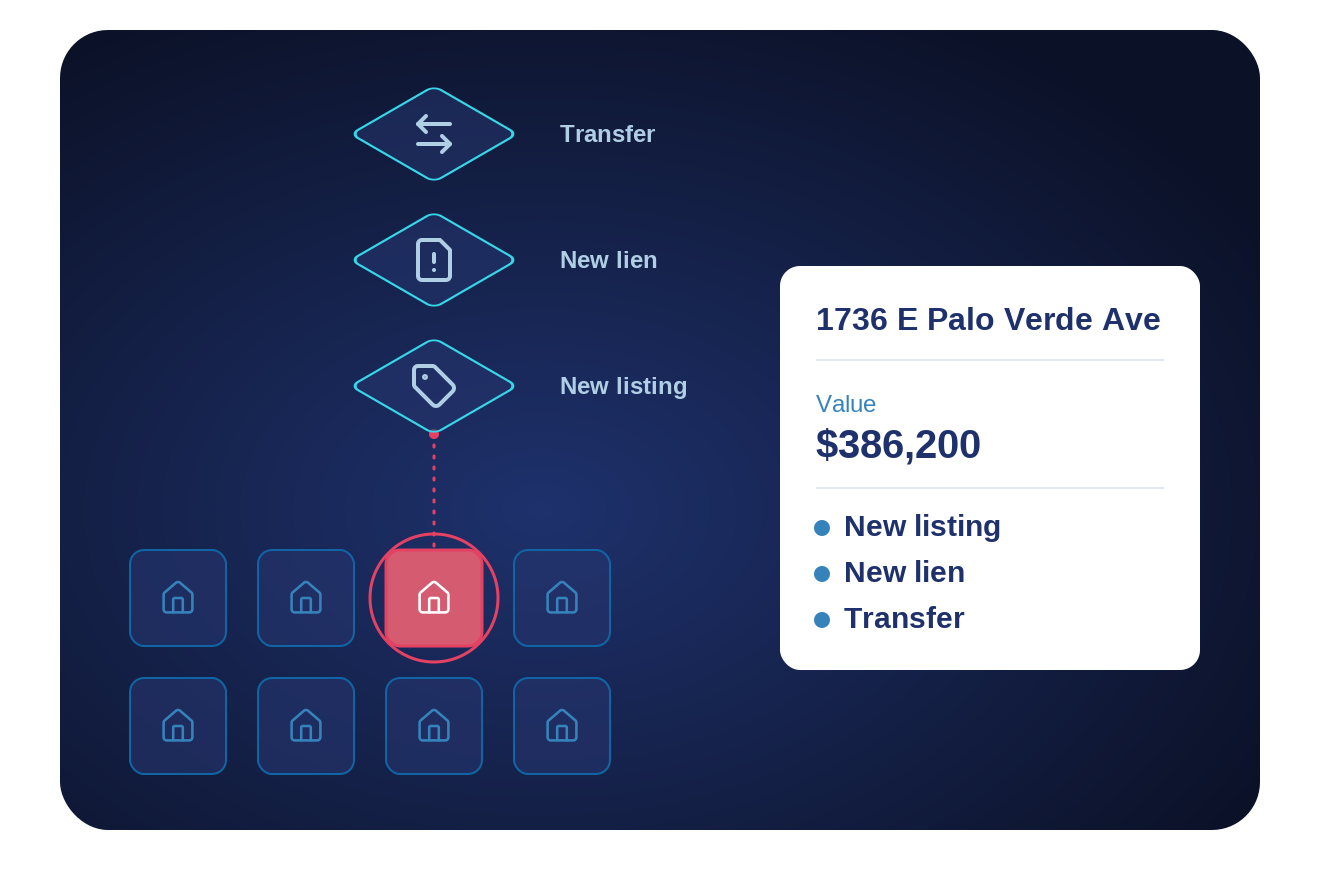
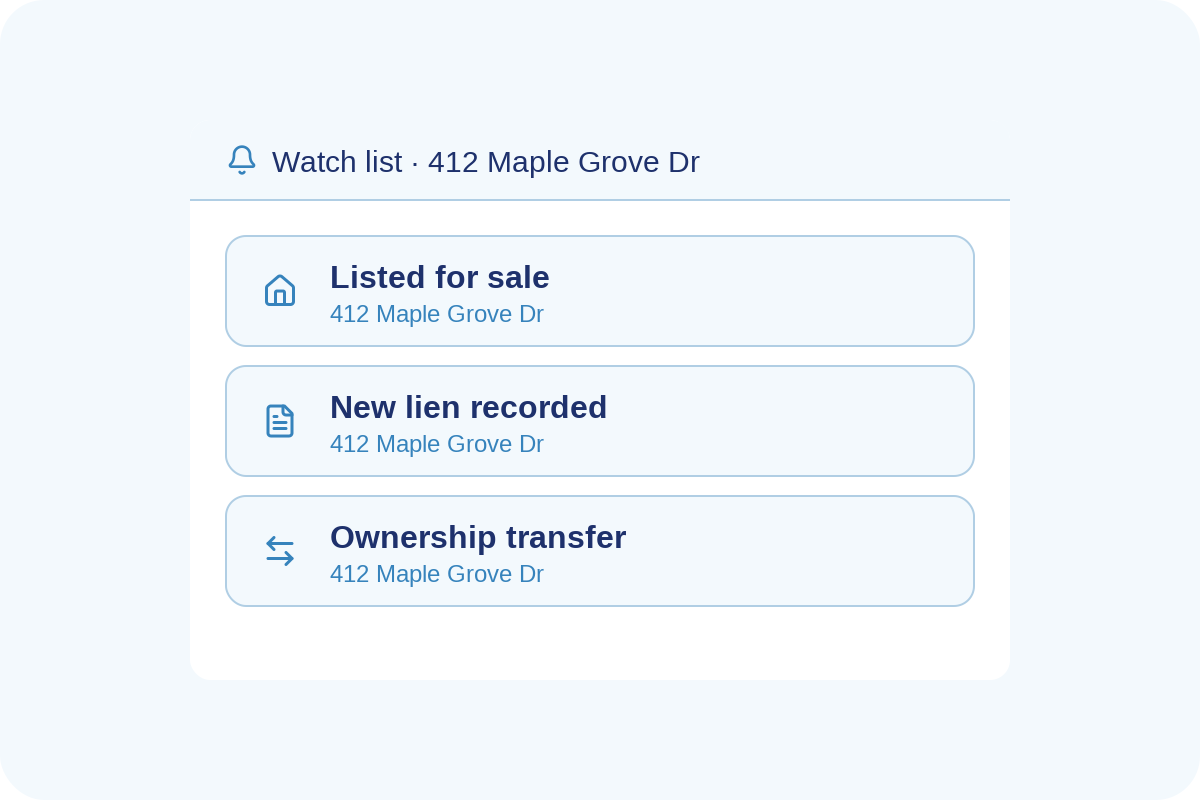
Get an alert when a home lists for sale, goes into default, gets a new lien or changes owner. Alerts go to your app or CRM.
- New listings and for-sale-by-owner sales
- Default and foreclosure status changes
- New liens filed against the property
- Ownership transfers on each property
Track Status and Value Together
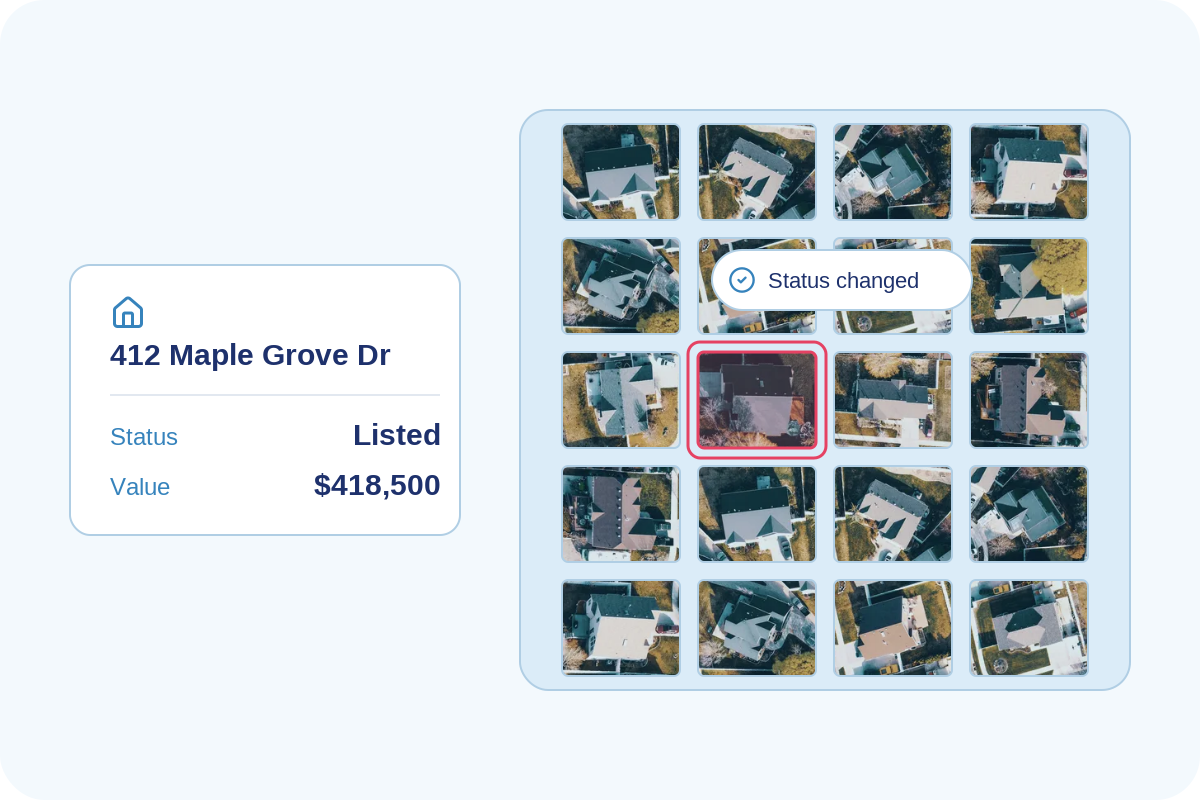
A status change on a home behind a loan, such as a new listing, raises an alert. Your team sees the new status and the home's estimated value at once.
- Estimated value and price range
- Estimated equity and LTV ratios
- Second mortgages and HELOCs on record
- Loan type and interest rate on record
The Data Behind Every Loan
Property value, liens and owner contacts, tied to the same home.
Value and Equity
Estimated value, price range and estimated equity for each home.
Mortgage Records
Loan type, interest rate, second mortgages and HELOCs.
Open Liens
Open and involuntary liens on each property.
Foreclosure Status
Notice of default, lis pendens and auction dates for each home.
Recent Movers
Homeowners who recently moved, for new-account marketing.
Listing History
Listing status, listing history and days on market.
Property Details
Living area, construction type and roof type for each home.
Owner Contact Data
Owner phones and emails with Do Not Call (DNC) and calling-lawsuit flags.
Ownership Changes
Ownership transfers and the new owner name for each property.
Six Ways Banks and Credit Unions Use BatchData
Portfolio, risk, servicing and marketing teams each start from a different signal.
Watch Collateral Homes
Get an alert when a home is listed, enters default, gets a new lien or changes hands.
Value Each Home
Get an automated value estimate (AVM) and price range for covered homes.
Read Mortgage History
Pull loan type, interest rate, second mortgages and lien records for each home.
Find Recent Movers
Flag homeowners who recently moved, for new-account marketing.
Check Owner Contact Data
Find owner phone numbers and emails, with DNC and calling-lawsuit flags.
Load Data into Your Warehouse
Send property and loan data to Snowflake or Databricks.
Coverage Behind Every Loan
Property, mortgage and owner data for the homes you hold.
Why Banks and Credit Unions Choose BatchData
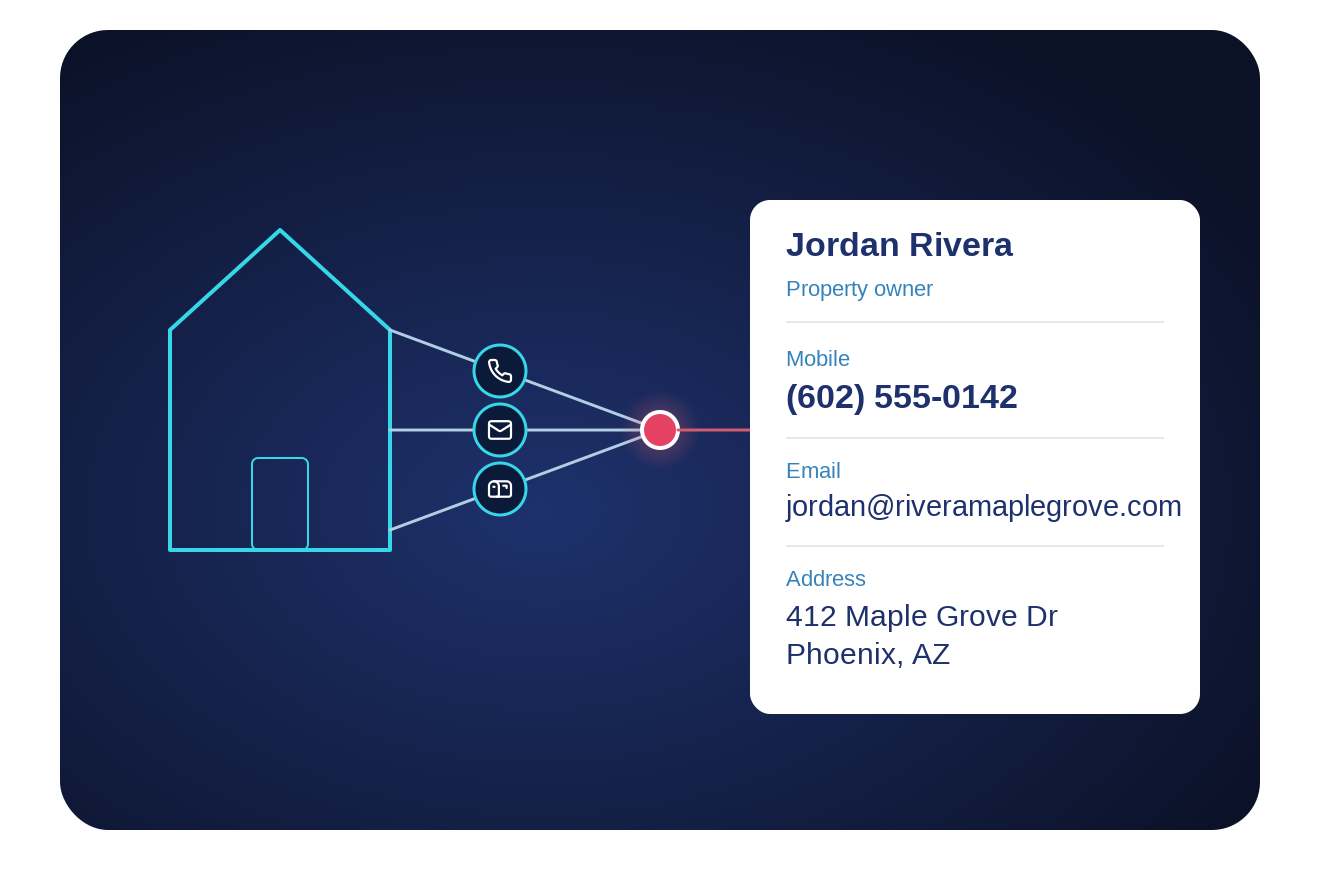
Mortgage lenders reach the owner of each home by phone, email or mail.
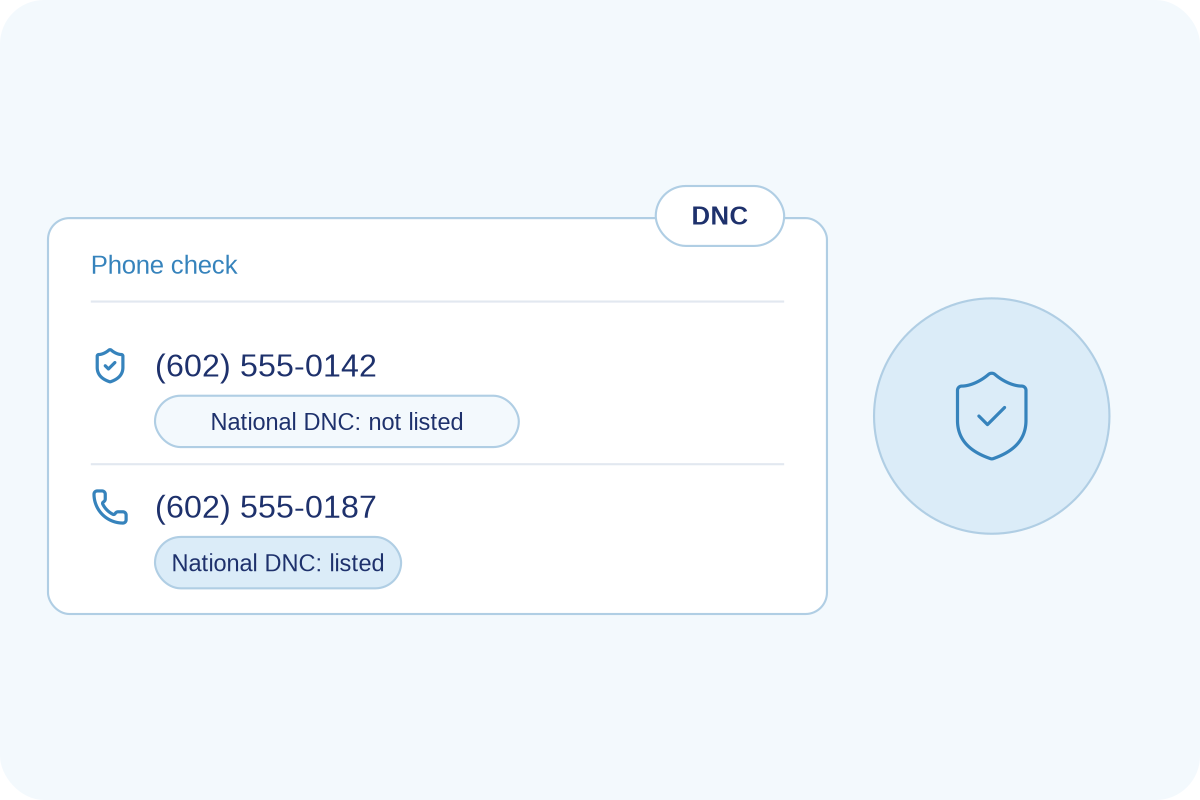
Check each owner phone number against the National Do Not Call list.
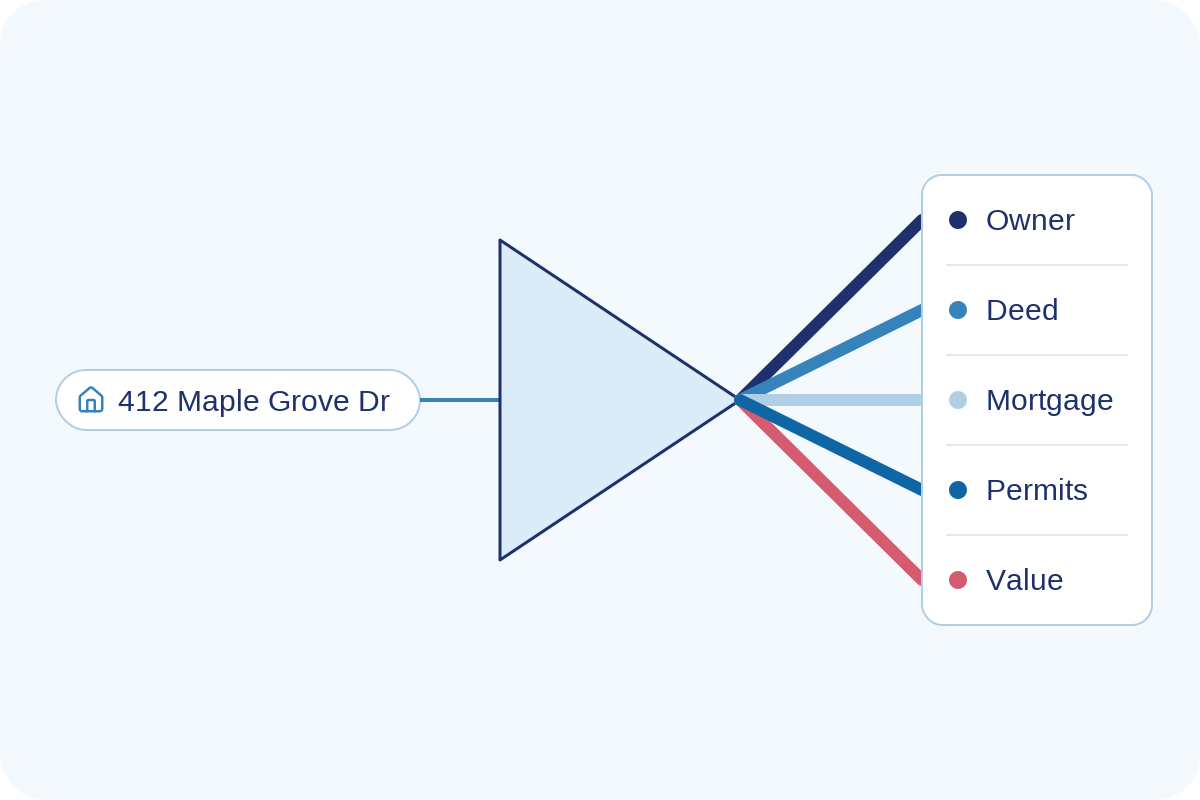
Enter one address to see the owner, deed, mortgage, permits and value.
Flexible Delivery Options
Pick the way your team works. Start with one and add the others when you need them.
- An API your developers can call
- Property Search and Lookup return every dataset you subscribe to in one call
- Look up one property or send a list
- Developer docs and no-cost sandbox tokens
- Address autocomplete and geocoding
- Async delivery to your webhook for large batches
- Choose the datasets and markets you need
- CSV, JSON and Parquet formats
- Files sent to a secure folder, Amazon S3 or Google Drive
- Direct delivery to Snowflake or Databricks
- Weekly, monthly, quarterly or annual deliveries
- Watch your list of properties for changes
- The updated record when the data you chose changes
- Alerts sent into your app or CRM
- Saved searches that notify your system when matching data changes
Frequently Asked Questions
Answers to common questions about BatchData for banks and credit unions.
Ready to Watch Your Loans?
Tell us which loans and markets you hold. We show you the data and a plan that fits.