A property can appraise well and still be a weak loan. If the roof is near failure, the HVAC is old, or life-safety issues show up in an inspection, collateral risk changes fast.
Here’s the short version: property condition scores give me one standard way to rate a building’s physical state for underwriting. They help me separate physical risk from value and borrower credit risk, so I can use the score for loan eligibility, pricing, repair escrows, reserves, and post-close tracking.
If I had to boil this article down, it comes to 4 points:
- What the score measures: the building’s physical condition, not market value and not borrower strength
- What feeds the score: inspections, appraisals, PCAs, repair estimates, permits, and photos
- How lenders use it: eligibility, loan pricing, reserves, repair escrows, and exception review
- Why it matters at scale: it gives a standard input for portfolio segmentation and asset watchlists
A few facts make the point clear:
- Many lenders use 1–5, 1–10, or letter-grade condition scales
- In some systems, a higher number means better condition; in others, it means worse condition
- Major systems like roof, structure, and HVAC often carry the most weight
- Life-safety and structural defects usually have the biggest effect on the final rating
The main idea is simple: a condition score turns messy inspection notes into a number or grade I can use in an underwriting file. That makes loan decisions easier to document and easier to compare across properties.
Understanding UAD Quality and Condition Ratings (UAD 3.6)
What Property Condition Scores Measure and How Rating Scales Work
A property condition score is a standardized rating of a property's physical condition. It looks ONLY at the building’s physical state. It does not measure market value or the borrower’s financial profile. In underwriting, the score needs to be consistent enough to support pricing, reserve decisions, and exception handling.
What Goes Into a Condition Score
The score is based on visible physical factors like deferred maintenance, roof condition, HVAC condition, and permit history. Some models also use property type, class, and year built for context. So, a property with a new roof and no deferred maintenance won’t score the same as one with aging systems and open repair issues.
Verified permits can help confirm that major repairs or additions were officially recorded, which can affect the score. Those inputs shape the scoring model.
Common U.S. Condition Score Formats
The scale matters just as much as the score itself because underwriting rules depend on how the numbers work. In the U.S., lenders use several formats, such as:
- 1–5 scales
- 1–10 scales
- Letter or grade-based scales
Some systems treat higher numbers as better condition. Others do the opposite and use higher numbers for worse condition. That’s why the score definition and loan file need to state the direction clearly.
What Condition Scores Do Not Measure
Condition scores do not measure market value, appreciation, or borrower strength. That’s a different job.
Valuation models focus on things like comparable sales, size, layout, age, location, and recent transactions to estimate value.
Next, the article explains how lenders turn inspection data and property records into the score.
Where the Score Comes From: Input Data and Scoring Methods
Primary Data Sources Lenders Use
Condition scores are only as good as the data behind them. Lenders usually pull from several sources, including formal appraisals, property condition assessments (PCAs), field inspections, repair estimates, permit records, and property images. Each one helps fill in a different part of the picture.
Permit data and remodeling history matter because they create a clear paper trail for recent upgrades or deferred maintenance. That kind of documentation helps lenders check what changed, when it changed, and whether the work was recorded properly. Structured records also make it easier to keep inputs consistent from one property to the next. And that's a big deal, because automated scoring works best when the inputs are structured and repeatable.
Still, raw data alone isn't enough. The model has to turn those inputs into a repeatable underwriting signal.
How Scoring Models Turn Observations Into a Rating
Scoring methods take those inputs and convert them into a rating underwriters can use. In most models, the property is broken into major systems like the roof, HVAC, and structure. Each system gets a weight based on its impact. Deficiencies are logged, severity is graded, and the results roll up into an overall score or rating band. Life-safety issues and structural defects usually carry the most weight.
This is where explainability matters. If an underwriter asks why a property scored poorly, the answer can't be vague. It needs to point back to specific inputs and findings, not some black-box model.
How BatchData Can Support Condition Data Workflows
For lenders building these workflows, one of the toughest parts is keeping source data structured and consistent. BatchData can support condition scoring workflows with property records, permit data, APIs, and bulk delivery. That helps teams feed scoring models with cleaner, more uniform inputs across markets and property types.
When the inputs stay consistent, the scoring process is more stable too. That supports auditability, consistency, and repeatable loan decisions.
How Lenders Use Condition Scores in Underwriting
Property Condition Scores: The Complete Underwriting Stack Explained
Eligibility, Pricing, Reserves, and Repair Escrows
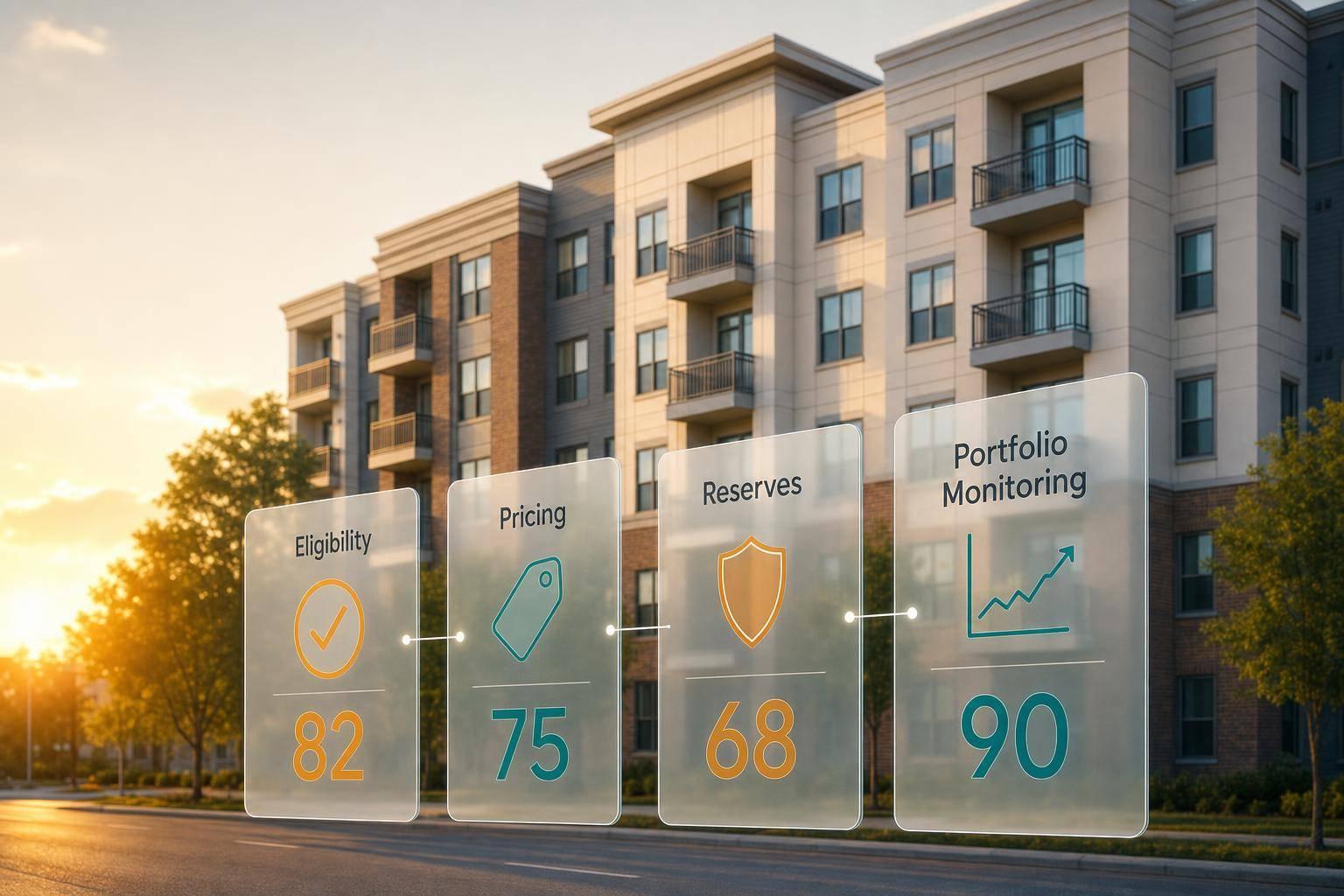
Once the score is in the file, underwriters use it to turn a property’s physical condition into a loan decision. That score can affect eligibility, pricing, reserve needs, repair escrows, and pre-close repair conditions. In plain terms, it helps the lender decide whether the collateral needs extra protection before funding.
How Condition Scoring Fits Beside Valuation and Borrower Review
Condition scoring works best when it sits next to valuation and borrower review, not buried inside either one. Each one answers a different underwriting question, and each points to a different type of risk.
- Valuation looks at what the asset is worth.
- Condition looks at the asset’s physical state.
- Borrower review looks at the borrower’s ability and profile.
That distinction matters. Borrower strength does not offset collateral defects. A strong sponsor can’t fix a roof issue on paper. Underwriters also need condition scoring to be clear enough that they can explain the physical collateral risk behind the number without dancing around it.
Portfolio Monitoring and Risk Modeling
Condition scores still matter after closing. At the portfolio level, teams use them to segment assets, spot deterioration, and set reserves through the same collateral lens used at closing. The same score can also support post-close surveillance and portfolio-level risk tracking.
Conclusion: Using Condition Scores as Part of a Complete Underwriting Stack
A condition score only works when it’s part of a clear review process. By itself, it shows the physical state of a property. It should sit next to valuation and borrower review, not take their place. When you pair it with valuation, market context, and borrower review, it can help shape eligibility, pricing, reserves, and repair escrows.
You can see that pretty clearly in a simple underwriting stack.
The table below shows the minimum inputs lenders should keep separate during review.
| Stack Layer | What It Answers | Key Inputs |
|---|---|---|
| Condition Score | What is the property's physical state? | Physical attributes, building permits |
| Valuation | What is the property worth? | AVM estimates, comparable sales, price per sq. ft. |
| Borrower Review | What is the credit and sponsor risk? | Borrower financials, credit history, sponsor profile |
Used this way, condition scores remain explainable and defensible. Just as important, they stay in their lane and measure the risk they were built to measure.
FAQs
What is a good condition score?
A good condition score is a relative measure of how well a property has been maintained compared with similar homes in its local market.
There’s no universal standard. A strong score means the property meets or goes beyond the quality, age, and upkeep standards people would expect in that neighborhood. That gives lenders a clearer sense of whether the collateral lines up with the valuation and overall risk profile.
Can a low score kill a loan?
Yes. A low property condition score can hurt a loan application because lenders use it to judge the home's value and the risk tied to the collateral.
If the score shows the property may be worth less than expected, or that it doesn't meet the lender's standards, the loan may not move forward.
Who sets the scoring scale?
The customer - not the vendor - sets the scoring scale. That means users define their own rules for property analysis, keep control over the logic behind the results, and can explain that logic clearly to clients, partners, or investment committees.
For lenders, this makes it easier to line up the scoring scale with underwriting requirements and business goals.