A delinquent tax list date is not an auction date. Before I contact an owner or bid, I check 4 facts with the responsible office: the parcel’s identity, the deadline that applies, the total balance, and its current status.
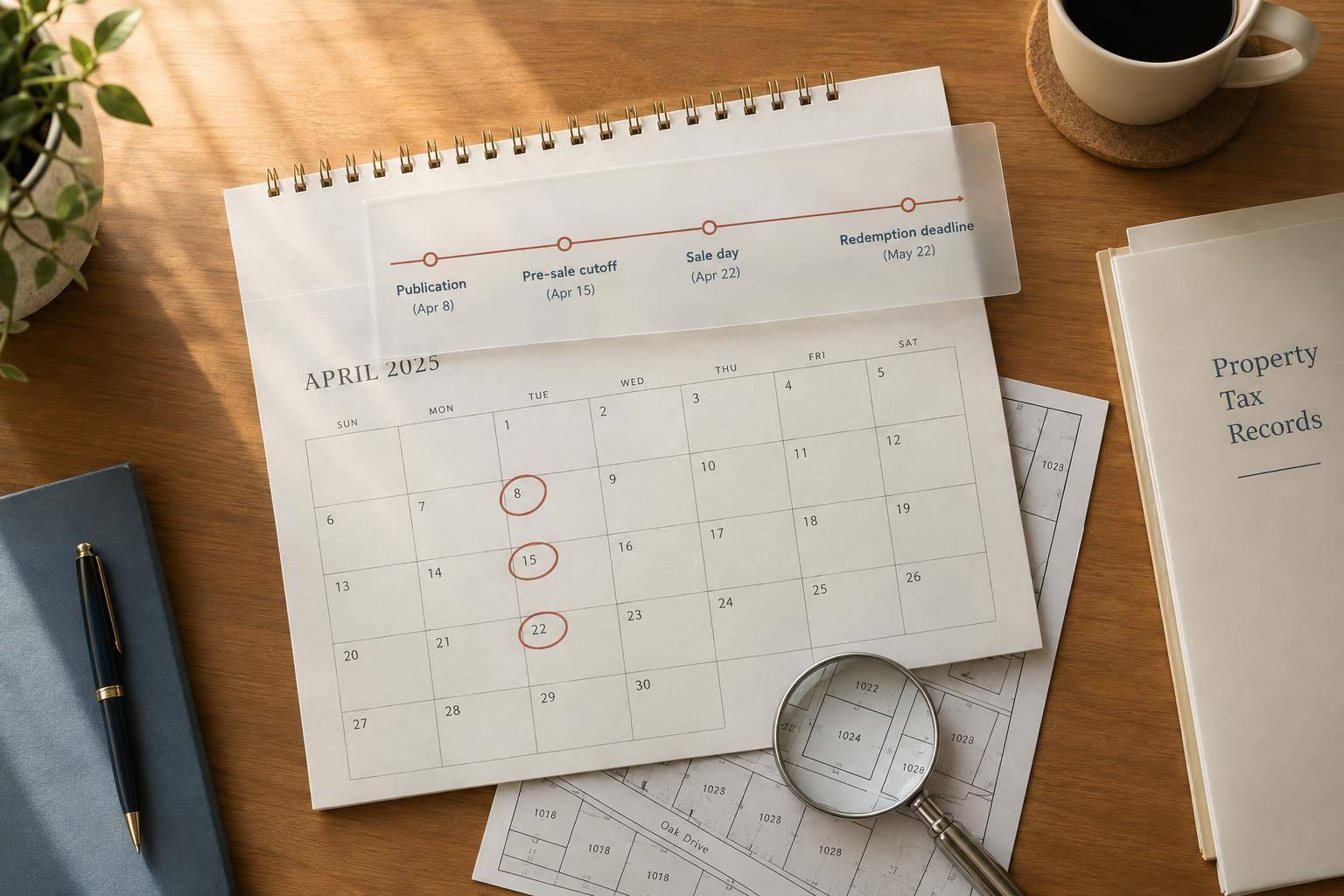
I keep these dates separate:
Quick Comparison
| Date | What it tells me | What I check |
|---|---|---|
| Publication date | When unpaid accounts were listed | Whether the parcel is still unpaid and listed for sale |
| Pre-sale payment cutoff | When payment must be completed to stop the sale | Full payoff, accepted payment method, and receipt or posting deadline |
| Scheduled sale date | When the auction is planned | Latest notice, auction terms, and any withdrawal or postponement |
| Redemption deadline | When an eligible party must redeem after a sale, if allowed | Eligibility, required amount, and the legally effective deadline |
My rule: treat the list as a starting point, not live auction inventory. I match parcel records, save sources and check times, and recheck before outreach or bidding. <u>A download date does not prove the information is current.</u>
If records conflict - or a parcel is paid, removed, canceled, redeemed, postponed, or sold - I pause outreach. Data tools can help me organize records, but I confirm balances, deadlines, and sale status with the responsible authority.
Delinquent Tax List Dates vs. Tax Sale Deadlines
How Does Delinquent Tax Sale Work?
Delinquent Tax List Dates vs. Property Tax Sale Dates
Investors often mix up these dates. Each controls a different part of the tax-sale process.
| Date type | Legal function | Issuing authority | Investor action | Changes possible after publication |
|---|---|---|---|---|
| Publication date | May satisfy notice requirements; does not confirm current availability | County treasurer, tax collector, or clerk; published through the required notice outlet | Save the notice and check current parcel status | Payment, removal, amount changes, or revised sale eligibility |
| Pre-sale payment cutoff | Deadline for payment that can stop the sale | County collector or treasurer under local rules | Confirm the exact deadline, payment method, and clearing requirements | A listed parcel may be removed after payment |
| Scheduled sale date | Auction date for the tax interest or parcel | County treasurer, collector, sheriff, or other statutory auction authority | Check the final sale list and auction terms | Postponement, cancellation, or parcel withdrawal |
| Redemption deadline | Last date to redeem after sale, where allowed | State law and the responsible county office | Confirm applicable rights, charges, and procedures | Redemption may end or limit the purchaser’s interest |
Publication Dates Show When Delinquent Accounts Were Listed
Depending on state or local law, notices may appear in a legal newspaper, on a county website, or in an official tax-sale portal. A valid notice does not mean a parcel is still available.
Weld County, Colorado, states that its potential-sale list is available approximately three weeks before the sale and is updated daily through the auction.
A published list can therefore meet legal requirements while already being out of date.
Sale Dates Show When Auctions Are Scheduled
The sale date tells you when an auction is scheduled - not whether it will happen as planned. Payment, withdrawal, a stay, or rescheduling can change whether or when a parcel goes to auction.
Use a recurring annual schedule to plan, but confirm the date with a current official notice. The sale notice - not the publication list - controls bidding timing.
Keep Each Date Separate
Track tax year, publication date, source update date, download date, and scheduled sale date in separate fields. Mixing them up can send you to parcels that are already paid, withdrawn, or no longer eligible.
Downloading a file does not make its contents current. Store the original notice separately from later parcel-status checks.
Pre-Sale Payment Deadlines vs. Redemption Deadlines
After the list date, check the payment cutoff and any post-sale redemption rights. A parcel may still appear on a published list even if it’s later removed before the auction.
Pre-sale payment can stop the sale. Redemption is a separate post-sale process. Missing the pre-sale deadline does not create redemption rights. Check the parcel’s current status first, then the payment cutoff, and then any redemption rights.
| Milestone | Required action | Governing authority |
|---|---|---|
| Pre-sale payment deadline | Confirm the full payoff, accepted payment method, and receipt or posting cutoff; get written confirmation of removal | County procedures and state law |
| Sale date | Confirm current parcel status, auction requirements, and any post-sale rights | Statutory auction authority |
| Redemption deadline | Confirm eligibility and pay the full redemption amount to the correct office before the legally effective deadline | State law; responsible clerk, collector, or court |
Paying Before the Sale May Remove a Parcel
Request the full payoff amount, including taxes, penalties, interest, fees, and statutory costs. A partial payment can leave the parcel eligible for sale.
Confirm the exact cutoff date and time, which payment methods are accepted, and whether funds must be received or posted by that cutoff. Starting a payment does not prove the sale has stopped. Get a receipt or written confirmation of removal, and don’t treat a pending transaction as a completed payoff.
If the parcel isn’t removed, check the redemption rules next.
Redemption After the Sale Depends on Local Rules
If the sale goes forward, the next deadline is redemption - if the jurisdiction allows it. Under state and local law, eligible parties may include the taxpayer, owner, successor, grantee, or certain creditors. The redemption period may begin at the sale, certificate issuance, or another statutory event.
Before relying on a post-sale right, ask the designated office to confirm eligibility, the event that starts the redemption period, the final deadline, and the full redemption amount. That amount may include required interest, penalties, costs, subsequent taxes, or assessments. The auction date alone does not establish redemption rights or deadlines.
Check List Dates and Status Before Outreach or Bidding
After separating publication dates, sale dates, and payment deadlines, verify each parcel’s current status before real estate investing outreach or bidding. A published list is a snapshot - not confirmed auction inventory. Treat each entry as a lead to check, not proof that the parcel is available.
Match Parcels to Official Records
Match the parcel number across the published list, official tax account, and sale notice. Use the legal description to resolve differences; names and addresses alone aren’t enough.
Your verification checklist should cover the parcel number, legal description, delinquent years, publication and update dates, sale date and time, location or platform, payment cutoff, current amount due, current status, and responsible office.
Log Verification Times and Recheck Status
Keep publication, update, download, and verification timestamps separate. Record verification dates in MM/DD/YYYY format, including local time and time zone when available. Save the source name, page or document title, and any confirmation number or office communication.
Before outreach, final review, and bidding, check charges, posted payments, schedule changes, redemption status, and any required sale confirmation.
Stop outreach for parcels marked paid, removed, canceled, redeemed, postponed, or sold. Remove sold parcels from pre-sale review, too. These checks help prevent outdated lists from leading to misdirected outreach, inaccurate return estimates, and bids on unavailable parcels.
If records conflict, pause action. Ask the responsible office which balance, date, and status controls.
Manage Parcel Data With BatchData
For large parcel lists, BatchData can help organize these fields through property-data enrichment, address verification, APIs, and bulk delivery. Keep official status fields, source references, and verification timestamps separate.
Enrichment does not establish legal deadlines, current balances, redemption rights, or auction availability. Verify those facts with the responsible authority.
Conclusion: Confirm Deadlines and Current Parcel Status
Publication dates tell you when notice was given. Sale dates tell you when the auction takes place. Payment cutoffs and redemption deadlines govern different actions.
A published list may already be out of date when you read it.
Before spending money on outreach or bidding, confirm four facts with the responsible office: the parcel’s identity, the deadline that applies, the current total balance, and the latest official status. If any detail is unclear, pause before acting.
FAQs
What if official tax sale records conflict?
Official tax sale records can conflict because county systems update on different schedules. Parcel IDs, ownership details, and tax amounts may differ across records.
Start by standardizing assessor’s parcel numbers (APNs), addresses, and FIPS codes to confirm that the records refer to the same parcel. Then compare them, giving priority to the most recently certified or official records. Flag any unresolved differences for human review, and document each source, timestamp, and validation step.
Does a postponed auction extend the payment deadline?
No, postponing an auction typically doesn’t extend the payment deadline. That deadline generally follows legal requirements for resolving overdue taxes. The county sets the auction date separately.
Relying on the auction date could cause you to miss the payment deadline, since collection proceedings may move forward before the sale. Confirm the current deadline and the status of your overdue taxes directly with the local taxing authority.
How can I confirm a payment stopped the sale?
Confirm directly with the local tax collector or the jurisdiction’s authorized office that the payment was processed and the property tax sale was canceled. Public lists can lag behind updates, so a list’s publication date alone doesn’t confirm whether the sale is still scheduled.
Check the latest official records for payment timestamps or updated status flags. If your list conflicts with current tax authority records, use the official records.