



Special assessment districts aren't a minor property-tax footnote. They're beneficiary-paid infrastructure financing arrangements that can attach repayment obligations to individual parcels, affect escrowed PITI, complicate resale, and change how a lender evaluates lien and payment risk.
The model has deep roots. The Federal Highway Administration's special-assessment primer traces special assessments to the 1800s, while municipal finance reporting places outstanding assessment-district debt at about $45 billion in 2024 and annual issuance at roughly $3 billion by 2010 after the financial crisis. That scale makes parcel-level visibility an underwriting requirement, not a niche research task.
- Legal structure: A district defines the beneficiary area, project, assessment roll, and repayment terms.
- Cost allocation: Charges may be based on frontage, parcel count, total assessed value, or land value.
- Credit impact: The annual installment can increase escrowed housing costs and compress borrowing capacity.
- Data requirement: District boundaries, balances, payment status, and payoff dates belong in the property file.
The most reliable way to understand special assessment districts is to start with the lien attached to the parcel, then follow that obligation through formation, payment, underwriting, servicing, and resale.
What a Special Assessment District Actually Is
A special assessment district is a legally defined area where properties receiving a direct, identifiable benefit from a public improvement are charged for that benefit. The charge is limited by the amount of benefit conferred, rather than automatically covering the entire project cost, as explained by the FHWA overview of special assessments.
Think of the arrangement as a beneficiary-paid municipal infrastructure loan. A city or other public sponsor finances roads, sidewalks, drainage, sewer connections, street lighting, or related improvements. The repayment obligation is then allocated to the parcels inside the benefit area, often through a tax-bill assessment or a lien tied to the property.
The district is the legal vehicle. The special assessment is the parcel-level charge. Underwriting needs both.
The four working pieces
- District boundary: The geographic area must identify which parcels receive the benefit. A property next to a district may not be subject to the assessment, so adjacency isn't enough.
- Project scope: The governing documents specify the improvements being financed. A street-lighting project creates a different obligation from a sewer or drainage project.
- Assessment roll: This parcel-by-parcel schedule assigns the charge and records how the sponsor calculated relative benefit.
- Repayment schedule: The schedule establishes installments, interest, maturity, and any payoff provisions.
That structure differs from a standard property tax, which supports broader public services through the general tax base. It also differs from Mello-Roos and public improvement districts, whose legal authority, revenue source, boundaries, and lien treatment depend on state and local law. Don't classify every additional charge on a tax bill as the same instrument. The documents control.
The market is large enough to matter in routine credit review. Municipal finance reporting places assessment bond issuance at roughly $3 billion annually by 2010 after the financial crisis and stalled development, with about $45 billion in outstanding debt in 2024 (municipal special tax district financing data). A reader focused on the impact of special assessments on property value should start with the same question an underwriter asks: what obligation follows this parcel?
For a broader explanation of how property assessments differ from market value and tax calculations, see this guide to property tax assessment. The lien-first framing turns a vague legal concept into concrete PITI line items.
The History and Scale of SAD Financing in the U.S.
Special assessments became an established American infrastructure tool during the nineteenth century. The Federal Highway Administration's historical account notes that special assessments date back to the 1800s and that Congress enacted laws in 1894 requiring adjacent Washington, D.C., property owners to pay 50% of the cost of first-time paving for streets, gutters, curbs, and sidewalks through a special assessment.
That law illustrates the core principle. Owners abutting an improvement were treated as identifiable beneficiaries, so the city didn't need to spread the entire cost across every taxpayer. The model later supported street, sewer, water-connectivity, drainage, and lighting projects as American municipalities expanded.
Assessment finance then moved with development cycles. During the post-war suburban expansion, local governments used district structures to help finance infrastructure serving new neighborhoods and development areas. The approach remained durable because it connected repayment to the parcels receiving the improvement, but bond performance still depended on the value and payment capacity of those parcels.
Underwriting lesson: A legally tested structure can still carry cyclical collateral risk. Longevity isn't the same as stability.
Assessment bond issuance averaged roughly $12 billion to $15 billion annually from 1995 through 2005, according to municipal finance reporting that summarizes S&P and MSRB data. Issuance later fell to approximately $3 billion annually by 2010, after the financial crisis and stalled development activity, while outstanding debt reached about $45 billion in 2024 (assessment bond market history and scale).
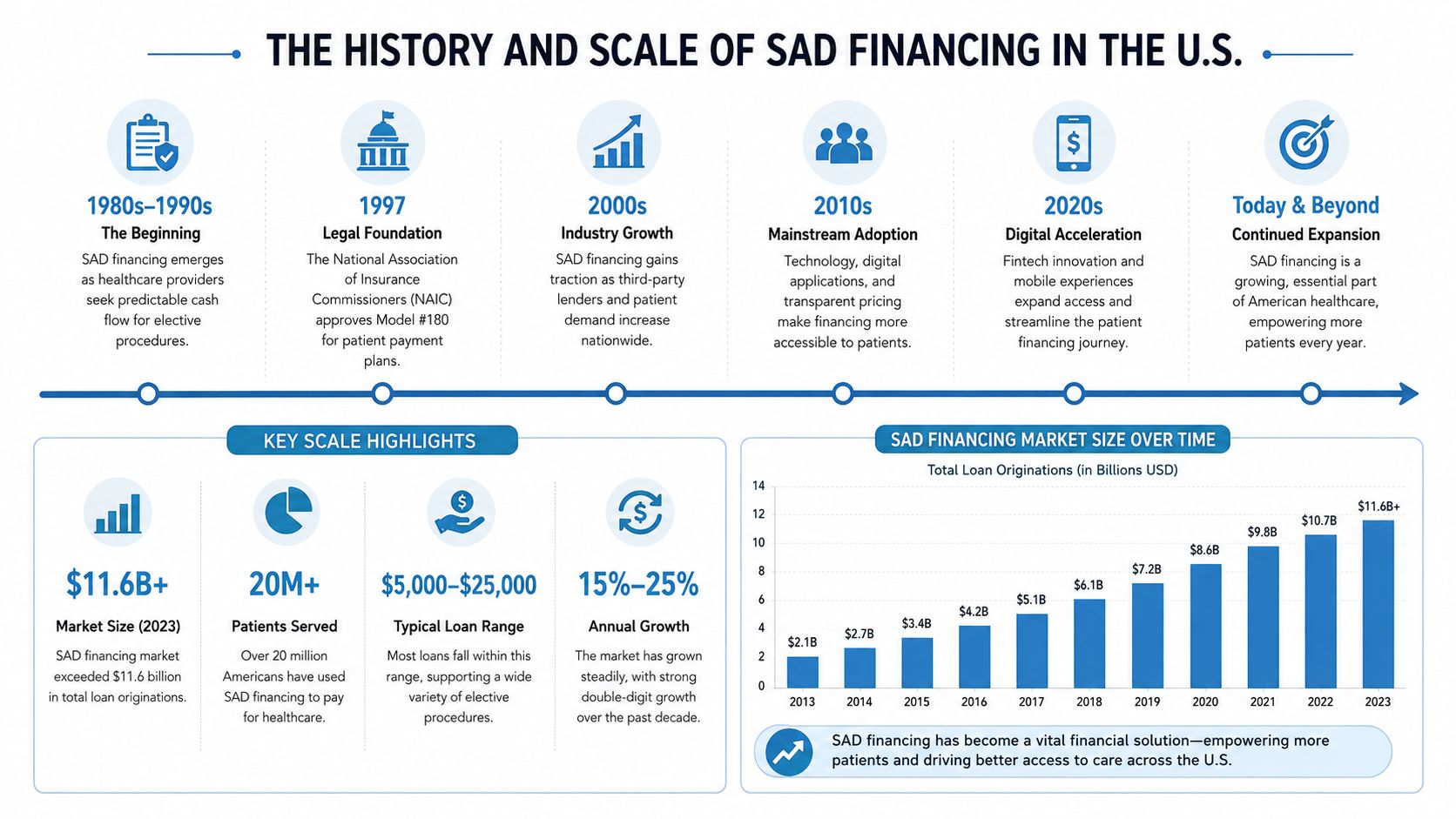
The underwriting implication is direct. A district can survive for generations as a legal mechanism while individual projects experience payment stress when development slows, land values weaken, or owners fall behind. A parcel dataset therefore shouldn't treat the district as a static label captured only at origination. It should track the assessment balance, payment status, boundary, and maturity throughout the loan or investment life.
How Special Assessments Are Calculated and Allocated
The assessment formula determines which neighboring parcels carry more of the repayment burden. Federal guidance identifies four common approaches, and each creates a different underwriting profile.
| Method | Basis | Cost Shift | Underwriting Concern |
|---|---|---|---|
| Front footage | Linear frontage along the improvement | Street-front parcels pay according to exposure, while interior parcels may carry less or no direct frontage burden | Narrow and deep lots can have very different obligations, so parcel geometry matters |
| Per parcel | A uniform charge for each property served | Cost is flattened across participating owners regardless of size or value | A small parcel and a high-value parcel may face similar installments, affecting affordability differently |
| Percentage of total property value | A surcharge tied to assessed property value | Higher-value parcels carry more of the charge | Payment levels can move with assessment changes and may affect resale underwriting |
| Land-value surcharge | A surcharge based on land value only | Developable or higher-value land carries more of the obligation than heavily improved low-land-value parcels | Analysts need a reliable land-value field and must separate land from improvement value |
The FHWA special-assessment FAQ lists these allocation methods, including front footage, the number of properties served, total property value, and land value. The legal formula isn't a technical detail to skip. It tells you whether the obligation follows physical proximity, parcel count, assessed value, or developable land.
What the formula changes
Front-foot charges can make two adjacent properties look similar in a tax search while carrying different obligations because their street frontage differs. A long parcel with limited frontage may be treated differently from a shallow parcel with a broad street edge.
Uniform per-parcel charges simplify administration but can produce uneven affordability. The same nominal assessment may be manageable for one owner and material for another, depending on income, loan balance, and property use.
Value-based methods connect the charge to assessed value, which can make the obligation more sensitive to reassessment and property characteristics. They also require the analyst to confirm which value the governing documents use.
Land-value methods are especially relevant in development areas. The charge may reflect the land's development potential rather than the existing building, so an improved property and a vacant parcel shouldn't be assumed to have equivalent exposure.
At resale, foreclosure, or refinance, retrieve the actual assessment roll and apportionment rule. A county tax bill can show the amount due, but it may not explain why the parcel carries that amount or how the balance changes after a payoff.
How Districts Are Created, Voted On, and Bounded
A district is created through a public and legal process that identifies the project, beneficiary parcels, assessment formula, and approval mechanism. The exact procedure varies by state, so a lender underwriting across jurisdictions can't rely on one national template.
The formation sequence
- A public sponsor identifies the need. The municipality or authorized entity defines the infrastructure problem and the improvements intended to solve it.
- Technical documents estimate cost and benefit. An engineer's report or equivalent analysis describes project costs, benefit zones, and the proposed allocation.
- The boundary is mapped parcel by parcel. The map determines which properties are inside the district. This is why a parcel-level boundary check is more reliable than a street address or subdivision name.
- The proposed assessment roll is published. The roll assigns each parcel's proposed charge and gives owners an opportunity to review or challenge it.
- Owners petition, vote, or protest under state law. Approval rules may use weighted ownership, head count, majority protest, rate caps, or other statutory controls.
Missouri provides a useful example of a dual threshold. Under Missouri's special-assessment district statute, a district may levy special assessments after a petition is signed by owners representing more than 50% of assessed value and more than 50% per capita of the owners.
That rule requires both a wealth-weighted majority and a head-count majority. A single large landowner can't satisfy the entire approval test alone, and a large number of small owners can't necessarily approve a project without sufficient assessed value.
The rulebook changes across borders. California commonly uses a Proposition 218 majority-protest framework, while Florida may apply notice and cap-rate requirements involving affected owners. Those differences change how predictable the final assessment is, how quickly a rate can change, and which documents a lender must obtain.
Boundary rule: A parcel that touches a district isn't automatically a parcel inside it. Verify the geometry against the recorded map.
The same principle applies to other real-property burdens. Analysts reviewing public-record easements and rights-of-way should use the recorded parcel and document data, not an informal neighborhood description.
What SAD Exposure Means for Buyers, Lenders, and Investors
Special assessment exposure becomes financially visible at different points in the property lifecycle. The buyer sees a recurring or outstanding charge, the lender recalculates repayment capacity, and the investor evaluates income, resale, and disclosure risk.
A buyer may first encounter the assessment during title, tax, or municipal due diligence. If the charge wasn't included in the initial carrying-cost estimate, the buyer may request a closing credit, renegotiate price, or discover that a delinquent balance remains attached to the property after closing. The practical question isn't whether an assessment exists. It's whether the seller is current, whether the amount is escrowed, and whether a payoff or transfer event changes the obligation.
For a lender, the annual installment belongs in the housing-expense calculation. If the mortgage escrow account didn't collect enough, the servicer may need to recalculate the payment and address the shortage. A senior lien payoff can also reduce the borrower's available equity and compress the effective LTV position. During refinance, an unpaid balance can create closing friction, payoff requirements, or title risk.
Investors face a different timing problem. A property can appear stable in an operating model while an annual levy, outstanding balance, or near-term maturity remains outside the pro forma. If a tenant reimburses taxes but the lease excludes a particular assessment, the owner carries the cost. If the obligation is disclosed late in a sale, the buyer may discount the price or delay closing.
| Stakeholder | Moment of Impact | SAD Risk | Mitigation |
|---|---|---|---|
| Buyer | Contract review and closing | Unbudgeted installment, delinquency, or payoff demand changes cash required to close | Verify the assessment roll, current status, escrow treatment, and seller payoff responsibility |
| Lender | Origination, servicing, or refinance | PITI rises, escrow falls short, or lien payoff changes effective leverage | Add the annual charge to housing expense and confirm lien priority and payoff terms |
| Investor | Acquisition, operations, or resale | Net operating income is overstated or resale disclosure creates price friction | Match the assessment to lease recoveries, hold-period assumptions, and exit diligence |
County tax data can help locate recurring charges, but the analyst still needs the governing district documents. A practical starting point is a county property tax rate reference, followed by parcel-specific confirmation of the assessment amount and status.
Servicing trigger: Treat a delinquent assessment as an active credit event, not an administrative footnote.
The Data Attributes That Make SAD Exposure Visible
An underwriter can't evaluate a special assessment from a district name alone. The minimum viable parcel record needs enough fields to identify the obligation, quantify the payment, confirm its legal reach, and determine whether it remains active.
| Attribute | Definition | Underwriting or Monitoring Use |
|---|---|---|
| District identifier and name | Unique district key and recorded district title | Groups properties for concentration analysis and document retrieval |
| Formation date | Date the district was legally established | Establishes the age of the obligation and supports document review |
| Original assessment amount | Initial parcel-level charge | Shows the starting obligation and supports reconciliation |
| Current outstanding balance | Remaining unpaid principal or assessment balance | Feeds payoff analysis, equity review, and refinance diligence |
| Annual installment | Amount scheduled for the current period | Enters escrow and PITI calculations |
| Interest rate | Rate applied to the financed assessment balance | Helps estimate repayment cost and remaining obligation |
| Payoff schedule and maturity date | Installment timing and final due date | Determines whether the lien survives the expected hold period |
| Payment status | Current, delinquent, or prepaid condition | Triggers servicing alerts and closing escalation |
| Apportionment method | Rule used to allocate project cost | Explains payment differences between neighboring parcels |
| Boundary geometry | Spatial shape of the district and parcel relationship | Confirms whether the property is inside, outside, or merely adjacent |
Why each field changes a decision
The current balance and annual installment are the immediate financial inputs. The balance informs payoff and equity analysis, while the installment affects the borrower's recurring housing expense and escrow requirement.
The maturity date matters when the expected ownership or loan period extends beyond the assessment schedule. A property held through maturity may have a different risk profile from one sold before the final installment, but the analyst shouldn't assume the obligation disappears without reviewing the payoff terms.
Payment status drives operational action. A current assessment may be routine. A delinquent assessment can require title review, borrower contact, payoff confirmation, or senior-credit escalation.
Boundary geometry resolves a common data error. A subdivision or street-level match can produce false positives when a parcel sits near, but not inside, the district. The minimum schema should therefore combine legal identifiers with spatial verification.
This isn't a complete data model. It's the minimum structure needed to make SAD exposure legible before the analyst adds ownership history, tax records, liens, valuation, lease terms, and transaction-specific documents.
How BatchData Surfaces SAD Signals for Underwriting and Monitoring
A parcel-level workflow should return the district identifier, outstanding balance, annual installment, and payoff date alongside the property's tax, assessment, lien, and ownership records. BatchData positions its API as an integration point for those real-estate fields, allowing an underwriter or asset manager to query the property record rather than manually stitching together separate county searches.
The workflow starts with a property lookup. The analyst resolves the parcel, checks whether the boundary geometry places it inside the district, and retrieves the active assessment attributes. The annual installment then moves into the PITI worksheet, the outstanding balance moves into payoff and equity review, and the maturity date moves into hold-period monitoring.
Three operational queries
Pre-funding PITI recalculation identifies active installments before closing. The lender can compare the proposed housing expense with the borrower's qualifying calculation, then investigate any escrow mismatch before funds are released.
Portfolio concentration analysis groups properties by district identifier, payment status, maturity window, or assessment balance. That view can reveal a shared municipal or development exposure that isn't obvious when each loan is reviewed independently.
Marketing-list filtering isolates owners with upcoming assessments, active balances, or delinquent status. The filter should be used for relevant outreach and due diligence, not as a substitute for verifying the recorded obligation.
| Data Attribute | Source | Underwriting or Monitoring Use |
|---|---|---|
| District ID | Parcel and district record | Groups exposure by legal district and supports document lookup |
| Outstanding balance | Assessment or lien record | Flags payoff, equity, and refinance exposure |
| Annual installment | Tax and assessment record | Updates PITI, escrow, and operating-cost calculations |
| Payoff date | District repayment schedule | Creates maturity and hold-period alerts |
| Payment status | Current assessment record | Escalates delinquent or unresolved obligations |
| Boundary geometry | Parcel and district GIS relationship | Prevents false positives from nearby parcels |
The advantage isn't merely fewer searches. A unified record creates consistent field definitions, repeatable rules, and an audit trail for why a property was flagged. That matters when servicing teams, credit committees, portfolio managers, and closing staff need to act on the same parcel facts.
Data principle: A special assessment should be queryable like a mortgage balance or tax amount. If the analyst must find it in a separate workflow every time, the process will eventually miss it.
Putting It Together and Where Parcel-Level SAD Data Goes Next
Use a simple decision framework, then require documentation for exceptions:
- Flag for manual PITI review: Any parcel with an active SAD balance above 2% of estimated property value should receive manual PITI and payoff review. This is a policy threshold, not a legal rule.
- Escalate to senior credit: Escalate when the district carries delinquent status or has a near-term balloon or other concentrated repayment event.
- Ignore only when justified: Sub-threshold balances on stabilized investment properties may be treated as immaterial when the payment is current, the lease treatment is clear, and no near-term maturity creates a cash requirement.
The important shift is operational. Parcel-level SAD data is moving from a specialist advantage toward a baseline expectation for lenders, investors, servicers, and property platforms. The next useful capabilities are real-time payoff confirmation at closing, automated refinance triggers when balances fall, and machine-readable district disclosures in listing feeds.
Treat special assessment exposure as routine, queryable infrastructure. The district boundary, balance, payment status, and maturity date should sit beside taxes, mortgages, liens, and ownership records, not in a closing email that nobody can search.
BatchData brings parcel, tax, assessment, lien, ownership, valuation, and contact data into a developer-friendly real estate workflow, helping teams surface special assessment exposure before it becomes a closing or servicing surprise. Visit BatchData to evaluate the data and APIs for underwriting, portfolio monitoring, due diligence, and property intelligence.