



New owners of older homes spend a median of $3,900 a year on upkeep, versus about $1,500 for owners who've already lived in those homes for at least 10 years, making the initial burden nearly 2.6 times higher for recent buyers, according to U.S. Census Bureau reporting on older-home costs.
That number changes the conversation. Buying old homes isn't mainly about charm, trim details, or a “good feeling” at the showing. It's an underwriting problem first, an inspection problem second, and only then a renovation project.
If you handle old houses like ordinary listings, you'll spend too much time touring bad inventory and too little time pricing hidden risk. A better process starts before the showing, using property records, ownership signals, permit history, liens, and condition clues to decide which houses deserve real attention.
- Start with data: Filter by age, geography, ownership pattern, and distress signals.
- Inspect in layers: General inspection alone isn't enough for aging systems and structure.
- Budget like an operator: Price repairs, hazardous materials, and contingency before you negotiate.
- Fix financing early: Older properties can create lender friction and insurance surprises.
- Verify legal limits: Historic designation can change your renovation plan entirely.
An Introduction to the Old Home Investment Playbook
New owners of older homes spend a median of $3,900 a year on upkeep, versus about $1,500 for owners who've already lived in those homes for at least 10 years, making the initial burden nearly 2.6 times higher for recent buyers, according to U.S. Census Bureau reporting on older-home costs.
That gap is the right starting point. Buying old homes is an underwriting exercise before it becomes a design project.
The buyers who get hurt are usually not the ones who miss a cracked pane or peeling paint. They are the ones who fail to price deferred maintenance, unpermitted work, insurance constraints, and title or ownership friction before they fall in love with the house. By the time those issues show up during escrow, negotiating power is weaker and the repair budget is already behind.
Old houses rarely come with one isolated problem. They come with stacked risk. An aging roof often sits on top of poor drainage. Old branch wiring often shows up in houses with partial plumbing updates and uneven permit history. Long ownership tenure can signal care, but it can also mean systems were stretched well past replacement cycles.
That is why the acquisition process has to start before the showing.
A practical old-home playbook uses modern property data to narrow the field early. Permit history can show whether major system updates were documented. Ownership records can reveal estate situations, absentee ownership, and long hold periods that deserve a closer look. Pre-foreclosure and lien signals can point to distress, which matters both for sourcing and for estimating how much maintenance may have been deferred. If you want a tighter process, use a real estate due diligence checklist for early property screening before you book tours.
What the playbook looks like in practice
A disciplined acquisition process usually follows five moves:
- Build a target list with age bands, neighborhood fit, ownership tenure, and likely distress or off-market signals.
- Screen for hidden risk through permit gaps, tax issues, lien activity, and other record-level warning signs.
- Order specialized inspections based on the house's likely failure points, not just a standard general inspection.
- Convert defects into a line-item budget that includes remediation, contingency, and carrying costs.
- Clear financing, insurance, and legal constraints before hard commitments or nonrefundable spend.
The goal is not certainty. Old houses do not offer that. The goal is better pricing, fewer wasted tours, and a cleaner decision on whether the property is worth pursuing at all.
How to Underwrite Risks Before You Visit a Property
A large share of houses in many older markets were built decades ago. That shifts the underwriting job. The biggest mistakes usually happen before the tour, when buyers treat an old house like a standard retail listing instead of a records problem.
Serious buyers screen old homes from a desk first. Public records, servicing data, and permit history can eliminate weak candidates before you spend a Saturday walking properties that were already telling you the truth on paper.
Build the target list with data, not listing copy
Start with a market-specific buy box. In one city, a 1955 house is normal inventory. In another, it is an edge case with different financing, insurance, and renovation risk. As noted earlier, housing age varies widely by region, so the age band has to fit the local market rather than a national rule of thumb.

Use a property data platform to narrow the field fast:
- Year built: Separate houses by era because 1920s plaster, 1950s electrical, and 1970s additions create different risk stacks.
- Ownership tenure: A 25-year hold can reflect careful stewardship or years of deferred capital work.
- Absentee ownership: Useful for off-market sourcing and for spotting rentals that may have had maintenance deferred.
- Mortgage and lien data: Debt pressure affects both seller flexibility and the odds that maintenance was postponed.
- Pre-foreclosure filings: Distress can create opportunity, but it also raises the probability that systems were run to failure.
- Permit history: Missing permits, long gaps, or scattered finish-only permits often deserve a second look.
For a repeatable first-pass screen, use this real estate due diligence checklist for early property screening before you book tours.
Read the paper trail like an underwriter
Single data points rarely settle the question. Patterns do.
A recent resale after a short hold period is not automatically a problem. Pair that with fresh cosmetics, sparse permit activity, and an old roof or mechanicals, and the risk profile changes. The trade-off is simple. A polished house can save time on finishes while leaving you exposed on the expensive systems that drive returns.
The same applies to permits. A file that shows a kitchen remodel but no electrical, plumbing, or HVAC work often means the visible layer changed while the core infrastructure stayed put. A clean permit file also has limits, because plenty of municipalities have inconsistent records and plenty of owners did work without permits. That is why I look for combinations that raise the probability of a bad surprise, not a single red flag in isolation.
| Signal | What it may mean | Why it matters |
|---|---|---|
| Long ownership with sparse permits | Deferred maintenance or undocumented work | Major systems may be near end of life |
| Recent transfer and quick resale | Cosmetic flip risk | New finishes may hide old mechanicals |
| Lien or distress activity | Financial pressure | Repairs may have been delayed |
| Permit history concentrated in aesthetics | Surface upgrades only | Electrical, plumbing, or structure may still be original |
One practical rule helps here. If the listing says "fully updated" but the record only supports paint, flooring, and cabinets, underwrite for old-house systems until proven otherwise.
Distress signals change both pricing and repair assumptions
Pre-foreclosure activity, tax delinquency, municipal liens, and contractor liens do more than identify motivated sellers. They also help estimate how hard the owner has been triaging cash. An owner under pressure may have skipped drain work, roof maintenance, knob-and-tube replacement, or foundation water management because those items are expensive and invisible in listing photos.
That changes your buy box. A distressed old home can be a strong deal if the margin covers the repair stack and the title path is clean. It is a bad deal if you are pricing it like a lightly dated retail property.
Drainage is one of the easiest examples. Older sewer lines, clay laterals, and root intrusion can turn a clean-looking property into a five-figure problem. Before you tour a house with age-related plumbing risk, understand why homebuyers need drain surveys and decide whether that cost belongs in your initial underwriting.
The goal is fewer tours, tighter offers, and better exits on the houses you do pursue. Old-home investing rewards buyers who rank properties by probable defect load and seller flexibility before emotions enter the process.
What Specialized Inspections Actually Uncover
Roughly 80 percent of U.S. homes were built before 2000, and a meaningful share of the old-home inventory investors target carries hidden system risk that a standard walkthrough will not price correctly. On older housing stock, specialized inspections are less about confirming obvious defects and more about converting uncertainty into line items before you finalize your number.
By the time you order inspections, the best investors already have a hypothesis. Permit gaps, ownership duration, lien activity, and deferred-maintenance signals from property data platforms help predict which specialists to send first. The inspection phase then tests that thesis. It should answer specific underwriting questions, not produce a generic PDF you skim the night before contingencies expire.
The inspection stack that actually changes pricing
Start with a general inspector for broad screening. Then add specialists based on the failure points old houses hide most often: structure, sewer, electrical, and wood-destroying organisms.
A structural engineer is not a luxury on a house with sloping floors, repeated door misalignment, masonry cracking, or signs of moisture at the foundation wall. General inspectors can flag movement. Engineers tell you whether you are looking at historic settlement, active movement, rot-related deflection, or a load-path problem that changes scope and cost.
Pest inspections matter for more than termites. On older homes, insect activity often overlaps with chronic moisture, failed grading, poor crawl-space ventilation, and damaged sill framing. That distinction affects both repair sequencing and who should bid the work.
Old Home Inspection Triage
| System | Risk Signal | Required Inspection | Typical Outcome |
|---|---|---|---|
| Foundation | Sloping floors, sticking doors, masonry cracks, moisture intrusion | Structural engineer | Separates cosmetic movement from active structural repair scope |
| Electrical | Mixed-era wiring, ungrounded receptacles, old panels, visible splices | Electrical specialist or licensed electrician | Identifies safety hazards, insurability issues, and likely rewire areas |
| Plumbing and sewer | Slow drains, cast iron age risk, yard settlement, chronic backups | Sewer scope plus licensed plumber | Confirms line condition, blockages, root intrusion, or replacement risk |
| Pest and concealed wood damage | Termite evidence, soft framing, elevated crawl-space moisture | Specialized pest inspection | Maps damaged areas and whether moisture correction comes first |
What general inspections leave unresolved
The phrase “further evaluation recommended” is doing a lot of work in old-house reports. It usually marks the items that move your return the most.
Sewer is the cleanest example. A camera scope is cheap relative to the downside, and it often reveals root intrusion, offset joints, bellies, or deteriorated clay and cast-iron sections that never appear in listing photos. If you want a quick primer before diligence starts, review why homebuyers need drain surveys.
Electrical is similar. A general inspector may note two-prong outlets or an outdated panel, but that does not answer the underwriting question. The core issue is whether the house has partial rewires, abandoned knob-and-tube, overloaded branch circuits, amateur junctions, or service limitations that will affect insurance, financing, and renovation scope.
That is why I treat specialist inspections as a decision tool, not a formality.
Match the inspection to the pre-visit data
The strongest old-home buyers connect inspection orders to the record trail they reviewed before touring. If permit history shows a kitchen remodel but no electrical permit, send an electrician. If municipal data shows recurring water-related code issues, prioritize sewer and drainage diagnostics. If ownership records suggest a long hold with little permitted work, expect deferred systems rather than cosmetic-only updates.
Inspection spending should follow probability, not habit. Buyers who want a realistic baseline can compare home inspection cost ranges and what they usually cover, then add specialist fees where the property record points to concentrated risk.
What works and what wastes time
| Approach | What works | What doesn't |
|---|---|---|
| General inspection only | Broad screening for visible defects and maintenance issues | Pricing structural, buried-line, or hidden electrical risk |
| Specialist inspections tied to pre-visit data | Better repair scoping, tighter bids, stronger renegotiation | Ordering every specialist without a record-based reason |
| Seller-provided reports | Occasionally useful for context | Relying on reports that do not answer your lender, insurer, or contractor questions |
One field rule holds up across old-home acquisitions. If one major system is compromised, adjacent systems deserve scrutiny. Water drives wood rot. Rot affects structure. Deferred electrical work often sits beside unpermitted remodel work. Specialized inspections uncover those connections early enough to change the deal, or kill it before it gets expensive.
How to Budget for Renovations and Hidden Costs
Old-house budgets fail in the same place. Buyers price the visible renovation and miss the work required to make the property financeable, insurable, and rentable.
The fix is a line-item budget tied to property records, inspection findings, and bid ranges from the right trades. Old homes punish vague numbers. A contractor saying “probably needs some updating” is not a budget. It is a placeholder for risk.
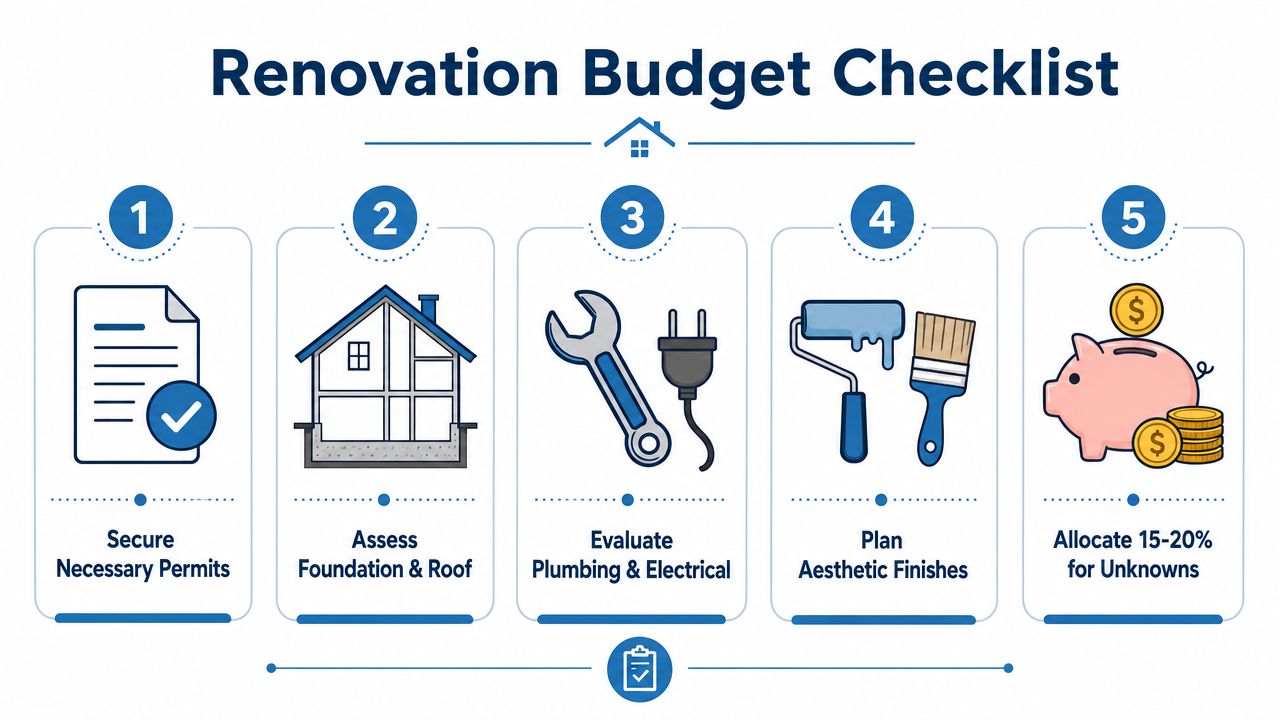
Build the budget in three layers
Start with the work that affects whether you can close, insure, and occupy the house. Then price the work that will likely hit during your hold period. Cosmetic changes come last.
That usually means three buckets:
- Day-one systems and safety work: electrical service, active leaks, failing roof sections, structural stabilization, plumbing defects, heating, and any hazard remediation that blocks occupancy or financing
- Near-term capital items: windows, drainage improvements, chimney repair, partial replumbing, HVAC replacement, and exterior envelope work
- Cosmetic and layout scope: kitchens, baths, flooring, paint, trim, and non-structural reconfiguration
This order protects your underwriting. A dated kitchen is optional. Knob-and-tube wiring, a sagging porch roof, or unpermitted plumbing is not.
Use pre-visit data to pressure-test the renovation number
Modern property data platforms help before a contractor ever walks the house. Permit history can show whether major systems were updated legally or whether the “newer renovation” was mostly cosmetic. Ownership length helps frame deferred maintenance risk. Pre-foreclosure or tax distress can signal years of postponed repairs. Listing photos combined with permit gaps often reveal the pattern fast: fresh finishes, old infrastructure.
I underwrite old homes by matching visible condition to the record. If a house shows a remodeled kitchen but no permits for electrical or plumbing work, I assume hidden systems may still need correction. If ownership data shows a long hold with little recorded work, I increase the reserve for core systems instead of trusting the listing language.
Price hidden costs as separate line items
Hidden costs should sit in their own category, not inside a vague contingency number. That category often includes:
- Hazard remediation: lead paint, asbestos-containing materials, mold cleanup, or old oil tank issues
- Permit and plan costs: drawings, engineer letters, filing fees, and inspection rechecks
- Change-order exposure: wall openings that reveal rot, undersized framing, abandoned wiring, or patchwork plumbing
- Carrying costs during repair: interest, taxes, utilities, insurance, and lost rent or delayed move-in
- Code-triggered upgrades: work that starts as a small repair and expands once the municipality requires related corrections
These are the budget killers because they rarely show up in a casual walk-through estimate.
If you want a baseline on front-end diligence costs before you finalize your scope, this guide on how much a home inspection costs helps frame the spend.
Negotiate with numbers, not repair promises
Credits usually beat seller repairs on old houses. Seller-selected contractors work to close the transaction, not to protect your long-term basis. Buyers need control over scope, permits, invoices, and workmanship standards.
Ask for credits or a price reduction tied to actual bids. Use specialist findings, municipal record gaps, and expected code-triggered work to support the request. If the seller refuses and the numbers stop working, walk. Discipline matters more than winning the deal.
Buy based on your repair budget, not the seller's explanation.
For buyers using borrowed funds, the capital stack matters almost as much as the rehab scope. This investor guide to rehab financing is useful if you're deciding how to sequence repairs without draining cash.
A short video can also help you sanity-check renovation planning before you finalize scope:
Set contingency based on record quality and scope complexity
Contingency should reflect uncertainty you can describe. Mixed-era renovations, missing permits, signs of repeated patch repairs, and any planned wall or floor opening all justify a higher reserve. Clean records, recent permitted system work, and tight scope support a lower one.
On old homes, contingency is part of acquisition underwriting, not a rounding error added after the fact. If the all-in number plus reserve kills your margin, the property is overpriced. That conclusion is useful. It keeps you from buying a project that only works on paper.
What Are the Impacts on Financing and Insurance
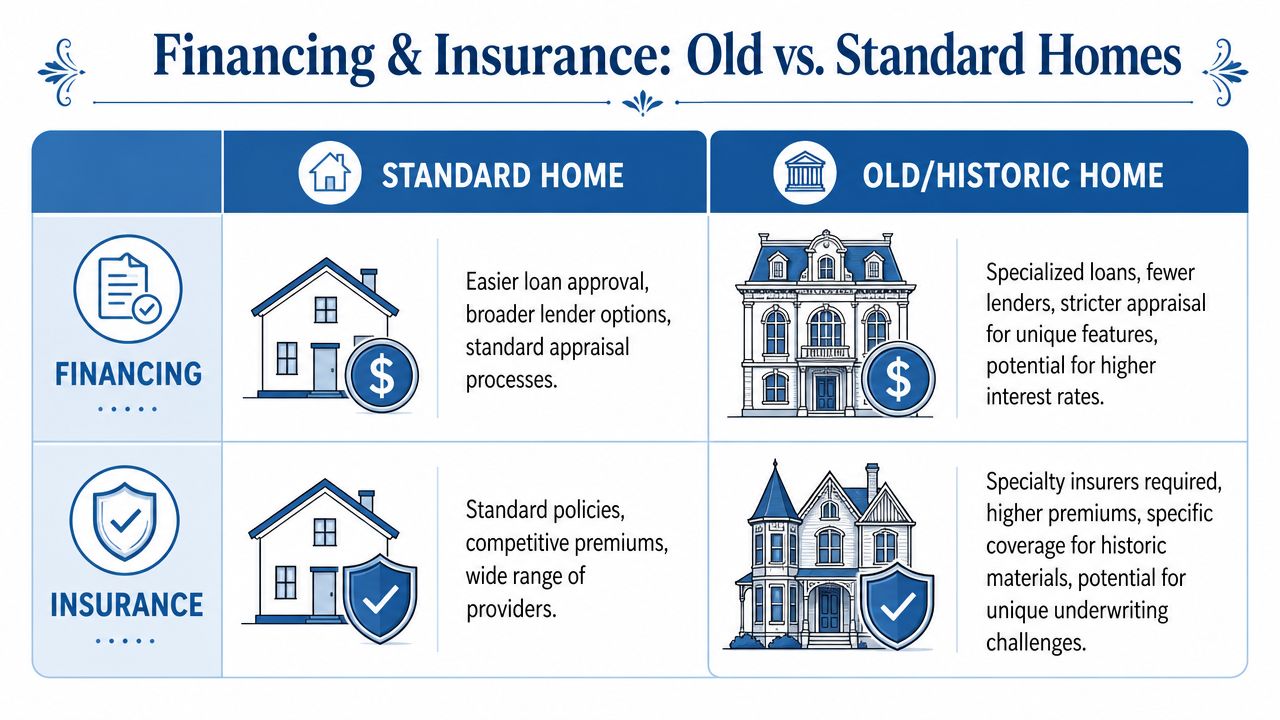
Financing an old house is not the same as financing a standard house, and insurance can break the deal faster than the lender does.
The biggest blind spot is insurance shock. Buyers of homes built before 1940 can face premium hikes of 15% to 30%, and 22% encounter unexpected exclusions for pre-existing conditions such as outdated wiring, according to Members 1st's discussion of older-home insurance issues.
Why insurance fails late in the process
Insurers care about things buyers often treat as “repair later” items. Outdated wiring, old plumbing, and unresolved system defects don't just affect maintenance. They affect underwriting.
That's why a property that looks structurally fine can still produce policy exclusions, higher premiums, or outright coverage problems. If the carrier sees higher fire or water-loss risk, your nice closing timeline becomes irrelevant.
The right time to shop insurance on an old house is before you remove contingencies, not after the appraisal lands.
Get quote feedback early and give the carrier real information. Inspection findings, known updates, and contractor estimates are more useful than a casual description from a listing sheet.
Comparing standard purchases and old-home deals
| Issue | Standard home | Old or historic-leaning home |
|---|---|---|
| Insurance shopping | More straightforward | More underwriting scrutiny on systems and prior conditions |
| Loan approval | Often routine if condition is average | Can tighten if condition or habitability is questionable |
| Repair timing | More flexibility | Safety and insurability items may need immediate action |
Older homes can still finance well, but product choice matters. A conventional mortgage usually works when the property is habitable and the deferred maintenance doesn't scare the appraiser, insurer, or lender. Renovation loans make more sense when the house needs material systems work before it fits standard underwriting.
What to do before closing
Handle these items in sequence:
- Get insurance quotes early: Don't assume a standard policy will fit.
- Ask about exclusions directly: Wiring, plumbing, roof age, and prior loss conditions should all be on the table.
- Match the loan to the condition: If repairs are central to viability, consider a renovation structure instead of hoping conventional financing glides through.
- Review title protection: On any older property with a messy chain of work or improvements, understand what lender's title insurance covers.
You also need to know whether the home is effectively tolerated under older code standards or whether upgrades will be triggered by future work. A property can be functionally standing and still create liability if key systems fall outside modern safety expectations.
What works and what stalls
The buyers who handle old homes well usually do one thing differently. They treat financing and insurance as part of diligence, not as admin after the offer.
The ones who get stuck often rely on assumptions borrowed from newer houses. That's where the last-minute premium spike, exclusion, or lender pushback shows up.
What Happens When a Property Has Historic Designation
An old house and a historically designated house are not the same asset.
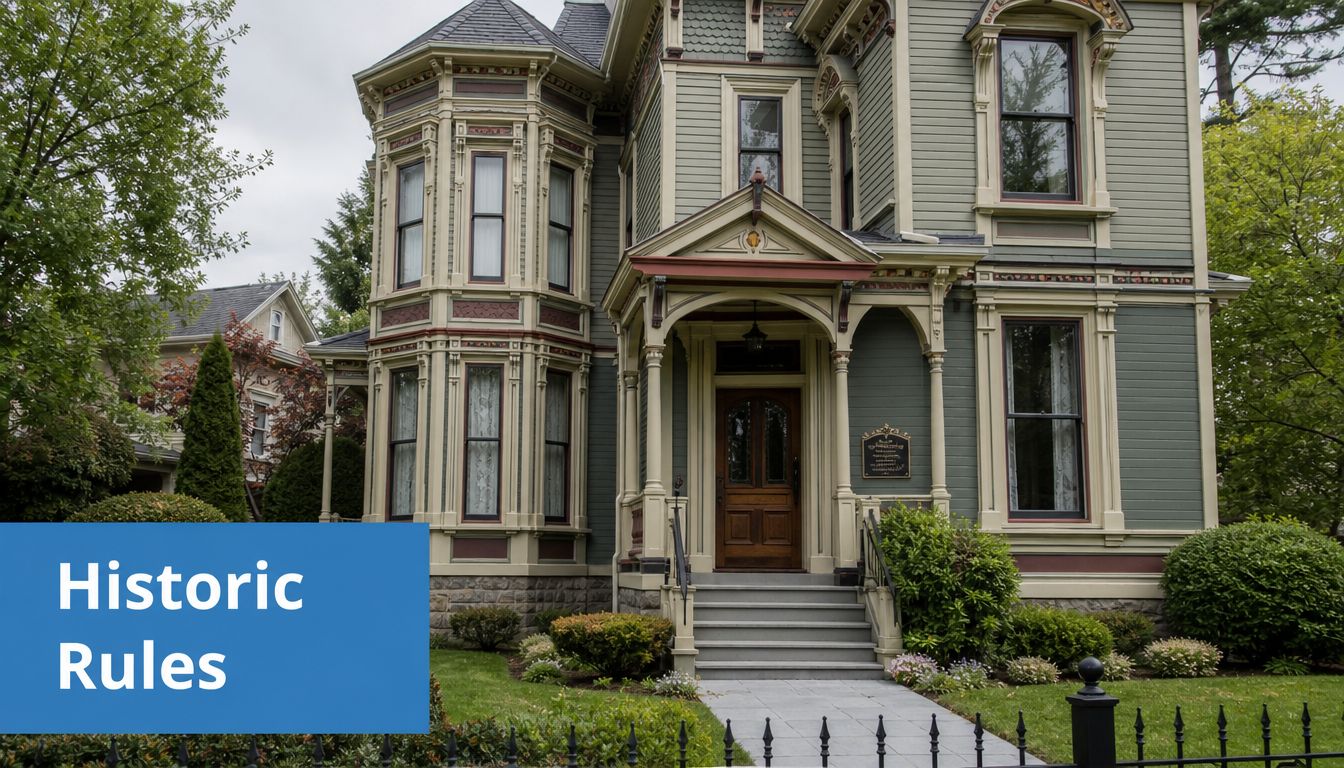
Age tells you something about systems, maintenance, and construction type. Historic designation tells you something else entirely. It can alter what you're allowed to change, how you renovate, what materials you use, and how long approvals take.
Verify status before you underwrite the renovation
Don't rely on listing language like “historic charm” or “heritage style.” Verify whether the property sits in a historic district or carries formal landmark protection through local records.
Then identify the governing body. In many places, that means an Architectural Review Board or preservation commission. Their approval process can affect windows, roofing, siding, additions, exterior paint choices, and demolition decisions.
If you've never dealt with protected buildings before, this overview of consent for listed building renovations gives a useful picture of how renovation permissions can differ when preservation rules apply.
The real trade-off
Historic status can support neighborhood stability and may create access to tax-related incentives in some jurisdictions. It can also limit the exact value-add moves an investor wants to make.
Use a simple screen before you proceed:
| Question | If yes | If no |
|---|---|---|
| Are exterior changes restricted? | Build longer approval time into budget and schedule | Standard renovation path may be easier |
| Do required materials raise costs? | Reprice scope before making the offer | Your budget may hold more easily |
| Is your strategy based on layout or facade changes? | Historic controls may block the plan | The deal may still fit your thesis |
Where buyers get trapped
The common mistake is underwriting the house as though all improvements are discretionary and fast. They aren't.
A designated property can be a strong buy if your plan aligns with the rules. It becomes a bad buy when your return depends on changes the review board won't permit, or only permits with expensive materials and extra delay.
For buying old homes, legal constraints belong in the same diligence bucket as sewer lines, wiring, and foundation movement. They're all forms of risk. They just show up in different documents.
BatchData helps investors, lenders, insurers, and real estate operators find and evaluate old-home opportunities with property records, ownership history, permit data, liens, mortgage details, and pre-foreclosure signals in one place. If you want to source smarter, screen risk before the showing, and underwrite properties with better data, explore BatchData.