A recorded transfer isn't always a market sale, and that's the trap in most real estate recent transactions feeds. An analysis of 55,498 transactions found that 6.6% sold off the MLS, with deed records often failing to say whether a transfer was a conventional sale at all, according to Inman's analysis of off-MLS selling. Intra-family moves, estate settlements, and entity transfers sit in the same files as arm's-length deals.
A sale can close on Monday and sit unrecorded at the county for weeks. That's why a free portal's recently sold list is never complete, and why a provider's latest sale may not be the latest arm's-length transaction. If you're pricing a comp or underwriting a loan, that gap changes the answer.
- Lag first: Ask when a closing becomes a record, not when marketing claims it's updated.
- Delivery second: Separate consumer search tools from licensable APIs and bulk feeds.
- Fit third: Match the source to underwriting, comps, monitoring, or a quick scan.
The closing itself involves signed documents, funds, and recording steps that don't happen instantly, as Lein Law Offices explains property closings. Below are 10 sources compared on update cadence, delivery format, pricing transparency, and the job each one fits.
1. BatchData
BatchData is a licensable data feed for teams building property intelligence into their own systems. It covers 155M+ U.S. property records, 1,000+ attributes, and daily updates. Transaction data sits alongside ownership history, valuations, equity, mortgage and lien details, listings, permits, and pre-foreclosure activity. That context can help underwriting teams distinguish a possible market sale from a transfer that reflects an ownership change.
Delivery and Workflow Fit
Use low-latency APIs for in-product lookups and underwriting checks. For model training or portfolio-wide refreshes, BatchData also offers bulk delivery through S3, Snowflake, or flat files. Smart Property Search and Portfolio Monitoring APIs support ongoing screening as well as individual property checks.
The platform also combines property data with contact enrichment, skip tracing, phone and email verification, confidence scores, and BatchRank propensity modeling. Those tools suit teams that need to prioritize owner outreach, but they do not replace validation of transaction records for comp selection.
BatchData fits underwriting, due diligence, portfolio monitoring, and ML workflows that need data at scale. White-glove onboarding and custom matching can help teams move from a legacy provider, though match quality still needs review against the counties and property types in scope. Request a quote based on record volume and delivery method before modeling cost.
2. ATTOM
ATTOM is the incumbent many teams already have, and it's a genuine data feed rather than a browsing tool. You get sale history, sales trends, and comparable-sale information through APIs and other delivery options. Property-level lookups reach up to 10 years of sales history, which is enough for most comp windows and trend work.
That history matters because headline sales rates swing hard month to month. The Census Bureau and HUD new-home sales release reported a seasonally adjusted annual rate of 657,000 new single-family homes sold in January 2025, rising to 800,000 in August before easing again. A source that gives you ZIP-level trends alongside individual sales helps you see whether a comp sits in a rising or cooling patch.

- Recent sale search: Query by location and other criteria for prospecting or comp sets.
- Sales trends: ZIP-code level views sit next to property characteristics in one response.
- Integration: Developer documentation gives your engineers a concrete starting point.
Pricing depends on package and use case, and some plans require a sales conversation, so budget comparison takes effort. Public-record sales still lag closings while counties process deeds, and ATTOM can't fix that. Check field depth and update cadence in your target counties, because national coverage claims hide local thin spots.
3. RealEstateAPI
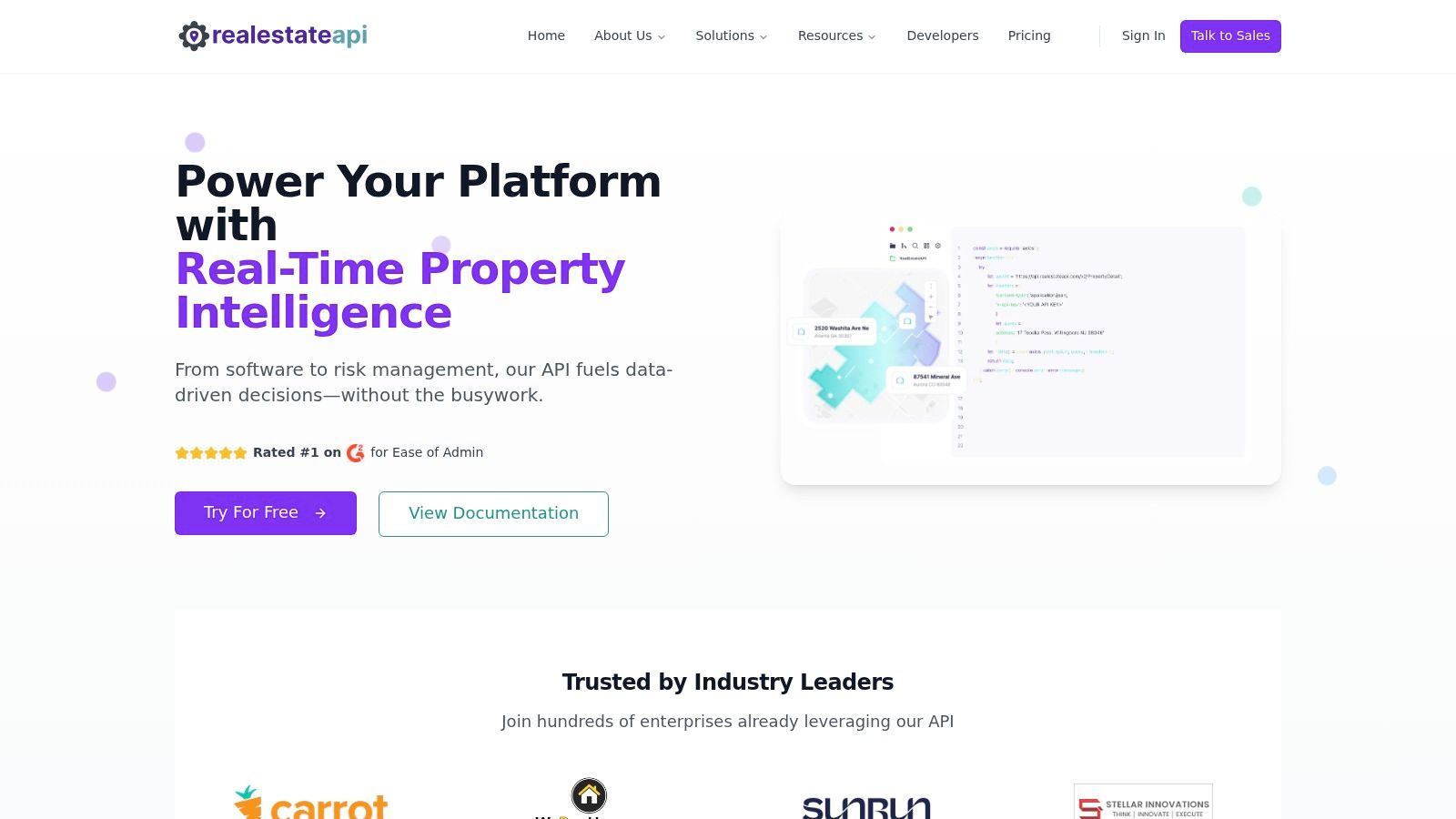
RealEstateAPI does one thing most providers blur, and it's the thing that matters most for comps. Its documentation distinguishes the latest recorded sale from the latest arm's-length sale. If you've ever comped against a family transfer priced at a nominal amount, you know why that flag earns its keep.
Built for Developers
You filter property searches by sale date and sale amount, then configure comparable-sale windows, radius, and matching criteria to suit your model. Bulk endpoints and a unified property-data response keep integration simple, and the provider states property data is updated daily. Published pricing and a self-serve model mean you can evaluate without a sales call, which is rare in this category. Free trial credits let you test real queries before paying.
The trade-off is credit-based billing. Costs stay predictable only if you estimate usage accurately, and a prospecting job that fans out across counties burns credits fast. This is a developer service, not a friendly sold-home search for non-technical staff. Validate coverage and transaction detail for your markets and property types during the trial, because the trial is exactly where weak counties show up.
4. RentCast
RentCast is the low-friction on-ramp. It's a REST API covering property records, sale transactions, listings, comps, and market data, aimed at developers and smaller teams that want to prototype before committing to an enterprise contract. Sold-property searches take a date range, location or radius, property type, and characteristics like bedrooms, bathrooms, and square footage.
Context helps you judge what those searches return. The National Association of REALTORS December 2025 existing-home sales overview reported a seasonally adjusted annual rate of 614,900 existing-home sales in December, with a median existing-home price of $405,400. Thin transaction volume means thin comp sets in many areas, so a wide radius or longer look-back is often unavoidable.
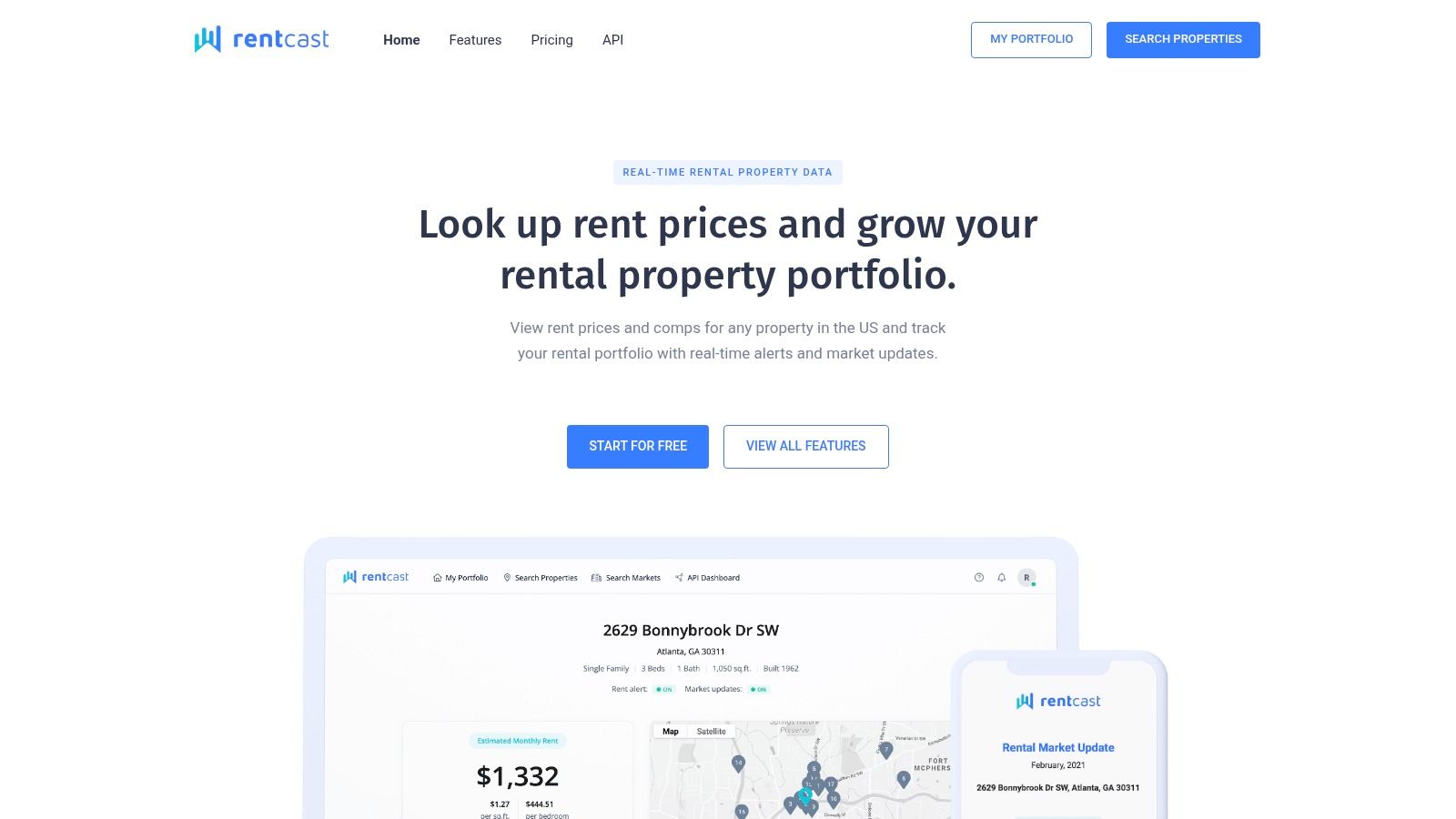
The developer plan includes 50 free API requests per month, enough to wire up an integration and sanity-check responses. Documentation includes sold-property query examples you can copy and run. Value estimates and rental data sit alongside transactions, which suits investor-facing tools.
RentCast is honest about lag. Recent sales can take weeks or months to appear depending on county record availability. Coverage is strongest for residential property and excludes several nonresidential commercial categories, so don't stretch it into commercial work. Check the terms before commercial use, because permitted use isn't automatic.
5. Cotality Owner Transfer
Cotality Owner Transfer treats the transfer itself as the record, not just the sale. It normalizes assessor and recorder data, maps transactions to parcel identifiers, and describes up to 50 years of transaction history. That's enterprise infrastructure for teams doing historical modeling or chain-of-ownership analysis, which pairs naturally with a dedicated property owner history lookup when you need to verify who held title and when.
Sales details may include buyer, seller, sale amount, deed category, and sales indicators. Deed category is the field I'd interrogate first, because it's your best shot at separating arm's-length sales from administrative transfers at scale. Delivery runs through API, flat files, and major cloud platforms, so it drops into an existing warehouse without custom plumbing.
Deep history only helps if the transfer type is labeled. Fifty years of unclassified deeds is fifty years of noise.
Pricing varies by volume, geography, and delivery method, and it isn't published. Enterprise licensing and onboarding will exceed what a small project needs or can justify. Public-record availability still varies by county, so even this feed isn't immediate. Buy it for depth and normalization, not for speed.
6. LightBox Transaction History
Start with the update claim, because LightBox states one. It describes more than 30 years of transaction information with weekly updates. Weekly is slower than daily feeds, but a stated cadence you can plan around beats a vague promise of freshness, and it fits research workflows that don't need same-week closings.
Access Routes
- API queries: Pull by transaction ID, assessment ID, county, date range, or geography.
- Bulk downloads: Take files in CSV, SHP, or GeoJSON for GIS-heavy work.
- LightBox Vision: Use the visual interface when an analyst, not a pipeline, is doing the research.
Records carry sale dates, prices, and parties involved, and they link into LightBox property and assessment data. That linkage is valuable if you already work in spatial analysis or want transaction context mapped against parcels, in the same spirit as building on real estate historical data rather than isolated sale rows. Pricing isn't stated on the transaction pages, so expect a licensing discussion. If you only need a few local comps, this is more machinery than the job requires.
7. PropertyRadar
PropertyRadar isn't a feed you embed. It's a web-based research and prospecting platform where recent sales and comps sit next to list building, exports, and owner information. The user is an investor, agent, or marketer who finds a transaction and then acts on it inside the same tool.
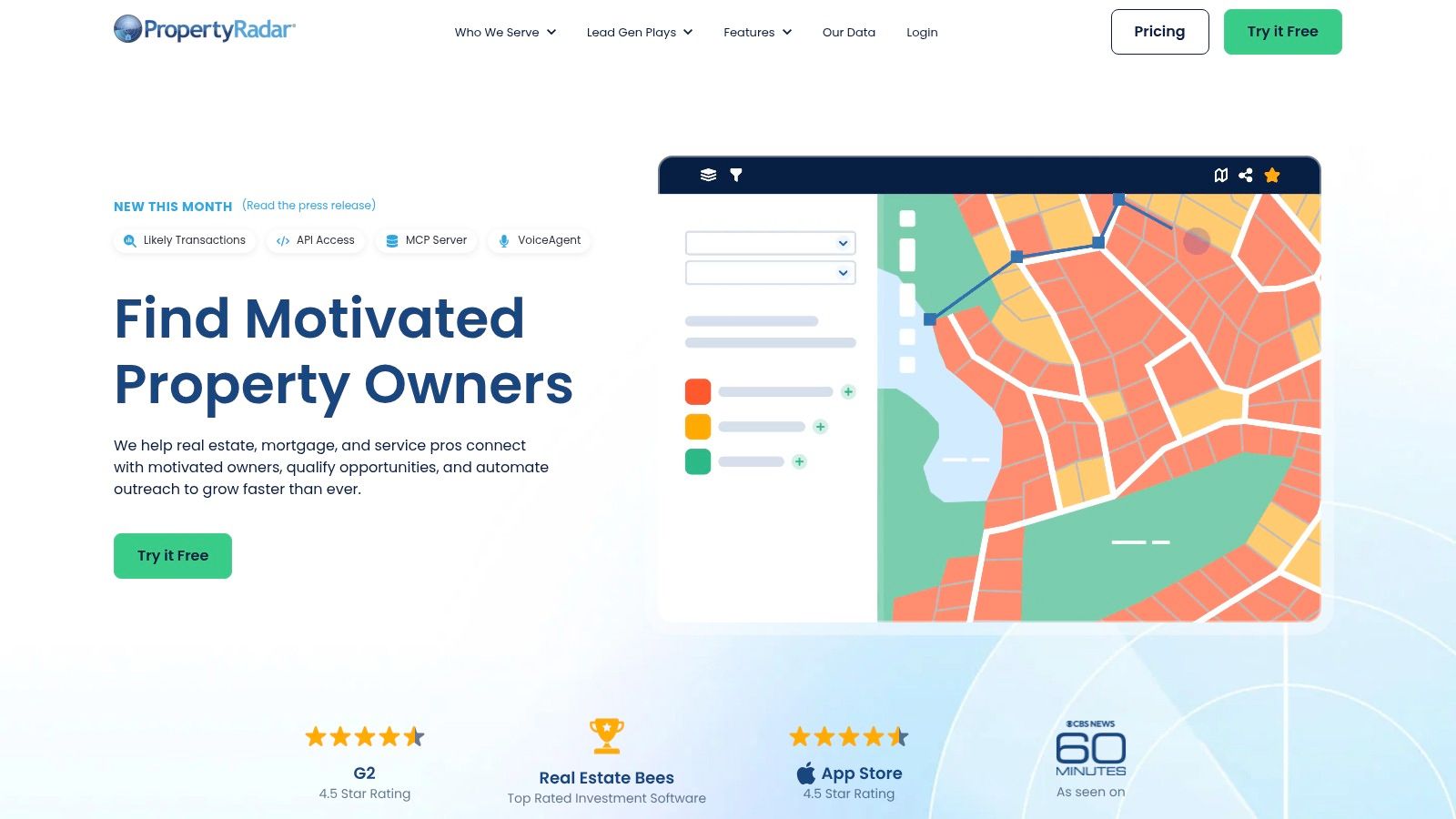
You search and filter using sales and transfer criteria, review comps against full property profiles, then build lists and push them into follow-up workflows through exports and integrations. It also supports analyzing investor purchases and flips, which tells you who's active in a market, not just what sold. For a small team without developers, that hands-on path beats standing up an API integration.
The limits follow from the format. You can't cleanly embed raw transaction data in your own product, and coverage plus available fields need checking state by state and county by county. Pricing and capabilities vary by plan and add-ons, though plans can be changed and annual billing may reduce cost. Judge it as a prospecting seat, not as data infrastructure, and it's a fair deal.
8. PropertyShark
Say you need a defensible comp set for one building by tomorrow, not a national feed. That's PropertyShark territory. It's a property-by-property research platform with sales history, comparable sales, ownership details, zoning, and permits behind a web interface and downloadable reports. You're buying polished research output, not raw records.
Public pricing makes subscription tiers easy to compare, which puts it ahead of most of this list on transparency. You can download research lists and move from a subject property to its comps without touching an API. For brokers, appraisers, and analysts doing episodic deep dives, that workflow is efficient.
The meter runs on report and export quotas, and some records or features cost extra beyond the subscription. Coverage depth varies by market and source availability, so a strong experience in one metro guarantees nothing in the next. If your use case is high-volume or embedded, quotas will choke it quickly. Treat PropertyShark as a research desk subscription and check your core markets before you rely on it.
9. CoStar Sales Comps
Commercial deals don't behave like residential ones, and CoStar Sales Comps is built only for that world. It provides transaction details, buyer and seller information, brokers, sale type, sale notes, and related loan and public-record context. The provider states new commercial transactions are added daily.
Sector selection decides whether those comps mean anything. Altus Group's U.S. commercial real estate transaction analysis for Q2 2025 reported aggregate transaction volume of $115.0 billion, up 3.8% year over year, with multifamily volume up 39.5% while the broader recovery stayed uneven. A comp tool that connects each sale to property, submarket, listing, tenant, and loan data helps you avoid benchmarking a multifamily asset against office momentum, the same discipline a structured comparable sales analysis demands on the residential side.
Access requires contacting CoStar, and enterprise pricing puts it out of reach for occasional research. There's no simple public subscription to test. It's also the wrong tool for ordinary residential sales searches, full stop. If commercial valuation is your core work, the context around each transaction justifies the conversation. If it isn't, don't start one.
10. Zillow Recently Sold
Zillow Recently Sold is the free option, and you should use it for exactly what it is. It's a consumer discovery tool with a map-and-list interface for browsing sold homes, sold dates, property details, and prices where reported. No subscription, no integration, no contract.
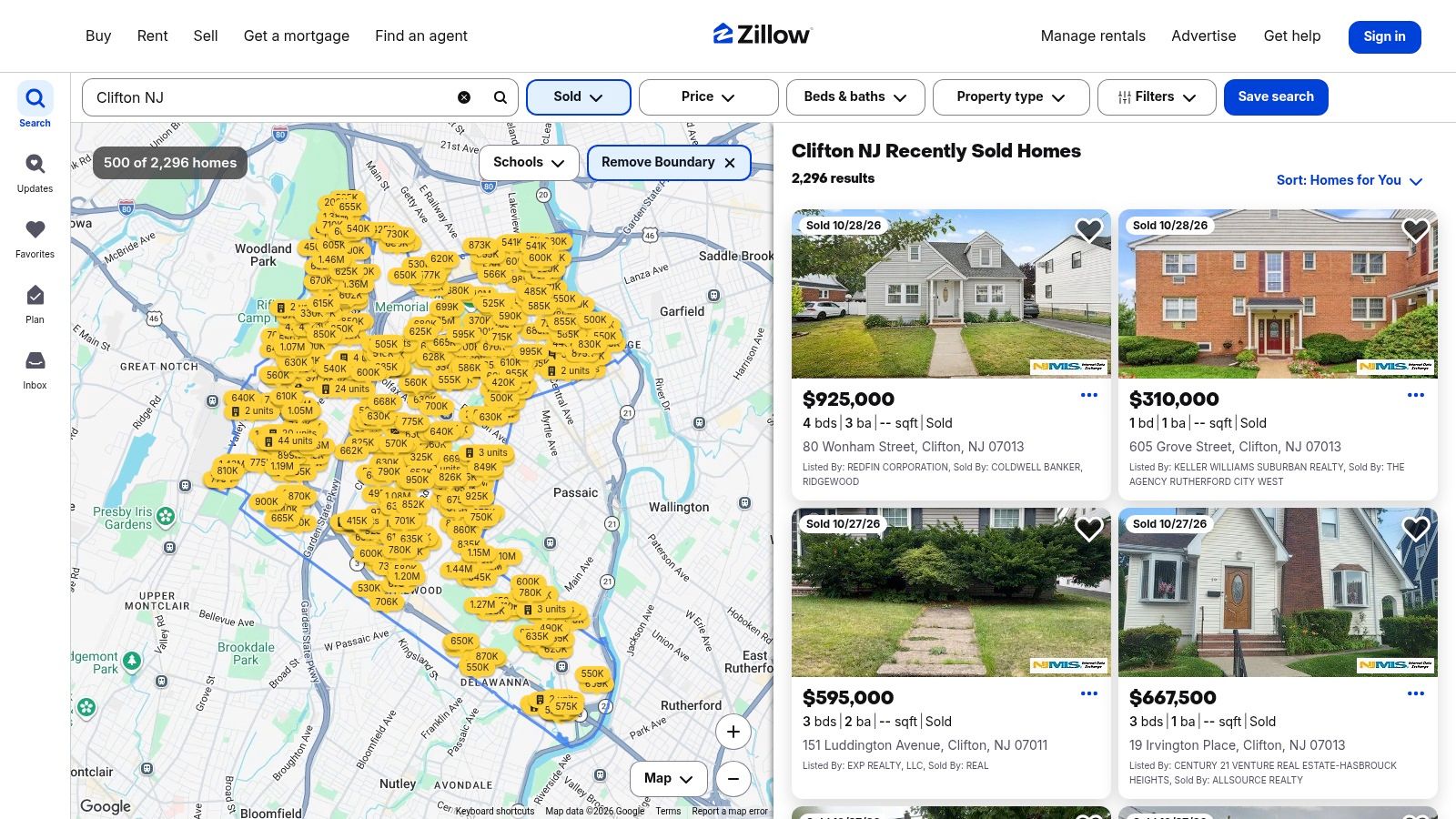
For an initial neighborhood scan, it's fast and good enough. You can spot candidate comps, sanity-check a price range, and decide whether a deeper pull is worth paying for. Broad visibility across U.S. markets makes it a reasonable first look almost anywhere.
Practical rule: Use free portals to find questions, never to settle them.
Sold-price visibility and completeness vary by market and listing source, and listing-based sold records don't represent all recorded deed transfers. Off-MLS sales, private deals, and non-disclosure markets leave holes you can't see from the map. There's no bulk export, no data license, and no commercial API path here. The moment a number from this page would influence a loan, a bid, or a valuation, verify it against a recorded source.
How the 10 sources compare on access model, pricing disclosure, and bulk delivery
| Item | Access Model | Pricing Disclosure | Bulk or Export Delivery |
|---|---|---|---|
| BatchData | Low-latency APIs | Not publicly listed | Bulk delivery via S3, Snowflake, and flat files |
| ATTOM | APIs and other delivery options | Depends on package and use case; some plans require contacting sales | Other delivery options available; bulk details not specified |
| RealEstateAPI | Self-serve API with bulk endpoints | Published, credit-based pricing; free trial credits available | Bulk endpoints available |
| RentCast | REST API | Developer plan includes 50 free requests per month | Bulk delivery not specified |
| Cotality Owner Transfer | API, bulk files, and cloud platforms | Not published; varies by volume, geography, and delivery method | Bulk files and cloud-platform delivery |
| LightBox Transaction History | API and LightBox Vision interface | Not stated; requires a licensing discussion | Bulk downloads in CSV, SHP, and GeoJSON |
| PropertyRadar | Web-based research and prospecting platform | Subscription pricing varies by plan and add-ons | Data exports and integrations available |
| PropertyShark | Web-based research and subscription platform | Public subscription pricing; tiers vary | Downloadable research lists with plan-based quotas |
| CoStar Sales Comps | Commercial sales-comps platform; contact CoStar for access | Enterprise-oriented; contact CoStar | Bulk or export delivery not specified |
| Zillow Recently Sold | Free consumer-facing web search | Free basic browsing | No bulk export or API delivery |
Match the Source to the Job Before You Buy
Pick the source by the decision it feeds, not by the feature list. A neighborhood scan, an underwriting decision, and a monitoring pipeline are three different jobs, and no single product on this list wins all three. Start by naming the decision, the geography, and how stale a record can be before it's useless.
Regional splits should drive your coverage tests. The National Association of REALTORS September 2025 research update reported existing-home sales fell 0.2% from July in August 2025, while sales increased in the Midwest and West and decreased in the Northeast and South. A national average hides that, and so does a national coverage claim.
Test Before You Sign
- Run your hardest counties: Sample the exact markets and property types you'll use in production, not the vendor's demo set.
- Measure lag directly: Compare known closing dates against first appearance in the feed.
- Check transfer labels: Confirm how arm's-length sales are flagged and how entity or family transfers are marked.
- Price the actual volume: Model credits, quotas, or seat costs at production scale, not pilot scale.
Workflow fit matters as much as the records themselves. The National Association of REALTORS 2025 technology survey of more than 1,200 agents found electronic signatures reached 79% adoption among REALTORS, and 66% said saving time was the primary reason for adopting new technology. Your transaction source should remove handoffs the same way, through clean status fields and normalized records your existing tools can consume.
For a quick scan, a free portal is enough, but never treat it as a complete deed record. For underwriting, monitoring, or model training, shortlist API and bulk providers, get quotes in writing, and validate match rates before committing. Commercial buyers should also review commercial leases and title exceptions alongside any comp set, since a clean price on a messy title isn't a clean comp.
My recommendation is simple. Prototype cheap where you can, pay for depth where errors cost money, and re-test coverage every time you enter a new county. The most expensive transaction data is the feed you trusted without checking.
If recent transactions drive your underwriting, monitoring, or prospecting, you need records that arrive normalized, current, and tied to ownership, valuation, and verified contact data in one place. BatchData delivers that through low-latency APIs and bulk delivery built for production workloads, not manual lookups. Visit the platform, test it against your toughest counties, and see how your current feed stacks up.