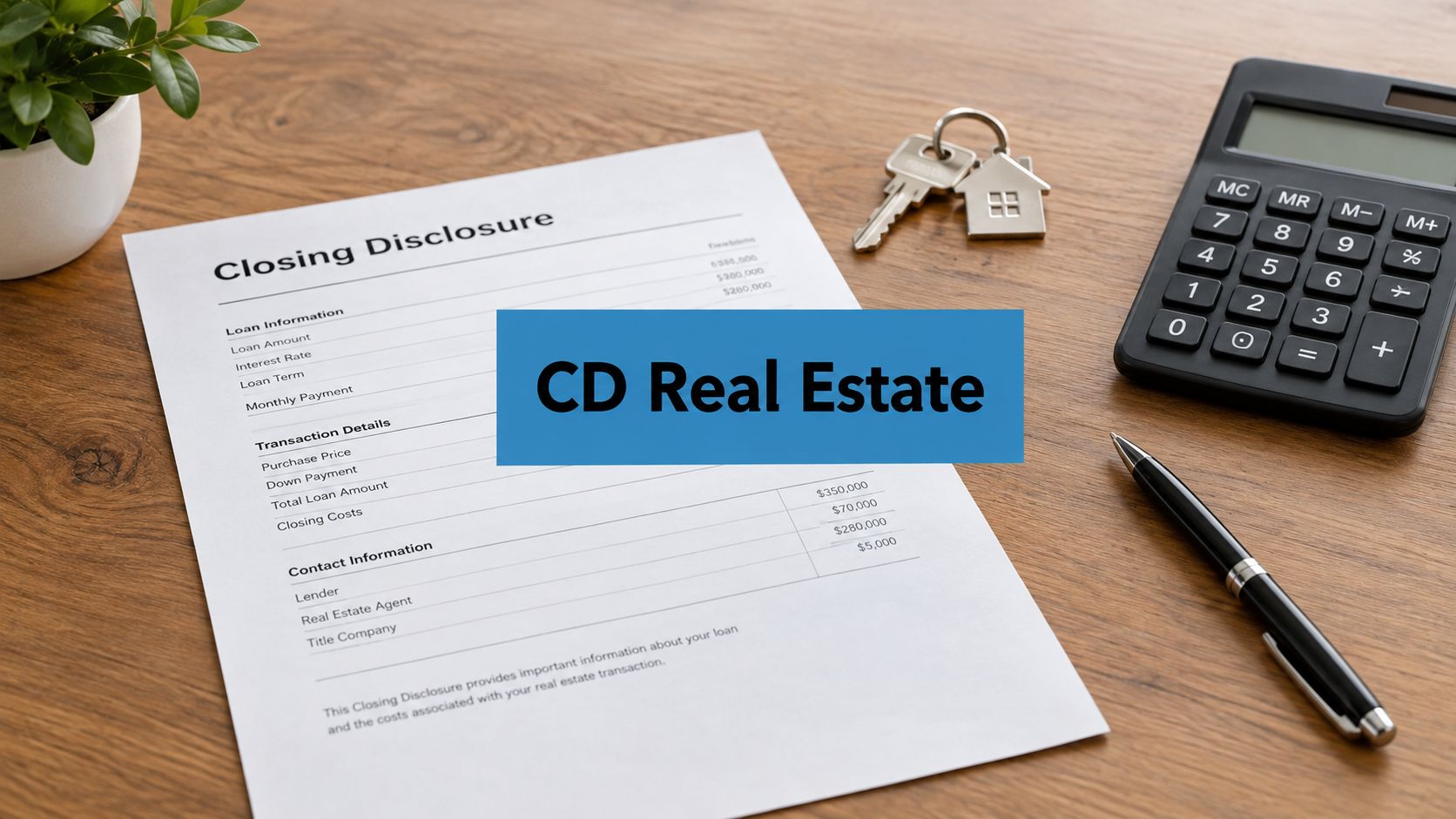
CD real estate covers two very different things, a plain bank certificate of deposit used as a real estate cash reserve, and property-linked instruments marketed as real estate CDs that are not insured bank deposits. Treating them as one product is the most common mistake I see, and it's an expensive one.
Most popular advice tells you to chase the headline rate and call it safe because the word CD is in the name. Don't. A bank deposit and a property-backed private instrument have different issuers, different legal claims, different liquidity, and completely different ways to lose money.
- Bank CD as reserve: Your claim is against the bank, subject to deposit insurance and the maturity terms.
- Property-linked CD: Your outcome depends on a sponsor and an underlying asset, even if part of the return looks fixed.
- Your first job: Identify the instrument before you compare yields, then verify the property, debt, and exit terms behind any property-linked pitch.
If you can't answer who owes you money and what asset supports that promise, you don't have an investment thesis yet.
What CD Real Estate Actually Covers
CD real estate is an umbrella phrase, not a standardized product you can underwrite from a rate sheet. You need to split it into two tracks before you talk about return, safety, or suitability.
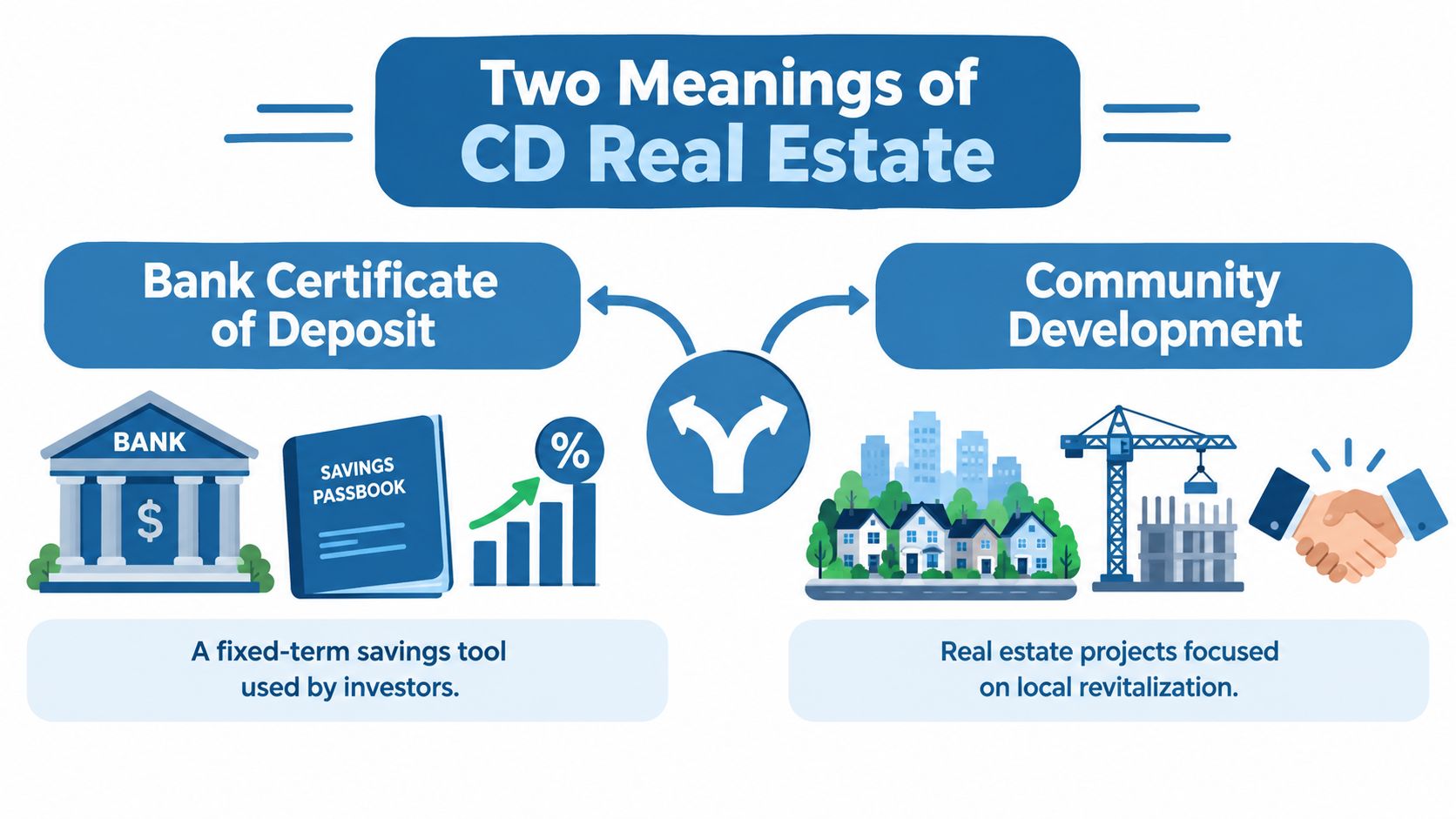
The first track is straightforward. An investor, buyer, or lender parks cash in a standard bank certificate of deposit and earmarks it for a down payment, closing costs, earnest money, renovation budget, or reserves. The property deal is the future use of the cash. It isn't the asset backing the CD.
The second track is different in kind. Instruments marketed as real estate CDs or real estate-backed CDs use proceeds to fund property and may combine fixed interest with rental income or appreciation, a structure described in the financial dictionary definition of real estate CDs. That's property exposure wearing deposit language.
The Questions That Separate Them
Ask these before anyone quotes you a yield:
- Issuer identity: Is this a bank deposit, or is it issued by a sponsor, fund, or property entity?
- Insurance status: Is principal covered by deposit insurance, or does the marketing only imply safety?
- Legal ownership: Who owns the property, and do you have a direct claim, a note, an equity interest, or only a contractual promise?
- Cash flow source: Does payment come from the bank's balance sheet or from rent, refinancing, and eventual sale proceeds?
- Exit mechanics: Can you withdraw early, sell to someone else, or are you locked in until the sponsor chooses to exit?
A guaranteed-sounding rate doesn't make the total investment low risk if rent, occupancy, refinancing, or sponsor solvency still controls whether you get paid in full.
That distinction drives everything else. A bank CD reserve is a timing and liquidity problem. A property-linked CD is a credit, asset, and structure problem. If a salesperson can't show you offering documents, property ownership, lien position, fees, and the exact insurance position, walk away. Confusion isn't a minor disclosure issue here. It's the product risk.
How a Plain Bank CD Works as a Real Estate Reserve
A plain bank CD is a fixed-term deposit where you lock cash until maturity in exchange for a stated interest rate or APY. Used correctly, it's a parking place for money with a known future job. Used carelessly, it's cash you can't reach on closing day.
Match Maturity to the Deal Date
Start with the date you need the money, then choose the term. That's the opposite of how many buyers shop. They pick the highest rate, then discover the maturity lands after earnest money is due, after a renovation draw, or after a closing deadline.
Build in a buffer for delays in underwriting, title, inspections, and funding. If the transaction date is uncertain, laddering maturities or keeping part of the reserve in immediately available cash is often smarter than locking every dollar for a marginal rate pickup.
What Early Access Really Costs
Withdrawing before maturity may trigger an early-withdrawal penalty or require forfeiting part of the interest earned, according to the SEC guide to certificates of deposit. You need the exact penalty formula in writing. Ask whether partial withdrawals are allowed, whether the penalty can eat into principal under the bank's terms, and how quickly released funds settle.
Brokered CDs deserve separate scrutiny. They're bought through a brokerage and may need to be sold to another investor if you exit early. That sale price can move against you, creating a market loss and, in some cases, loss of principal. If you're comparing structures, review how brokered CDs differ before assuming brokerage access means better liquidity.
- Bank CD: Early exit is governed mainly by the issuing bank's penalty terms.
- Brokered CD: Early exit may depend on secondary-market demand and prevailing rates.
- Callable CD: The issuer may redeem early, which can disrupt a reserve plan even when you didn't want access yet.
- Maturity handling: Confirm grace periods and automatic renewal rules so cash doesn't roll into a new term by default.
My recommendation is blunt. Don't put earnest money or emergency repair capital in a CD unless the maturity and penalty math still work under a delayed or accelerated closing. The best CD for a deal isn't the highest yielding one. It's the one that releases the right amount, at full expected value, before the contract requires it.
Comparing CD Real Estate to REITs, Fractional Ownership, and Crowdfunding
These instruments aren't interchangeable just because they all promise real estate exposure or a yield. The right comparison starts with where your money sits, what you own, and how you exit.
Real Estate Cash and Yield Instruments Compared
| Instrument | Liquidity Window | Deposit Insurance | Main Return Driver | Typical Fee Load |
|---|---|---|---|---|
| Bank CD | At maturity, or earlier subject to penalty terms | Yes for an insured bank deposit within applicable coverage | Contractual interest from the bank | Low and usually embedded in the offered rate |
| Property-backed CD | Often limited until maturity, sponsor redemption, sale, or refinancing | Don't assume it applies, verify issuer and legal form | Fixed payments plus possible rent or appreciation | Sponsor, servicing, and transaction fees may reduce net yield |
| Public REIT | Market trading during market hours | No | Property income, dividends, and share price movement | Fund or company operating costs and trading spreads |
| Fractional ownership | Platform or sponsor dependent, often restricted | No | Rent and appreciation on a specific property interest | Platform, management, and disposition fees |
| Real estate crowdfunding | Usually locked for the project or loan term | No | Interest on debt or project-level equity returns | Platform, sponsor, servicing, and asset management fees |
A public REIT gives you a tradable security and diversified property exposure, but your daily price is set by the market. Fractional ownership gives you exposure to a specific asset, which concentrates both upside and mistakes. Crowdfunding can be debt or equity, and those two positions behave nothing alike when a project misses its plan.
A bank CD sits outside the property risk stack entirely until you deploy the cash. A property-backed CD sits inside it, even if the brochure foregrounds a fixed component. Read a broader guide to capital market real estate dynamics if you want the financing context, but don't let market commentary substitute for the offering documents in front of you.
Practical rule: Classify the instrument by legal claim first, property story second, yield last.
Cycle data reinforces why. The CPPI National All-Property Index rose an average of 10.6% annually from 2010 through 2016, yet six major markets ended 2016 37.8% above their previous peak while non-major markets were only 8.7% above theirs in the NAIC review of Moody's Analytics and Real Capital Analytics data. A national yield pitch hides that spread. Ask which asset, submarket, tenant base, and capital stack you're funding. If the answer is vague, the comparison is over.
How CD Interest Is Taxed When It Funds a Deal
CD interest is generally taxable when it's received, credited to your account, or available for withdrawal, even if you're saving it for a property closing. The IRS doesn't care that the money has a future real estate purpose. Tax timing follows the deposit terms.
Terms of One Year or Less
For a CD with a term of one year or less that pays interest at maturity, you generally report the interest when you receive it or when you're entitled to receive it without paying a substantial penalty. That's manageable if maturity and closing fall in the same tax year, because the cash and tax event are closer together.
Don't assume no tax is due just because you roll the proceeds into a deal or leave them sitting in the same account. Once the interest is credited or available under the applicable rule, it belongs in your tax calculation.
Terms Longer Than One Year
Longer CDs create the surprise. For a maturity longer than one year, you're required to include a portion of the total interest in income each year under original issue discount rules in IRS Publication 550 on investment income and expenses. You can owe tax before final maturity pays out the accumulated interest in cash.
Investors call that phantom income, and it matters for a reserve strategy. Your projected down payment may look intact on a statement while an annual tax bill consumes cash from another account. Your after-tax yield is lower than the headline APY, and your available closing funds may be lower too.
Coordinate three dates with your tax adviser before you buy:
- Interest crediting dates: When does interest become taxable under the CD terms?
- Maturity date: When can you access the full balance without penalty?
- Contract dates: When are earnest money, closing funds, and post-closing reserves due?
Also confirm how the bank reports interest and keep statements with your transaction file. That documentation helps reconcile source of funds during mortgage underwriting and supports your tax return later. A CD reserve should simplify a purchase, not create a separate liquidity need every April. If the term crosses tax years, model the tax payment as part of the acquisition budget from day one.
Why Refinancing Risk Can Reshape a CD-Funded Real Estate Plan
Refinancing risk is where a tidy reserve strategy meets an untidy property balance sheet. Your CD can perform exactly as promised while the building you buy, fund, or rely on for income runs into a debt maturity it can't clear on workable terms.
The chart below belongs at the start of that conversation because maturity outcomes shape cash flow before they show up as a missed investor payment.
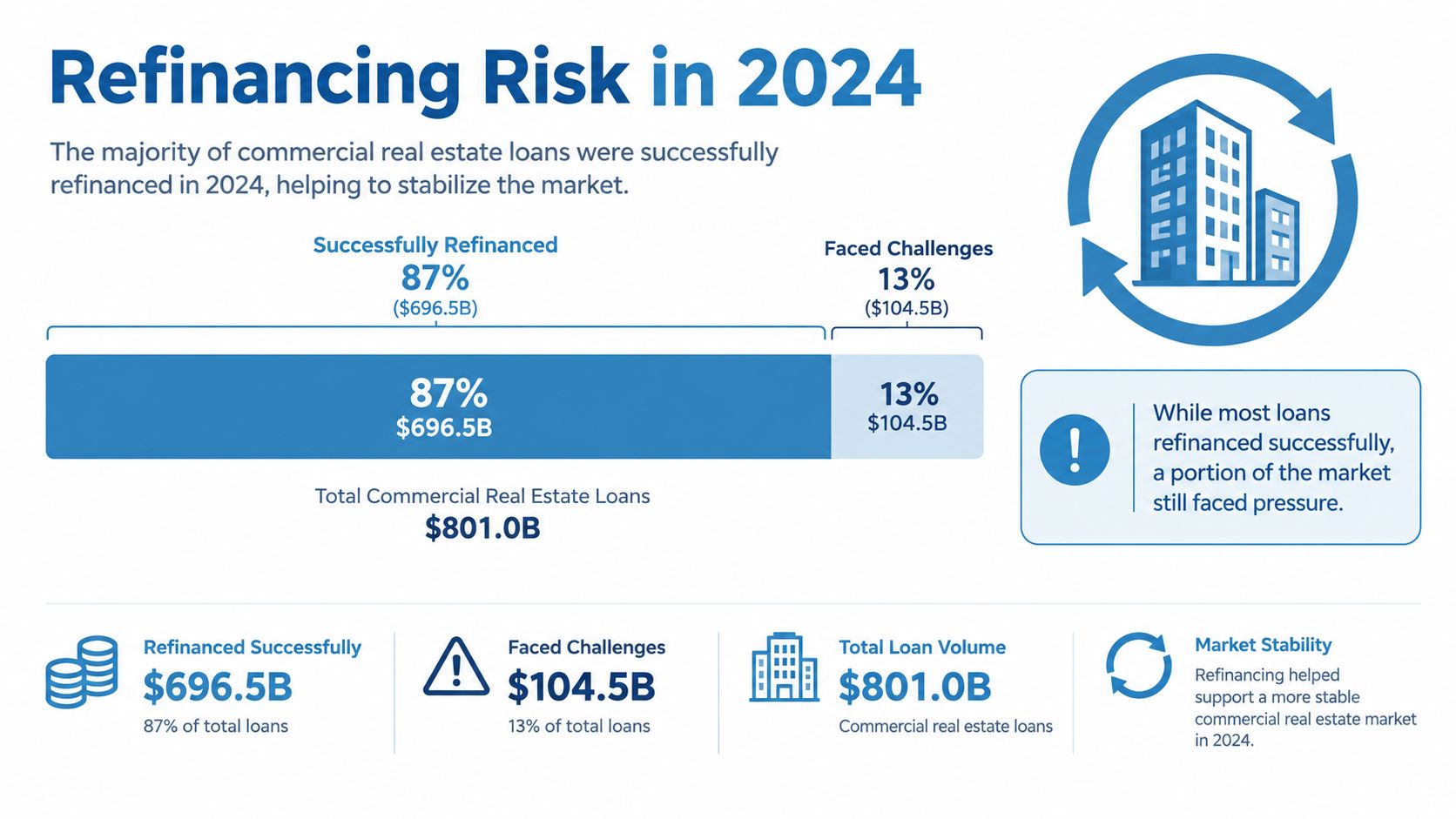
This isn't a blanket bear case. U.S. commercial real estate refinancing was 68% by balance and 84% by loan count in 2024, while overall delinquencies were 2.98% at year-end and were forecast to rise to 3.5% in 2025 and 4.2% in 2026 in Fitch reporting on CMBS refinancing and delinquencies. Office delinquencies were projected at 8.4% in 2025 and 10.3% in 2026, which tells you the stress is concentrated rather than evenly spread.
That concentration is the point. Debt coming due can reset payments, demand fresh equity, force a sale, or wipe out distributions that looked stable under the old loan. Investors comparing funding structures can use this explanation of debt vs equity financing Australia as a conceptual refresher, but your underwriting still needs the specific maturity schedule, rate terms, covenants, and lien priority for the property in front of you.
Submarket history shows the same unevenness. Central business district office prices rose 74% from their trough and were only 8% below their pre-recession peak, while suburban office prices rose 14% and remained 37% below prior levels in the TD Economics analysis of U.S. commercial real estate. Same broad asset class, radically different collateral recovery.
The short video below is useful as a visual pause before you translate those market patterns into questions for a specific deal.
Stress-test the property, not the brochure. Recalculate debt service at a higher refinancing rate, test lower occupancy, and check whether reserves survive a valuation decline. Review the basics of loan to value ratio in property underwriting so you can judge how much equity cushion disappears if the appraisal comes in light. If a property-linked CD can't explain what happens at loan maturity, you don't know its real risk. You're just looking at the payment it hopes to make.
Property Data Checks to Run Before Committing
Independent property verification is mandatory before you fund a purchase or buy a property-linked instrument. Don't rely on the sponsor's summary when ownership, debt, occupancy, and distress records can be checked against the underlying asset.
The desk-level work starts with the property record itself, not the pitch deck.
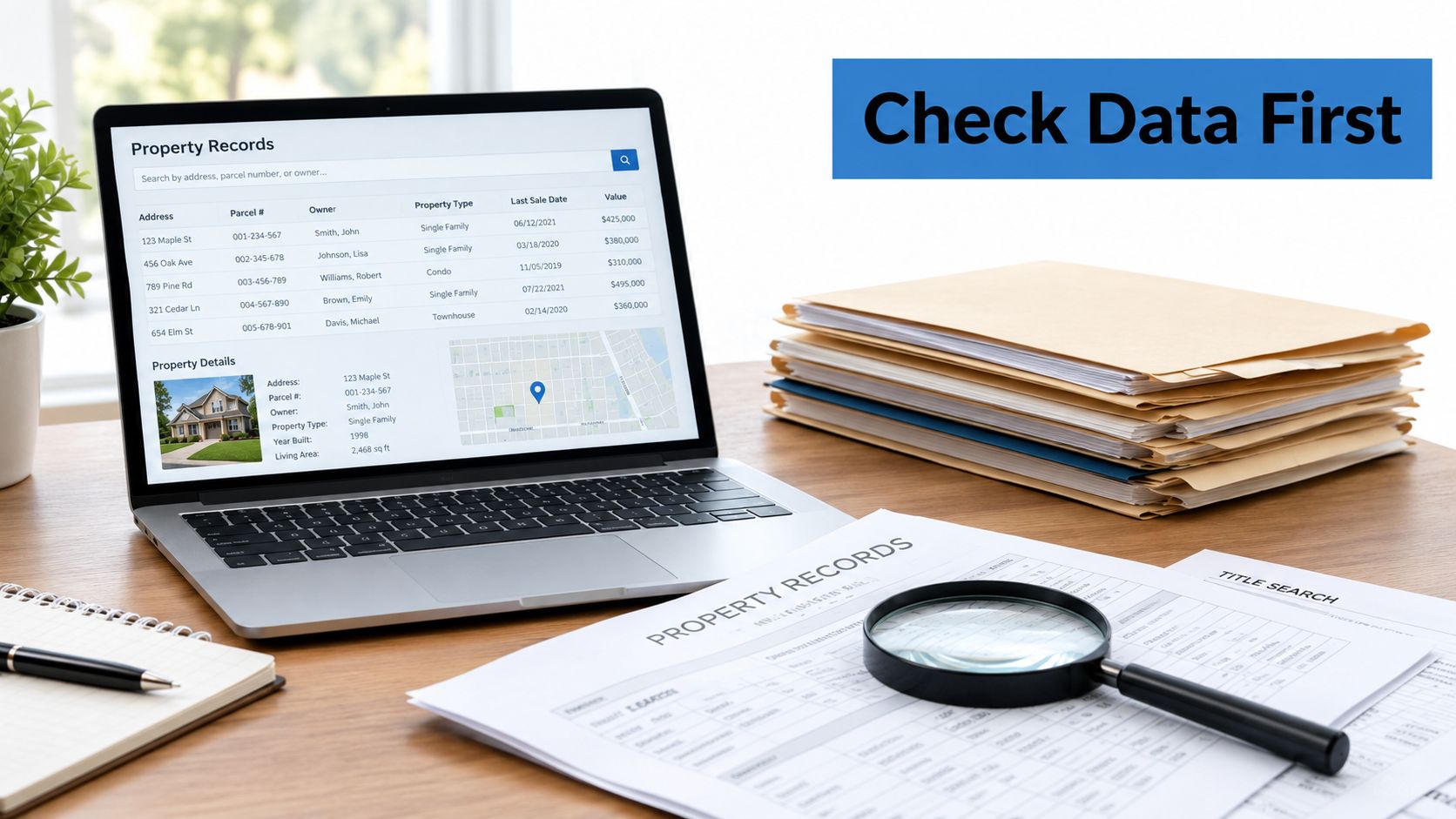
Run these checks in order:
- Confirm owner of record. Match the legal owner to the borrowing or selling entity in the deal documents. Investigate mismatches, recent transfers, and fragmented ownership before you proceed.
- Trace ownership history. Review chain of title, transfer dates, and sale prices for flips, related-party transfers, or valuation jumps that need explanation.
- Map liens and mortgages. Identify open loans, lien priority, recorded balances where available, tax liens, judgments, and other claims that sit ahead of new capital.
- Test value and equity. Compare automated valuation signals and valuation history with debt exposure. A thin equity cushion changes refinancing and loss severity.
- Check occupancy and income signals. Cross-check listing history, rent signals, vacancy indicators, and owner occupancy against the sponsor's income claims.
- Screen for distress. Look for pre-foreclosure activity, lis pendens, tax delinquency, permits, and code-related red flags that signal deferred problems.
If the owner in the public record doesn't match the entity asking for money, stop and resolve that discrepancy before discussing yield.
Turn this into a repeatable workflow with a documented real estate due diligence checklist, especially if you're screening multiple assets or monitoring a portfolio. Save dated snapshots of ownership, lien, valuation, and distress results so you can show what was known when capital was committed.
For lenders and proptech teams, refresh matters as much as coverage. Ownership changes, new liens, listing activity, and distress filings can alter risk after origination. A one-time pull at signing isn't monitoring. Build scheduled re-checks around maturity dates, lease events, payment problems, and major valuation moves. That's how you spot vulnerability before it becomes a forced sale or interrupted distribution.
Putting It Together, A Decision Rubric for CD Real Estate
Use four checks every time you encounter CD real estate, and don't skip ahead because the rate looks attractive. The rubric below turns the analysis into a sequence you can apply to a bank offer, a sponsor pitch, or a property you're preparing to buy.
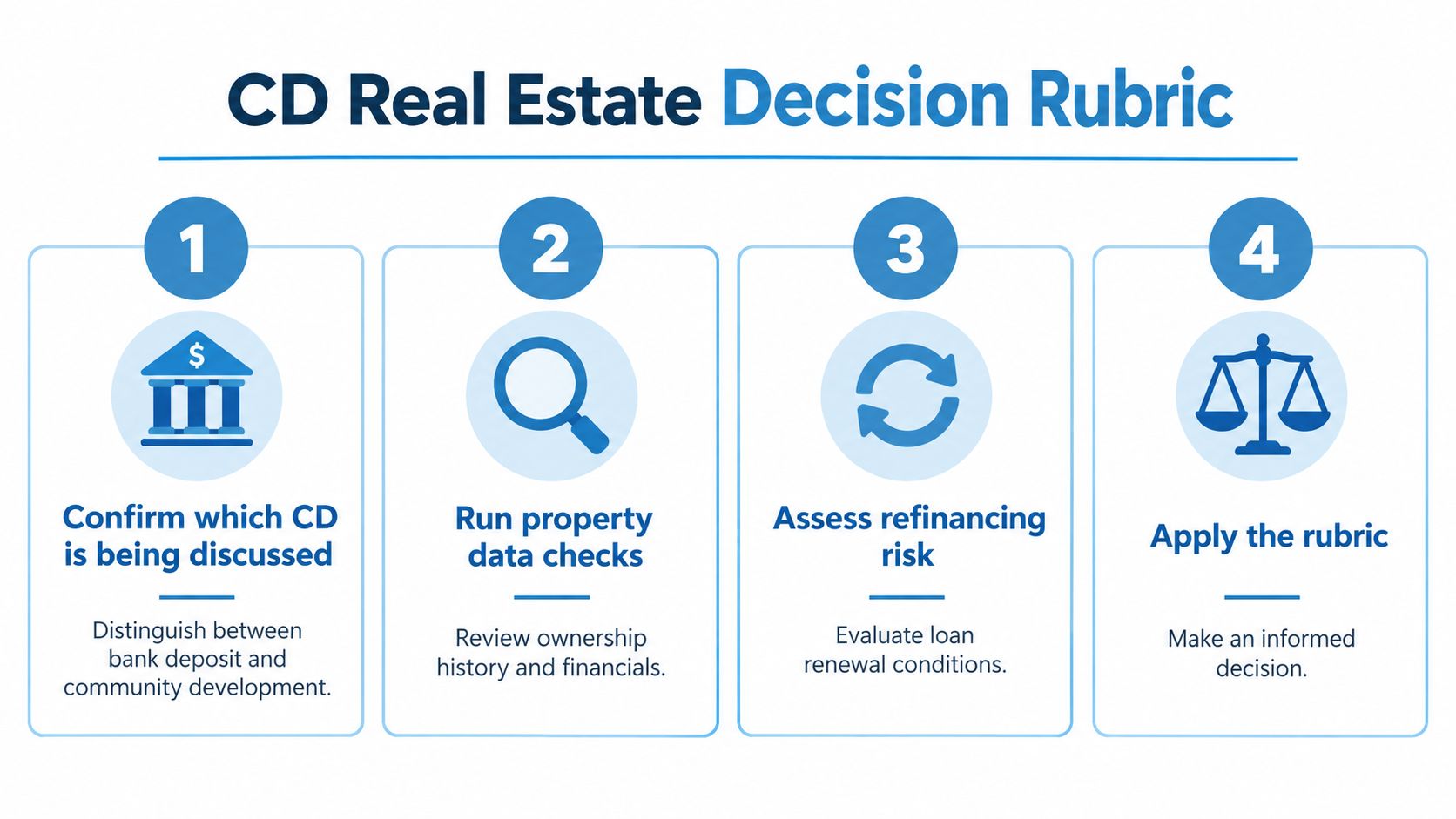
- Identify the instrument: Confirm whether it's an insured bank deposit or a property-linked private instrument, and name the issuer.
- Test liquidity and tax timing: Match maturity, penalties, secondary-market access, and taxable interest to your closing calendar.
- Stress the property debt: Examine maturity, occupancy, valuation, lien priority, and refinancing capacity under weaker conditions.
- Verify before signing: Independently confirm ownership, liens, value, rent or listing signals, and distress flags.
Pair that rubric with disciplined real estate investment property analysis so the reserve decision and the asset decision use the same assumptions. Too many investors underwrite the CD rate carefully and the building casually. Reverse that instinct.
My final recommendation is simple. Use a plain bank CD when capital preservation and a defined future date are the job. Treat a property-linked CD as a private real estate investment until documents prove otherwise. If insurance, ownership, liquidity, or refinancing answers are fuzzy, the correct decision isn't to negotiate harder. It's to pass.
Before your next CD-funded acquisition or property-linked allocation, verify ownership, liens, valuation, and distress signals on the actual asset instead of trusting a summary sheet. BatchData gives investors, lenders, and proptech teams daily refreshed U.S. property, ownership, mortgage, and market data through APIs and bulk delivery to support underwriting and portfolio monitoring.