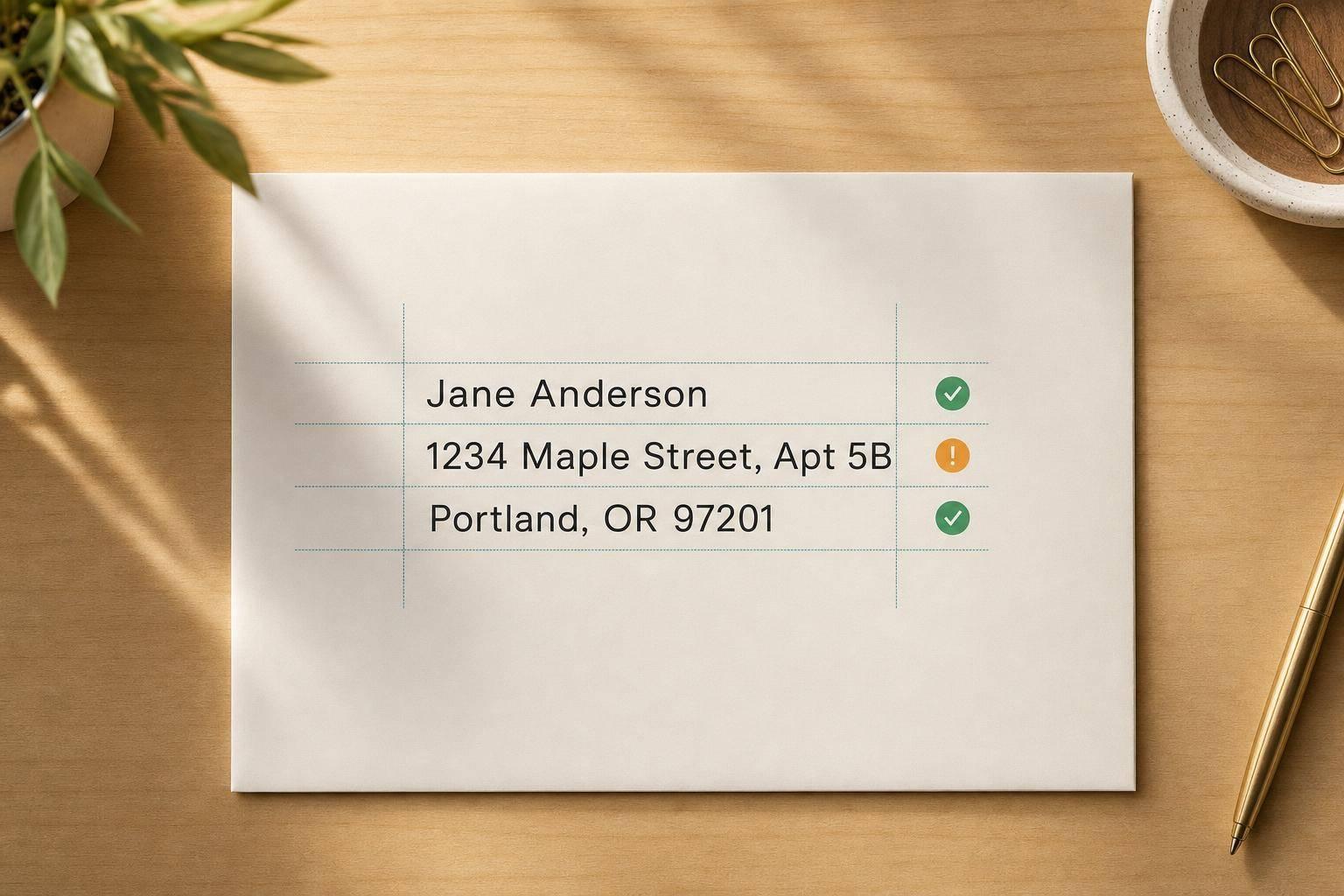
US Mailing Address Format Checker
Clean up address formatting with confidence
A US mailing address format checker is useful when you want to review an address before printing a label, sending customer mail, or saving contact details in a cleaner format. Small mistakes—like extra punctuation, a misspelled state, or a ZIP code written incorrectly—can make an address look unprofessional and harder to process.
What this tool helps you catch
This checker focuses on structure and presentation, not official deliverability. It reviews required fields, recognizes valid state abbreviations, accepts standard ZIP and ZIP+4 patterns, and highlights likely issues such as missing street numbers or inconsistent unit labels. If you paste a full address, it can also try to split the text into separate fields for easier review.
A practical way to standardize US addresses
If you regularly work with contact forms, shipping details, invoices, or mailing lists, a mailing address checker can save time and reduce avoidable formatting errors. The suggested output is designed to be easier to read and more consistent with common US mailing conventions. That means you can standardize address entries quickly while still keeping full control over the final version.
FAQs
Does this tool verify that an address is real or deliverable?
No. This tool is designed to check formatting and structure, not confirm whether an address actually exists or can receive mail. It can point out issues like a missing city, an invalid state entry, or a ZIP code in the wrong format, but it should not be treated as official USPS validation unless a real address verification API is connected.
Can I paste a full address instead of filling in every field?
Yes. You can paste a full US address, and the tool will attempt to split it into street address, unit, city, state, and ZIP code. Because this is a rules-based parser, some addresses may still need a quick manual edit, especially if the original text is messy, unusually formatted, or missing separators.
What kinds of formatting problems can it catch?
It looks for common issues that make addresses harder to read or process, such as missing required fields, invalid state abbreviations, incorrect ZIP code format, repeated spaces, odd punctuation, inconsistent apartment or suite labels, and casing problems like ALL CAPS or all lowercase. It can also flag patterns that suggest the street line may be incomplete, such as a missing street number or a likely missing suffix like St, Ave, or Rd.