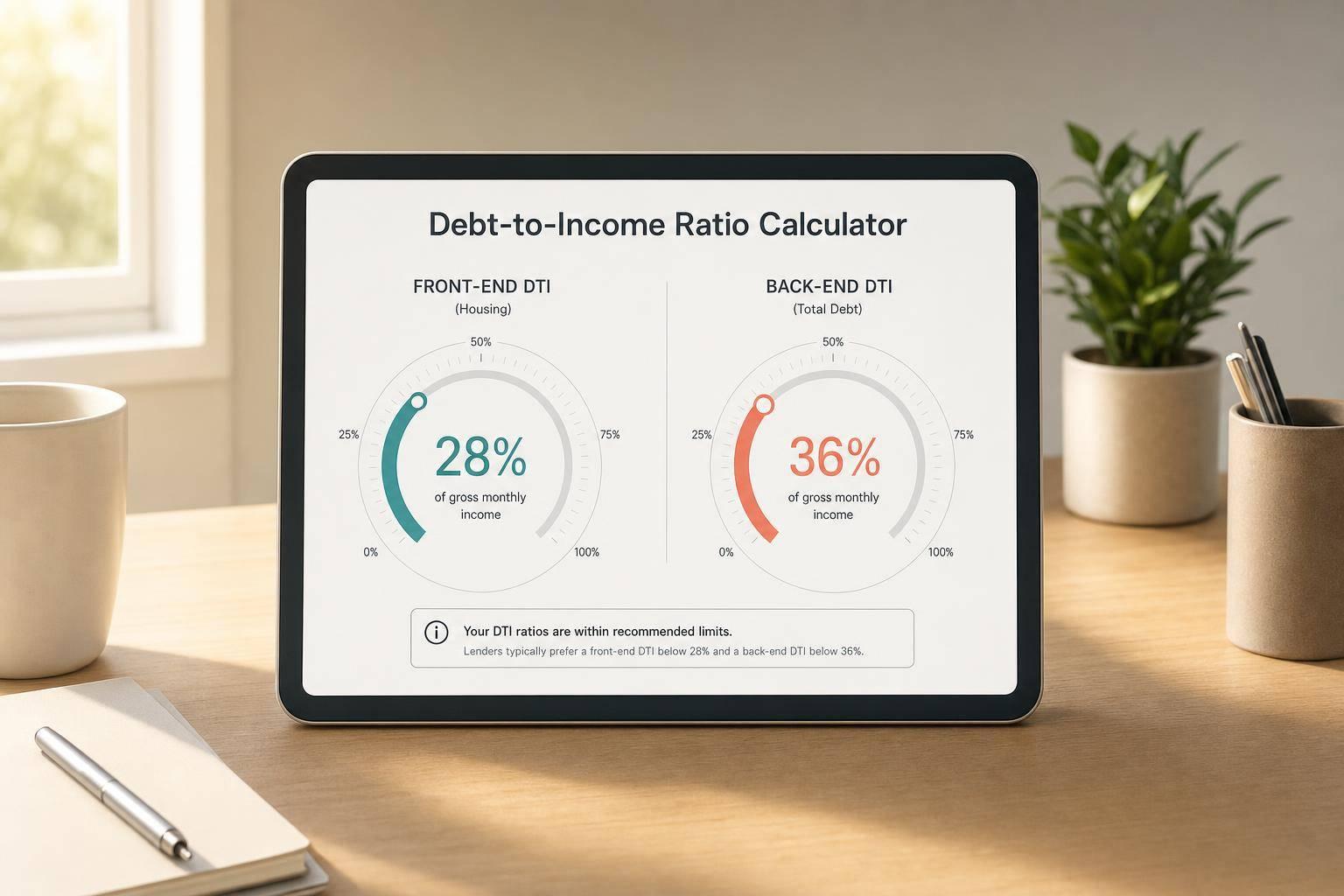
Understand Your Monthly Debt Picture
A Debt-to-Income Ratio Calculator helps you see how much of your gross monthly income is already committed to housing and other recurring debts. That matters whether you’re reviewing your budget, comparing renting versus buying, or trying to understand how a lender may look at your finances. This tool estimates both the front-end ratio, which focuses on housing costs, and the back-end ratio, which includes total monthly debt obligations.
Why DTI Matters
Your debt-to-income ratio isn’t the only number that affects borrowing, but it’s one of the clearest ways to measure payment pressure. A lower ratio often means more room in your budget for savings, emergencies, and day-to-day expenses. A higher percentage can be a sign that debt payments are taking up too much of your income.
What This Calculator Shows
By converting weekly, biweekly, monthly, or annual income into a monthly figure, the calculator gives you a more apples-to-apples view of your obligations. You’ll see your housing expense ratio, total debt load, and a practical interpretation of where your result falls. If your back-end DTI is elevated, that can be a useful prompt to explore debt payoff strategies, lower monthly expenses, or income growth before taking on a new obligation.
FAQs
What’s the difference between front-end and back-end DTI?
Front-end DTI looks only at housing costs compared with your gross monthly income. That usually includes your rent or mortgage payment, property taxes, homeowners insurance, and HOA dues. Back-end DTI is broader. It includes housing plus other recurring debt payments, such as car loans, student loans, credit card minimums, personal loans, and support obligations. Lenders often pay closer attention to back-end DTI because it gives a more complete picture of your monthly debt load.
What DTI ratio is considered good?
There isn’t one universal cutoff, but a front-end ratio around 28% or less is often viewed as favorable, and a back-end ratio around 36% or less is commonly considered healthy. Once back-end DTI gets near 43%, borrowing can become more difficult in many lending situations. A higher ratio doesn’t automatically mean you won’t qualify for credit, but it can signal tighter cash flow and may affect loan options, rates, or approval terms.
Can I use this calculator if some housing fields are missing?
Yes. If you don’t have every housing detail yet, the tool can still provide an estimate based on the figures you do know, especially if you choose to include estimated housing costs only when some fields are blank. Just keep in mind that the more complete your numbers are, the more useful the result will be. This tool is best used for planning and education, not as a loan approval decision.