



SEO Title: Abandoned Buildings Illinois Guide for Investors
Meta Description: Learn how to find, vet, and acquire abandoned buildings in Illinois using legal, municipal, and property-risk signals.
Meta Keywords: abandoned buildings illinois, illinois vacant properties, chicago abandoned buildings data, distressed property investing illinois, abandoned property risk assessment, illinois redevelopment, motivated sellers illinois
Illinois investors do not win this niche by finding the most dramatic-looking building. They win by building a repeatable process for spotting ownership failure, screening risk early, and pricing the work before everyone else sees the opportunity.
Abandoned buildings in Illinois sit at the intersection of municipal enforcement, title problems, deferred maintenance, insurance exposure, and redevelopment upside. The operators who make money here treat them as data problems first. Curb appeal, or the lack of it, is only the starting signal.
The practical question is simple. Which properties can you legally access, underwrite with confidence, and convert into a viable acquisition or redevelopment play?
Quick takeaways
- Classification drives the deal. A property can appear abandoned and still fall into a different legal or municipal category.
- Public records create sourcing advantages. Complaint history, vacancy indicators, tax status, and code activity can be monitored systematically instead of searched one address at a time.
- Safety risk changes pricing fast. Fire exposure, structural deterioration, and unsecured access affect inspection strategy, insurance assumptions, and rehab scope.
- Reuse strategy matters early. Some buildings belong in a redevelopment pipeline. Others are demolition candidates, hold-for-assemblage sites, or poor fits at any price.
- Manual deal hunting does not scale. Investors need a workflow that connects municipal signals, ownership data, and outreach execution.
That workflow is what separates curiosity from inventory. In Illinois, the edge comes from knowing how abandonment is defined, where distress appears first in public records, how to reject dangerous or legally messy deals fast, and how to contact the right owner before the asset becomes a crowded listing.
How Is an “Abandoned Building” Legally Defined in Illinois?
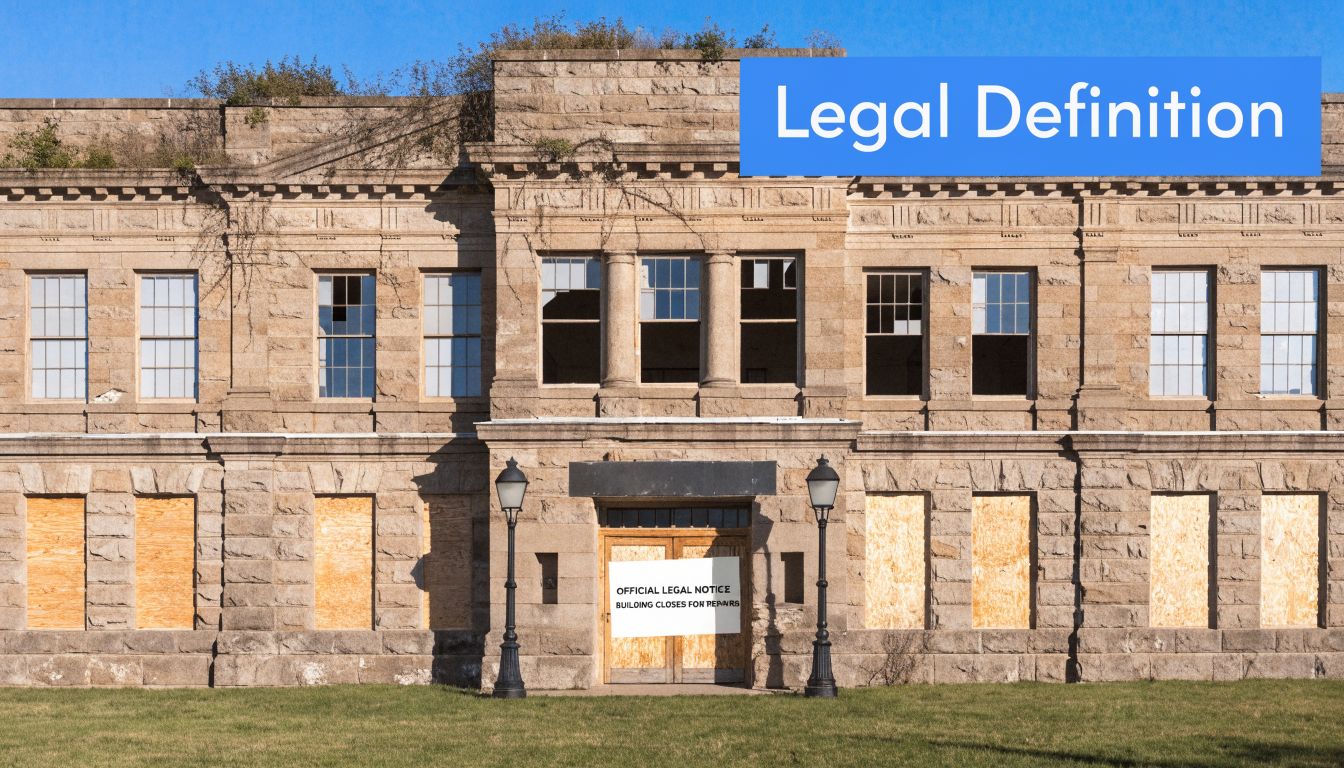
An abandoned building in Illinois is not defined by appearance alone. It's usually the result of state law, foreclosure status, and local ordinance rules working together, with municipalities often making the most important classification calls.
That distinction matters because vacant and abandoned aren't interchangeable in practice. A vacant property might be unoccupied. An abandoned property usually carries additional signals such as neglect, noncompliance, or a breakdown in ownership responsibility that can trigger municipal action, boarding requirements, nuisance enforcement, or accelerated scrutiny from code officials.
What investors need to separate early
The first screen is simple. Ask whether the property is:
- Vacant but maintained: no occupant, but utilities, lawn care, and exterior condition suggest active ownership
- Vacant and distressed: no occupant plus visible neglect, complaints, or unresolved code issues
- Operationally abandoned: no occupant and no credible maintenance or management response
- Legally constrained: tied up in foreclosure, estate issues, municipal violations, or uncertain title
A lot of bad deals start when investors collapse all four into one category.
Why municipal rules matter more than curb appeal
Across Illinois, cities don't all use the same triggers or enforcement posture. In practice, local governments often look at combinations of:
| Signal | Why it matters | Investor implication |
|---|---|---|
| Prolonged non-occupancy | Suggests no active use | Raises maintenance and nuisance risk |
| Utility shut-offs | Indicates operational distress | Can support abandonment screening |
| Open code violations | Shows unresolved compliance issues | Adds cure cost and timeline risk |
| Tax delinquency or ownership limbo | Suggests weak owner capacity or disengagement | May create opportunity, but often with title complexity |
The point isn't that every city uses the same checklist. They don't. The point is that legal meaning comes from records and enforcement history, not from boarded windows alone.
Practical rule: Never underwrite from the sidewalk. Underwrite from the ordinance, the complaint history, and the title trail.
Access risk is part of the legal definition problem
Many beginners get sloppy at this stage. A property that appears abandoned is not automatically open for inspection, photography, or entry.
Entering abandoned properties can trigger trespassing charges and fines, and many sites carry hazards such as unstable floors, asbestos, and wildlife exposure, while perimeter photography may be legal in some cases, as noted in this discussion of Illinois abandoned locations and access risks.
That creates a bright line for investors. Curiosity is not due diligence. Permission, title review, and lawful access are due diligence.
What works and what doesn't
What works
- Checking city complaint systems, violation records, and tax status before a site visit
- Confirming whether a foreclosure, probate matter, or municipal case affects access
- Treating “abandoned” as a legal and operational status, not a visual label
What doesn't
- Assuming boarded properties are available for entry
- Mailing offers before identifying who controls the property
- Confusing neglect with clear acquisition opportunity
In abandoned buildings Illinois searches, this is the first serious filter. If you get the definition wrong, everything after it gets more expensive.
How Can You Systematically Locate Abandoned Properties?
Open complaint records, vacancy signals, and distress indicators can generate far more leads than any investor can pursue by windshield time alone. The edge comes from building a repeatable filter that cuts a large universe down to a workable acquisition list.
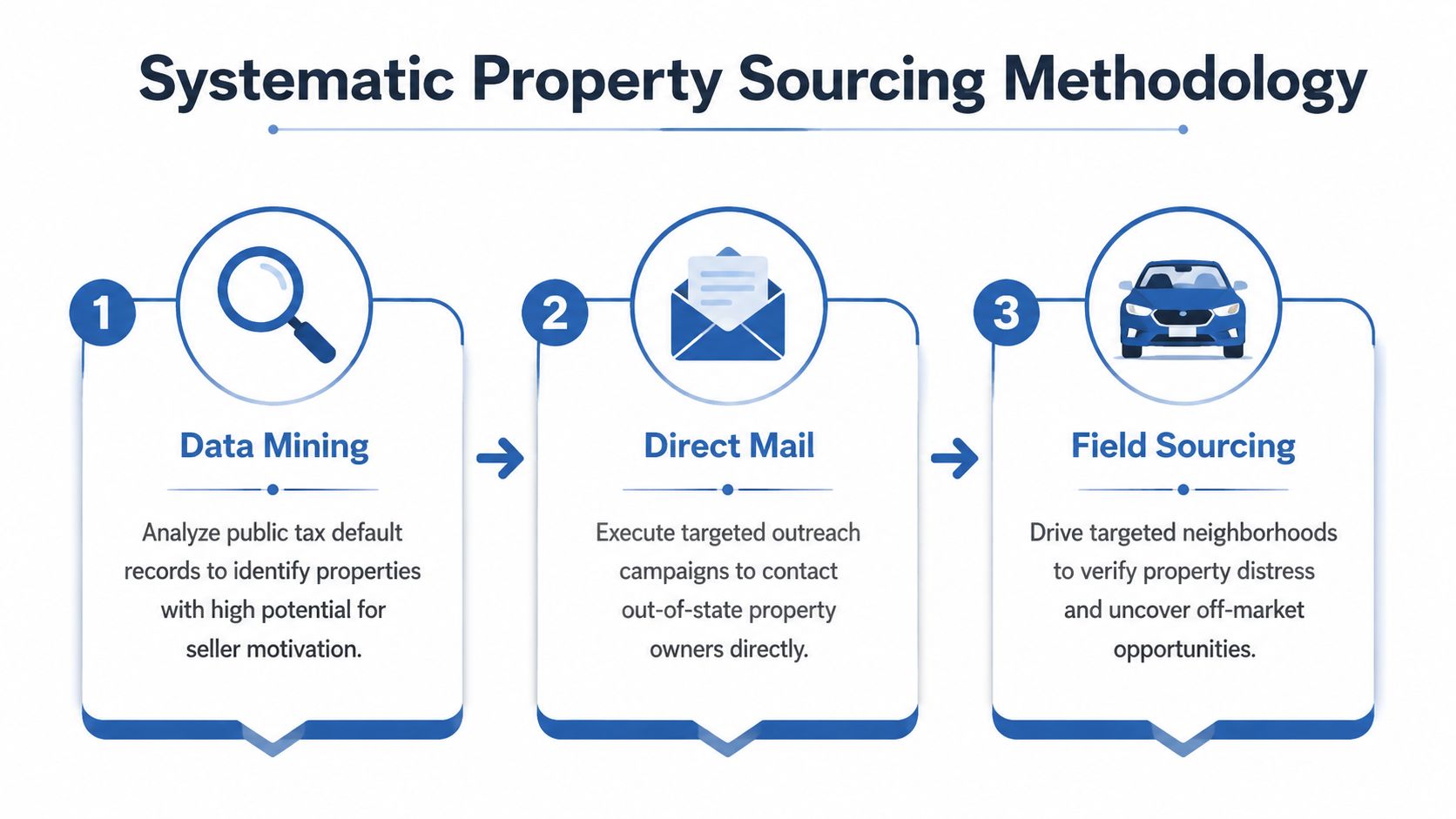
You locate abandoned properties systematically by stacking municipal signals, parcel-level ownership data, and field verification in that order. Investors who reverse that order usually waste time on addresses they cannot control, cannot finance, or should never touch.
Start with municipal activity, not curb appeal
Chicago is the clearest operating model in Illinois because the city publishes open abandoned-building complaint data and refreshes it frequently, as noted earlier. That matters because stale vacancy data is weak sourcing data. A property that drew attention years ago may already be occupied, demolished, transferred, or tied up in enforcement.
The better use of complaint records is not simple lead generation. It is ranking.
Prioritize addresses based on:
- Recency: newer complaints deserve faster review
- Repeat activity: multiple complaints often point to unresolved neglect
- Cluster density: distress concentrated on a few blocks can affect both risk and exit strategy
- Address quality: complaint records often need parcel matching before they are useful for owner research
This first screen should produce a shortlist, not a final buy list.
Add ownership and distress layers before anyone drives the route
A single vacant or abandoned flag is weak. A file gets more interesting when several signals line up around the same parcel.
Good sourcing stacks public and commercial data around each address:
| Data layer | What it shows | Why it matters |
|---|---|---|
| Municipal complaints | Active neighborhood reporting | Surfaces current visibility and possible code pressure |
| Ownership type | Individual owner, estate, LLC, absentee, investor | Helps estimate response rate and decision-maker complexity |
| Tax status | Delinquency or payment issues | Indicates pressure and possible hidden payoff problems |
| Foreclosure or court activity | Legal distress and timing | Affects who can sell and when |
| Permit history | Active work or recent abandonment reversal | Removes false positives from your list |
Analysts at ATTOM found that vacancy risk is not distributed evenly across ownership situations. It shows up more often in higher-stress categories such as investor ownership and pre-foreclosure. Operationally, that means a complaint-heavy property tied to absentee ownership or legal distress deserves more attention than a boarded building with no supporting signals.
If you want a practical reference for building that kind of list, this guide on how to find distressed properties follows the same layered logic.
Then verify only the files that survive screening
Field work still matters. It just belongs later in the workflow.
Once an address clears the data screens, verify a short list from the public right-of-way and document what the records cannot show:
- Whether the structure is still standing and appears secure
- Whether there are signs of active occupancy, maintenance, or contractor presence
- Whether the property looks vacant, unmanaged, or in transition
- Whether the block is improving, flat, or losing occupancy
- Whether neighboring uses support your likely exit, rental hold, resale, or assemblage
This step is where many investors get sloppy. They see a dramatic structure, assume distress, and mentally skip to acquisition. A disciplined operator treats site review as confirmation work, not discovery work.
What usually fails
Driving every block first fails because it puts labor ahead of probability.
Buying generic vacant-property lists fails because those files often mix temporary vacancy, inherited homes, active rehabs, and true abandonment.
Chasing aesthetics fails because visual neglect does not solve title problems, ownership ambiguity, municipal claims, or access issues.
For abandoned buildings Illinois investors, systematic sourcing is an operations problem. The goal is to identify properties with visible distress, traceable control, and a realistic path to acquisition before your team spends money in the field.
How Do You Assess the Risk of an Abandoned Property?
A bad abandoned-property deal usually fails before rehab starts. The failure points are predictable: unclear title, municipal claims, unsafe condition, and a resale plan that does not fit the block.
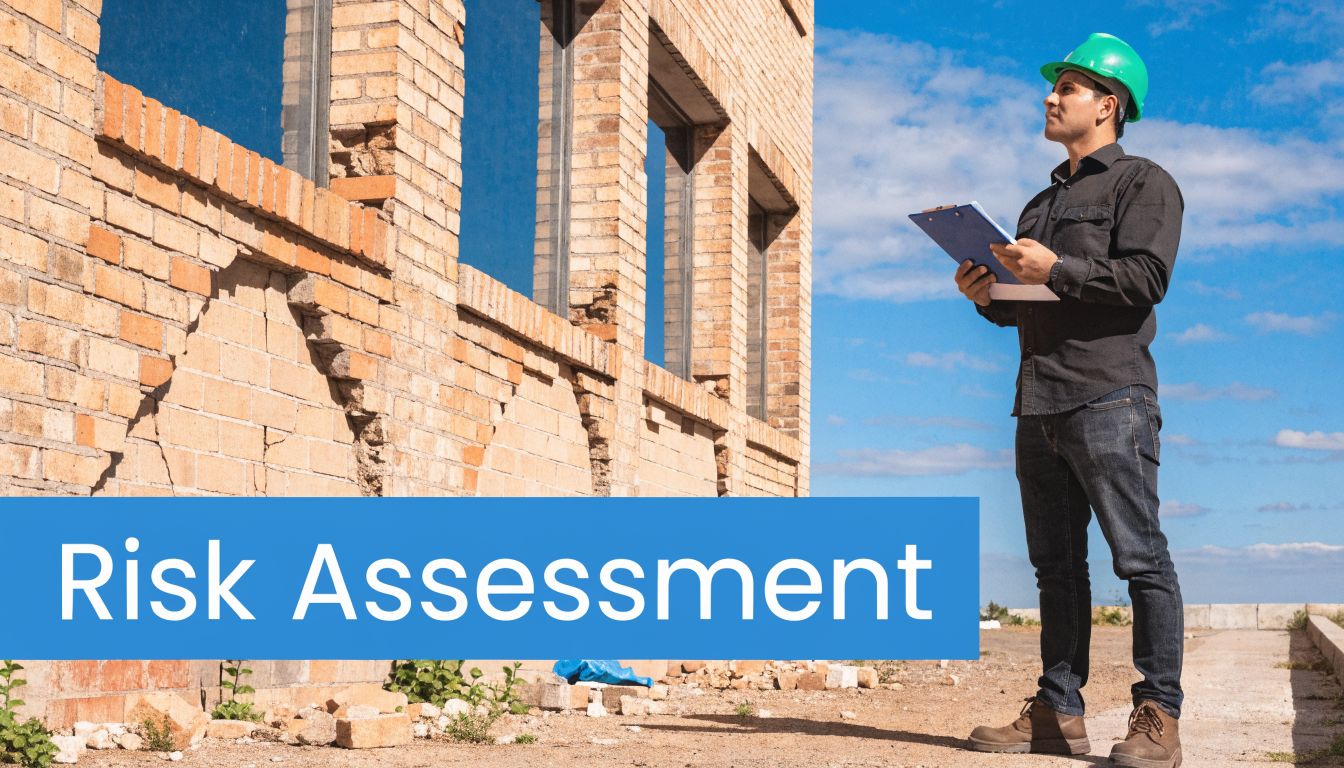
You assess risk by underwriting three files at once: the money file, the condition file, and the control file. Investors who collapse those into one vague "distress" category tend to overpay for uncertainty.
Start with financial exposure, not the asking price
The price on paper is rarely the actual basis. The true basis is price plus obligations plus time.
Review the file for:
- Back taxes: delinquent taxes change payoff math and can affect timing
- Liens and municipal claims: boarding, cleanup, nuisance abatement, and utility balances can survive longer than inexperienced buyers expect
- Mortgage and foreclosure history: unresolved debt history often signals a slower path to clean transfer
- Carrying costs: insurance, security, mowing, winterization, and vacancy time can erase a thin margin fast
A disciplined investor estimates two numbers early. The first is all-in acquisition cost. The second is cost to get the asset to a financeable or saleable state. If those numbers are fuzzy, the risk premium needs to go up. For a practical screening framework, use this real estate due diligence checklist.
Physical risk changes the exit strategy
Vacant buildings deteriorate without interruption. Water gets in. Freeze-thaw cycles spread damage. Copper disappears. Unauthorized entry creates liability and can change the condition between one visit and the next.
That matters because condition does not just affect rehab budget. It affects what kind of deal you have. A property that looked like a light renovation in photos can become a heavy rehab, a shell conversion, or a teardown once you verify structure, roof lines, mechanicals, and signs of fire or long-term moisture.
Use a simple screen:
| Physical issue | What to verify | Likely effect on the deal |
|---|---|---|
| Water intrusion | roof failure, staining, soft floors, mold indicators | Higher rehab scope, longer timeline |
| Structural distress | settlement, wall movement, collapsed sections | Engineering costs, permit complexity, possible teardown |
| Fire or vandalism damage | char, open access points, stripped systems | Insurance issues, salvage-only economics |
| Deferred exterior maintenance | masonry failure, broken windows, unsecured entries | Faster ongoing deterioration and neighborhood complaints |
Buy based on verified condition, not old assumptions.
Legal and control risk decides whether you can close
Some abandoned properties are expensive to fix. Others are impossible to buy on a useful timeline.
The biggest blockers are usually ownership and title issues:
| Risk type | What it looks like | Why it matters |
|---|---|---|
| Clouded title | missing transfers, conflicting interests, recording gaps | Closing can stall or fail |
| Heir or estate complications | multiple heirs, probate delays, unclear authority to sign | Outreach takes longer and negotiations get fragmented |
| Tax sale status | redemption periods or procedural limits | You may not control the asset when you think you will |
| Code enforcement exposure | open violations, citations, demolition pressure | Post-close cash needs can hit immediately |
This is the part newer investors underestimate. A building can be cheap, vacant, and visibly distressed, yet still be a poor target if no single party can convey clean control.
Use the right order of operations
Handle risk in sequence.
- Confirm ownership and likely authority to sell
- Review taxes, liens, and municipal enforcement history
- Estimate condition risk from records, imagery, and lawful exterior verification
- Model the exit based on realistic rehab or demolition scope
- Schedule interior access, contractor bids, and legal review only after the file still makes sense
That order cuts wasted inspections, wasted outreach, and wasted earnest money. For abandoned buildings Illinois investors pursue seriously, good risk assessment is less about spotting distress and more about deciding which distressed assets are controllable, financeable, and worth operating.
What Are the Strategies for Redevelopment and Use?
The best redevelopment strategy depends on what kind of abandonment you're looking at. Some properties are cleanup-and-resell deals. Others are hold assets, assemblage pieces, or preservation-sensitive reuse projects.
Treating every distressed building like a flip is lazy underwriting. The structure, neighborhood, legal status, and historical context all change the correct play.

Four strategies that are actually usable
| Strategy | Best fit | Main upside | Main limitation |
|---|---|---|---|
| Fix and flip or rent | small residential or mixed-use assets with recoverable condition | Fastest path to monetization when title and rehab are manageable | Margin disappears if hidden condition is severe |
| Land banking | weak structure, decent location, long-term neighborhood thesis | Lets you control future optionality | Ties up capital without immediate income |
| Assemblage | parcels that matter more together than alone | Can create a larger development footprint | Requires patience and coordination |
| Adaptive reuse | schools, factories, institutional buildings, unusual architecture | Can unlock differentiated value and community support | Usually carries more design, code, and capital complexity |
Adaptive reuse is where many investors mislabel the asset
A surprising number of Illinois properties marketed or discussed as “abandoned” are better understood as at-risk historic assets. That isn't semantic. It changes what you can do, what others may support, and how the market values the end product.
Many frequently searched Illinois landmarks are in transition rather than permanent ruin. The Illinois Soldiers' and Sailors' Children's School, for example, is on the National Register of Historic Places, as noted in this overview of Illinois abandoned locations and preservation context.
That means the right redevelopment lens is sometimes preservation-plus-reuse, not scrape-and-rebuild.
Some “abandoned” buildings have more value in their identity than in their shell.
A visual example helps here:
What works in practice
Fix and rent works when the building is ordinary enough to finance, lease, and maintain without heroic assumptions.
Land banking works when the structure itself may not justify immediate rehab, but control of the parcel does.
Assemblage works when nearby ownership fragmentation blocks a bigger project and your parcel is one piece of that puzzle.
Adaptive reuse works when the building's story, scale, or design creates something replacement construction can't mimic.
What usually goes wrong
Investors lose money when they choose a strategy before validating the asset class. A deteriorated house is not a historic conversion. A former school is not a basic rental turn. A burned-out structure on a shrinking block is not a passive hold just because the ask is low.
For abandoned buildings Illinois opportunities, the money isn't in finding the most dramatic building. It's in matching the property to the redevelopment model that fits its constraints.
How Do You Execute an Outreach and Acquisition Workflow?
You execute an outreach and acquisition workflow by moving from screened parcel list to verified owner, then to timed contact, then to active monitoring. Most outreach underperforms because investors skip the verification step and send the same message to everyone.
In Illinois, that sloppiness gets expensive fast. Markets with concentrated abandonment punish generic processes because the volume is too high and the ownership situations are too uneven.
Build the contact strategy from the file
East St. Louis shows why scale matters. Local reporting citing 24/7 Wall St. said the city was ranked the 4th most abandoned city in America, with 698 vacant buildings, equal to 26.89% of all homes, with 5,908 residents and an average home value of about $47,500, according to this report on East St. Louis abandonment levels.
In a market like that, random outreach isn't a strategy. You need triage.
Start by sorting your targets into working buckets:
- High-probability reachable owners: absentee or investor owners with clear mailing paths
- Complex legal files: estate, foreclosure, or uncertain control
- Low-priority inventory: distressed looking, but no compelling seller signal yet
That lets you reserve your best outreach effort for assets where contact can produce a deal.
Use message fit, not template volume
A good first message acknowledges the property problem without sounding predatory. It should be short, specific, and professional.
Useful outreach usually includes:
- Property specificity: reference the address or parcel clearly
- Straight intent: say you're interested in buying, not “partnering” or “helping” in vague terms
- Low-friction response path: phone, email, or simple return mail
- Respect for complexity: if the property may involve co-owners or estate issues, don't pretend it's a one-signature close
If you're building owner outreach in a more systematic way, this guide on how to find motivated sellers fits the same direct-response logic.
Monitoring is what keeps the pipeline alive
Abandoned-property outreach isn't one-and-done. Files change. Municipal pressure increases. Ownership status shifts. Complaint activity rises or goes quiet.
That's why serious operators monitor targets instead of rebuilding lists from scratch every few months. The practical goal is simple: know when a file changes enough to justify a fresh touch, a revised offer, or a site revisit.
The investor who responds first to a real change usually beats the investor who sends the most mail.
What a clean workflow looks like
| Stage | Action | Output |
|---|---|---|
| List build | Filter for distress, ownership complexity, and local signals | Target universe |
| Contact verification | Confirm who controls the property and how to reach them | Reachable owner record |
| Targeted outreach | Send property-specific contact with a clear offer path | Inbound responses and conversations |
| Ongoing monitoring | Track status changes that affect timing or urgency | Repeatable acquisition pipeline |
The operators who do well in abandoned buildings Illinois investing don't just find neglected structures. They build a repeatable machine for lawful access, clean underwriting, and disciplined seller contact.
If you want to run that workflow at scale, BatchData gives investors, lenders, and proptech teams a unified property data layer for sourcing, due diligence, owner contact enrichment, and portfolio monitoring. It's built for teams that need current records, broad coverage, and a faster path from parcel research to acquisition decisions.