






































SEO Title: Home Title Problems: How to Find, Fix & Prevent Costly Issues
Meta Description: A complete guide to home title problems. Learn to identify common title defects, understand title fraud, and use tools like title insurance and monitoring to protect your property.
Meta Keywords: home title problems, what is a title defect, title fraud, clouded title, fix title issues, title search, owner's title insurance, property monitoring
A home title problem is a legal defect in a property's history that challenges your right to ownership, potentially halting a sale and costing you thousands in legal fees. Over 47% of real estate transactions in Q1 2025 showed red flags for title or wire fraud, making a clear title a non-negotiable asset for any homeowner or investor. This guide breaks down the most common title defects, how to find them, and the exact steps to resolve them.
Core Takeaways:
- Financial Claims: Unpaid taxes, contractor liens, and old mortgages are the most frequent title defects.
- Public Record Errors: Simple typos or filing mistakes can invalidate an entire chain of ownership.
- Title Fraud: Criminals actively forge deeds to steal property, a risk that has surged in recent years.
- Resolution & Prevention: A combination of corrective legal documents, owner's title insurance, and property monitoring is the best defense.
These aren't abstract risks; they are tangible threats that can erase your equity overnight.
What is a Home Title Problem and Why Does it Matter?
A home title problem is any claim, lien, or error in public records that creates a cloud on the title, raising legal questions about who holds true ownership of a property. A "clean" title means your ownership is undisputed. A "clouded" or "defective" title means an old mortgage, a contractor's lien, or even a typo from 50 years ago could jeopardize your entire investment.
The High Stakes of a Defective Title
A defective title immediately kills most real estate transactions, as buyers and lenders refuse to take on property with unresolved legal issues. For a current owner, a previously unknown heir or lienholder can surface years after purchase, forcing you into court to defend your ownership rights.
The entire title insurance industry, which collected $4.5 billion in premiums in Q2 2025 alone, exists because these problems are so common and costly. During the first six months of 2025, title insurers paid out $336 million in claims, definitive proof that these hidden defects frequently become major financial losses. You can read the full ALTA report on title insurance market share and premium volume for the raw data.
Common Categories of Title Defects
Most title defects, while varying in specifics, fall into predictable categories. Understanding these buckets is the first step toward effective risk mitigation.
Common Home Title Problems and Their Impact
| Problem Category | Specific Example | Potential Impact on Transaction |
|---|---|---|
| Financial Encumbrances | An unpaid property tax bill or a mechanic's lien from a contractor. | The seller must pay off the debt before the sale can close, or the lien will transfer to the new owner. |
| Public Record Errors | A misspelled name on a deed or an incorrect legal description of the property. | Can delay closing for weeks or months while the error is corrected through legal channels. |
| Ownership Disputes | An undisclosed heir from a previous owner's will suddenly makes a claim to the property. | The sale is halted indefinitely, potentially leading to a lengthy and expensive lawsuit to determine rightful ownership. |
| Boundary & Easement Issues | A neighbor's fence is discovered to be built three feet onto your property. | Can lead to disputes with neighbors and may require a new survey and legal agreements before the property can be sold. |
| Probate & Inheritance Problems | The property was not properly transferred out of a deceased person's estate. | The seller may not have the legal authority to sell the property until the probate court process is completed. |
Ignoring the potential for title problems is a gamble no homeowner or investor can afford. A professional title search and owner's title insurance are essential defenses against these hidden financial landmines.
How Do You Uncover Defects in a Property's Title?
You uncover home title problems by commissioning a professional title search, which is a comprehensive investigation of public records to verify the seller's legal right to transfer ownership. This process reconstructs the property's chain of title—a chronological history of all past owners—to identify any claims, debts, or inconsistencies attached to the property.
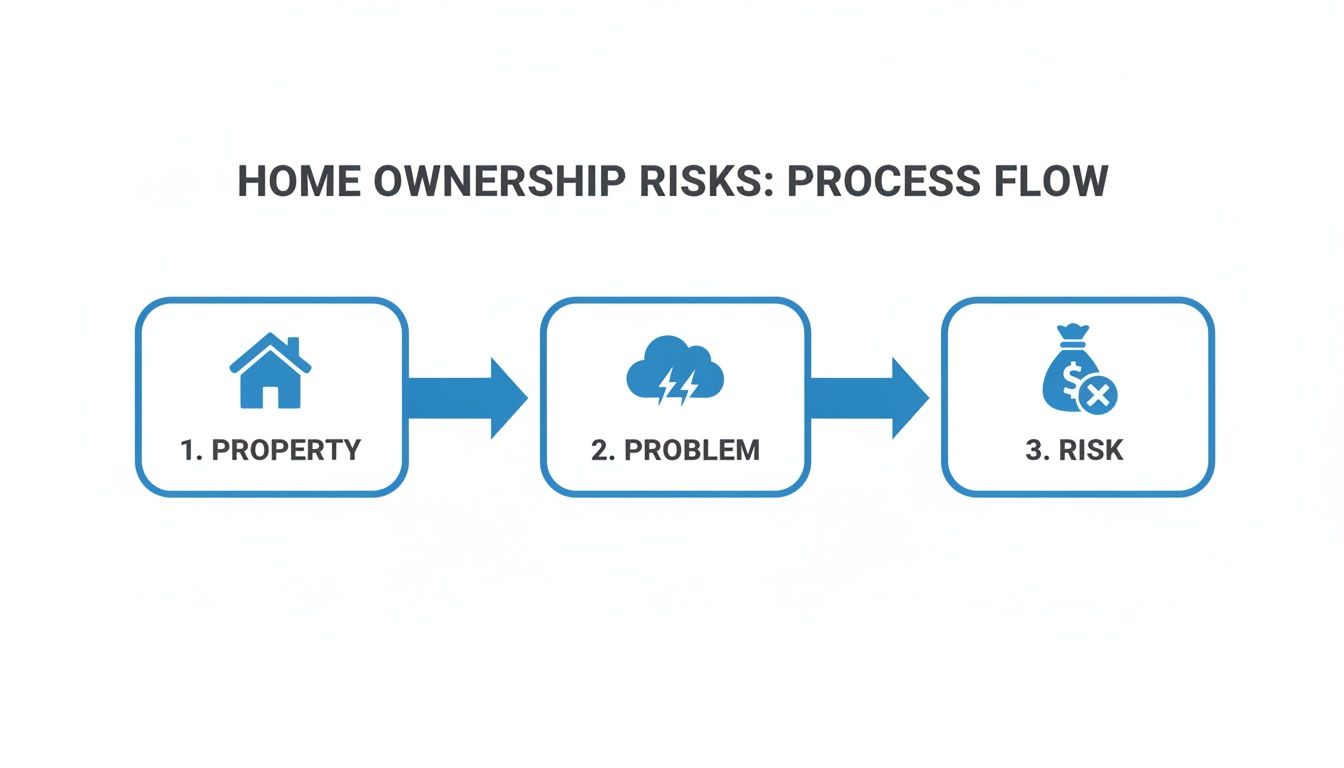
As this illustrates, a small record discrepancy can escalate directly into a significant financial risk for the homeowner. A thorough search is non-negotiable.
Decoding the Preliminary Title Report
The findings of a title search are delivered in a preliminary title report. This document is a roadmap to potential issues and outlines what must be resolved before a title insurer will issue a policy.
Focus on these two sections:
- Schedule A: Confirms the property's legal description, the current recorded owner, and the type of ownership interest being insured. Any discrepancy here is a major red flag.
- Schedule B: Lists all the exceptions—problems the title insurance policy will not cover unless they are fixed before closing. Common exceptions include existing mortgages, tax liens, utility easements, and HOA restrictions (CC&Rs).
The Challenge of Fragmented Public Records
A primary obstacle in any title search is the fragmented nature of U.S. public records, which are spread across over 3,000 counties, each with its own system—some digital, others still using paper ledgers. This lack of standardization makes manual searches slow and prone to human error. You can read more about these title search challenges and their impact on transaction timelines.
Simple mistakes like typos or misfiled documents remain common and can cause weeks of delays while you work with county offices to correct the record. Modern real estate data platforms solve this by aggregating and standardizing data from thousands of sources, enabling automated systems to run comprehensive checks with superior speed and accuracy.
A detailed title review is a critical component of any comprehensive real estate due diligence checklist.
What Are the Most Common Categories of Home Title Problems?
A home title problem, or a "cloud on title," is any issue in the public record that casts doubt on ownership. While specific situations vary, nearly all title clouds fall into one of four primary categories.
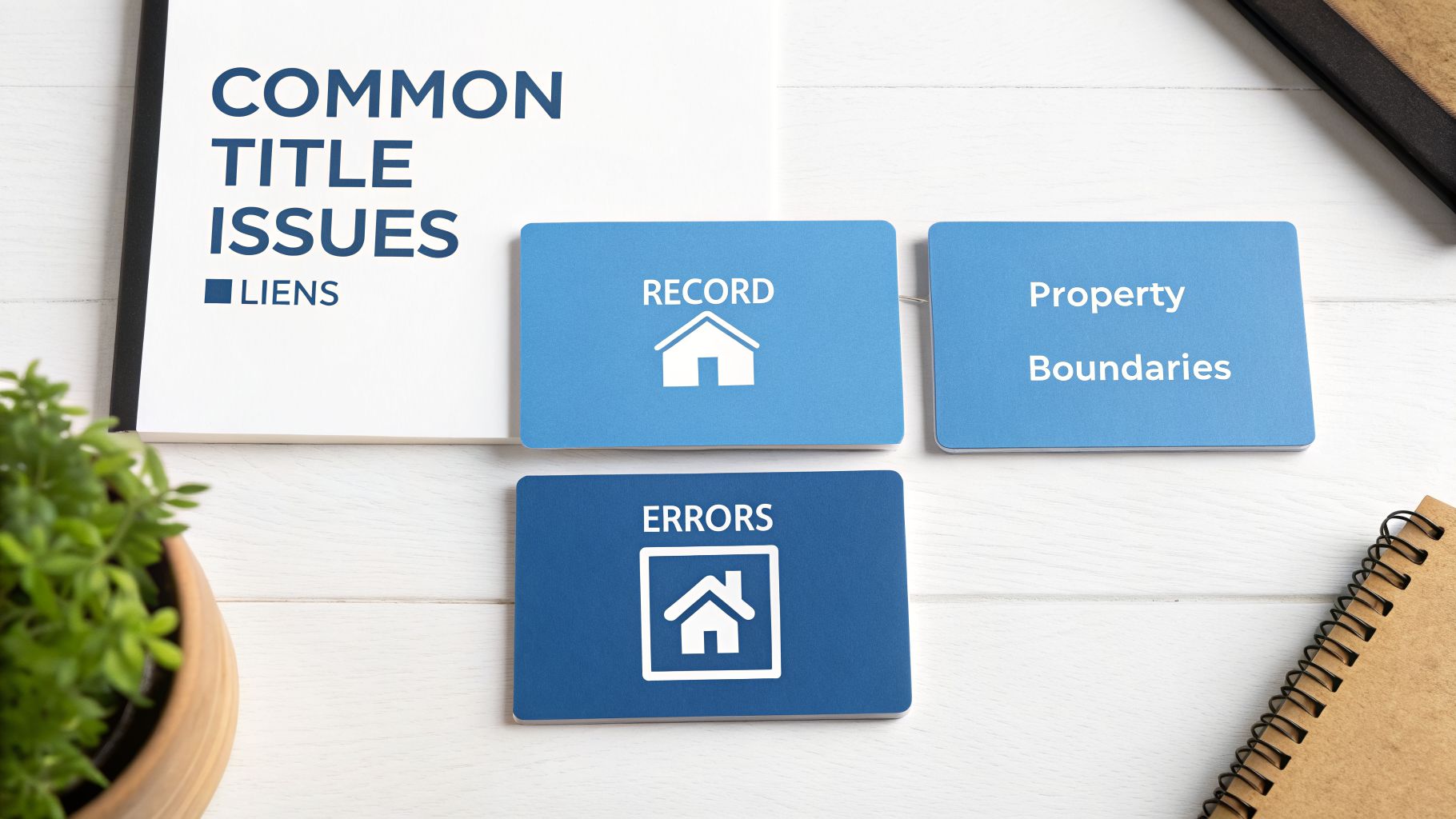
Understanding these categories is your field guide for spotting and resolving trouble before it kills a deal.
Financial Claims and Encumbrances
An encumbrance is a debt attached directly to the property that must be settled before ownership can be cleanly transferred. These are the most common title defects.
- Unpaid Property Taxes: Liens from local governments that take priority over almost all other claims.
- Mechanic's Liens: Filed by contractors or suppliers who were not paid for work done on the property.
- Mortgage Liens: Unreleased liens from previous mortgages that were paid off but never officially cleared from the record.
- Judgment Liens: Imposed by a court to secure payment for a lawsuit lost by a previous owner.
Errors in Public Records
The property ownership system relies on accurate public records, but these records are created and maintained by humans who make mistakes. A clerical error made decades ago can halt a transaction today. For more detail on this, see our article on the 5 common issues in title verification.
- Incorrect Legal Descriptions: An error in the property's boundary lines or lot number on the deed.
- Misspelled Names: A typo in a previous owner's name can technically break the chronological chain of title.
- Improperly Filed Documents: A deed that was signed but never correctly recorded with the county, making the transfer invisible in the public record.
Ownership Disputes and Hidden Claims
This category includes situations where the seller may not have full legal authority to sell the property, or someone else has a legitimate but hidden claim.
- Missing Heirs: A long-lost relative of a deceased former owner emerges with a valid claim to the property.
- Undisclosed Divorces: One spouse sells the property without the legally required consent of the other, who retains an ownership interest.
- Contested Wills: A will granting the property to the seller is challenged in court by another family member.
- Forgeries and Fraud: A deed in the property's history was forged, invalidating all subsequent ownership transfers.
Physical Property and Boundary Issues
These problems arise when the legal description on the deed does not match the physical reality of the land.
- Encroachments: A neighbor's fence, shed, or driveway is built partially on your property.
- Boundary Line Disputes: Disagreements between neighbors over the exact location of the property line.
- Unrecorded Easements: A legal right for another party (like a utility company) to use a portion of your land that was never officially recorded.
Resolving Different Types of Title Defects
Clearing a title defect can range from a simple payment to a full court case. The resolution strategy depends entirely on the problem.
| Title Problem Type | Primary Resolution Method | Estimated Complexity |
|---|---|---|
| Mechanic's Lien | Pay the outstanding debt; obtain a lien release document. | Low to Moderate |
| Public Record Error | File a corrective deed or affidavit with the county recorder. | Moderate |
| Boundary Dispute | Negotiate a boundary line agreement; obtain a quitclaim deed. | Moderate to High |
| Missing Heir Claim | Negotiate a settlement; file a quiet title action in court. | High |
Resolving these issues is non-negotiable. A boundary dispute can stop a construction project, while an unrecorded easement might grant a third party the right to access your backyard at any time.
What is Real Estate Title Fraud?
Real estate title fraud is a crime where a thief uses forged documents and a stolen identity to transfer your property's title into their name without your knowledge. The fraudster can then sell your home or take out a mortgage against your equity and disappear with the cash, leaving you in a legal battle to reclaim a property you never knew you lost.

From Rare Anomaly to Major Industry Risk
Title fraud has escalated from a fringe event into a mainstream risk. In Q1 2025, data from FundingShield revealed that 47% of real estate transactions showed red flags for wire or title fraud—the highest rate ever recorded. This is an active, widespread threat. You can discover more insights on the escalating fraud rates in 2025 to see how unprepared many firms are.
The National Association of REALTORS' 2025 Deed & Title Fraud Survey found that 63% of its members were aware of these crimes in their local markets. In the Northeast, that figure jumps to an astonishing 92% of agents.
How Title Fraud Actually Works
Title fraud is a crime of stealth that exploits vulnerabilities in the public records system. The process typically follows a clear sequence.
- Target Identification: Criminals seek properties with no mortgage, vacant lots, or second homes where the owner is absent.
- Identity Theft: They use stolen personal information to create fake IDs and impersonate the true homeowner.
- Deed Forgery: The fraudster forges the owner's signature on a new deed, often a quitclaim deed, transferring the property to a shell company or themselves.
- Fraudulent Notarization: They use a corrupt or deceived notary to legitimize the forged signature.
- Recording the Forged Deed: The fraudulent deed is filed with the county recorder's office. Since recorders only record documents, not verify their authenticity, the transfer becomes part of the official public record.
- Cashing Out: With the title now in their name, the criminal quickly sells the property or obtains a large loan against it, then vanishes with the money.
Which Properties Are Prime Targets?
While any property can be targeted, certain types are far more vulnerable to title fraud.
- Vacant Properties: An empty home, second home, or undeveloped land is ideal for fraudsters, as the owner is not physically present to notice suspicious activity.
- Rental Properties: An absentee landlord makes it easier for a scammer to impersonate the owner.
- Properties Owned Free and Clear: A home with no mortgage represents pure equity, a jackpot for a criminal to cash out via sale or a new loan.
- Properties of Deceased Owners: The chaotic period following a death creates a window for fraudsters to illegally transfer a title before heirs can secure the estate.
How Can You Resolve and Prevent Title Issues Effectively?
Resolving a home title problem requires a two-pronged approach: a legal strategy to fix existing defects and a defensive strategy combining insurance and monitoring to prevent future issues. The goal is to shift from reactive damage control to proactive asset protection.
Strategies for Resolving Existing Title Defects
Existing title defects must be actively resolved; they do not disappear over time. The correct legal tool depends on the specific problem.
- Negotiating a Lien Release: For financial claims like a mechanic's lien or court judgment, the most direct solution is to contact the creditor, settle the debt, and have them file an official lien release with the county to clear the record.
- Using a Quitclaim Deed: For minor issues like a misspelled name or a potential claim from a relative, a quitclaim deed is an efficient fix. The person signs a document relinquishing any potential interest they might have in the property.
- Filing a Corrective Deed: Clerical errors, such as an incorrect legal description, are typically resolved by filing a corrective deed that amends the public record with accurate information.
For severe ownership disputes, a quiet title action is the ultimate remedy. This is a lawsuit that asks a court to issue a final judgment declaring the rightful owner, permanently clearing all competing claims from the title.
Proactive Prevention: Your Best Defense
Avoiding title problems is far cheaper and less stressful than fixing them. A strong defense is built on insurance and vigilant monitoring.
1. Secure Owner's Title Insurance
Owner's title insurance is the single most important preventative measure for a homeowner. While a lender's policy only protects the bank, an owner's policy protects your equity against past defects—like forgeries, undiscovered liens, or missing heirs—for as long as you or your family own the property. It covers your financial losses and legal fees if a claim arises. Learn more about the crucial difference in our breakdown of lender's title insurance.
2. Implement Property Monitoring
With title fraud escalating, insurance alone may not be enough. Property monitoring services function like credit monitoring for your real estate assets, continuously scanning public records for any changes related to your property.
This screenshot shows how a property intelligence platform sends instant alerts for critical events like ownership transfers or new liens. This real-time data allows you to receive immediate notification if a fraudulent deed is recorded, giving you the chance to take action before a criminal can sell your home or borrow against it. This proactive monitoring transforms your defense from reactive to preemptive.
What is the Difference Between a Title Search and Title Insurance?
A title search is the investigative process of examining public records to find existing title problems before you buy a property. Title insurance is the protection you purchase to cover financial losses from undiscovered defects that emerge after you buy the property. The search is the diagnostic; the insurance is the warranty.
Can You Perform Your Own Title Search?
No, you should not perform your own title search. While public records are technically accessible, title examination is a specialized skill requiring expertise in interpreting complex legal documents and identifying subtle red flags. A single missed document can lead to catastrophic financial loss. Professionals carry errors and omissions insurance, providing a financial safety net that you do not have when conducting a search yourself.
How Much Does it Cost to Fix a Title Problem?
The cost to fix a title problem ranges from a few hundred dollars to over $15,000.
- Simple Clerical Errors: Filing a corrective deed might cost $200 – $500.
- Paying Off Liens: This requires settling the full debt, which could be thousands of dollars, plus legal and filing fees.
- Quiet Title Action: A lawsuit to resolve a major ownership dispute typically costs between $5,000 and $15,000 in legal fees and can take months or even years to complete.
Don't let hidden title issues put your deals on ice. With BatchData, you get instant access to over 155 million property records, complete with the title, lien, and ownership data you need for thorough due diligence. Spot and solve problems before they start. Explore the platform and protect your portfolio today.