Uncover the Truth About Your Property Data
When it comes to real estate, having reliable information is everything. Whether you’re a homeowner, buyer, or investor, the quality of your data can make or break a deal. That’s where a tool to assess property information trustworthiness comes in handy. It’s not just about having numbers or addresses—it’s about knowing if you can bank on them.
Why Data Reliability Matters
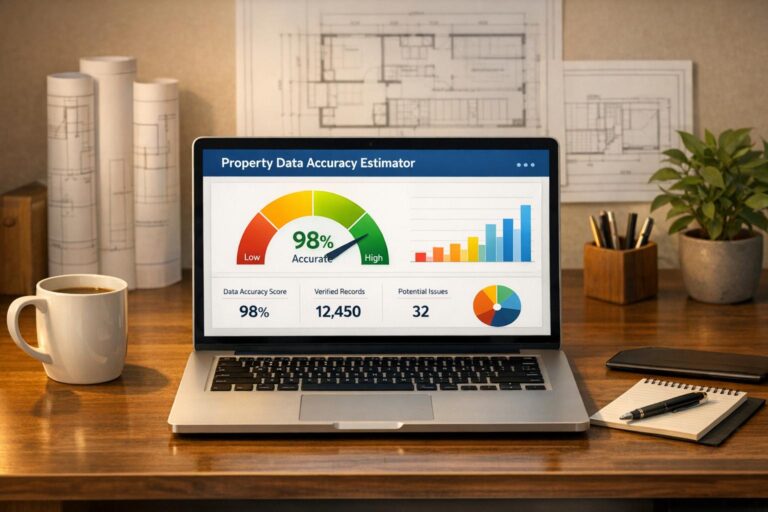
Imagine basing a major purchase on outdated or incomplete records. Mistakes like that can cost time, money, and peace of mind. By evaluating the source, freshness, and depth of your info, you can avoid pitfalls before they happen. A quick check of real estate data credibility can reveal if you’re working with solid facts or shaky guesses. Our estimator simplifies this by breaking down complex factors into a single, easy-to-read score.
Make Smarter Choices
Don’t leave things to chance. With just a few clicks, you can get a clearer picture of whether your records hold up. This isn’t about replacing expert advice but giving you a starting point to ask the right questions. Next time you’re sifting through property details, take a moment to gauge their strength—it’s a small step that can save you big headaches down the road.
FAQs
How does this tool calculate the reliability of property data?
Great question! Our estimator uses a simple but effective algorithm that weighs three key factors: the credibility of the data source, how recently it was updated, and how complete the information is. For example, data from public records updated within the last 6 months with a full address will score higher than user-reported data from over a year ago with missing fields. Each factor gets a weighted score, and we combine them to give you a percentage and a quick summary like ‘75% – Moderately Reliable.’ It’s not foolproof, but it’s a solid starting point.
Can I trust the accuracy score completely when making decisions?
While our tool gives you a helpful estimate, it’s not the final word. The score is based on the inputs you provide and our algorithm’s assessment of source credibility, recency, and completeness. Real-world factors—like errors in the original data or unverified sources—might still affect reliability. Think of this as a guide to flag potential issues, but always double-check critical info with professionals like real estate agents or title companies before big decisions.
What should I do if my data scores low on reliability?
If your data gets a low score, don’t panic—it just means you might need to dig deeper. Start by cross-referencing with more authoritative sources like county records or trusted real estate platforms. If the data’s outdated, see if there’s a more recent update available. And if key details are missing, try to fill in the gaps with verified info. A low score is a nudge to be cautious, so take the extra steps to ensure you’re working with solid information.