3D visualization is changing how real estate is marketed and sold. It allows buyers to explore properties virtually, offering a deeper understanding of layouts, designs, and features. This technology reduces uncertainty, speeds up decision-making, and increases property value. Key benefits include:
- Better property understanding: Virtual walkthroughs clarify layouts, room sizes, and lighting.
- Higher buyer engagement: Interactive tours let buyers customize finishes and visualize spaces.
- Faster sales: Properties with 3D tools sell up to 30% faster and for up to 9% more.
Interactive 3D Walking Virtual Tour with Dynamic Sunlight
Core Benefits of 3D Visualization for Property Insights
The move from traditional property marketing to 3D visualization has introduced a range of advantages that go far beyond aesthetics. These tools not only improve how buyers perceive properties but also lead to better sales outcomes and greater satisfaction.
Better Spatial Understanding
Relying on 2D floor plans or static photos often leaves buyers guessing about critical details like room sizes, layout flow, and how spaces connect. 3D visualization removes these uncertainties by offering virtual walkthroughs that let buyers experience spaces as if they were physically there. They can evaluate how open or cramped connections feel, visualize ceiling heights, and even assess how natural light fills a room – things traditional methods struggle to convey.
This clarity extends to features that are hard to imagine through photos, such as storage options, furniture arrangements, and overall room flow. These virtual experiences help buyers develop a more accurate understanding of the property before stepping foot inside.
For real estate professionals, this means fewer misunderstandings during showings. Buyers arrive with realistic expectations about the layout and design, which allows for more focused conversations about the property’s strengths rather than clarifying spatial details. This improved understanding naturally enhances the buying experience.
Higher Buyer Engagement
Once spatial clarity is established, 3D visualization takes buyer engagement to a new level. Unlike static photo galleries or pre-recorded video tours, interactive virtual tours allow buyers to control their experience. They can explore rooms and angles that interest them most, keeping their attention far longer.
Many modern 3D platforms also offer customization features that make the experience even more captivating. Buyers can experiment with wall colors, flooring options, or furniture arrangements in real time, turning the viewing process into a collaborative and personal exploration. This ability to customize helps buyers envision their life in the space and builds an emotional connection with the property – sometimes before they even schedule a physical visit.
Faster Decision-Making
With better understanding and deeper engagement, 3D visualization also speeds up the decision-making process. By providing detailed visuals upfront, these tools reduce uncertainties that often delay negotiations and extend sales timelines.
In fact, properties marketed with 3D visualization tools tend to sell up to 30% faster and at prices about 3% higher compared to those using traditional methods. This efficiency comes from buyers being able to quickly rule out properties that don’t meet their needs, often without requiring a physical visit.
For new developments, 3D visualization is especially impactful. Photorealistic renderings of unfinished properties allow buyers to commit earlier in the process, broadening the pool of potential buyers and accelerating sales.
Additionally, virtual tours help filter out less serious inquiries, ensuring that physical showings are reserved for genuinely interested buyers who already have a strong understanding of and connection to the property. This streamlines the entire process, from initial interest to closing, making it smoother and more satisfying for all parties involved.
Common 3D Visualization Techniques in Real Estate
When combined with detailed property data, 3D visualization methods can significantly speed up decision-making and streamline the buying process. Real estate professionals have access to a variety of tools that serve specific purposes in property marketing. Knowing the right moment to utilize these tools can make all the difference in connecting buyers to properties and closing deals faster.
Virtual Tours
Virtual tours allow buyers to explore homes from anywhere, offering an immersive experience that brings properties to life. These tours let potential buyers "walk through" a home virtually, giving them a clear sense of the layout and key features.
One standout in this space is Matterport-style 3D tours, which provide smooth navigation between rooms, sharp imagery, and precise spatial details. Properties featuring virtual tours tend to sell 20% faster. This technology captures every angle of a property, offering a detailed visual experience that buyers can explore on their own schedule.
Virtual tours are accessible 24/7, unaffected by weather or location, making them especially valuable for out-of-state or international buyers. These buyers can thoroughly evaluate properties without the time or expense of traveling for in-person visits.
Modern platforms go a step further by including interactive features. Buyers can experiment with furniture placement, change paint colors, or adjust lighting to envision how the space might look with their personal touch. These features help create emotional connections, which often play a key role in purchase decisions.
For a more detailed look at property layouts, interactive floor plans offer another engaging option.
Interactive 3D Floor Plans
While virtual tours focus on immersive navigation, 3D floor plans excel at clarifying a property’s layout. Unlike traditional 2D blueprints – which can be hard to interpret for those without a design background – interactive 3D floor plans transform flat drawings into easy-to-understand, three-dimensional visuals.
These tools help buyers grasp how rooms connect and how the overall space flows. Users can explore multiple levels, zoom in on specific areas, and even visualize furniture placement within each room. This is especially useful for properties still under construction or undergoing renovations, where buyers need to imagine the finished product.
The interactive nature of these plans allows for real-time customization. Buyers can test different layouts, consider potential renovations, or see how their existing furniture might fit. For agents, this feature is a powerful tool for gauging buyer interest – those who spend time interacting with the plans often signal serious intent, helping agents prioritize their efforts.
Photorealistic Renderings
Photorealistic renderings bring properties to life with stunning detail, capturing textures, lighting, and finishes that closely resemble real-world conditions. These visuals give buyers a clear and compelling sense of what a property offers.
The impact on buyer behavior is striking. Listings that include photorealistic renderings can sell for up to 9% more than those relying solely on standard photos. These high-quality images build buyer confidence by providing a vivid representation of the property.
This technique is particularly effective for pre-construction sales and new developments. Developers can showcase a finished product long before construction is complete, securing buyers and even financing early in the process. Renderings also allow buyers to explore different design options, color schemes, and finishes, empowering them to make informed decisions about customizations.
By carefully selecting elements like lighting, angles, and architectural highlights, photorealistic renderings can generate strong buyer interest. Each of these techniques becomes even more powerful when paired with accurate property data.
| Technique | Primary Strength | Best Application | Typical Impact |
|---|---|---|---|
| Virtual Tours | Remote exploration and 24/7 access | Luxury homes, distant buyers | 20% faster sales |
| Interactive 3D Floor Plans | Layout understanding and customization | New construction, renovations | Better buyer qualification |
| Photorealistic Renderings | Emotional connection and confidence | Pre-construction, high-end properties | Up to 9% higher sale prices |
The secret to success lies in selecting the right tools for the property and audience. High-end homes often benefit from using all these visualization techniques, while smaller properties may achieve great results with just virtual tours and floor plans. Tailoring your approach based on your buyers’ preferences ensures you’re making the most of these powerful tools.
Integrating 3D Visualization with Real Estate Data
Pairing 3D visualization with detailed property data does more than create visually appealing tours – it transforms them into powerful decision-making tools. This combination not only enhances the buyer’s experience but also streamlines the real estate process, as outlined below.
Combining 3D Visualization with Property Data
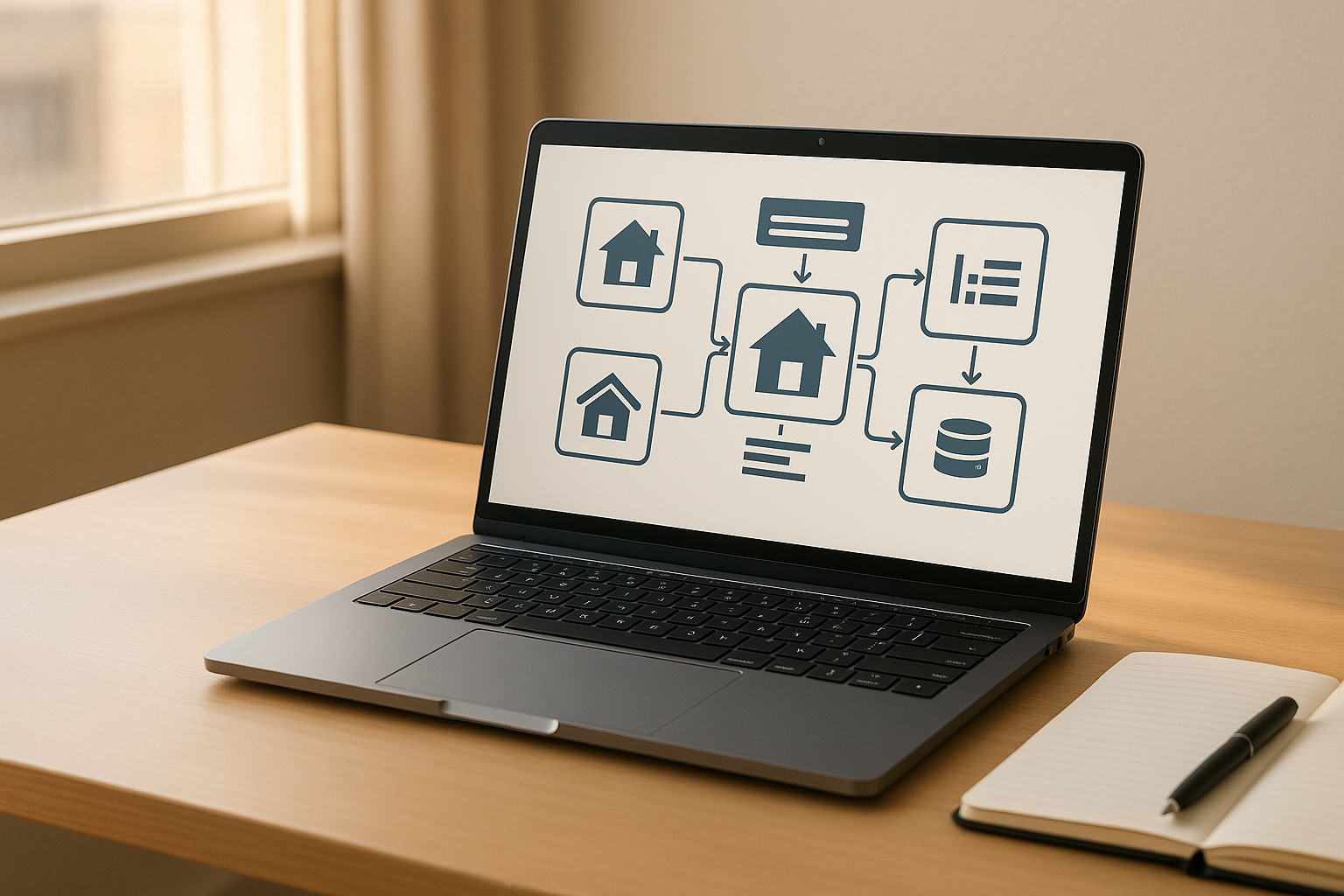
By merging 3D models with enriched property data, buyers gain a seamless way to access both visual and factual insights. Imagine being able to click on a room in a virtual tour to see its dimensions, view renovation history, or check local school ratings – all without leaving the 3D environment. Modern platforms make this possible by overlaying crucial information directly onto virtual tours.
This interactive approach offers a deeper understanding of how property features, market trends, and neighborhood factors influence a home’s value and suitability. For example, BatchData’s extensive database, which includes over 155 million properties with more than 800 attributes, serves as a robust foundation for these enhanced visualizations. The results speak for themselves: properties with integrated 3D tours and enriched data sell up to 20% faster and for up to 9% more than those relying on traditional methods. Buyers also report feeling more confident in their decisions, thanks to the combination of visual exploration and detailed data analysis.
Real estate agencies using 3D tours embedded with live data overlays – like price, square footage, and school ratings – have seen significant success. Buyers appreciate the ability to explore properties virtually while accessing accurate, up-to-date information, leading to higher satisfaction levels.
Steps to Implement 3D Visualization in Your Workflow
If you’re ready to enhance your real estate process with integrated 3D visualization and data, follow these steps:
- Assess your current data and visualization needs. Start by reviewing the property information you already have and identifying gaps. Think about your target audience, property types, and the level of detail your clients expect.
- Select a 3D visualization platform with API support. Look for platforms that allow real-time data updates and the ability to overlay property details, market trends, and buyer preferences onto 3D models.
- Standardize your property data. Gather information like room dimensions, features, ownership history, and neighborhood statistics. Services like BatchData can provide enriched property details and contact data through reliable APIs.
- Link 3D models with relevant data. Match each area of the model with corresponding details, such as room sizes, renovations, and amenities.
- Test for accuracy and user experience. Ensure data displays correctly, links work seamlessly, and the interface operates smoothly. Pay close attention to loading speeds and mobile compatibility, as many buyers use phones or tablets.
- Train your team. Staff should be well-versed in presenting integrated insights to clients. This includes understanding which data points are most relevant for different buyers and how to guide them through the enhanced visualization experience.
- Maintain regular updates. Property data and market conditions change frequently. Use APIs and data enrichment services to ensure your system stays up-to-date with real-time information.
The real value lies in treating visualization and data as interconnected tools. When buyers can explore a property visually and dive into detailed analytics without interruption, they feel more confident and move faster through the purchasing process. This reduces uncertainty and accelerates decisions.
| Integration Component | Function | Benefit |
|---|---|---|
| Property Attributes | Dimensions, features, layout details | Clear spatial understanding |
| Market Data | Pricing, trends, comparable sales | Better valuation decisions |
| Owner Information | Contact details, ownership history | Targeted outreach opportunities |
| Neighborhood Analytics | Demographics, schools, amenities | Complete location insights |
Key Takeaways on 3D Visualization and Property Insights
3D visualization is reshaping how properties are presented and how buyers make decisions. By offering realistic and detailed models, it improves spatial understanding, increases engagement, and speeds up decision-making. Properties that use 3D visualization reportedly sell up to 20% faster, achieve prices up to 9% higher, and spend 30% less time on the market. These benefits stem from cutting-edge visualization techniques that bring properties to life.
Tools like virtual tours, interactive 3D floor plans, and photorealistic renderings allow potential buyers to explore properties remotely. These features clarify layouts, make spaces feel more tangible, and help buyers form emotional connections – key factors in making purchasing decisions.
When combined with enriched property data, 3D visualization becomes even more powerful. Buyers can virtually explore properties while accessing crucial details like room dimensions, renovation histories, school ratings, and market trends. This comprehensive approach reduces uncertainty and helps buyers make faster, more informed decisions. For real estate professionals, this integration not only strengthens pre-sale strategies but also sets the stage for future advancements.
For those in real estate looking to adopt these technologies, success depends on selecting platforms with strong API support, standardizing property data, and ensuring frequent updates from trusted sources. Services like BatchData provide reliable, up-to-date real estate data, creating a solid foundation for enhanced visualization tools.
3D visualization is particularly impactful for marketing properties that are still under construction. Developers can attract early buyers, justify pricing with detailed renderings, and reach beyond the audience looking for move-in-ready homes.
Looking forward, advancements in AI and VR are set to take these immersive experiences even further. By embracing these tools, real estate professionals can better align with changing buyer expectations, simplify workflows, and improve conversion rates.
FAQs
How does 3D visualization help buyers better understand a property’s layout compared to traditional methods?
3D visualization offers an incredibly detailed and interactive way to explore properties, far beyond what traditional 2D plans or static photos can provide. It allows buyers to virtually walk through spaces, get a sense of room sizes, and understand how different areas flow together. This creates a more immersive and lifelike experience, helping buyers truly picture themselves in the property.
This technology does more than just showcase properties – it simplifies decision-making by removing much of the uncertainty. Buyers can feel more confident in their choices, while real estate professionals benefit from clearer communication and fewer misunderstandings. By incorporating 3D visualization, properties are presented in a way that deeply connects with potential buyers.
How do 3D visualization tools enhance buyer engagement and create an emotional connection with a property?
3D visualization tools bring properties to life, giving potential buyers an immersive and detailed experience no matter where they are. With features like virtual walkthroughs, customizable layouts, and interactive design options, these tools help buyers picture themselves living in the space, creating a deeper emotional connection.
They also shine when it comes to showcasing standout features – whether it’s intricate architectural details or breathtaking views. By highlighting these unique aspects, 3D visualization tools leave a lasting impression and help buyers feel more confident in their decisions.
How does combining 3D visualization with detailed property data simplify real estate decisions?
Integrating 3D visualization with detailed property data creates a more immersive and practical way to explore real estate. With this technology, buyers and investors can virtually walk through properties, evaluate layouts, and even imagine potential renovations – all without setting foot on-site.
When combined with rich property data like ownership history, market trends, and neighborhood details, this approach transforms decision-making. It cuts through the uncertainty, offering a faster and more informed path to making confident real estate investments.