


































SEO Title: Address Cleansing Software Guide for Real Estate Teams
Meta Description: Learn how address cleansing software improves property data, underwriting, skip tracing, and marketing accuracy at scale.
Meta Keywords: address cleansing software, address verification, property data quality, CASS address validation, real estate data cleansing, skip tracing, geocoding, mailing list cleansing
Bad address data is expensive long before anyone notices it.
The market makes that clear. The Address Verification Software Market was valued at USD 13.25 billion in 2025 and is projected to reach nearly USD 28.84 billion by 2032 at an 11.75% CAGR, a signal that companies now treat address quality as infrastructure, not cleanup work, according to address verification software market projections.
For proptech, mortgage, insurance, and high-volume marketing teams, the address is the join key that holds the rest of the business together. If that key is wrong, parcel matching breaks, owner records split, underwriting confidence drops, direct mail wastes spend, and analytics start learning from noise.
Here’s the short version:
- Address cleansing software standardizes and corrects raw inputs so systems can use them.
- The ROI shows up across operations, from fewer failed lookups to lower skip tracing costs and better model performance.
- Implementation matters as much as tool choice. Real-time APIs, batch processing, and workflow triggers solve different problems.
- Standalone validation helps, but unified property data workflows usually create more value for real estate and finance teams.
The Hidden Costs of Inaccurate Address Data
In most data stacks, the address looks simple. It isn’t.
An address is often the field that connects mailing operations, valuation models, tax jurisdiction mapping, lien research, servicing workflows, and owner outreach. When it’s incomplete, misspelled, duplicated, or formatted inconsistently, the error spreads downstream into every system that depends on location.
Where the damage shows up first
Bad address data usually hits four places first:
- Property matching fails: A record that should link to a parcel, deed, or owner file doesn’t match cleanly.
- Marketing spend leaks: Mail gets returned, outreach hits the wrong household, or segmentation breaks.
- Risk models lose fidelity: If the property location is wrong, jurisdiction, comp selection, and collateral analysis get weaker.
- Teams waste labor: Analysts end up manually researching records that should have matched automatically.
That’s why this category keeps growing. The market isn’t expanding because companies suddenly like data hygiene. It’s expanding because unclean address data keeps showing up as operational loss.
Practical rule: If your address field is unreliable, your enrichment layer is unreliable too.
Why this matters more in real estate and finance
Real estate and finance operations depend on exact location identity, not just rough deliverability. A lender doesn’t just need mail to arrive. The lender needs the correct property tied to the correct owner, mortgage, and legal record. The same is true for investors, insurers, and brokerages.
The cost isn’t always visible in a single dashboard. It shows up as bad joins, duplicate owners, mismatched parcels, lower contact rates, and underwriting exceptions that shouldn’t exist.
A good address cleansing software stack fixes that by doing three jobs well:
- It normalizes inputs so every downstream system reads the same structure.
- It validates against authoritative postal logic so deliverability and jurisdiction logic improve.
- It enriches and deduplicates records so one property doesn’t turn into multiple conflicting identities.
If your team handles property, borrower, owner, or policyholder data at scale, address quality isn’t a nice-to-have. It’s the base layer of the entire data strategy.
What Exactly Is Address Cleansing Software
Address cleansing software is a system that standardizes, corrects, validates, and enhances raw address data so it becomes usable across operational and analytical systems.
At a practical level, it acts like a digital postmaster for your database. It inspects the raw input, breaks it into components, fixes obvious errors, checks it against reference data, and returns a version that machines can trust.
What it does beyond simple validation
A lot of teams confuse cleansing with validation. Validation asks, “Does this address exist in a recognized postal format?” Cleansing does more.
It typically includes:
- Parsing: Breaking one messy string into street, city, state, ZIP, unit, and country.
- Standardization: Applying a consistent format across records.
- Correction: Fixing typos, directional errors, abbreviations, and field placement issues.
- Completion: Appending missing pieces when the reference data supports it.
- Usability checks: Returning metadata that helps systems decide whether to accept, reject, or flag a record.
For teams working on checkout flows, lead forms, or service signups, a useful adjacent read is this guide on optimizing e-commerce delivery accuracy. The same point-of-entry discipline applies to property and lending systems.
What raw data looks like versus cleansed data
Raw address data usually comes from web forms, spreadsheets, CRM exports, county feeds, call center input, or partner uploads. That means inconsistent capitalization, missing apartment numbers, swapped fields, and duplicate entries are normal.
Cleansed data turns that mess into structured records that downstream systems can join against with far less ambiguity.
| Data state | Typical condition | Operational result |
|---|---|---|
| Raw input | Free-text, inconsistent, incomplete | Failed matches and manual review |
| Validated only | Address existence checked | Better deliverability, limited identity resolution |
| Fully cleansed | Parsed, corrected, standardized, enriched | Better joins, segmentation, and downstream analytics |
One useful reference for comparing adjacent approaches is this overview of address verification software in property workflows.
A clean address record is not just prettier data. It’s a reliable key for geospatial, ownership, and contact intelligence.
Address cleansing software matters because every other property data process assumes the address is already trustworthy. Without that, the rest of the stack spends its time compensating for avoidable errors.
What Are The Core Capabilities of Address Cleansing
Address cleansing software needs to do five jobs well: parse and standardize input, validate deliverability, merge duplicates, geocode accurately, and support downstream enrichment. If one of those steps is weak, the cost shows up later as manual review, broken joins, and missed revenue.
Standardization and validation
Standardization turns messy address strings into a consistent structure your systems can use. It converts variations like “123 Main Street Apt 4B,” “123 MAIN ST #4B,” and “123 Main St Unit 4B” into the same normalized record, with street, unit, city, state, and postal code in predictable fields.
That sounds simple. At scale, it is not.
In real estate and lending, standardization is what allows one property record to match across CRM data, assessor files, servicing platforms, mailing systems, and third-party enrichment vendors. Without it, every downstream match rate drops and operations teams end up doing exception handling by hand.
Validation answers a different question. Does this address conform to postal rules, and is it likely to route correctly? Good tools validate against postal and locality reference data, flag missing or invalid components, and handle country or region-specific formatting rules where needed.
For teams dealing with owner outreach, underwriting, or portfolio monitoring, validation reduces waste at the point where records enter the system.
Deduplication and record survivorship
Duplicate detection is where many teams learn that address cleansing is not just formatting. Two records can refer to the same property while looking different enough to miss an exact match. Abbreviations, punctuation, transposed fields, and inconsistent unit handling create duplicate property and owner records all the time.
That creates measurable cost.
A duplicate property can trigger duplicate mail, split lead history, conflicting owner timelines, or parallel review work inside underwriting and servicing. In marketing, it inflates audience counts and wastes spend. In finance, it can create fragmented collateral views that analysts then have to reconcile manually.
Good cleansing software uses matching rules that account for address variants and then applies survivorship logic. That means deciding which record becomes the system of record, which fields to preserve, and how to carry source attribution forward. The trade-off matters. Aggressive deduplication can merge separate units in multifamily data if unit logic is weak. Conservative deduplication leaves money on the table by preserving avoidable duplicates.
Teams that struggle with property identity often also mix up delivery and location records. This guide to physical address versus mailing address helps clarify that distinction before duplicate rules are configured.
Geocoding and enrichment
Geocoding converts a cleansed address into coordinates and a map-valid location. That is what makes the record useful for parcel matching, flood analysis, territory assignment, servicing coverage, and valuation models.
Accuracy matters here. A rooftop-level geocode is more useful than a ZIP centroid if the record feeds underwriting, risk scoring, or property-level outreach. I have seen teams assume geocoding solved identity problems, when the underlying address was still ambiguous. That usually produces confident-looking output attached to the wrong property.
Enrichment should come after the address has been standardized, validated, and resolved against duplicates. Then the address can reliably connect to parcel boundaries, ownership data, tax records, lien events, occupancy indicators, and mortgage intelligence.
Clean first. Enrich second. Otherwise you pay to append data to records you cannot trust.
Why the capabilities have to work together
Each capability fixes a different failure mode.
Standardization improves consistency. Validation improves deliverability. Deduplication improves entity resolution. Geocoding improves spatial accuracy. Enrichment improves business context.
Used together, they create a usable property key for high-volume operations. That is the true payoff for property investors, lenders, brokerages, and data vendors. Fewer bad joins. Lower mail waste. Better model inputs. Less analyst time spent fixing records that should have been resolved upstream.
The strongest implementations follow a clear order:
- parse the raw input
- standardize the structure
- validate against reference data
- deduplicate overlapping records
- geocode the surviving record
- enrich once the address identity is stable
That sequence is what turns an address from a text field into an operational asset.
Why Does Clean Address Data Matter in Real Estate and Marketing
Clean address data changes business outcomes because it improves both reachability and identity resolution.
That’s the difference between “mail got delivered” and “the right property, owner, and risk profile got linked correctly.” In real estate, finance, and marketing, that distinction determines whether you waste spend or create margin.
The real estate and mortgage ROI
Property data workflows break when the address is unreliable. The wrong street suffix, missing unit, or inconsistent format can stop a record from linking to the parcel, deed, valuation record, or lien event your team depends on.
That affects:
- Underwriting: bad location identity weakens collateral review and downstream risk analysis.
- Portfolio monitoring: event matching becomes less dependable if property records don’t align cleanly.
- Lead generation: owner outreach suffers when address matching and contact enrichment don’t line up.
The ROI gets clearer when cleansing is paired with contact hygiene. According to integrated data scrub findings for brokerages and proptech teams, integrated data solutions that combine address cleansing with owner contact scrubbing can cut skip tracing costs by 42% for brokerages. The same source states that unclean addresses can degrade machine learning propensity model accuracy by as much as 25%.
That second point matters more than many teams realize. If your model is learning from fragmented property identities, your scoring logic is training on noise.
The marketing ROI
Marketing teams often focus on response rates, but the first question is simpler. Did the message reach the intended address and map to the intended household or property?
Cleansed address data improves direct mail targeting, territory segmentation, suppression logic, and audience building. It also lowers the amount of manual cleanup required before launching a campaign.
| Business Use Case | Problem Caused by Bad Data | Benefit of Cleansed Data (ROI) |
|---|---|---|
| Direct mail marketing | Returned mail, duplicate sends, wrong household targeting | Lower waste and cleaner audience targeting |
| Skip tracing and outreach | Property records don’t align with owner contact data | Lower skip tracing cost and better contact workflows |
| Mortgage underwriting | Parcel and jurisdiction mismatches | More reliable collateral and compliance analysis |
| Portfolio monitoring | Event signals fail to attach to the right asset | Better continuity across servicing and risk review |
| Propensity modeling | Fragmented addresses distort training data | Stronger model inputs and more useful scoring |
Clean address data doesn’t just reduce errors. It makes every other data investment work harder.
What doesn’t work
Two patterns fail repeatedly:
- Treating cleansing as a one-time migration project. Data decays as soon as new records arrive.
- Using separate tools with no shared identity logic. One system standardizes, another enriches, another dedupes, and nobody agrees on the surviving record.
For high-volume teams, the gain comes from operationalizing cleansing inside intake, batch maintenance, and enrichment workflows, not from running a cleanup job once and hoping the problem stays solved.
How Do You Implement Address Cleansing in Your Business
Address cleansing is typically implemented in one of three ways: real-time API validation, bulk batch processing, or workflow-level integration. The right pattern depends on where bad address data enters your stack and how fast you need the result.

Real-time APIs
Real-time APIs are the best fit for forms, onboarding flows, quote tools, and internal data entry screens. They catch errors before they land in the system.
This pattern works well when you need immediate feedback such as:
- user-entered property addresses
- borrower intake forms
- agent or CSR desktop workflows
- service eligibility checks
According to Vertex address cleansing implementation details, modern address cleansing APIs can process over 25,000 addresses per second with 99.9% accuracy on CASS benchmarks. The same source says this level of precision can reduce tax jurisdiction misassignment errors by up to 95% and boost skip tracing success rates by 30% to 40%.
That kind of throughput matters when validation sits inside a live transaction path.
Bulk processing for existing databases
Batch processing is the right choice when the problem already lives in your CRM, warehouse, data lake, or flat-file archives. This is usually the workhorse pattern for proptech, lending, and insurance teams with large historical datasets.
Use it when you need to:
- scrub old mailing lists
- normalize partner-delivered records
- repair legacy CRM data
- prepare property datasets before enrichment or model training
A practical checkpoint before rollout is understanding what level of postal compliance you need. This overview of USPS address validation workflows is useful when your use case depends heavily on U.S. mailing and standardized postal formatting.
Implementation rule: Clean your historical data in bulk first. Then protect the perimeter with real-time validation.
Workflow integrations
Workflow integrations sit between the first two options. Instead of making users call an API directly or running giant batch jobs manually, you embed cleansing inside business processes.
Examples include:
- CRM automation that standardizes new leads before routing.
- Marketing operations that re-check records before campaign activation.
- Servicing and compliance workflows that trigger validation when a borrower or owner updates contact information.
Trade-offs by implementation model
| Implementation pattern | Best for | Trade-off |
|---|---|---|
| Real-time API | Point-of-entry capture | Requires tight latency and UX design |
| Bulk batch processing | Historical cleanup and enrichment prep | Not ideal for catching new errors instantly |
| Workflow integration | Ongoing operational hygiene | Depends on process discipline across systems |
What doesn’t work is choosing one model and expecting it to solve every problem. Mature teams usually combine them: batch for repair, API for prevention, workflow integration for maintenance.
How Does BatchData Deliver Superior Address Intelligence
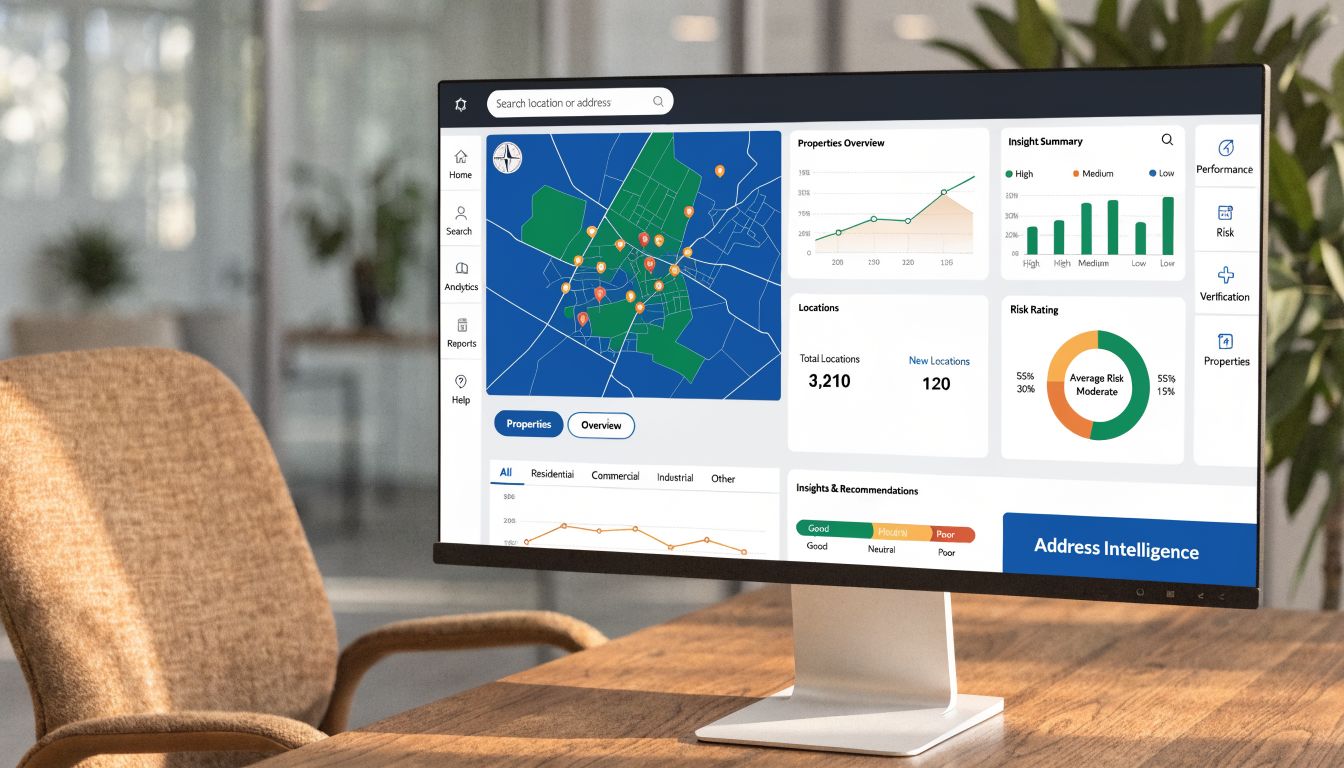
For high-volume real estate and lending teams, the return on address cleansing shows up when a corrected address becomes a usable property key across search, matching, and portfolio workflows.
A point solution can standardize an address line. The harder problem is what happens next. If operations teams still have to reconcile that record against ownership, liens, listings, valuations, and borrower or seller outreach in separate systems, the cleanup work only solves part of the cost problem.
Where unified property workflows matter
In property operations, a clean address needs to do more than pass formatting checks. It needs to resolve to the right asset and stay stable enough to support downstream decisions. That is where teams either save money or create more manual review.
The practical test is simple. After cleansing, can the record reliably support:
- parcel and owner matching
- portfolio monitoring
- outreach and reachability workflows
- underwriting and due diligence
- property search across inconsistent source formats
BatchData fits that model because the address does not sit in isolation from the rest of the property record. The platform combines address handling with broader property, ownership, mortgage, lien, listing, permit, and distress data. For a proptech or finance team, that changes the economics. Fewer records need human review. Fewer leads get split across duplicate property identities. Analysts spend less time stitching together partial matches before a campaign, acquisition review, or servicing action can move forward.
What that changes operationally
The biggest gain is not cleaner formatting. It is lower downstream friction.
Search improves because users can still find the right property when input data is incomplete or inconsistent. Monitoring improves because new events are more likely to attach to the correct asset instead of creating duplicate records. Skip tracing and contact enrichment perform better when they start from a resolved property identity instead of a loosely cleaned mailing address.
Modeling improves too. In my experience, fragmented address data subtly reduces match rates and weakens training sets long before anyone blames the model. If one property appears under multiple address variants, acquisition scores, risk flags, and outreach results spread across records that should have been one.
Delivery flexibility matters as much as match quality. Some teams need an API for live applications. Others need batch outputs for warehouse ingestion, nightly refreshes, or portfolio analytics. Real estate data operations usually span several systems, so the useful product is the one that fits the operating model you already have.
The ROI comes from reducing rework after cleansing, not from cleansing alone.
That is the difference between an address utility and address intelligence. In real estate and finance, the highest-value setup turns the cleansed address into a stable join point for the rest of the property graph.
Frequently Asked Questions About Address Cleansing
Address cleansing questions usually come down to scope, implementation, and expected output. Here are the answers that matter in practice.
Common decisions teams need to make
Some teams need mailing accuracy. Others need parcel-level identity resolution. Those are related, but they’re not the same requirement.
That’s why tool selection should start with the workflow you’re protecting, not the feature checklist.
| Question | Answer |
|---|---|
| Is address cleansing the same as address validation? | No. Validation checks whether an address conforms to recognized reference data. Cleansing includes parsing, correction, standardization, and often enrichment or deduplication. |
| Do I need real-time validation or batch cleanup? | If bad data enters through forms or user workflows, use real-time validation. If the problem already exists in your systems, start with batch cleanup. Most high-volume teams need both. |
| Does cleansing help with duplicate records? | Yes, if the software includes matching and deduplication logic. Standardization alone helps, but duplicate resolution usually needs fuzzy matching and survivorship rules. |
| Can address cleansing improve geocoding quality? | Yes. Geocoders perform better when the input is standardized and complete. Messy input increases ambiguity and bad matches. |
| Is U.S. postal validation enough for property data work? | Not always. Mailing validity helps, but property use cases also need parcel alignment, owner matching, and enrichment. |
| How should teams think about pricing? | Look at pricing in the context of workflow value, not only per-record cost. A cheaper standalone validator can become expensive if analysts still need manual repair and external enrichment. |
What buyers often overlook
The common mistake is buying for one narrow use case and assuming the same tool will support underwriting, marketing, and data science equally well. It usually won’t.
Another mistake is skipping governance. Even strong address cleansing software needs:
- Input controls so bad data doesn’t keep entering
- Match policies for duplicates and record survivorship
- Confidence thresholds for accept, reject, or manual review
- Recurring maintenance for legacy and partner-supplied data
If your business depends on property identity, location intelligence, or owner reachability, address cleansing should be treated like a core data service. That’s when the ROI stops being theoretical and starts showing up in operations.
If your team needs property data workflows built on clean, usable address intelligence, BatchData is worth evaluating. It combines address-aware property matching, owner contact data, valuations, mortgage and lien signals, and bulk or API delivery so data teams can move from cleanup to actual decision-making faster.