

































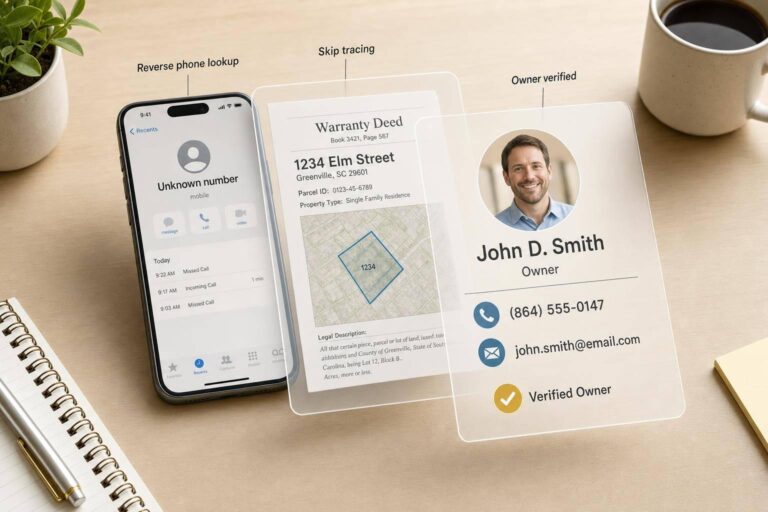
If I only have a phone number, I start with reverse phone lookup. If I only have a property or owner record, I start with skip tracing. That’s the core difference.
For me, this breaks down into two jobs:
- Reverse phone lookup = I begin with a phone number and check who it belongs to
- Skip tracing = I begin with a property address, owner name, or APN and pull contact details
- Using both together = I confirm the person first, then add more ways to reach them
- Main risks = stale data, reassigned numbers, and DNC issues
- Main payoff = fewer wrong numbers, faster lead sorting, and cleaner follow-up
If I’m dealing with an unknown caller, reverse lookup is usually the first step. If I’m working a property list with no contact data, skip tracing is the next move. And if I want a simple reverse skip trace flow, I use both in order: number first, owner match second, contact record last.
Quick Comparison
| Method | What I Start With | What I Get Back | Best Use | Main Issue |
|---|---|---|---|---|
| Reverse Phone Lookup | Phone number | Name, last known address, line type, carrier data | Unknown inbound calls, old lead list cleanup | Data can be thin or out of date |
| Skip Tracing | Property address, owner name, or APN | Phone numbers, email addresses, mailing addresses | Building owner records for outreach | Match quality can vary; DNC checks still matter |
A lot of investor teams use this sequence to cut dead-end calls and sort leads with less guesswork. In short: reverse lookup tells me who called. Skip tracing tells me how else to reach them.
sbb-itb-8058745
What reverse phone lookup does
Reverse phone lookup starts with a phone number and tells you who may be tied to it. In real estate, that usually means the owner, tenant, or business linked to a property. The input is simple: a U.S. phone number. The output often includes the person’s name, a last known address, the line type, and carrier details.
Starting input: a phone number
When you run a reverse lookup, you’re doing a fast check before spending time on a deeper owner search. For real estate investors, that matters. It can show whether a number still matches the property owner in your pipeline – or show that the match is off.
Line type matters too. A mobile number, landline, or VoIP line can shape how you reach out. Many pro tools also auto-scrub numbers against federal and state Do Not Call lists, which can help cut dialing compliance risk.
Best use cases: unknown callers and cleaning older lead lists
The two most useful use cases for acquisition teams are screening inbound calls and cleaning older lead lists.
If an unknown number calls your office after seeing your marketing, a reverse lookup can show the caller’s name and address before you call back. That gives you a quick way to check whether the caller matches a known owner record.
It also helps with old data. Before an ops team puts more budget into re-engaging an older list, a reverse lookup pass can show which numbers still map to the expected contacts and which ones have gone stale.
Limits: shallow data and reassigned number risk
Reverse phone lookup is a quick identity check, not a full contact plan. It can confirm or question identity, but it usually won’t build out a complete outreach record. Prepaid phones and VoIP lines are often less reliable, and the data may be thin or out of date.
Reassigned numbers are the bigger risk. A lookup may return stale or unclear results if the number changed hands. If you don’t check whether the data is current, you could contact the wrong person and burn time on outreach that goes nowhere. When a number looks stale or mismatched, skip tracing is the next move.
What skip tracing does
Skip tracing starts with a property or owner record and helps you find current contact details.
Starting inputs: property address, owner name, or APN
The usual starting point is simple: a property address, owner name, mailing address, or Assessor’s Parcel Number (APN). From there, skip tracing can return more than one phone number, email address, and mailing address tied to the same owner.
Best use cases: building outreach-ready owner records
Skip tracing turns a targeted property list into an owner record you can actually use for outreach.
This matters when you have property data, but no solid way to contact the person behind it. That shows up a lot with absentee-owner lists, tax-delinquent records, inherited property leads, and pre-foreclosure files. You know the property. You can even use a property search tool to find more details. You may even know the owner. But without current contact info, the lead just sits there. Skip tracing fills that gap.
A common workflow looks like this:
- Pull a trigger-based list, such as probate, tax delinquency, or pre-foreclosure
- Skip trace the records
- Load the returned contacts into your CRM for calling, texting, or direct mail
Many teams also run this in batches, which lets acquisition staff enrich large record sets instead of handling leads one by one.
Limits: data freshness, accuracy variation, and compliance checks
Skip tracing goes further than reverse lookup, but the match quality can change based on how current the data is and how clean the input record is. Before you batch skip trace, it helps to deduplicate records, verify details, and standardize addresses.
Compliance is the other part you can’t brush aside. Phone numbers returned through a skip trace should be scrubbed against federal and state Do Not Call (DNC) lists before they enter a call or text campaign. It also helps to use dialing tools that scrub numbers against federal and state DNC lists before outreach begins.
Next, it helps to compare both methods side by side so you can see when each one makes more sense as the first move.
Reverse phone lookup vs. skip tracing: a side-by-side comparison
The short version is simple: reverse phone lookup checks a phone number, while skip tracing builds a contact record from a property lead. That’s why many investors start with reverse phone lookup and then move to skip tracing when they need more complete contact data.
| Method | Starting Input | Typical Output | Best For | Main Limitation | When Investors Use It |
|---|---|---|---|---|---|
| Reverse Phone Lookup | Phone number | Name, identity, location | Verify unknown inbound callers | Shallow data; risk of reassigned or stale numbers | When a lead calls in or a number appears without context |
| Skip Tracing | Property address, owner name, or APN | Multiple phone numbers, emails, mailing address | Build outreach-ready owner records | Data freshness and accuracy variation; compliance requirements | When targeting a specific property for acquisition or driving for dollars |
When reverse phone lookup is the better first move
Reverse phone lookup makes the most sense at the top of the funnel when a phone number is all you have. A common example: a seller calls from a bandit sign, leaves a vague voicemail, and hangs up. In that moment, you don’t need a deep search right away. You just need to figure out who called.
A quick reverse phone lookup can show whether that number connects to an owner or lead already in your system. If it matches someone on file, you can keep moving. If the number looks reassigned or can’t be verified, it’s often a sign to stop wasting time and move on.
When skip tracing is the required next step
Once you’re working from a targeted property list, reverse phone lookup runs out of road fast. It won’t hand you a second phone number, an email address, or a mailing address. That’s the point where skip tracing comes in.
Starting with a property address, owner name, or APN, skip tracing builds a fuller owner contact record. That gives you more ways to reach the person behind the property. After that, you can load the returned contacts into your CRM for calls, texts, or direct mail. Then the record is set up for the reverse-skip-trace workflow.
How investors use both methods together in a reverse skip trace workflow
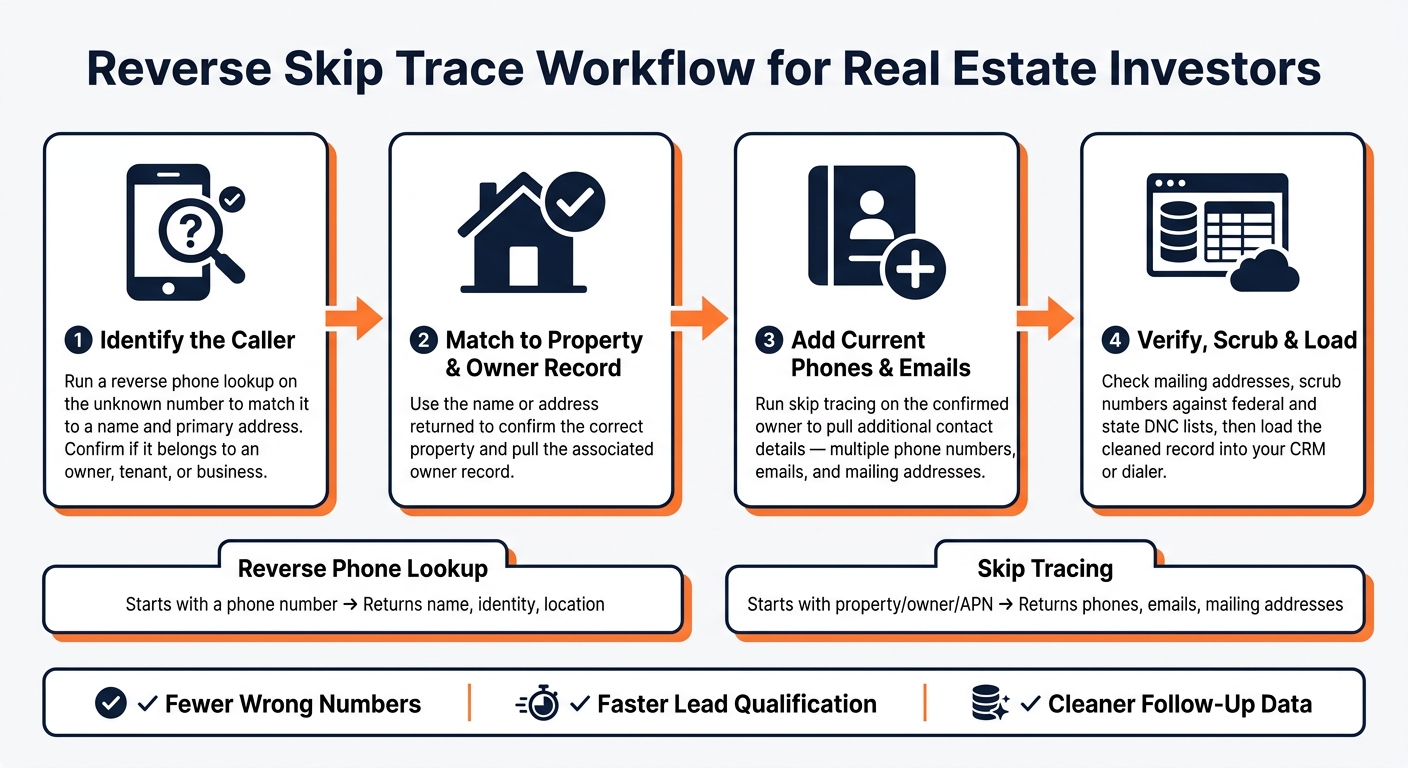
Reverse Skip Trace Workflow: How Real Estate Investors Use Both Methods Together
When an unknown number ties back to a property lead, investors often start with reverse lookup and then move to skip tracing. Put them together, and a name or phone number can turn into an owner record your team can actually use.
Once you know where each method fits, the next step is using them in the right order.
A step-by-step workflow for acquisition teams
In day-to-day work, acquisition teams usually run reverse lookup first. They use skip tracing only after they confirm the owner.
- Identify the caller. Run a reverse phone lookup to match an unknown number to a name and primary address. This helps confirm whether the number belongs to the owner, tenant, or a business tied to the property.
- Match it to the property and owner record. Use the name or address you found to confirm the right property and pull the owner record.
- Add current phones and emails. Run skip tracing on the confirmed owner to pull more contact details, so your team has more than one way to reach out.
- Verify addresses, scrub numbers, then load the record. Check mailing addresses before sending direct mail. Scrub numbers against federal and state DNC lists before dialing. Then send the cleaned record into your CRM or dialer.
Business value: fewer wrong numbers, faster qualification, better follow-up
Each step cuts down a common problem.
Verifying the address before skip tracing can help improve the accuracy of the contact data that comes back. Scrubbing numbers before dialing can lower compliance risk. And when your team has multiple checked contact paths for each owner, instead of one unconfirmed number, your correct-contact rate gets better.
That matters in plain business terms. Fewer dead-end calls mean less time wasted on each lead. Cleaner data means teams can make routing decisions sooner. A number that looked useless at first can become a lead worth working, and your team can sort out faster whether it calls for a phone call, text, or direct mail follow-up.
Conclusion: the key difference and why both methods matter
Reverse phone lookup tells you who a number belongs to. Skip tracing finds the best ways to reach a known owner or property lead. On their own, each method only gets you part of the way. In sequence, they give investors a workflow that is faster, more accurate, and much easier to scale.
Reverse lookup starts with a number. Skip tracing starts with a property or owner record. Used together, they improve owner identification, contact accuracy, and follow-up speed.
That sequence is the main edge: faster identification, cleaner data, and better outreach.
FAQs
What is a reverse skip trace?
A reverse skip trace starts with a phone number and works backward to identify, verify, and build a fuller profile of an unknown person.
It goes beyond a basic reverse phone lookup. Instead of just matching a number to a name, it also checks whether the number is valid, looks for risk signals, and confirms identity across multiple sources.
For real estate investors, that matters. It can turn a raw phone number into a more qualified lead, which makes outreach more accurate and follow-up more efficient.
How do I know when a phone number is reassigned or outdated?
Use reverse lookup or verification tools to check a number’s status, like active, inactive, or disconnected. A solid lookup can also show if the number now belongs to someone else instead of the person listed in your records.
Contact data decays by more than 2% per month, so verify phone numbers before you reach out. If a call or text doesn’t go through, refresh the data right away. That helps you confirm the record is still current and avoid contacting the wrong person.
Can I use reverse phone lookup and skip tracing in my CRM workflow?
Yes. Using reverse phone lookup and skip tracing in your CRM gives you one lead workflow because each tool handles a different part of finding and checking leads.
Use reverse phone lookup for unknown callers, skip tracing for batch property lists, and phone verification to filter out disconnected numbers, landlines, and VoIP records before outreach.
Related Blog Posts
- How to Use Skip Tracing for Lead Generation
- FAQs on Skip Tracing Filters and Search Options
- USPS NCOA vs. Skip Tracing: Which is Better for Finding Property Owners?
- “Reverse Phone Lookup vs. Skip Tracing: What’s the Difference (and Why Real Estate Investors Need Both)” – owns “reverse skip trace” conceptually without needing a product name; strong internal-linking bridge to your existing skip-tracing cluster.