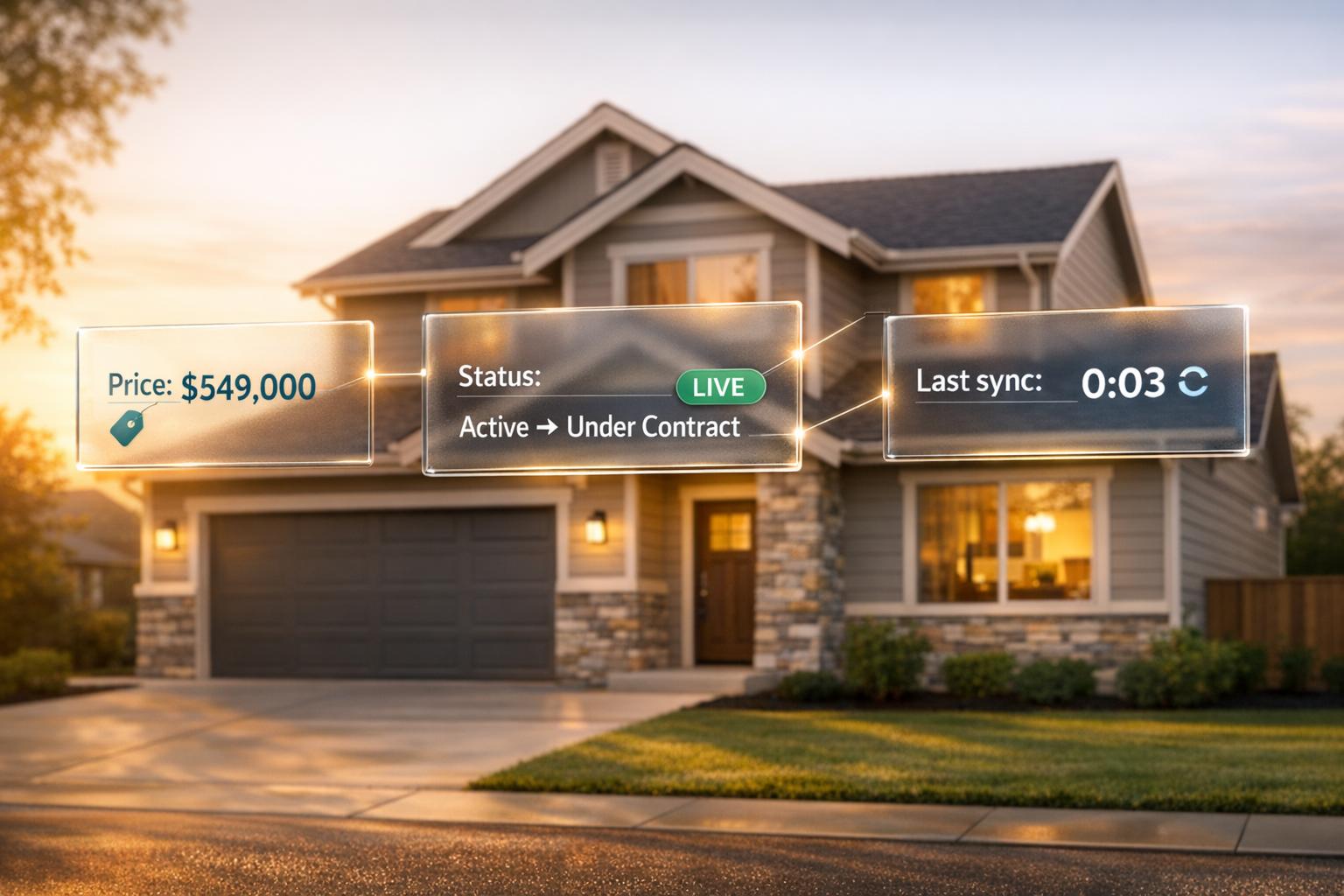



































Real estate teams no longer get to treat connectivity as a nice-to-have.
Whether you operate multifamily housing, affordable communities, office assets, or mixed-use portfolios, digital infrastructure has become part of the building itself. Tenants expect internet to work on day one. Staff need secure systems that can be managed remotely. Owners need enough visibility to support compliance, reduce downtime, and justify capital spend.
That was the core theme of a panel discussion featuring operators and infrastructure leaders from multifamily, commercial real estate, and enterprise networking. The conversation covered more than Wi-Fi. It revealed a bigger shift: real estate is moving from fragmented, property-by-property tech decisions to standardized, portfolio-level digital operations.
For BatchData’s audience of builders and scalers, this matters because digital infrastructure increasingly shapes property performance. It affects occupancy, operating costs, maintenance response, resident experience, risk management, and even regulatory readiness.
Key Takeaways
- Connectivity is now foundational infrastructure, not a tenant-side add-on.
- Security and bandwidth are the two non-negotiables during acquisition and transition.
- Standardization beats improvisation across firewalls, cameras, access control, and network gear.
- Cloud-managed systems are gaining ground because they lower support friction and centralize operations.
- Affordable housing presents a different economics model, but internet access still plays a mission-critical role.
- Digital resilience matters as much as speed; redundancy, monitoring, and remote recovery reduce operational disruption.
- ROI is often indirect but real, showing up in retention, reduced turnover, lower service costs, and fewer emergency fixes.
- Operators should involve IT earlier in development, not after construction decisions are already locked in.
- Compliance and reporting requirements are turning building systems into data systems, especially around energy, security, and connectivity.
- A practical next step: audit every property for connectivity, firewall ownership, bandwidth, carrier setup, and unmanaged devices.
sbb-itb-8058745
Why Digital Infrastructure Is Now Core to Property Operations
Historically, many landlords let tenants figure out internet and building tech on their own. That model is breaking down.
In multifamily, residents increasingly expect building-wide connectivity, digital access, smart amenities, and responsive service. In office, landlords are under pressure to make space move-in ready and tenant-friendly. In affordable housing, internet access is also tied to equity, education, and resident outcomes.
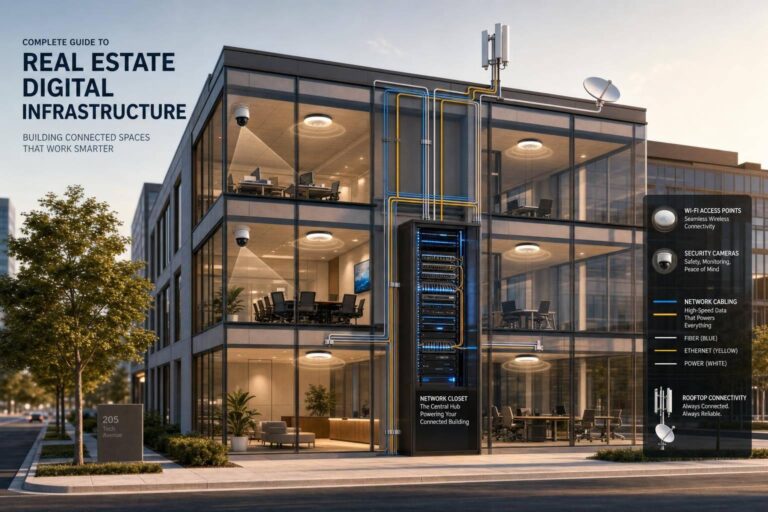
The panel made an important distinction: digital infrastructure has both physical and operational layers.
The physical layer includes:
- Fiber and internet connectivity
- Firewalls and switches
- Wi-Fi access points
- Cellular support such as DAS or newer neutral-host systems
- Cabling, risers, and network closets
- Cameras, locks, and access systems
The operational layer includes:
- Network segmentation
- Cloud management
- Portfolio-wide standards
- Vendor workflows
- Security policies
- Monitoring and recovery
- Device inventory
- Data governance during acquisition and disposition
That split matters. A building can have decent hardware and still be hard to operate if systems are inconsistent, undocumented, or locally managed.
The Physical Foundation: What Buildings Need First
One of the strongest themes from the discussion was simple: start with connectivity, then design around it.
For multifamily properties, required infrastructure varies by asset class. Affordable and HUD-supported assets may have mandated tenant internet obligations, while conventional properties often extend digital service from curb to unit, including access control and resident-facing connectivity.
In commercial buildings, the physical model is a little different. The panel described three zones that shape infrastructure planning:
- The vertical backbone through the building
- The tenant space itself
- The external carrier and street-side environment
That framing is useful because it pushes owners to think beyond "Does the building have fiber?" A property may technically have service, but still lack the electronics, routing, or internal design needed to support today’s bandwidth expectations.
What operators consistently prioritize
Across property types, the first-tier priorities were clear:
- Reliable internet service
- Secure firewalls
- Network separation between tenant and corporate traffic
- Adequate bandwidth
- Cellular coverage throughout the building
One operator described segregating networks through VLANs so resident-facing traffic never touches the corporate environment. That’s not just a technical best practice. It’s a risk-control decision that protects both operations and resident trust.
For technical teams, the lesson is straightforward: don’t confuse raw connectivity with usable infrastructure. A line into the building is only the beginning.
Security Comes Before Convenience
If the panel had one consensus position, this was it: security is the first investment, not the last.
One operator explained that in acquisitions, two items are effectively non-negotiable: bring in a managed firewall and confirm connectivity capacity. Everything else can be phased. Those two cannot.
That is a smart operating principle, especially for teams inheriting fragmented portfolios. It creates a minimum viable standard for safe remote management and future system rollout.
Why security dominates budget conversations
Real estate organizations often struggle to secure budget for technology unless there is an obvious revenue return. Security changes that conversation because it protects the business from:
- Operational downtime
- Resident-impacting outages
- Vendor sprawl
- Unmanaged devices
- Weak segmentation
- Compliance exposure
The subtext throughout the panel was important: every connected device is now part of the property risk surface. Cameras, access systems, boilers, leak sensors, EV chargers, and building automation tools all create new dependencies on stable and secure networks.
That’s why digital infrastructure can’t remain a side project owned only by local property teams.
Standardization Is the Real Scale Strategy
The most practical insight from the discussion was not about a specific technology. It was about standardization.
Several panelists described the same operational pain: acquired properties often come with inconsistent systems, limited documentation, and no complete inventory of what is installed. When something fails, corporate IT gets asked to fix tools they didn’t choose and may not even know exist.
That is the opposite of scale.
What standardization actually solves
Standardization improves:
- Remote troubleshooting
- Vendor coordination
- Staff training
- Security management
- Lifecycle planning
- Portfolio reporting
- Transition speed during acquisitions and dispositions
It also reduces dependence on hyper-local support. As one panelist implied, when your properties are scattered across remote markets, you cannot build strategy around hoping a local technician understands a one-off camera or access system.
For operators, the better model is:
- Standard firewall stack
- Standard camera platform
- Standard access control approach
- Standard monitoring layer
- Standard documentation requirements
- Standard onboarding process for new properties
This is exactly where technical architects and operations leaders align. The architect wants a clean, repeatable environment. The operator wants faster issue resolution and lower support cost. Standardization delivers both.
Acquisition Is Where Digital Weakness Gets Exposed
Real estate acquisitions move fast. Technology transitions usually do not.
That mismatch showed up repeatedly in the discussion. Properties change hands quickly, but the underlying infrastructure may reflect years of fragmented decisions. The result is a narrow window to establish operational control before residents or tenants feel the gaps.
A better acquisition playbook
The panel’s advice points to a practical framework for newly acquired properties:
1. Assess the digital baseline immediately
Evaluate:
- Current carriers
- Bandwidth availability
- Firewall ownership
- Network segmentation
- Camera systems
- Access systems
- Cloud vs. on-prem dependencies
- Device inventory
2. Lock down security first
Bring properties onto your preferred firewall and remote management model as early as possible.
3. Confirm bandwidth and resilience
A building may have service, but not enough for operational and resident demand. Validate actual capacity, not just provider claims.
4. Apply existing standards
The faster you know your own blueprint, the easier it becomes to transition acquired assets.
5. Document everything
This sounds obvious, but many operators admitted this work often begins after problems emerge.
For enterprise teams, this is a strong argument for building digital due diligence checklists into acquisition workflows, not treating them as post-close cleanup.
Cloud Management Is Winning for a Reason
The panel repeatedly pointed toward a future where more building systems are managed centrally through the cloud.
That includes:
- Security cameras
- Access control
- Networking infrastructure
- Monitoring systems
- Building automation tools
This shift is not just about modernity. It is about operating leverage.
Why the cloud model is appealing to operators
Cloud-managed systems can offer:
- Central visibility across the portfolio
- Easier policy enforcement
- Faster troubleshooting
- Less on-site dependency
- Lower friction during staff turnover
- Better support for distributed maintenance teams
One operator described showing ROI by comparing the total decentralized cost of managing infrastructure at each property versus the cost of centralizing oversight through IT. That’s an effective way to translate technical design into executive language.
For strategic operators, this is the key message: cloud adoption is often less about software preference and more about control, consistency, and total cost of ownership.
That said, not everything is fully cloud-native today. Some organizations still maintain hybrid environments, especially when certain applications or data must remain on-prem. The panel acknowledged that reality. But the direction of travel was clear.
Tenant Experience Has Become a Technology Outcome
A major thread in the conversation was that digital infrastructure now influences leasing, retention, and reputation.
That means IT is no longer just supporting operations behind the scenes. It is shaping the customer experience directly.
In multifamily, this shows up as:
- Reliable resident Wi-Fi
- Digital locks and access
- Working cellular coverage
- Smart amenity access
- Faster maintenance workflows
- Better communication and engagement
In office, this shows up as:
- Move-in-ready connectivity
- Strong in-building cellular service
- Consistent Wi-Fi
- Easy support for hybrid work patterns
- Fewer day-one setup headaches for tenants
One operator framed the business case around unit turns: if better amenities and digital experience reduce churn, the investment pays back through avoided turnover costs. That is a more realistic real estate ROI model than trying to tie every infrastructure dollar to a direct rent premium.
A useful reframing for operators
Instead of asking, "Does this tech generate revenue?"
A better question is:
"Does this reduce friction for tenants, staff, and ownership enough to protect occupancy and lower cost?"
Often, that is the more honest value driver.
Monitoring and Resilience Matter More Than Fancy Features
Another practical lesson from the discussion: some of the best infrastructure investments are the least visible.
One operator highlighted the value of monitoring tools that sit between the router and firewall, detect disruptions, and automatically restart systems before site teams even notice a failure. That kind of resilience does not make for flashy demos, but it materially improves uptime.
What proactive infrastructure looks like
- Automatic fault detection
- Remote resets
- Centralized NOC support
- Alerts before staff complaints
- Reduced truck rolls
- Fewer business interruptions
This is the kind of investment technical teams often understand instinctively, but ownership may overlook because it doesn’t feel customer-facing. Yet from an operational standpoint, resilience is a customer experience feature. People don’t remember the monitoring tool. They remember whether the building worked.
Affordable Housing Adds a Different Layer of Responsibility
One of the most important parts of the panel came from the affordable housing perspective.
In those environments, internet access is not only an amenity or leasing advantage. It can directly affect residents’ ability to work, communicate, access services, and support children’s education.
That changes the conversation.
The challenge in affordable portfolios
Affordable housing operators face:
- Tight budget constraints
- Subsidy-driven economics
- Limited capital flexibility
- Higher sensitivity to monthly resident cost
- Mission-driven pressure to improve access
The panel described several approaches, including direct provision, subsidized service models, and partnerships with carriers that offer discounted resident connectivity. The exact operating model varies, but the underlying point is clear: digital access is now part of resident support.
For investors and operators, this is a reminder that infrastructure decisions are not just technical or financial. In some asset classes, they are also mission-aligned.
Cellular Coverage Is Becoming Table Stakes
Wi-Fi matters, but the panel made it clear that cellular performance inside buildings is still essential.
That is especially relevant as more properties rely on mobile-first workflows for staff, residents, visitors, deliveries, and connected systems.
Traditional DAS deployments have often been expensive and complex. The panel pointed to newer neutral-host and alternative deployment models that reduce cost and simplify building-wide coverage.
Why this matters now
Poor cellular coverage affects:
- Resident and tenant satisfaction
- Access control reliability
- Mobile maintenance workflows
- Emergency communication
- EV charging and connected systems
- Hybrid work usability in office settings
One of the clearest market signals from the panel was this: if the internet, Wi-Fi, or phone service doesn’t work, many users simply will not lease the space.
That is not a future trend. That is current market reality.
Development Teams Need IT Earlier
A recurring frustration in real estate is the gap between development and operations.
Buildings are often designed and delivered before the eventual operating team has meaningful input into how systems will be managed on day two. The panel argued that this needs to change.
When IT and operations are included earlier, they can help define:
- Core infrastructure standards
- Connectivity requirements
- Closet and riser planning
- Hardware choices
- Cloud compatibility
- Vendor interoperability
- Support expectations after occupancy
This is especially important as buildings take on more digital responsibilities. A shortcut during construction can become a recurring operating headache for years.
One panelist was blunt about value engineering: cutting corners in infrastructure tends to multiply future cost. That observation lines up with what many operators learn the hard way. Cheap installs often create expensive maintenance.
Compliance, Energy, and IoT Are Expanding the Scope
The conversation also looked ahead to what’s next: connected building systems, electrification, cloud-native controls, and growing regulatory pressure.
Even when the panel did not go deep into each topic, the direction was clear. Real estate networks will need to support more than resident internet and office Wi-Fi.
They will also support:
- Building automation systems
- Leak detection
- Smart appliances
- Security infrastructure
- EV chargers
- Energy reporting
- Submetering
- HVAC controls
- IoT sensors
That means digital infrastructure is becoming the operating backbone for both tenant experience and compliance performance.
The hidden implication
As more building systems become connected, network design becomes a portfolio risk issue.
If the network is weak, fragmented, or underpowered, owners may struggle not only with service quality but also with reporting obligations and future system rollouts. In that sense, infrastructure spending today can be seen as option value for tomorrow’s requirements.
How to Think About ROI When the Payback Isn’t Obvious
The panel was candid: in real estate, the ROI case for technology is often messy.
Some returns are easy to model. Others are "soft ROI", but still highly material.
Harder-to-measure returns include:
- Reduced resident churn
- Faster leasing
- Better reviews and reputation
- Lower operational interruption
- Fewer truck rolls
- Reduced troubleshooting time
- More consistent staff productivity
- Better risk mitigation
Easier-to-measure returns include:
- Lower support costs through centralization
- Fewer repeat replacements from poor standardization
- Lower downtime impact
- Reduced unit turn cost through better retention
- Lower long-term ownership cost through platform consolidation
A smart approach is to evaluate infrastructure using total cost of ownership over several years, not just upfront capital. That was especially clear in the camera standardization example discussed by one panelist.
For strategic operators, this is the right finance lens:
- What does this cost today?
- What will inconsistency cost over five years?
- What operational risk are we carrying if we do nothing?
Often, the answer is enough to move the conversation forward.
Practical Lessons for Real Estate Operators and PropTech Teams
If you manage assets, build property workflows, or support infrastructure at scale, the panel’s discussion points to a few concrete operating principles.
1. Treat network infrastructure like core building infrastructure
It now has similar business importance to physical utilities.
2. Standardize before you scale
You cannot efficiently support one-off systems across a growing portfolio.
3. Put security and connectivity first in acquisitions
Those are the fastest ways to gain control without waiting for full modernization.
4. Centralize what you can
Cloud-managed environments improve consistency and reduce support friction.
5. Train field teams on basic networking awareness
Maintenance staff do not need to become network engineers, but they do need enough fluency to support troubleshooting.
6. Build for future system load, not yesterday’s bandwidth assumptions
Fiber in the building is not enough if the electronics and internal design lag behind demand.
7. Align IT, development, and operations early
The farther apart these groups remain, the more day-two problems the business creates for itself.
Final Thoughts
The biggest insight from this discussion is that real estate digital infrastructure is no longer a back-office issue. It is now tied to leasing competitiveness, resident satisfaction, operational resilience, compliance readiness, and portfolio scale.
The old model – where each property solved technology in its own way – is becoming too costly and too risky. The new model is more centralized, more standardized, more cloud-managed, and more conscious of connectivity as a resident and tenant expectation.
For data-driven operators, that shift should feel familiar. The same principle applies whether you are managing property data, contact data, or network infrastructure: clean inputs, clear standards, and centralized visibility produce better outcomes.
In practical terms, the next step is not to chase every new building technology. It is to get the foundation right: secure connectivity, documented infrastructure, standardized systems, and enough operational visibility to scale without chaos.
That is what modern digital infrastructure really means in real estate.
Source: "Infrastructure & Strategy: Redefining the Digital Foundation of Real Estate" – RETCON, YouTube, Mar 31, 2026 – https://www.youtube.com/watch?v=x3-aeSgxjxs