



































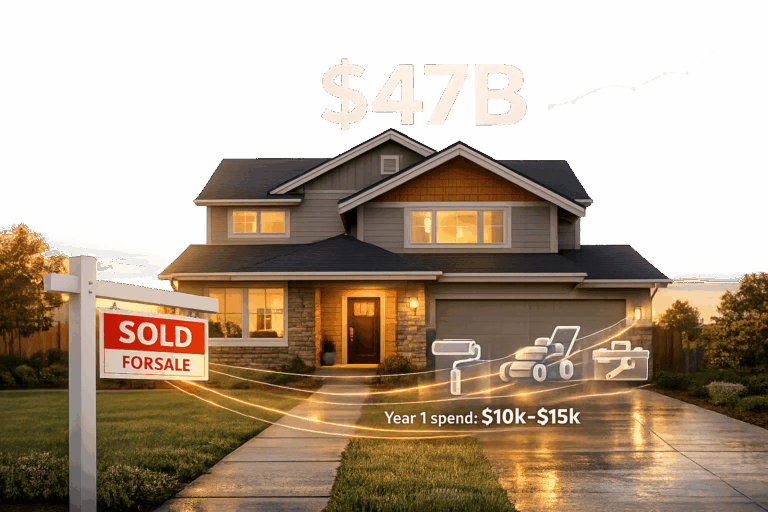
Every home sale in the U.S. creates a ripple effect in the home services industry, generating $47 billion annually. Here’s why:
- 73% of home improvement decisions occur within the first year of purchase.
- New homeowners replace roofs at 3.2x the rate of long-term occupants, with roofing alone driving a $23.5 billion opportunity.
- On average, homeowners spend $13,667 on 11 projects annually, with spending expected to grow as the market expands to $842 billion by 2026.
Key takeaway: Property sales are a reliable trigger for home services demand. Businesses that act quickly – using tools like real-time property data – can identify opportunities early, connect with new homeowners, and secure more leads.
BatchData simplifies this process by providing access to 155 million property records and tools that predict sales, flag ownership changes, and enrich contact data. This gives businesses the edge to target the right homeowners at the right time, boosting conversions and reducing marketing waste.
The Data Behind Property Sales and Home Services Spending
U.S. Home Services Market by the Numbers
The U.S. home services industry is massive – and it’s still expanding. By 2022, the market had grown to over $650 billion, a significant jump from around $500 billion in 2017. Looking ahead, forecasts suggest the total market value could reach $842.04 billion by 2026, with homeowner improvement and repair spending alone projected to hit $520 billion. By 2030, the market might even cross the $1.03 trillion mark.
Maintenance and repair services remain at the core of this sector, accounting for 37.82% of the total market share. This includes essential services like HVAC repairs, roofing, and general contractor work. Meanwhile, the U.S. homeownership rate rose to 65.9% in 2022, up from 63.7% in 2016, broadening the potential customer base for home service providers.
"New homeowners, in particular, often require a plethora of services, from plumbing to landscaping, to make their new house truly feel like a home." – WIN Home Inspection
These numbers highlight how property sales and homeownership trends fuel demand for home services.
How Property Sales Drive Home Services Demand
Property transactions play a direct role in increasing demand for home services. Sellers often invest in upgrades to boost their home’s sale price, while buyers face the challenges of maintaining or repairing older homes they acquire.
The aging housing stock in the U.S. adds another layer to this dynamic. In 2024, the average home was 36 years old – 10 years older than in 2012 – which means many homes come with deferred maintenance issues. For instance, homes built before 1940 average $4,820 in repairs, compared to $3,276 for homes built after 2000. Once a home is sold, the responsibility for these repairs shifts to the new owner, turning deferred maintenance into immediate service bookings.
"As newer buyers take ownership of older inventory, deferred maintenance backlogs continue to convert into booked jobs." – Mordor Intelligence
The scale of deferred maintenance is significant. Among millennials, 87% of homeowners report at least one pending repair project, and 84% admit to delaying those repairs. However, a property sale often forces these projects to the forefront, as buyers and sellers alike address necessary fixes.
How the $47 Billion Estimate Was Calculated
The $47 billion spending estimate reflects the direct impact of property sales on home services. This figure is based on several data points that intersect to reveal the scale of transaction-driven spending.
| Input | Data Point |
|---|---|
| Total homeowner improvement & repair outlays (2026) | $520 billion |
| Maintenance & repair market share | 37.82% |
| Average household spend per year (2023) | $13,667 across ~11 projects |
| Pre-1940 home average repair cost | $4,820 per transaction |
| Post-2000 home average repair cost | $3,276 per transaction |
| Existing home sales market CAGR (2024–2026) | 5.72% |
To calculate this, analysts multiply the annual number of existing home sales by the average combined pre-sale and post-sale spending per transaction. They also factor in the high percentage of homeowners (87%) who address deferred repairs during a sale event. Even a small +0.3% boost to the sector’s CAGR from property turnover translates into billions of dollars on a market-wide scale.
One reason this estimate holds weight is its consistency. Unlike optional renovations, spending triggered by property sales is tied to specific events like closings, inspections, and move-in dates. These deadlines make the spending both predictable and unavoidable, ensuring steady demand within the home services sector.
sbb-itb-8058745
Home Service Projects That Property Sales Set in Motion
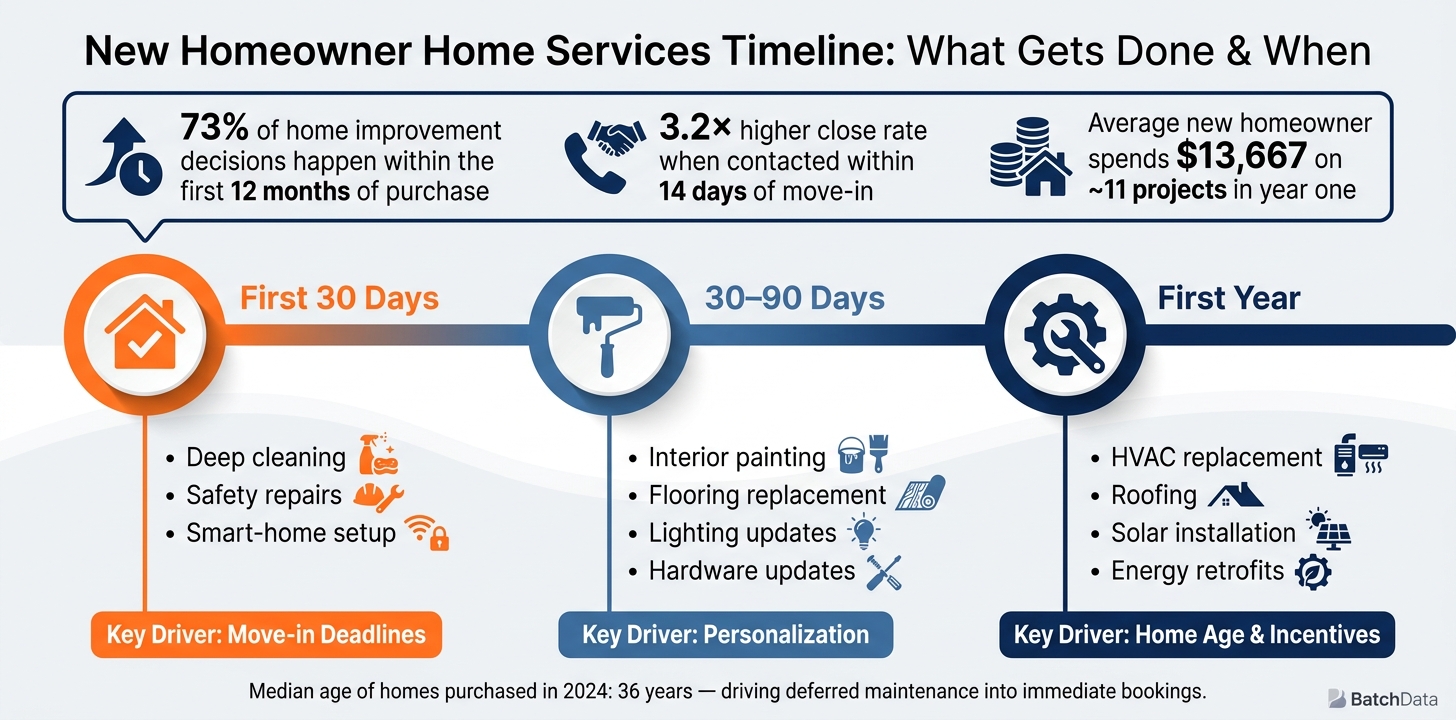
New Homeowner Home Services Timeline: What Gets Done & When
Property sales often spark a chain reaction of home service projects, both before and after the sale. These activities contribute significantly to the $47 billion home services market, showing how deeply tied real estate transactions are to this sector.
Pre-Sale Projects: What Sellers Do Before Listing
When preparing to sell, homeowners focus on removing potential buyer objections rather than undertaking full-scale renovations. The idea is to address anything that might cause hesitation, not to personalize the home for someone else’s preferences.
"The goal is to remove buyer objections, not to renovate your home for someone else’s taste." – Jacob Stark, Real Estate Agent
Sellers typically invest in small but impactful updates. Common projects include repainting in neutral tones, replacing outdated fixtures, updating cabinet hardware, and fixing maintenance issues like plumbing leaks or faulty electrical systems. Experts recommend allocating 1%–3% of the home’s value for these pre-sale fixes. For instance, a $500 upgrade to faucets and cabinet hardware often yields better returns than a $25,000 kitchen remodel. Cindy Aldridge, a real estate advisor, emphasizes practicality:
"Address visible wear, safety concerns, and comfort upgrades first. Skip the costly overhauls and cosmetic indulgences that don’t translate to buyer trust."
This approach pays off. In competitive markets like Denver Metro, homes sold at 98.89% of their listing price in early 2026, with a median time on the market of just 30 days. These results highlight how well-planned pre-sale projects can directly influence selling success.
Post-Sale Projects: What Buyers Do in the First Year
Once the sale is finalized, new homeowners shift their focus to functionality and safety. The goal is to create a home that feels move-in ready and well-maintained, rather than impressing with flashy upgrades.
"The goal is no longer to impress with expensive customization; it is to reduce friction, make the home feel move-in ready, and signal that the property has been well cared for." – Daniel Mercer, Senior Real Estate Content Strategist
The first priority is addressing essential systems like HVAC, plumbing, and electrical work, often followed by energy-efficient upgrades such as solar panels or heat pumps, especially when incentives are available. Once the basics are covered, buyers turn to aesthetic updates like painting, flooring, lighting improvements, and minor kitchen or bathroom refreshes. Full-scale remodels are typically avoided in favor of targeted upgrades.
As Daniel Mercer explains:
"The highest-performing projects are usually the ones that improve first impressions, reduce inspection anxiety, and make the home easier to compare favorably against nearby inventory."
These early efforts not only enhance the home’s appeal but also set the stage for more significant improvements down the road.
When Projects Are Most Likely to Happen After a Sale
Home improvement projects tend to follow a predictable timeline after closing. Here’s how the process generally unfolds:
- First 30 days: Immediate needs like deep cleaning, safety repairs, and setting up smart-home systems take priority. These tasks are often driven by tight move-in timelines.
- 30–90 days: Buyers start focusing on personalization, tackling projects like interior painting, flooring replacements, and lighting updates.
- First year: Larger system upgrades and energy-efficient retrofits, such as HVAC replacements or solar installations, become the focus. These are influenced by factors like the home’s age, mortgage rates, and available incentives.
| Timing Window | Typical Projects | Key Driver |
|---|---|---|
| First 30 days | Cleaning, safety repairs, smart-home setup | Move-in deadlines |
| 30–90 days | Paint, flooring, lighting, hardware updates | Personalization |
| First year | HVAC, roofing, solar, energy retrofits | Home age |
The median age of homes purchased in 2024 was 36 years – 10 years older than in 2012. With older homes dominating the market, buyers often face a backlog of deferred maintenance. Additionally, mortgage rates hovering between 6% and 6.5% have encouraged homeowners to stay put longer, redirecting their budgets from moving costs to home improvements.
Using Property Sale Events to Grow a Home Services Business
Identifying property sales quickly is a game-changer for home services businesses. Acting fast on this information can give you a serious edge over competitors.
How to Detect Property Sale Signals Early
The quickest way to spot a property sale is through county deed recordings, which are typically available within 24–48 hours after being filed. Timing is everything: contacting a new homeowner within the first 14 days can lead to a 3.2× higher close rate compared to waiting over 30 days.
But deed records aren’t the only source of valuable insights. Other indicators, like roofs older than 15 years, ownership exceeding 20 years, recent storm damage, or active remodeling permits, can help you identify high-priority opportunities. BatchData’s AI-powered tool, BatchRank, takes this even further by predicting which properties are likely to sell before they even hit the market, achieving 82% accuracy in Q3 2025 testing. As Ivo Draginov, President of BatchData, explains:
"Our goal for BatchRank is more deals and less marketing spend. Now, instead of targeting thousands and thousands of properties… you can target the top 50 most-likely-to-sell properties in an area."
BatchData monitors over 155 million properties and 221 million homeowners across the U.S., providing the coverage needed to act on these signals at scale.
Once you’ve gathered these early signals, the next step is to time your outreach effectively and turn this data into actionable leads.
Building Marketing Campaigns Around Transaction Events
After identifying a sale signal, a structured marketing sequence can help you stay top-of-mind. A 7-touch nurture campaign over 21–60 days works well, as 73% of home improvement decisions happen within 12 months, and 40% of leads go to the first business to respond.
Here’s an example of a multi-channel approach:
- Day 3: Send a postcard.
- Day 7: Follow up with an email.
- Day 10: Send an SMS.
- Day 21: Launch a digital ad.
- Day 30: Mail a follow-up letter.
- Continue with email and SMS touchpoints through Day 60.
Tailor your messaging to match the trigger. For example, emphasize energy savings for high-equity homeowners or focus on meeting code compliance for properties with recent permits.
For digital outreach, Google Local Services Ads can deliver quick results for high-intent prospects, costing around $40–$100 per lead. On the other hand, targeted direct mail – focusing only on top-priority properties identified through data – costs $2–$5 per piece and minimizes waste.
Combining these strategies with enriched property data can further refine your targeting and boost your return on investment.
Using Enriched Data to Improve Targeting and ROI
While early detection is critical, raw data alone isn’t enough to close deals. Enriching your data with details like home age, roof age, equity level, and permit history helps filter out unqualified leads and focus on prospects most likely to convert.
For instance, homeowners with 60% or more equity are 40% more likely to approve major upgrades and have the financial resources for larger projects. By prioritizing this segment and using skip tracing to append verified contact details, you ensure your outreach reaches the right decision-makers. The results speak for themselves: companies using data-driven targeting report 40–60% higher conversion rates and reduce marketing waste by up to 50%.
As Matt Shephard, Chief Revenue Officer at BatchData, puts it:
"The better the data, the more money you know you will be able to extract from that information and insight. I will happily stand on data being one of the most important things in a company’s tech stack."
Take Miller Plumbing, for example. In March 2024, this Columbus-based business integrated county deed records with their CRM to trigger automated welcome messages for new homeowners. Within just 90 days, their new customer acquisitions jumped from 18 to 31 per month – a 72% increase – and their cost per acquisition dropped from $185 via paid search to just $47.
How to Scale with BatchData: Tools and Best Practices
BatchData’s tools are designed to turn property sale insights into actionable strategies for business growth. Here’s how their features and workflows can help you scale efficiently.
BatchData Features Tailored for Home Service Businesses
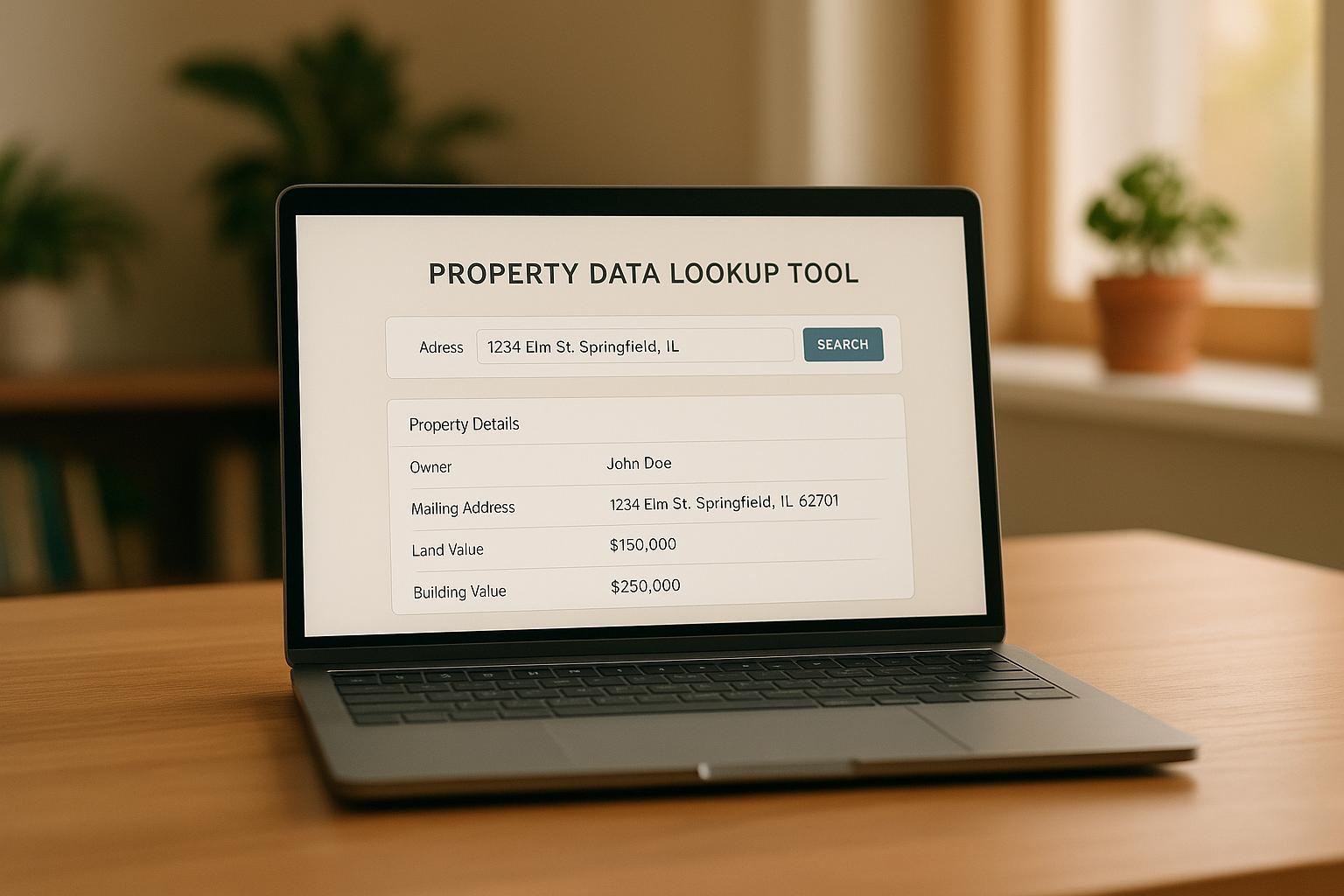
At its core, BatchData focuses on delivering essential property data instantly. The platform provides access to over 155 million properties, offering more than 700 searchable attributes like sale dates, transaction history, equity levels, and permit history.
One standout feature is the webhook-based Smart Search API, which automatically pushes leads matching your criteria directly to your CRM. For instance, you can create a profile – such as homes sold recently, built before 2005, with at least 60% equity in a specific zip code – and BatchData will send matching leads as soon as they qualify. As they explain:
"The best deals are captured the instant a property meets your criteria. Capture opportunities the moment they arise."
Additionally, BatchData’s contact enrichment feature ensures that your outreach reaches the right people by appending verified phone numbers and email addresses.
Automating Workflows with Transaction Data
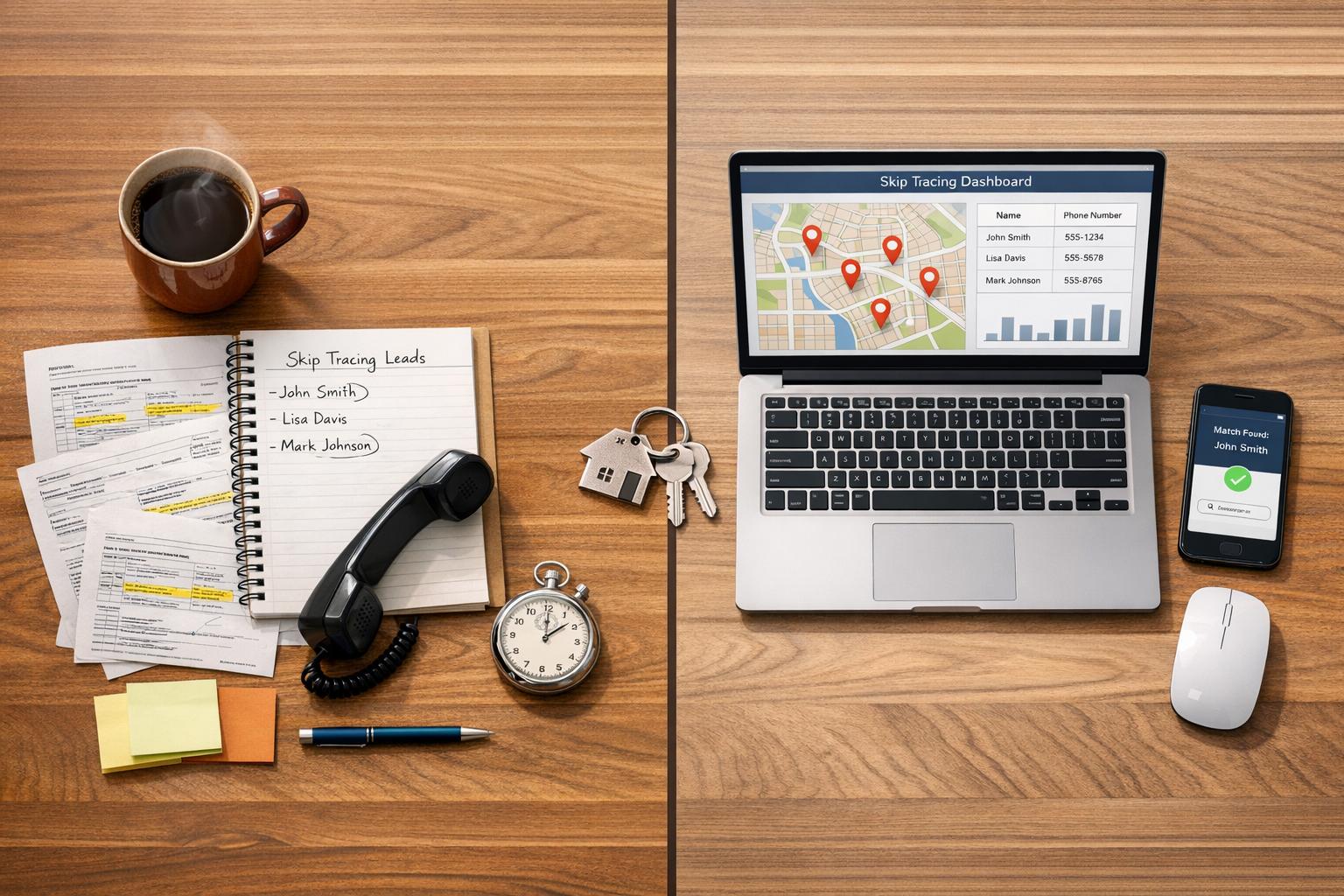
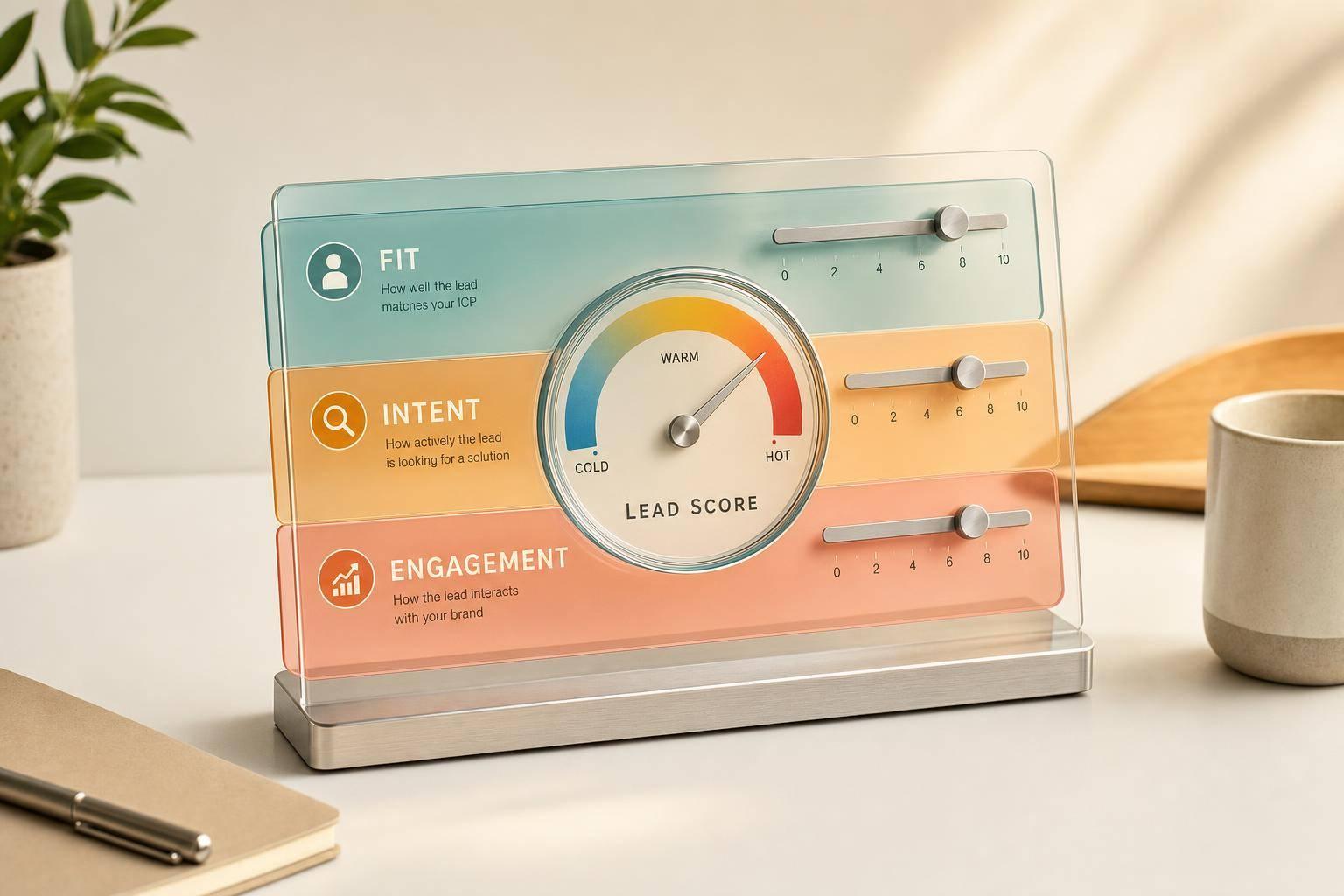
To make the most of BatchData, connect their Smart Search API to your CRM or marketing automation tools. When a property matches your criteria, automated workflows can handle contact enrichment through skip tracing property owners, score leads based on property attributes, and sequence outreach efforts. This setup allows you to act on early property sale signals, giving you a competitive edge in the home services market.
For teams without in-house developers, BatchData supports no-code integrations through platforms like Amazon S3, Google Drive, and SFTP. This enables lead files to be delivered directly to your tools on a set schedule. Chris Finck, BatchData’s Director of Product Management, highlights the time-saving benefits:
"We want to supplement your work and make you superhuman so you can do things in seconds not hours. That’s where BatchData comes in. What used to take 30 minutes now takes 30 seconds."
BatchData also ensures compliance with TCPA regulations by running phone numbers and addresses through validation tools. This helps filter out DNC-listed contacts and disconnected lines, reducing unnecessary expenses.
Monitoring and Optimizing Campaign Performance
Once your workflows are automated, real-time monitoring becomes crucial for success. By linking BatchData’s API to a live dashboard, you can track metrics like click-through rates, cost per acquisition, and conversion rates by property segment. This lets you adjust your budget and strategy on the fly, rather than waiting for monthly reports.
Over time, you can refine your targeting using predictive data. Monitoring attributes like equity levels, home age, and permit history helps identify patterns that lead to successful conversions. Businesses using this method often see 40–60% higher conversion rates and up to 50% lower marketing costs compared to broad outreach approaches.
BatchData offers flexible pricing options, including pay-as-you-go API access and custom plans to suit businesses of all sizes. A free trial is also available, allowing you to explore the platform’s capabilities before making a commitment. With these tools, businesses can tap into the growing demand in the home services market fueled by property sales.
Conclusion: How to Tap Into the $47B Home Services Market
Timely and accurate data plays a game-changing role in turning property sales into actionable business opportunities.
Every property sale opens a window of potential. On average, new homeowners spend between $10,000 and $15,000 on home services within their first year. The key to capturing this market? Timing. Contractors who connect with homeowners within 14 days of move-in are 3.2 times more likely to close a deal compared to those who wait over 30 days.
The takeaway is simple: property sales are a reliable predictor of demand. For instance, older homes often signal a need for roofing or HVAC updates, while properties with strong equity suggest homeowners may be ready for larger renovations. This data-driven approach eliminates guesswork, creating a repeatable and targeted strategy.
"Data is no longer a luxury; it is the essential infrastructure for sustainable growth in the Home Services market." – Cotality
BatchData enables home service businesses to act on these insights at scale. By providing real-time deed recording updates, comprehensive property and contact data, and automated CRM workflows, the platform ensures businesses can respond quickly and effectively to new opportunities.
This $47 billion market isn’t limited to national players. Any home service business can benefit by leveraging precise targeting based on sale dates, property conditions, and equity metrics. By using the enriched data and automated tools outlined here, businesses can turn property sales into actionable leads with measurable outcomes. BatchData’s free trial offers a hands-on opportunity to see how this approach can work in your market.
FAQs
How can I find new homeowners within 24–48 hours of a sale?
To pinpoint new homeowners within 24–48 hours of a sale, rely on automated data tools that monitor property transactions in real time. These tools sync with sources like county deed records, USPS change-of-address data, and CRMs to quickly identify recent sales. By automating move-in alerts, you can reach new homeowners during that crucial period when they’re actively looking for home services – often within 48 hours of their deed being recorded.
What home details best predict which services a buyer will need first?
When it comes to predicting which services a homebuyer might need right away, certain home details stand out. For instance, recent home improvement projects – like interior renovations or repairs – can give clues about what’s been updated and what might still need attention. Another key factor is the age or condition of major systems, such as the roof. These elements often shape the priorities for a buyer’s first year of homeownership, as they focus on tackling immediate maintenance tasks or addressing pressing issues.
How soon should I contact a new homeowner to win the job?
The ideal window to reach out to a new homeowner is within the first 30 days of their move. During their first year, new homeowners typically spend between $10,000 and $15,000 on home services, making early contact crucial for landing their business. Using automated workflows to detect move-ins within 48–72 hours can give you the speed advantage to connect with them before your competitors do.