






































Street-level international address validation is now broad enough that many cross-border workflows can be automated, but coverage is not the same as correctness. A product team still has to decide how much confidence is required for checkout, fraud review, KYC, policy issuance, CRM cleanup, and last-mile delivery. Those are different problems, and a single validation response should not drive all of them the same way.
If you need to validate international address data, focus on the full system. API calls are one layer. The harder engineering work sits in reference data selection, country detection, parsing and normalization rules, transliteration handling, fallback design, and policies for records that stay ambiguous after validation. That is where costs show up later, in failed deliveries, duplicate customer records, manual review queues, and broken downstream joins.
Teams usually start with front-end form checks. Then actual issues surface in imports, ETL pipelines, partner feeds, and records created before a country code was ever captured. Geopolitical name changes, local language variants, and address formats that do not map cleanly to a Western street-city-postal-code model force product and engineering decisions that generic API guides skip.
Key takeaways
- Global coverage is broad, but precision still varies by market. Street-level validation may be available while unit, building, or premise confirmation is weak or unavailable.
- Country identification should happen early. Parsing logic, postal rules, and confidence scoring depend on it.
- Validation works as a service layer, not a single endpoint. Plan for parsing, normalization, verification, enrichment, storage of canonical forms, and review paths for unresolved records.
- Reference data changes over time. New developments, renamed municipalities, revised postal boundaries, and sanctions-related country naming changes can invalidate old assumptions.
- Fallback strategy affects operations. If your business ships physical goods after checkout, post-purchase workflows like handling post-campaign address changes are as important as form-time validation.
- Transliteration and alias handling need explicit rules. A valid address can appear in local script, Latin script, or an outdated geopolitical name and still refer to the same destination.
A usable system does more than accept or reject an address. It decides what to standardize, what to trust, what to store, and when to ask a human to intervene.
A Developer's Guide to Implementing International Address Validation
A small error in address handling can break fulfillment, distort geocoding, and create duplicate customer records across systems. International validation gets expensive fast because the failure mode is rarely a hard reject. It is a record that looks usable, passes through checkout, and fails later in shipping, underwriting, compliance review, or analytics.
The engineering problem is broader than calling an API. A production system needs decisions about reference data, storage of canonical forms, confidence thresholds, review workflows, and how to recover when postal data is weak or politically outdated. Teams that skip those choices usually end up with a validator that returns a status code but does not help the business decide whether to ship, contact the user, or route the record for manual review.
Two workflows usually drive the design. The first is low-latency validation during signup, checkout, or lead capture. The second is batch remediation for imported CRM data, servicing files, property records, and historical customer tables. Those paths share normalization logic, but they should not share the same timeout budget, retry policy, or acceptance threshold.
What the product team needs to decide first
Set the operating rules before implementation starts.
- Country scope: Support for 12 priority markets is a different project from broad global coverage. Country count drives vendor selection, fallback logic, and test coverage.
- Accepted level of certainty: Shipping, tax calculation, fraud review, and property matching each tolerate different levels of ambiguity.
- System of record: Choose where the canonical address lives and whether downstream systems can overwrite it.
- Failure handling: Decide when to block, when to suggest corrections, when to accept with low confidence, and when to create a review queue.
- Script policy: Decide whether to store local script, Latin transliteration, or both.
- Change management: Decide how to handle renamed countries, disputed regions, and municipal boundary updates.
A practical rule helps here. Do not ask whether an address is valid in the abstract. Ask whether it is good enough for mailing, geocoding, sanctions screening, parcel delivery, service availability, or owner matching.
What works in production
The systems that hold up over time treat address validation as a service layer between intake channels and downstream platforms. They keep the raw user input, generate a normalized form, attach confidence and reason codes, and record which data source produced the result. That audit trail matters when support teams need to explain why one spelling was accepted and another was queued.
Good implementations also separate validation from enrichment. Geocoding, rooftop coordinates, parcel identifiers, and market context are useful, but they should not be the only proof that an address is deliverable or administratively correct. In property and location-heavy products, this often intersects with geospatial analysis for automated valuation models, where a normalized address is only one input into a larger location pipeline.
Common shortcuts that create expensive cleanup later
Several patterns fail predictably:
- Single regex pipelines: They break on country-specific ordering, building names, dependent localities, and non-Latin scripts.
- Geocoder-only validation: It can return coordinates for a place-like string while missing postal deliverability issues.
- Static reference tables: Postal data, locality names, and administrative boundaries change.
- Silent correction: If the system rewrites the wrong premise, district, or postal code without exposing confidence, support volume goes up.
- One canonical text field only: You lose the ability to compare user input, normalized output, and source-specific variants.
There is also an operational trade-off. A strict validator reduces bad records at entry, but it can hurt conversion in markets where users enter partial addresses or rely on landmarks. A more permissive validator keeps conversion up, but pushes more work into post-purchase operations. That is why teams shipping physical goods need to design for handling post-campaign address changes instead of assuming form-time validation will catch everything.
A global address validator is part parser, part policy engine, part data pipeline. Treating it that way from the start saves rework later.
How Does International Address Validation Actually Work?
A validator that handles 200-plus countries still fails fast if it starts with the wrong country context. Smarty notes that country identification is a required input for international validation. In practice, that means the system needs to know which rule set to apply before it parses a single token.
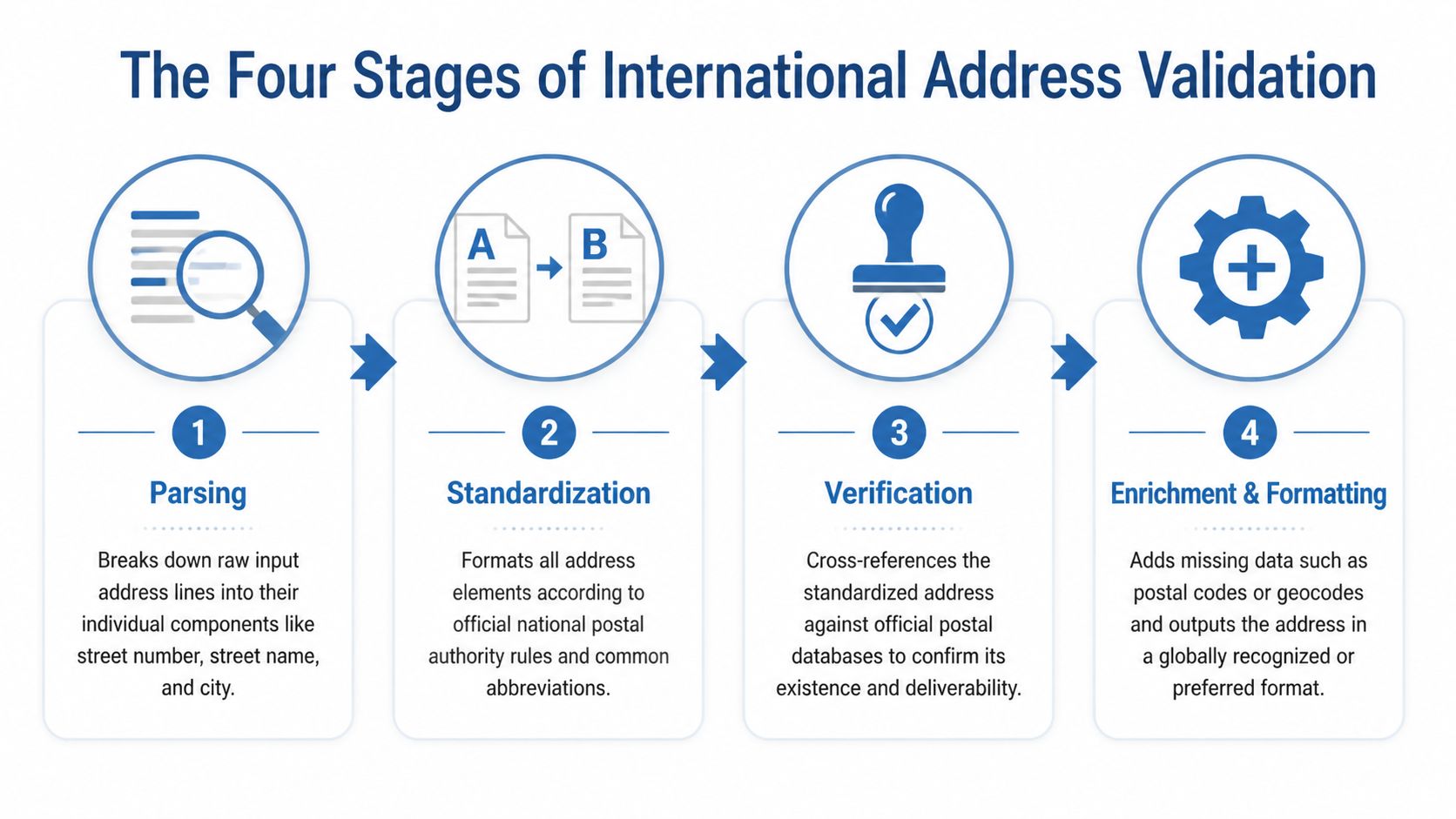
International address validation is a pipeline. The core stages are country detection, parsing, normalization, reference matching, and enrichment. The engineering work is not the API call itself. The hard part is deciding what to do when the input is incomplete, contradictory, written in two scripts, or valid for one provider and rejected by another.
Country selection drives the whole pipeline
Country is not a display field. It selects the parser, expected component order, postal code rules, administrative hierarchy, script policy, and formatter.
Teams often support a single free-text address box because it feels faster in the form. That design pushes ambiguity into the backend. A pasted string like "12 High Street, Victoria" can point to different parsing paths depending on country, and the wrong branch creates bad normalization that looks clean but is still wrong.
A better implementation is simple:
- Capture country up front, or infer it with low confidence and ask for confirmation.
- Pass the country code with the raw address payload.
- Run country-specific parsing and validation rules.
- Return structured output plus a confidence state, not just a boolean.
That confidence state matters for product behavior. An eCommerce checkout, underwriting workflow, and CRM import tool should not all treat "possible match" the same way.
Parsing should produce structure, not guesses hidden as certainty
Parsing breaks the input into usable parts such as premise, street, dependent locality, city, administrative area, postal code, and unit. That sounds routine until you hit addresses where the building name matters more than the street number, the postal code precedes the city, or the user enters a local-script version plus a Latin transliteration in the same line.
The cleanest architecture is a parser framework with country profiles, not one global parser with a pile of exceptions. Each profile should define expected fields, ordering patterns, common abbreviations, script handling, and known ambiguities. Preserve the original string alongside parsed components so support teams and downstream systems can still inspect what the user entered.
Transliteration needs explicit handling. If a user enters a Japanese address in Kanji and your shipping partner only accepts Latin characters, the system should keep both forms and record how the transliterated version was produced. The same applies to Cyrillic, Arabic, Greek, and mixed-script records. Silent conversion makes debugging harder and can create legal or delivery issues if the transformed output no longer matches local usage.
| Parsing problem | What usually causes it | Better system behavior |
|---|---|---|
| Components in unexpected order | Country-specific conventions | Load parsing rules by country and territory |
| Mixed script input | User, marketplace, or source-system variation | Store original and transliterated values separately |
| Missing locality or postal code | Partial entry, rural addressing, landmark-based input | Return warnings and fallback paths |
| Ambiguous place names | Shared city, province, or district names | Use country plus admin hierarchy to disambiguate |
Normalization creates a canonical record for machines
Normalization converts parsed components into a consistent structure your systems can compare, deduplicate, and pass downstream. This includes canonical field names, standardized locality labels, approved abbreviations, postal formatting, and consistent country and region codes.
The trade-off is straightforward. Aggressive normalization improves match rates across systems, but it can erase distinctions that matter to the customer or operations team. I usually recommend storing four layers for each record:
- Raw user input
- Parsed components
- Normalized canonical fields
- Provider-specific formatted output
That model helps with audits, provider switching, and issue resolution. It also makes actionable B2B data enrichment easier because enrichment pipelines can join against a canonical record without losing the original address text that sales, support, or compliance teams may still need.
Verification is a reference match plus a decision policy
Verification checks the normalized address against reference data and returns match metadata. The useful output is not "valid" or "invalid." The useful output is closer to: exact match, partial match, corrected match, unresolved, or conflict between components.
Product and engineering decisions matter more than vendor marketing. One provider may confirm the street and postcode but not the unit. Another may geocode the location correctly while still missing postal deliverability. Your system needs a decision layer that interprets provider responses based on business risk.
For example:
- Accept exact or high-confidence corrected matches at checkout.
- Ask the user to review medium-confidence corrections before payment.
- Queue unresolved business addresses for manual review during onboarding.
- Reject records only when the failure state is clear enough to justify the conversion hit.
Geopolitical changes complicate this layer. Country names, region names, and accepted spellings change over time. A validator should support aliases, historical names, and provider-specific mappings rather than assuming one permanent canonical label. Otherwise older CRM records stop matching newer reference data even when the physical destination has not changed.
Enrichment turns a checked address into an operational asset
Once the address is verified, enrichment adds the fields other systems need. That can include rooftop or parcel geocodes, administrative hierarchy, timezone, delivery point metadata, census or market overlays, and source confidence. For property, logistics, and territory planning products, spatial context often matters as much as mailability.
That is why mature implementations connect validation with geospatial analysis used in automated valuation models, rather than treating address checking as an isolated form feature.
A production workflow needs fallback logic
A working global pipeline usually follows this path:
- Capture country and raw address input
- Parse with country-specific rules
- Normalize into canonical fields
- Verify against one or more reference sources
- Enrich with geospatial and administrative metadata
- Apply a decision policy based on confidence and business context
- Store inputs, outputs, corrections, and provider metadata
The fallback path is just as important as the happy path. If the primary provider times out, if a country has weak premise-level coverage, or if transliteration confidence is low, the system should degrade predictably. That may mean dropping to postal-code-plus-locality validation, calling a secondary source, or routing the record to review instead of blocking the user.
That is how international address validation works in production. It is a data pipeline with policy controls, source-specific behavior, and a lot of edge-case management hidden behind a simple form field.
What Are Your Data Sources for Address Verification?
The source decision drives the failure rate. Teams that treat international validation as a single API purchase usually find the gaps later, after records start failing in checkout, CRM sync, fulfillment, or compliance review.
In practice, address verification data comes from three buckets: postal authorities, commercial aggregators, and geocoders. Each solves a different part of the problem. A global product usually needs more than one.
Comparison of International Address Data Sources
| Data Source Type | Coverage & Accuracy | Typical Cost Model | Best For |
|---|---|---|---|
| Postal authorities | Strong where direct access exists. Rules align closely with official local formats. Coverage is fragmented across countries. | Licensing, direct agreements, or country-specific access terms | Highly regulated workflows, country-specific compliance, mail operations |
| Commercial aggregators | Broad multi-country coverage with one integration. Accuracy varies by country and by precision level. | API usage, subscriptions, enterprise contracts, or bulk licensing | Product teams that need global support fast |
| Geocoders | Useful for spatial confirmation and map-based interpretation. Insufficient alone for postal validation. | Per request, subscription, or platform usage pricing | Location enrichment, routing, distance, map UX |
Postal authority data gives you the strongest local fidelity
If the business depends on official deliverability rules, direct postal data is usually the best reference. It tends to reflect local formatting, postal code logic, and delivery unit structure better than generalized global feeds.
The trade-off is engineering overhead.
A postal-first strategy means separate contracts, separate ingestion patterns, separate update schedules, and country-specific schema mapping. One source may publish premise data with formal building identifiers. Another may give you only locality and postal code tables. Some countries expose frequent updates. Others change slowly or require manual file handling. Product teams often underestimate that maintenance cost.
Direct postal data makes sense when a single country matters enough to justify custom treatment, or when auditability matters more than development speed.
Commercial aggregators are usually the right starting point
For multi-country products, aggregators are the practical first layer. One API can cover many countries, normalize fields into a usable schema, and give product teams a faster path to launch.
That convenience has a price. You inherit the provider’s conflict resolution rules, freshness windows, confidence model, and blind spots. If an aggregator merges postal files, government datasets, merchant-contributed corrections, and rooftop coordinates, your team still needs to know which source won for a given result and whether that result is good enough for the workflow.
This is also where product scope matters. If validation feeds sales ops, onboarding, account routing, or territory assignment, the address should not sit in its own silo. It becomes more useful when paired with company and contact context. A useful adjacent read is this guide to actionable B2B data enrichment, because the business value often comes from combining location quality with account-level enrichment.
A common implementation path works well here: start with one aggregator, log provider metadata and confidence outputs, then add country-specific overrides only where error costs justify the extra complexity.
Geocoders help with interpretation, not postal truth
Geocoders are good at turning imperfect address strings into coordinates and map features. That makes them useful for search, routing, service-area checks, and spatial joins.
They are weaker as a primary validation source. A geocoder may return a plausible point for an address that does not match local postal standards, uses an outdated administrative label, or lacks the delivery detail required by carriers or regulators. That is acceptable for map display. It is risky for underwriting, legal notices, policy issuance, and record matching across systems.
Use geocoders for:
- Latitude and longitude
- Spatial joins and territory logic
- Map search and autocomplete support
- Fallback suggestions when postal or aggregator data is incomplete
Keep them in a supporting role unless the product only needs approximate location.
Source selection is a product decision, not just an engineering one
The right source mix depends on what failure costs you.
If a bad address creates mild user friction, an aggregator plus geocoder is often enough. If a bad address can trigger compliance issues, failed delivery, duplicate records, or manual operations work, the system needs a stricter hierarchy and better traceability.
A simple decision pattern is usually enough:
| Business context | Better source strategy | Why |
|---|---|---|
| Checkout or onboarding | Aggregator plus geocoder | Fast integration and helpful user suggestions |
| Property and mortgage records | Aggregator plus higher-trust reference data and review workflow | Better traceability and fewer silent mismatches |
| Country-specific regulated mail | Postal authority first | Closer alignment with official formatting and delivery rules |
The mistake is assuming all countries deserve the same source strategy. They do not. Good international validation systems use broad coverage where it is sufficient, then invest in deeper country-specific data where the operational risk is real.
How Do You Handle Complex Validation Edge Cases?
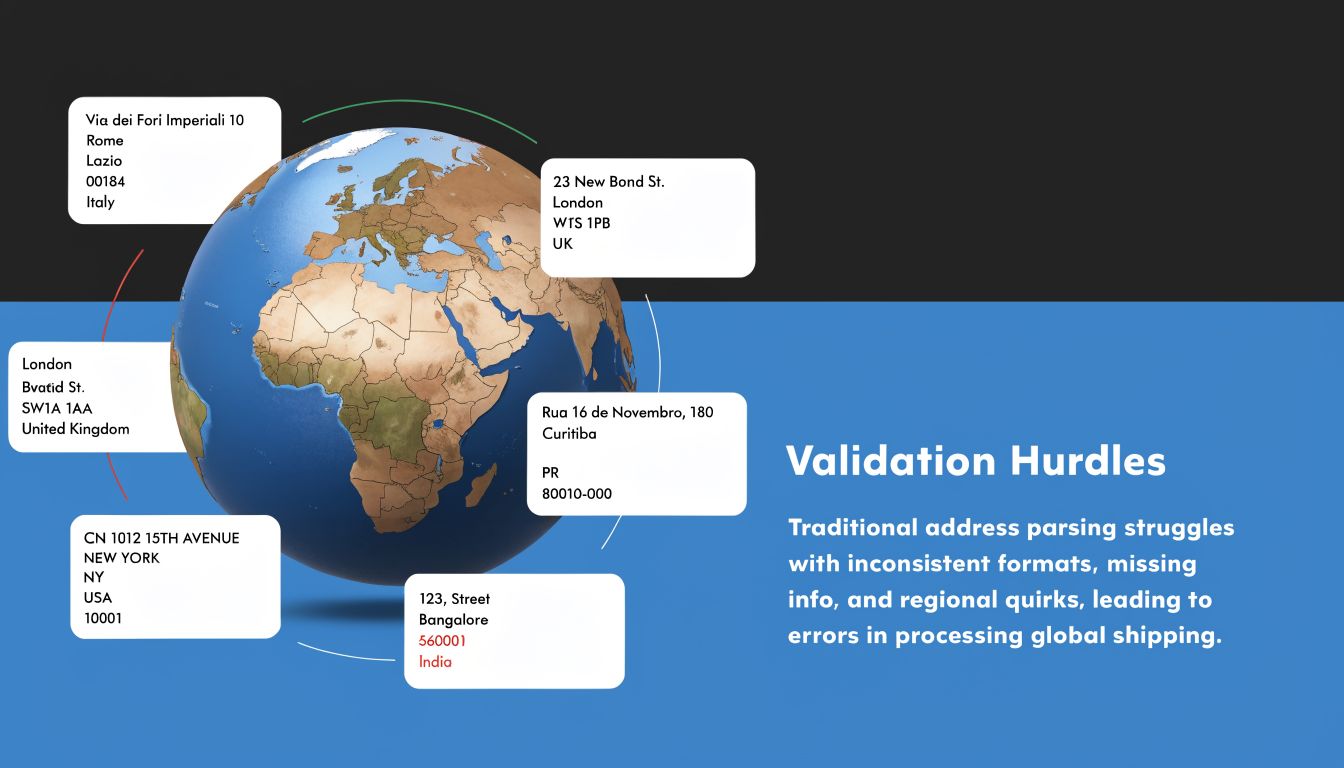
The difficult part of international validation is never the clean input. It’s the record that’s almost right, half translated, copied from an old document, or tied to a place name that changed after your database snapshot.
That’s why simplistic validators break in production. They assume addresses are static strings. They aren’t. They’re evolving location descriptions shaped by language, local conventions, and administrative change.
Transliteration needs a dual-track model
When users enter addresses in Cyrillic, Kanji, or another non-Latin script, many systems try to force an immediate transliteration into Latin characters. That’s useful for some downstream systems, but it can also destroy fidelity.
A better design keeps two parallel values:
- Original-script address
- Transliterated or romanized address
That allows search, matching, and display logic to work without overwriting the user’s source data. It also helps when different systems downstream expect different representations.
Don’t score transliteration mismatches the same way you score postal mismatches. They are different classes of uncertainty.
Historical place names must stay searchable
A strong example comes from South Africa. In February 2026, the city of Port Elizabeth was officially renamed to Gqeberha, and GeoPostcodes explains why validators need historical records of place name changes so both old and current names remain resolvable.
Records don’t update all at once. Residents may keep using the older place name. International shippers may not know the newer one. Legacy deeds, servicing records, and insurance files may contain both.
Your validator should support:
- Canonical current name
- Historical aliases
- Match metadata that shows which name matched
- Rules for whether to rewrite output or preserve source terminology
If you only store the latest name, your search and matching quality will degrade every time a jurisdiction renames a city, district, or region.
Static address tables don’t just get old. They actively create false negatives when geography changes.
Ambiguity should trigger workflow, not failure
Some addresses can’t be cleanly validated in one pass. Border-region records, partial rural descriptions, and imported legal documents often contain enough information for a human to recognize the place but not enough for a validator to certify it.
That doesn’t mean the system failed. It means the system should branch.
Good edge-case handling usually includes:
- Review queues: Route unresolved but important records for manual verification.
- Field-level confidence: Show uncertainty at the component level, not just on the whole address.
- Alias dictionaries: Keep local abbreviations, legacy place names, and common misspellings.
- Country-specific exception logic: Some markets need looser tolerance during intake and stricter normalization before fulfillment or servicing.
Don’t hide uncertainty from users
When the validator isn’t sure, say so. Silent normalization creates support tickets and data disputes later. Users can handle “we found a close match” better than they can handle a system that subtly changes a city or unit number.
The most resilient validators aren’t the ones that pretend every input has a perfect answer. They’re the ones that preserve ambiguity, expose confidence, and let downstream workflows decide what to do next.
What Should Your Implementation Strategy Include?
Your implementation strategy should include separate real-time and batch workflows, confidence-aware decisioning, fallback paths, and a schema designed for mixed-format records. If you collapse everything into one API call, you’ll ship something that looks complete in a demo and falls apart in operations.
That problem gets sharper in property workflows. EDQ’s discussion of international verification gaps points out that cross-border real estate transactions lack standardized validation for mixed-format addresses, especially when records include dual-country postal codes, historical address formats, or international mailing addresses tied to property ownership.

Real-time and batch should not share the same rules
Real-time validation serves humans. Batch validation serves datasets. They need different tolerances.
Real-time workflows should optimize for:
- Speed
- Clear correction suggestions
- Minimal user friction
- Strong country guidance at input time
Batch workflows should optimize for:
- Throughput
- Audit trails
- Deterministic reprocessing
- Exception handling at scale
If you use the same acceptance threshold for both, you’ll either annoy users or pollute your warehouse.
Confidence scoring is the control plane
A validator should never return a binary result alone. It should return component-level confidence, match status, and reason codes that your product can act on.
Three states are usually enough for application logic:
| Validation state | What it means | Suggested product behavior |
|---|---|---|
| High confidence | Core components align with authoritative data | Accept and standardize |
| Partial confidence | Some components match, others are uncertain | Ask user to confirm or route for review |
| Low confidence | Structure or locality cannot be trusted | Reject, hold, or require manual handling |
Domain-specific logic is a critical factor. A lending platform may accept a partially verified mailing address while requiring a higher-confidence collateral address.
Design for mixed-format real estate records
Real estate data is unusually messy because one transaction can include multiple address roles:
- Subject property address
- Borrower mailing address
- Tax mailing address
- Prior transfer record address
- Servicer or trustee correspondence address
Those records may belong to different countries or follow different formatting standards inside the same workflow. Generic vendor docs rarely address this well.
This is also one place where a property data platform can fit into the architecture. BatchData can serve as a structured property and owner data layer in U.S.-centric workflows, while international validation logic handles cross-border owner and mailing address normalization around that core dataset.
Build versus buy is mostly a maintenance question
A lot of teams frame this as an integration question. It’s really a maintenance question. Can your team keep parser rules, postal standards, alias history, and update schedules current across countries for years?
For product leaders weighing the engineering trade-off, this breakdown of software build versus buy strategies is a useful way to think about long-term ownership costs, not just launch speed.
Here’s the blunt version:
- Build in-house if address logic is core intellectual property and you can support continuous country-level maintenance.
- Buy a provider if you need broad coverage quickly.
- Hybridize if a vendor handles most cases and your team adds domain-specific rules for the exceptions that matter most.
The hybrid model is usually the most efficient. Let vendors handle postal complexity. Keep business-specific matching logic inside your own system.
The architecture that tends to hold up
A durable implementation usually includes these components:
- Input layer for forms, imports, and partner feeds
- Normalization service with country-aware parsing rules
- Verification provider abstraction so you can swap vendors or combine sources
- Decision engine that applies confidence thresholds by use case
- Review tooling for unresolved records
- Storage model that preserves raw, normalized, and historical address values
- Privacy controls so address data is retained and shared appropriately under your regulatory requirements
That last point matters. Addresses are personal data in many contexts. Your storage and replay strategy should reflect that from day one.
How Should You Test and Monitor Your Validation System?
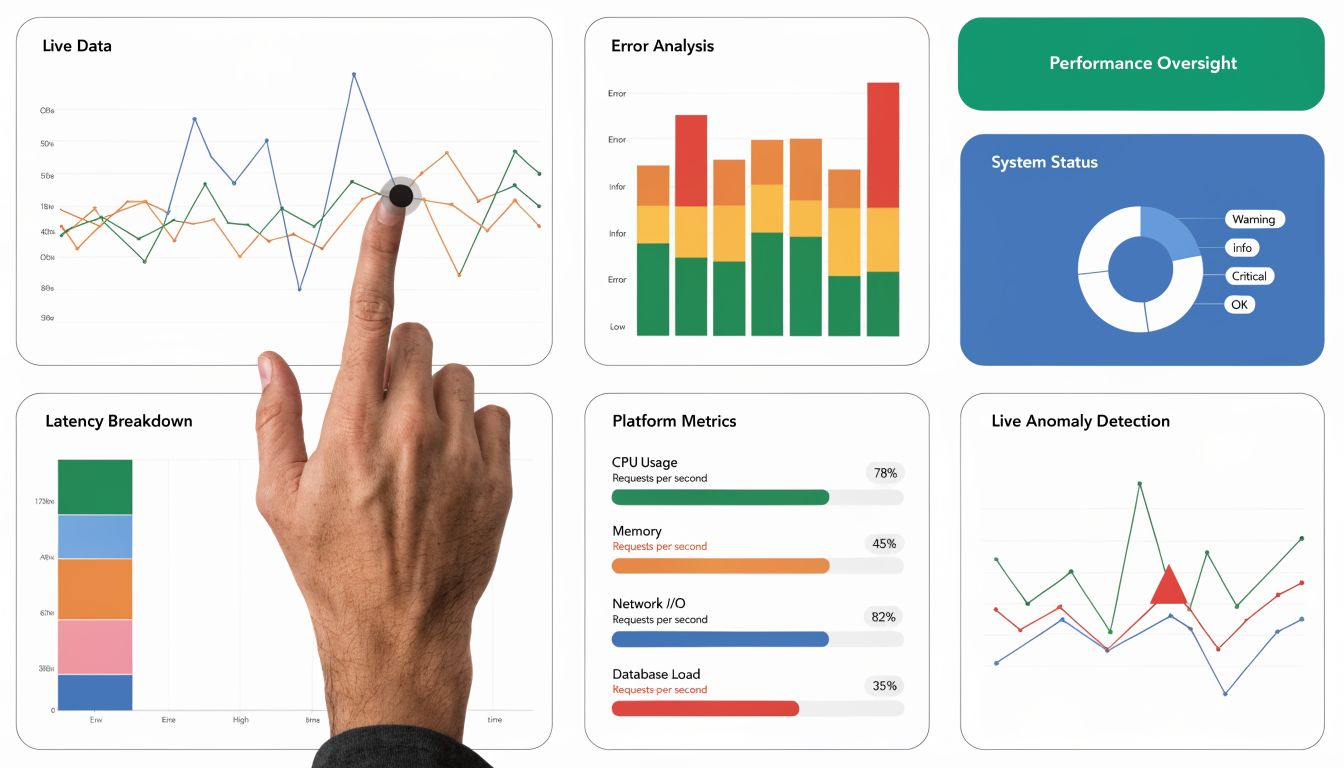
You should test and monitor international address validation as an ongoing data quality service. It isn’t a one-time integration. Postal formats evolve, provider behavior changes, and your own intake channels introduce new error patterns over time.
Build a test suite that reflects real failure modes
Typically, only obvious happy paths are tested. That’s not enough. Your suite should include valid, invalid, ambiguous, incomplete, and mixed-script examples from the countries you support.
Include cases such as:
- Correct addresses with local formatting
- Old place names and current place names
- Missing unit or postal code
- Transliterated versus original-script inputs
- Cross-border records where mailing and property addresses follow different standards
Keep expected outputs versioned. When a provider changes behavior, you want to know whether the change improved quality or introduced drift.
Monitor the metrics that expose operational risk
Track metrics by country and by input channel. A single global success rate hides too much.
The most useful dashboard metrics are:
| Metric | Why it matters | What to watch for |
|---|---|---|
| Validation success by country | Reveals market-specific failures | Sudden drops after provider or rules updates |
| Partial-match rate | Shows growing ambiguity in intake | Spikes from bad imports or parser regressions |
| API latency and timeout rate | Protects real-time user flows | Slowdowns during traffic peaks |
| Manual review volume | Measures operational burden | Growth after schema changes or new market launches |
Set alerts around drift, not just outages
An outage is obvious. Drift is what harms insidiously.
Alert when you see:
- Country-specific success degradation
- Unexpected growth in unresolved records
- Changes in standardized output patterns
- Higher manual review queues from one source feed
Use feedback loops too. If support or operations teams repeatedly override a country’s output, feed those patterns back into your parser rules, alias tables, or provider selection logic.
The goal isn’t perfection. The goal is to detect when your system has stopped representing the actual world accurately.
Frequently Asked Questions About International Address Validation
Is validation the same as verification or standardization
No. Standardization formats an address according to local postal conventions. Verification checks it against reference data. Validation is usually used as the broader umbrella term for the full process, including parsing, formatting, matching, and decisioning.
Should we build our own international validator
Usually not, unless address intelligence is central to your product and you can maintain country-specific rules over time. The initial parser is only the beginning. The long-term burden is updates, aliases, geopolitical changes, confidence logic, and operational review tooling.
Is geocoding enough to validate international address data
No. Geocoding is useful for spatial enrichment and approximate location confirmation. It doesn’t replace postal verification or country-specific formatting logic.
What should we store after validation
Store the raw input, structured parsed components, normalized output, and validation metadata. If you only save the normalized result, you lose auditability and make support investigations harder.
What pricing model should product teams expect
Vendors typically charge through API-based usage, subscriptions, enterprise agreements, or bulk licensing. The practical question isn’t just monthly price. It’s whether the pricing model matches your traffic pattern, batch volume, and need for predictable reprocessing.
What’s the biggest implementation mistake
Treating validation as a front-end feature instead of a shared data service. Once addresses flow into lending, underwriting, servicing, claims, investor reporting, or due diligence, bad normalization choices become expensive to unwind.
If your team works in property, lending, or insurance, BatchData is worth evaluating when you need a structured U.S. property data layer alongside address normalization, owner matching, and portfolio-scale data operations. It fits best when address quality isn’t an isolated problem and needs to connect to collateral data, ownership records, and downstream decision systems.