



Response time shapes revenue. In HVAC, the contractor who calls first often books first, especially on urgent repair jobs. That is why lead generation needs to be built as an operating system, not a stack of disconnected tactics.
If you want to know how to get HVAC leads, start with a harder truth. More leads do not fix weak follow-up, weak targeting, or weak conversion. Profitable growth comes from combining demand capture with proactive targeting, then routing every inquiry into a fast, disciplined sales process.
That means more than showing up on Google. It also means identifying homeowners before they raise their hand. Property characteristics, ownership records, and local market patterns can help an HVAC company focus on homes more likely to need replacement, maintenance, financing, or seasonal outreach. For territory planning, campaign prioritization, and housing trend analysis, Investor Pulse housing market reports offer the kind of market view that helps sharpen those decisions.
The short version is practical:
- Capture active demand. Show up in search, maps, and paid placements where homeowners already compare providers.
- Target likely buyers earlier. Use property and owner data to build lists based on age of home, ownership profile, geography, and other signals tied to HVAC demand.
- Respond fast and consistently. Route calls, forms, and message leads into an automated follow-up process so nights and weekends do not become wasted spend.
- Build trust before the estimate. Reviews, local proof, and a clean booking experience improve close rates after the lead arrives.
Many HVAC companies are not short on lead sources. They are short on systems, segmentation, and speed.
The Modern HVAC Lead Generation Formula
The modern formula has two parts. Digital visibility gets you found. Data-driven targeting gets you in front of likely buyers before competitors even know they exist.
Most contractors overinvest in one and ignore the other. They buy shared leads, dabble in PPC, post a few photos to Google, then wonder why margins stay tight. That approach breaks because lead generation in HVAC is now a race for speed, trust, and relevance.
Here’s the practical model:
-
Capture existing demand
- Show up in Google search
- Rank in local map results
- Run LSAs and targeted PPC
- Convert traffic with fast booking paths
-
Create your own demand pipeline
- Build homeowner lists from property signals
- Enrich records with verified contact data
- Run targeted outreach before a breakdown becomes an emergency
- Feed those leads into automation, not sticky notes
Practical rule: If your only lead source is “people searching right now,” your calendar will always be less predictable than it should be.
BatchData’s Investor Pulse reports are one example of the kind of market view that can sharpen those planning decisions. Market intelligence also matters in this context.
A strong HVAC growth system doesn’t rely on luck, one platform, or one season. It runs on channel mix, targeting discipline, and follow-up speed.
Which Digital Channels Drive the Best HVAC Leads?
Many homeowners find home service companies through Google. That alone explains why HVAC lead quality is rarely equal across channels. Search-driven channels capture active demand. Other channels support them, warm future buyers, or help you target specific homes before those owners start searching.
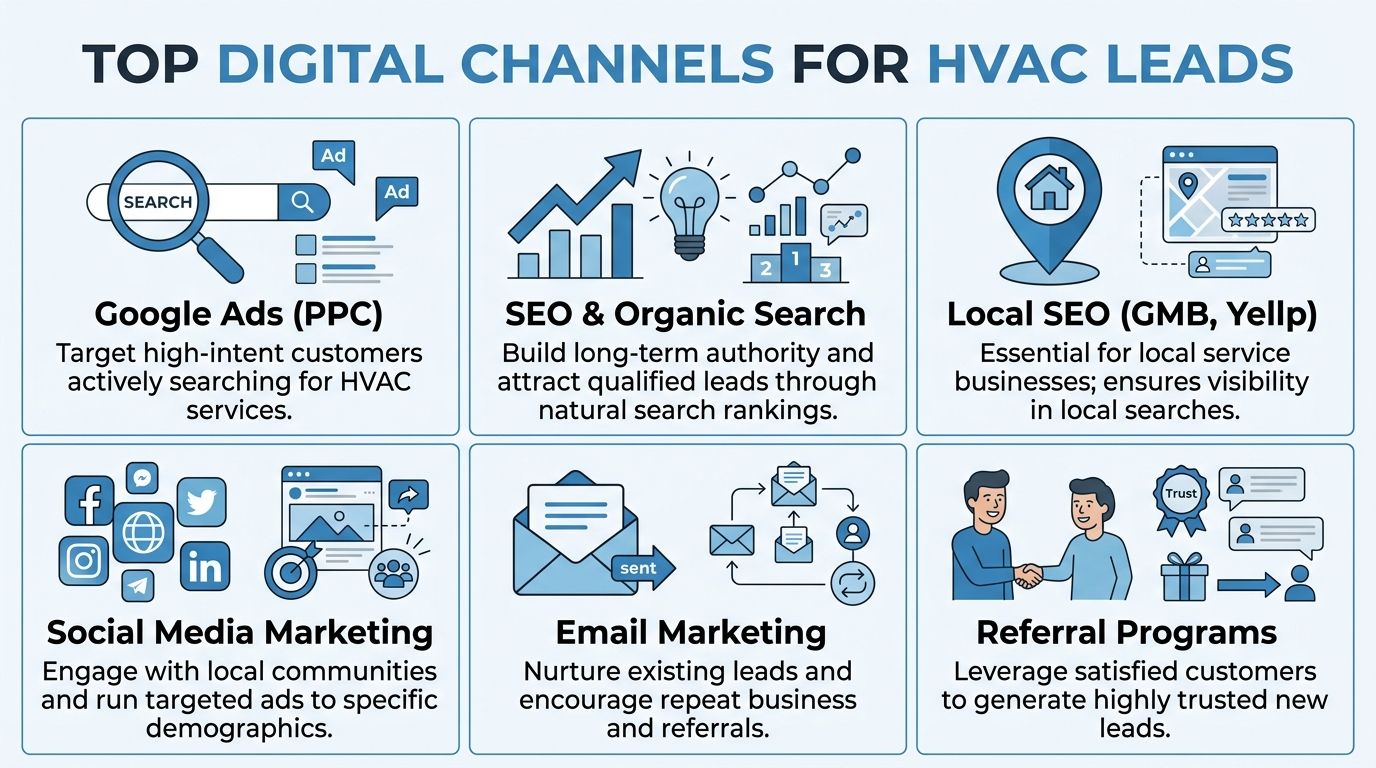
The practical question is not which channel is “best” in the abstract. It is which channel matches buyer intent, your response speed, and the margin profile of the job you want more of.
Google channels usually produce the highest-intent leads
If the goal is booked calls from homeowners who already need service, Google still carries the load.
| Channel | Lead Intent | Typical Cost Per Lead (CPL) | Primary Use Case |
|---|---|---|---|
| Local SEO and Google Business Profile | High | Qualitative only | Local visibility and map pack presence |
| Google Local Services Ads | Very high | Varies by market | Pay-per-lead calls from bottom-of-funnel buyers |
| Google PPC | High | Varies by service and market | Service-specific search demand and landing page control |
| Content SEO | Medium to high | Qualitative only | Long-term authority and education-driven inbound |
| Paid social | Medium | Qualitative only | Retargeting, seasonal offers, replacement demand creation |
| Direct mail | Varies | Qualitative only | Hyper-local outreach to selected households |
Google channels win because intent is obvious. A homeowner searching “AC repair near me” is far closer to booking than someone scrolling Facebook after dinner.
That does not mean every Google lead is profitable. Emergency repair clicks can be expensive. Branded search can look cheap because your reputation already did the hard work. Map pack traffic converts well, but only if your reviews, call handling, and service-area pages are in shape.
What each channel is good at
Local SEO and Google Business Profile
This is your long-term base. A weak profile raises the cost of every other channel.
Focus on:
- Fresh photos: real installs, techs, trucks, and finished jobs
- Review velocity: steady review requests after completed calls
- Service pages: one page per service and core service area
- Local relevance: correct categories, hours, service areas, and citations
This channel takes time to build, but it lowers lead costs over time and improves close rates because homeowners already see social proof before they call.
Google Local Services Ads
LSAs are built for speed. They work best for repair-heavy businesses that can answer the phone now, not 20 minutes from now.
The trade-off is simple. You get strong intent, but you get less control than with PPC. Lead quality can swing by market, and disputed or weak-fit calls still eat time. If your CSR team misses calls or takes too long to respond, LSA performance drops fast.
Google PPC
PPC gives tighter control over message, geography, keyword targeting, and landing page experience. That matters if you want more installs, financing applications, ductless estimates, or heat pump replacements instead of a mixed bag of service calls.
Use PPC for:
- Emergency repair terms
- Installation and replacement terms
- Seasonal demand spikes
- Financing-related searches
- Competitor defense in crowded markets
PPC breaks when one campaign tries to cover every service. Separate intent. A repair keyword should not send traffic to an install page. An install ad should not dump into a generic homepage.
Content SEO
Content SEO does a different job. It captures homeowners who are still evaluating options, comparing systems, or researching rebates before they contact a contractor.
The pages that tend to produce real leads are specific:
- Repair questions: symptom-based searches
- Replacement decisions: repair-versus-replace pages
- Rebates and incentives: local and utility program searches
- Seasonal education: maintenance timing and weather-driven demand
Generic blog posts do not do much. A focused page on “heat pump rebates in [city]” or “is a 15-year-old AC worth repairing?” can pull in better traffic because the searcher already has a defined problem.
Paid social and direct mail work differently
Paid social rarely matches search for immediate lead intent. It still has value, especially for replacement offers, financing promotions, maintenance plans, and retargeting previous site visitors.
Direct mail can work for HVAC, but only when the list is selected with care. Blanket mailers to an entire ZIP code usually waste money. Targeting older housing stock, higher-equity owners, or micro-areas with favorable turnover and home-age patterns produces a better shot profile. Teams using geospatial analysis for property-level targeting can narrow outreach to neighborhoods that fit their install and replacement goals instead of mailing everyone.
That matters because proactive targeting changes the economics of these channels. Search captures demand after it appears. Data-backed mail and digital audiences help you reach likely buyers before the peak summer rush.
What usually works and what usually wastes money
| Approach | What works | What does not |
|---|---|---|
| Budget allocation | Heavy investment in Google-centered channels | Spreading spend evenly across every platform |
| SEO execution | Service-area pages plus steady review generation | One generic homepage trying to rank for every service |
| Paid media | Service-specific campaigns tied to dedicated landing pages | Broad campaigns with mixed intent |
| Social | Retargeting, financing offers, replacement campaigns | Expecting cold social traffic to convert like search |
| Direct mail | Highly filtered household lists and neighborhood selection | Saturation mail to random addresses |
A strong channel mix usually starts with Google, then adds targeted outbound channels once tracking and follow-up are tight. That sequence protects cash flow. It also gives you a cleaner way to test proactive campaigns against known conversion benchmarks.
How to Use Property Data for Proactive Lead Generation
Permit filings, equity data, ownership records, and home-age trends give HVAC companies a way to find likely buyers before those homeowners ever search. That matters because the cheapest lead is often the one you reach before the auction starts on Google.
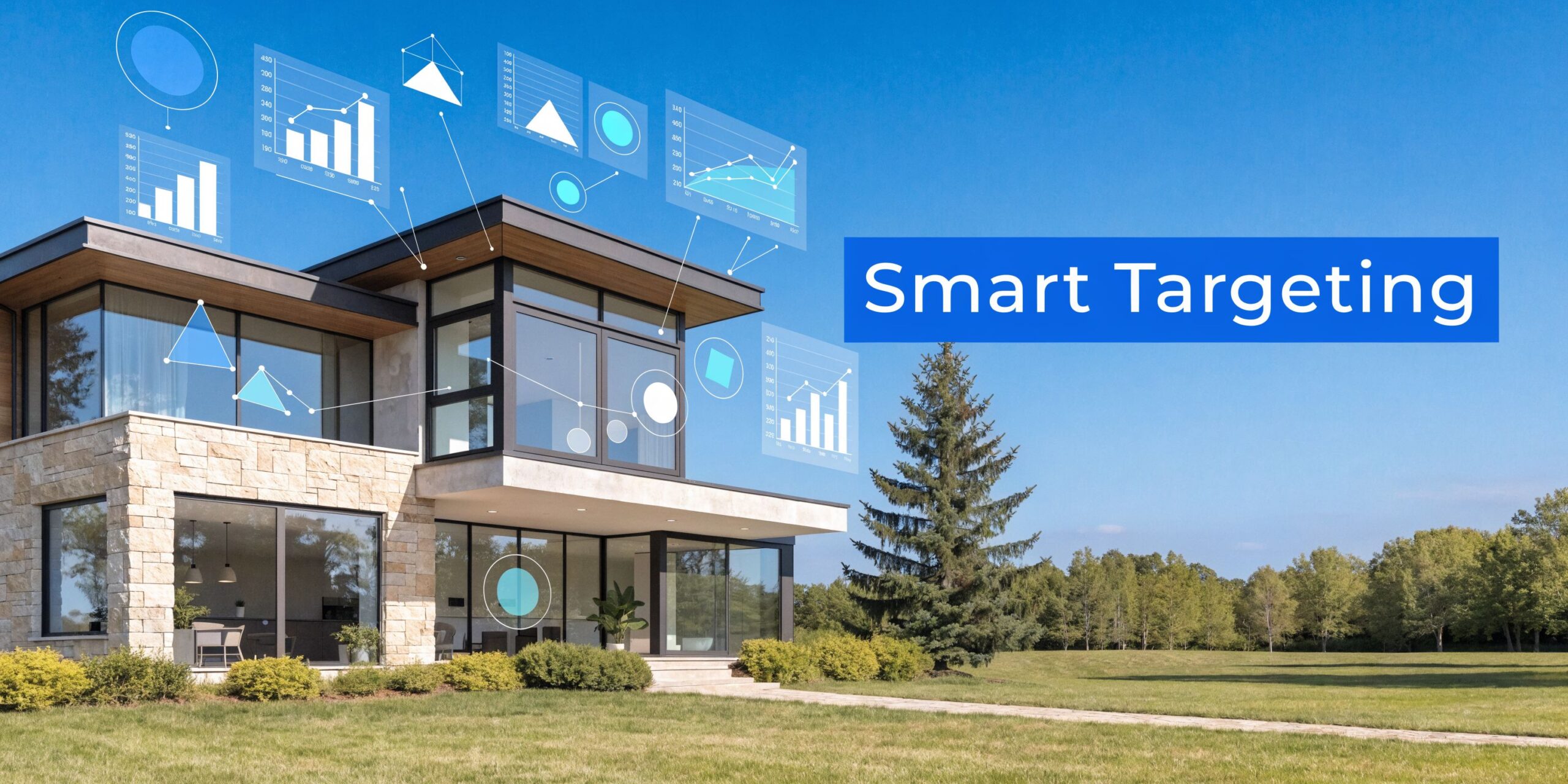
This approach is different from buying a broad homeowner list and hoping your call center finds a few decent opportunities. The job is to identify properties with a believable reason to need service, replacement, or an efficiency upgrade, then match the offer and channel to that signal.
Start with signals that map to actual HVAC demand
Good targeting begins at the property level. A random ZIP code does not tell you much. A 22-year-old home with a recent remodel permit, high equity, and an owner who has held the property for 12 years tells you a lot more.
The strongest filters usually include:
- Recent permits: Remodels, additions, and major home improvement activity often create HVAC inspection, replacement, or ductwork opportunities
- Property age: Older homes tend to produce more replacement conversations, especially where systems are near end of life
- Equity position: Owners with more equity often have more room to approve larger jobs or financing-backed upgrades
- Ownership tenure: Long-term owners can be strong candidates for deferred replacement, comfort upgrades, or indoor air quality offers
- Distress indicators: Pre-foreclosure or other distress signals can fit fast-turn repair, sale-prep, or occupancy-readiness services in the right market
Geography sharpens the list further. Geospatial analysis for property-level targeting helps you spot neighborhoods where housing age, turnover, and investment activity line up with the work you want more of.
Build segments, not just lists
Raw addresses do not create pipeline. The value comes from segmentation and prioritization.
A practical workflow looks like this:
-
Filter the service area
- Start with the ZIPs and municipalities your team can service profitably
- Exclude fringe areas that create drive-time waste or dispatch friction
-
Stack the right signals
- Combine home age, permit activity, equity, tenure, and ownership type
- Score records higher when multiple signals point to likely need
-
Enrich for contactability
- Append owner phone numbers, emails, and mailing addresses
- Remove records with weak match confidence before outreach starts
-
Assign the right offer
- Recent remodels may fit inspection, balancing, or upgrade messaging
- Older homes may fit replacement, efficiency, or financing offers
- Distress segments may fit speed, documentation, and fast scheduling
-
Route by channel
- Direct mail works well when neighborhood concentration is high
- Phone and SMS fit high-priority records with stronger intent signals
- Email supports lower-cost follow-up and educational touches
Many HVAC companies waste money in this area. They buy names, skip scoring, and send the same message to every homeowner. Response rates drop because the offer has no context.
Why property data outperforms generic homeowner marketing
Generic homeowner lists create three expensive problems. The first is poor fit. The second is bad contact data. The third is weak timing.
Property data helps fix all three. You can mail only streets with older housing stock. You can call owners tied to recent permits instead of cold dialing an entire county. You can build seasonal campaigns around likely replacement pockets before heat waves hit and call volume spikes.
That changes the unit economics of outbound marketing. Sales reps spend less time chasing people with no reason to buy. Dispatch gets more conversations with homeowners who fit your service mix. Marketing gets a cleaner read on what signals produce booked jobs.
A bigger list usually lowers efficiency. A narrower list with stronger intent signals usually improves it.
One platform fits into the process at this stage
If you want to run this system consistently, the stack needs four things: property records, ownership data, contact enrichment, and lead scoring. BatchData is one option. It provides large-scale U.S. property data, valuations, equity, permit and pre-foreclosure records, owner contacts, and propensity modeling through BatchRank, which can help a team build and prioritize homeowner audiences for HVAC outreach.
The trade-off is straightforward. Better data improves targeting, but only if someone on your team owns segmentation, suppression, and campaign testing. Data alone does not produce booked jobs.
Match the message to the property signal
Relevance does the heavy lifting here.
A few practical examples:
- Recent permit owner: Lead with comfort, code compliance, airflow, and post-renovation system performance
- High-equity owner in an older home: Lead with replacement options, energy savings, warranty protection, and financing
- Long-tenure homeowner: Lead with reliability, maintenance history, and avoiding an emergency replacement
- Distress-related property: Lead with speed, documentation, and getting the home ready for sale, rental, or occupancy
This kind of targeting works even better when it feeds a disciplined follow-up system. A strong lead nurturing guide is useful here because proactive outreach only pays off if the handoff, response timing, and follow-up are tight.
What Does a High-Conversion Lead Nurture Workflow Involve?
A lot of HVAC leads are won or lost before a comfort advisor ever gets involved. The first contact window matters most, especially for repair requests that come in after hours, from mobile, or from homeowners comparing three companies at once.
A high-conversion workflow handles three jobs at the same time. It acknowledges the lead immediately, routes it based on urgency and value, and keeps follow-up running until the customer books, declines, or goes cold long enough to shift into longer-term nurture.

The first five minutes decide a lot
In the field, I see the same failure pattern over and over. A homeowner submits a form, nobody responds quickly, and the office treats that delay like a minor admin issue. It is a revenue issue.
Speed is critical, but speed alone is not enough. The company that replies first with a generic message does not always win. The company that replies fast, identifies the situation correctly, and gives the homeowner a clear next step usually does.
That matters even more if you are using property and owner data upstream. If your marketing already targets likely replacement candidates, recent permit activity, or high-equity owners in older homes, the nurture workflow needs to recognize those signals and change the response. A no-cool emergency from a past maintenance customer should not enter the same queue as a low-intent quote request from a price shopper.
The workflow needs four pieces
-
Instant acknowledgment
Send a text or email confirmation as soon as the lead hits the system. Confirm receipt, set response expectations, and include an emergency phone option if relevant. -
Routing logic
Send urgent repair requests to a live person or answering service immediately. Lower-urgency estimate requests can go into an automated sequence while your team works the queue. -
Lead scoring
Score the lead using source, service type, geography, customer status, and property context. With this, the data strategy starts paying off operationally. -
Booking path
Give the homeowner one clear way to book. Phone call, call-back confirmation, or scheduling link. Friction kills conversion.
A practical sequence that works
The sequence should be short, direct, and tied to intent.
- Minute 1: confirmation text with company name and next step
- Minute 5: live call attempt for emergency, high-value, or high-score leads
- Hour 1: second text if there is no response
- Day 1: email covering availability, trust signals, and a clear booking option
- Day 3: follow-up reminder with a specific prompt
- Later: seasonal reminders, maintenance messaging, or replacement education for unbooked leads
The message should change based on what you know. A homeowner in a 20-year-old house with high replacement likelihood should not get the same follow-up as someone asking about a tune-up coupon. Good nurture is part speed, part prioritization, part message match.
For teams that want a broader framework for timing and sequencing, this lead nurturing guide is a useful reference.
What to score first
Scoring gets more useful when it reflects job economics and booking probability, not just whether a form was submitted.
Start with:
- Urgency in the inquiry: no cooling, leaking system, burning smell, same-day request
- Service type: repair, maintenance, replacement, second opinion
- Customer relationship: existing customer, maintenance member, past estimate, brand-new lead
- Property fit: older home, recent remodel permit, equity position, ownership tenure
- Location and serviceability: inside your core radius or on the edge of it
This helps the office team work the board intelligently. A high-score replacement lead in your best service area deserves faster attention than a weak lead outside your target zone.
Where HVAC teams break the system
The breakdown usually happens in operations.
Common problems include unattended after-hours forms, no text automation, weak call handling, and disconnected systems between CRM, phones, and dispatch. Another frequent issue is treating every lead exactly the same. That wastes time on low-value inquiries while better opportunities wait too long.
The trade-off is simple. More automation improves response coverage, but poor automation creates dead, generic follow-up that feels robotic. The fix is not less automation. The fix is tighter rules, better segmentation, and regular review of booked-job rates by lead source, score, and response time.
That is what turns lead generation into a repeatable growth system instead of a pile of missed calls and forgotten form fills.
How Can You Build a Powerful Review and Referral Engine?
A strong review and referral engine lowers customer acquisition cost because it turns completed jobs into the next wave of demand. It also improves close rates. Homeowners comparing two HVAC companies usually trust the one with recent, specific reviews, clear job photos, and a reputation that looks active instead of stale.
Reviews should be treated like an operating process, not a favor your team remembers to ask for once in a while. The highest response rates usually come right after a successful repair, tune-up, or install, while the customer still remembers the technician, the result, and the relief of having the system working again.
Use a simple workflow:
- Trigger the ask at job closeout: send the request as soon as the technician marks the work complete
- Keep the message tight: one text, one link, one clear ask
- Segment by job outcome: ask satisfied customers immediately and hold problem jobs for a service recovery step first
- Send one reminder: if they do not respond, follow up once within a few days
- Reply to reviews weekly: short, professional responses show the profile is being managed
Google is the priority because it shapes local visibility and buyer trust at the same time. Facebook and Nextdoor can still help in certain neighborhoods, but they are secondary channels for most HVAC companies.
The mistake I see often is asking every customer the same way. A maintenance visit, a same-day repair, and a full system replacement do not create the same level of excitement. Install and rescue-call customers often leave the strongest reviews because the value feels obvious. Maintenance customers still matter, but the ask needs to be timed well and framed around reliability, professionalism, and ease.
Referral growth works the same way. It needs structure.
The overlooked opportunity is partner referrals from people who get into the home before comfort problems turn into search behavior. That fits the larger lead generation playbook in this guide. Property and owner data can tell you which homes are aging into replacement demand. Trade partners often confirm it on the ground when they see old equipment, poor airflow, attic heat, panel upgrades, or renovation activity.
Good referral partners include:
- Plumbers: they hear homeowner complaints in mechanical rooms and utility spaces
- Electricians: they see service upgrades, breaker issues, and capacity constraints tied to HVAC equipment
- Roofers and insulation crews: they spot ventilation and heat-load problems
- Realtors and property managers: they need fast inspections, repair documentation, and pre-listing replacements
- General remodelers: they uncover additions, duct changes, and older systems that no longer fit the house
Make it easy for those partners to send business. Give them a direct contact, a dedicated intake number, and a clear promise on response time. Then close the loop. If a plumber sends a homeowner to your team and hears nothing back, that referral source dries up fast.
Rewards can work, but reliability usually matters more. In some markets, formal incentives create compliance issues or attract low-quality referrals. A better system is faster follow-up, professional communication, and visible proof that you took care of their client well.
Your field team also has to support the engine. Technicians should know when to ask for a review, when to ask for a referral, and when to stay quiet because the job experience was only average. That requires training, scripting, and clean handoff notes in the CRM. It also helps to standardize proposal delivery with HVAC estimating software, so replacement customers get a professional experience worth talking about.
What strengthens trust is consistency:
- recent reviews that mention real service outcomes
- job photos from actual homes
- fast, polite responses to negative feedback
- technicians who show up on time and communicate clearly
- office staff who make scheduling easy
- partner contacts who know you will protect their reputation too
Flashy branding cannot cover weak delivery. Consistent service, a steady review pipeline, and referral partners who trust your follow-through will produce better HVAC leads for a longer time.
What Is the Ideal Tech Stack for HVAC Lead Generation?
The ideal HVAC lead generation tech stack is integrated, not bloated. You need a system that moves a lead from first contact to booked job without manual re-entry, lost notes, or guesswork about source.
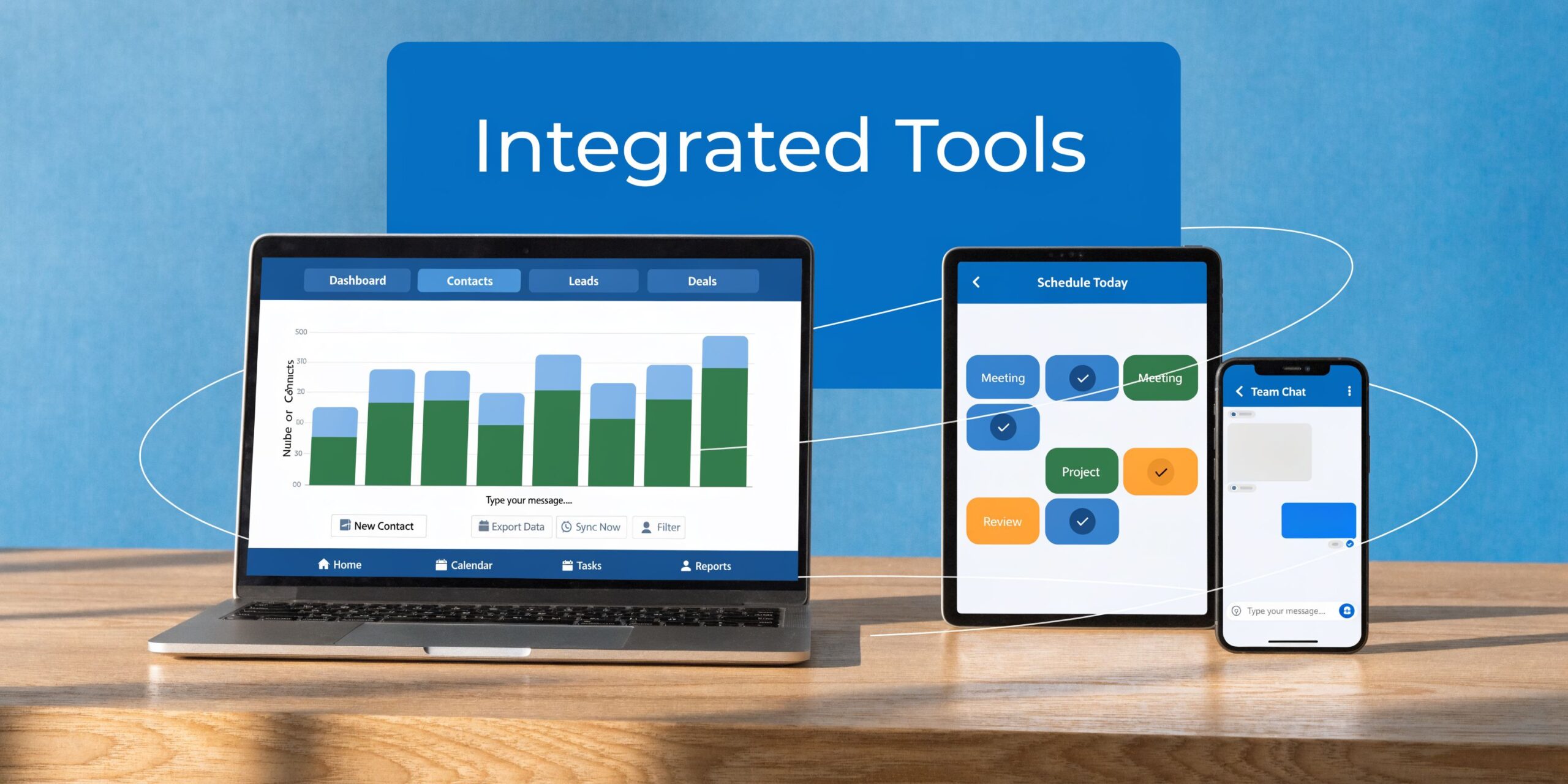
The core stack
| Layer | Job | Common examples |
|---|---|---|
| CRM and field service platform | Manage leads, scheduling, dispatch, and customer records | ServiceTitan, Housecall Pro |
| Communications | Power SMS, email, call routing, and reminders | Twilio, Mailchimp |
| Call tracking and analytics | Attribute calls and form fills to channels | CallRail, Google Analytics |
| Estimating and quoting | Standardize pricing and speed proposal delivery | HVAC estimating software |
| Reporting | Tie spend to booked work and revenue | CRM dashboards, BI tools |
How the pieces should connect
The workflow should feel linear:
- Ad click, call, or form fill enters the CRM
- Source is captured automatically
- The office sees service type and urgency
- Automation sends acknowledgment and reminders
- Dispatch and scheduling update the record
- The estimator or technician builds the quote
- Reporting shows what channel produced the job
That sounds basic. It isn’t. A lot of HVAC shops still run on disconnected tools, spreadsheets, and inboxes. The result is duplicate records, weak attribution, and missed follow-up.
What to avoid
Skip tools that create more admin than insight.
Bad signs:
- No source tracking: you can’t tell where the lead came from
- No automation: staff must manually text and email every prospect
- No mobile usability: techs can’t update status or notes in the field
- No estimate standardization: quoting depends on memory and inconsistent templates
A smaller connected stack beats a bigger fragmented stack.
Purpose of the stack
The stack isn’t there to impress anyone. It exists to make response speed, scheduling, quoting, and attribution reliable.
When that system works:
- lead handling is faster
- office staff misses fewer handoffs
- techs can quote on site
- marketing can see what books
- owners stop making budget decisions based on hunches
That’s the difference between “doing marketing” and running a lead machine.
How Do You Track KPIs to Ensure Marketing ROI?
You track marketing ROI by following the path from lead source to booked revenue. Anything less creates noise.
The KPI set for HVAC shouldn’t be huge. It should be tight enough to drive decisions.
The metrics that matter
Start with these:
| KPI | What it tells you | Why it matters |
|---|---|---|
| Cost per lead | What you paid to generate an inquiry | Useful for channel comparison, but incomplete alone |
| Lead-to-quote rate | How well the office turns inquiries into real opportunities | Exposes intake and qualification issues |
| Quote-to-close rate | How well sales and pricing convert opportunities | Separates weak leads from weak sales execution |
| Customer acquisition cost | What it costs to win a customer | Connects spend to actual growth |
| Revenue by source | Which channels create real jobs, not just form fills | Prevents budget waste |
How to read the numbers correctly
A cheap lead source can still be expensive if it produces weak jobs.
That’s why the sequence matters:
- Source
- Lead
- Quote
- Booked job
- Revenue
If one channel generates volume but another generates better close quality, the answer isn’t always to buy more volume.
Build a weekly dashboard
Don’t wait until month-end accounting to understand marketing.
A simple weekly owner dashboard should show:
- spend by channel
- lead count by channel
- quotes created
- booked jobs
- revenue tied back to source
- notes on operational issues that affected conversion
Broader market context can also help when you’re deciding where to shift geographic focus or which property segments may be heating up. The national Investor Pulse report is the kind of external reference point that can support those planning decisions.
A KPI only matters if it changes a decision. If you’re not reallocating budget, retraining staff, or fixing a workflow, the dashboard is decoration.
What owners often miss
Three blind spots show up repeatedly:
- They judge channels on leads, not booked work.
- They don’t separate office conversion problems from marketing problems.
- They ignore lead quality differences between emergency, maintenance, and replacement demand.
Track tightly enough to answer practical questions:
- Which source produces the best booked jobs?
- Which service type closes best?
- Which locations underperform?
- Where does follow-up break down?
That’s how to get HVAC leads profitably, not just frequently.
Frequently Asked Questions about HVAC Leads
What’s the fastest way to get HVAC leads?
Paid Google demand capture usually produces leads fastest because it reaches homeowners who already need service. Results still depend on response time, call handling, and whether your office can turn an inquiry into a scheduled job before a competitor does.
Are shared leads worth buying?
They can fill gaps, especially if you need short-term volume. They also bring tighter margins, heavier price shopping, and lower exclusivity. Buy them only if your team answers fast, follows a script, and tracks booked jobs by vendor instead of judging quality on lead count alone.
Is SEO still worth it for HVAC companies?
Yes, especially for replacement, maintenance, and local service intent that repeats month after month. SEO takes longer to build than paid search, but it gives you a steadier flow of inbound demand and lowers your dependence on marketplaces and rising ad costs.
How should a small HVAC company split marketing effort?
Keep the mix tight at first. A small operator usually gets better results from strong execution in Google Ads, Google Business Profile, reviews, and follow-up than from spreading budget across five channels.
Then add proactive outbound based on property and owner data. That gives you a second lead source outside search, which matters when branded competitors bid up auctions or seasonal demand softens.
How do you get commercial HVAC leads without relying on bid boards?
Start with a list built from building, owner, and portfolio data rather than generic purchased contacts. Target property owners, asset managers, and small commercial portfolio operators by equipment age proxies, property type, ownership structure, and signs that a building may need deferred maintenance or capital work.
That approach creates a warmer starting point than broad cold outreach. Biscred outlines why ownership intelligence and lien-related signals can help commercial contractors identify better HVAC opportunities earlier in the cycle (Biscred).
What’s the biggest mistake in HVAC lead generation?
Treating it like a channel-only problem.
Lead flow breaks when targeting is weak, the office responds slowly, attribution is sloppy, or nobody separates tune-up leads from high-ticket replacement opportunities. Good HVAC marketing is a system. The companies that win build demand capture and demand creation at the same time, then measure booked revenue by source.
If you want a more proactive lead engine, BatchData provides property records, owner contact enrichment, and portfolio-level signals that can help identify likely HVAC opportunities before those prospects start filling out forms or searching for a contractor. That creates a shot at exclusive outreach instead of competing for the same shared demand.