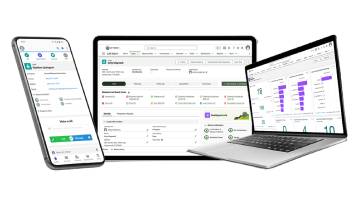
Most property companies don’t have a data problem. They have a decision problem.
Listings data, agent activity, portal performance, pricing signals, and market movement all exist in fragments. The hard part is not collecting more information. It’s turning messy, fast-changing inputs into something a sales leader, marketplace operator, or product team can actually use.
That was the central theme of a discussion with Lucas, co-founder and CEO of ProperBird, a company focused on helping real estate portals understand agent behavior across markets. The conversation was nominally about AI, but the deeper issue was more practical: where AI truly helps in property intelligence, where it still falls short, and what it will take to move from raw data to trusted recommendations.
For PropTech teams, operators, and investors, that distinction matters. AI is powerful, but in data infrastructure businesses, not every use case can tolerate ambiguity. If your output informs pricing, sales targeting, or market strategy, "probably right" is not good enough.
Key Takeaways
- AI adds the most immediate value in internal productivity, especially software development and pipeline iteration.
- Deterministic outputs still matter in analytics workflows. If the same query produces different answers tomorrow, trust erodes fast.
- The hard problem is not scraping data. It’s structuring unstructured information and extracting reliable meaning from it.
- Property intelligence is shifting from data delivery to insight delivery. Mature clients may want raw data, while smaller teams increasingly need analysis built in.
- Anomaly detection and trend surfacing are strong future AI use cases because they help teams focus on what deserves attention.
- Marketplace intelligence becomes much more valuable when listings, traffic, and monetization data are connected.
- Off-portal inventory is a growing blind spot. If listings appear first on brokerage sites or private channels, portal-only analysis is incomplete.
- Trust is a gating factor for deeper analytics. Clients may hesitate to share pricing and traffic data unless governance is airtight.
- Action step for operators: audit where your current workflows require repeatable truth versus exploratory insight. AI should be deployed differently in each.
- Action step for technical teams: invest first in data normalization and entity resolution before layering on LLM-driven insights.
The Real Opportunity: From Data Supply to Intelligence Layer
ProperBird’s model offers a useful lens into where the property data market is heading.
The company operates across roughly 30 countries, collecting listing data from major real estate portals to understand which agents are active and how they behave across marketplaces. At a high level, that sounds like a data aggregation business. In reality, it points to a broader shift taking place across PropTech:
the market is moving from "give me the data" to "help me act on it."
That distinction matters because different customers are at different stages of maturity.
Two customer types are emerging
From the discussion, a clear segmentation appears:
1. Sophisticated marketplaces that want raw data
These companies often have internal analytics teams, established BI tooling, and the technical capacity to build their own models. For them, external providers are valuable when they reduce data acquisition burden and improve coverage.
This audience aligns with the Technical Architect mindset: clean inputs, reliable pipelines, and flexibility to build internally.
2. Challenger or smaller portals that need recommendations, not just records
These organizations may lack deep analytical resources. They still need market intelligence, but they are less likely to build robust internal models from scratch.
This is where an external "intelligence layer" becomes attractive. Instead of exporting CSVs or API payloads and asking the client to figure it out, the provider surfaces patterns, anomalies, and opportunities directly.
That appeals more to the Strategic Operator: reduce wasted effort, identify where to focus, and make better decisions faster.
Where AI Is Already Delivering Value: Engineering Speed
One of the strongest points from the discussion was also one of the most grounded: AI is already reshaping product development velocity.
Lucas described a case where a feature that might previously have taken months was completed in about a week, with AI generating a large volume of code in the process. Whether or not every company sees that exact gain, the broader implication is clear:
AI is compressing the cost and time of software iteration.
For data businesses, this matters because speed is strategic. Faster engineering cycles mean teams can:
- launch parsers and data handlers more quickly
- test new enrichment workflows
- build internal tools for QA and monitoring
- expand into new markets faster
- ship customer-facing analytics features with less overhead
For CTOs and lead developers, this is the most mature AI use case discussed: not replacing data rigor, but accelerating the systems that support it.
Why coding is an easier AI win than analytics
Engineering workflows tolerate some trial and error. A developer can review output, test it, reject bad code, and iterate. Analytics in a client-facing intelligence product is different. If an AI model hallucinates, misclassifies, or shifts its answer from one day to the next, the damage is not just technical. It becomes commercial.
That leads to the next major insight.
Why Determinism Still Matters in Property Data
One of the most important comments in the conversation was the insistence on determinism.
In practical terms, that means if an analytics system runs the same logic against the same conditions, it should return the same result. In property intelligence, that expectation is foundational.
If you’re:
- assigning an agent overlap score
- identifying duplicate listings
- ranking target accounts for a sales rep
- estimating market share in a suburb
- comparing pricing opportunities across customer segments
then consistency matters more than novelty.
This is where many AI discussions become too abstract. In real estate data operations, repeatability is part of the product.
The implication for AI adoption
AI is not equally appropriate across the stack.
A more practical deployment model looks like this:
Best near-term fit
- code generation
- workflow automation
- parser setup assistance
- anomaly detection
- summarization of large internal datasets
- surfacing "where to look next"
More limited fit unless tightly controlled
- final source-of-truth metrics
- canonical entity matching
- compliance-sensitive outputs
- customer-facing dashboards that require exact reproducibility
- pricing recommendations without validated business rules
That’s a useful lesson for any company building in property data: AI should augment deterministic systems, not replace them prematurely.
The Hardest Problem Isn’t Collection. It’s Structure.
Many outsiders assume the biggest technical challenge in marketplace intelligence is scraping listings from portals. The discussion suggested otherwise.
The tougher challenge is taking unstructured, inconsistent market data and turning it into structured, usable intelligence.
That includes questions like:
- Is this the same listing appearing across multiple sites?
- Is this the same agent represented under different formats or offices?
- Is an image reused across multiple records?
- Did a listing appear first on an agency site before reaching a major portal?
- Are we seeing a new trend or just noise created by bad normalization?
This is the hidden infrastructure work that determines whether a downstream insight is useful or misleading.
For data operators, this is the familiar but often underappreciated truth: bad normalization destroys good analytics.
Why this matters for ROI
If your team makes outbound decisions based on incomplete or poorly resolved property data, the cost shows up quickly:
- sales reps target the wrong accounts
- marketers waste spend on stale records
- analysts overstate portal share
- pricing teams miss local market conditions
- investors misread supply dynamics
This is exactly why clean, structured data is more than a technical issue. It’s an operating advantage.
The Next AI Leap: Surfacing Trends and Anomalies
Where AI may become genuinely transformative in marketplace intelligence is not in replacing core metrics, but in helping teams identify what matters inside overwhelming volumes of data.
Lucas pointed to a future where AI agents surface notable changes automatically:
- unusual listing behavior in a local market
- changes in agent activity across competing portals
- emerging duplication patterns
- shifts in market concentration by suburb
- accounts showing high likelihood of conversion or churn risk
This is a strong use case because it matches what LLM-style systems do well when used carefully: triage complexity.
Instead of expecting an operator to comb through millions of rows, an AI layer can flag ten accounts, neighborhoods, or trends worth immediate review.
That’s not "AI making the decision." It’s AI improving the preparation for the decision.
For operations leaders, that distinction is critical. Better prioritization can create value even before full predictive automation is ready.
Why Hyperlocal Intelligence Is the Real Battleground
One of the more strategic ideas in the discussion was that marketplace competition is often not won at the national level, but at the suburb-by-suburb or micro-market level.
That’s highly relevant in U.S. real estate and home services, where performance varies dramatically by ZIP code, neighborhood, and inventory pocket.
A portal or platform may look strong in aggregate but weak in specific local zones where competitors dominate. The same applies to:
- investor acquisition strategies
- home service territory planning
- brokerage expansion
- ad budget allocation
- market entry analysis
This reinforces a broader point: aggregated metrics can hide the only insights that matter operationally.
If AI and analytics are going to power smarter decisions, they need to work at the level where the business actually sells, acquires, and competes.
The Flywheel That Makes Intelligence More Valuable
The conversation repeatedly returned to a marketplace flywheel built around three components:
- listings
- traffic
- monetization
That framework is useful because listings alone tell only part of the story.
Listings tell you supply behavior
You can see who is active, where they publish, and how inventory moves.
Traffic tells you demand attention
You can understand where buyers or users actually engage.
Monetization tells you commercial leverage
You can evaluate pricing power, account value, and revenue opportunity.
When these three are connected, analytics become far more actionable.
For example, a portal could move from saying:
- "We are weak in this suburb"
to saying:
- "We are weak in this suburb, but competitor traffic is thin and several high-value agents are under-monetized, so this segment is worth focused sales outreach at a specific price point."
That is a completely different class of intelligence.
Why Trust Is Still the Bottleneck
There is an obvious reason many marketplace data companies stop short of this full-flywheel model: clients are protective of their internal data.
Publicly available listing data can be collected externally. But traffic metrics, conversion rates, account pricing, and monetization details sit inside the customer’s walls.
To combine external market intelligence with internal operating data, a provider needs more than technical integration. It needs trust.
That trust has multiple layers:
- contractual protection
- data segregation
- clear access controls
- governance and auditability
- confidence that competitors cannot infer sensitive strategy
- assurance that model outputs won’t leak proprietary patterns
For enterprise teams, this is not a side issue. It is the adoption issue.
Any platform claiming to offer AI-driven strategic recommendations in property marketplaces will eventually face the same question: can clients safely share the data that makes those recommendations valuable?
The Off-Portal Problem: Marketplaces Don’t See Everything
Another important point raised in the discussion is one many operators underweight: some listings never begin on major portals.
Properties may appear first on:
- brokerage websites
- smaller regional platforms
- office-level pages
- private pre-market channels
That creates a blind spot. If you only monitor the top portals, you may miss a meaningful portion of inventory behavior, especially in markets where sellers or agents try to delay portal exposure.
This has major implications for:
- off-market deal sourcing
- portal sales strategy
- inventory forecasting
- market share analysis
- competitive intelligence
For investors and acquisition teams, this is particularly relevant. The earliest signal of opportunity may show up outside the obvious channels.
For data providers, it means scaling coverage is not just a matter of adding more volume. It requires deciding which sources matter enough to structure and monitor continuously.
The Cold Start Issue Isn’t Always a Data Issue
A question from the audience touched on "cold start" problems for new projects or new markets. The answer was revealing: for a company focused on external market collection, entering a new geography is less about historical data scarcity and more about pipeline setup.
In other words, if public sources exist, you can begin collecting a market snapshot relatively quickly.
That has a broader lesson for startups and market entrants:
You do not always need years of internal historical data to get moving. You need:
- a reliable baseline
- broad enough source coverage
- fast normalization
- enough signal to identify where to focus first
This matters for challenger portals, investors entering new metros, and home service companies expanding territory. A well-structured current-state snapshot can be more valuable than a shallow historical archive.
What This Means for Property Leaders
The discussion points toward a realistic framework for using AI in property intelligence.
For technical leaders
Your first priority is still infrastructure:
- structured ingestion
- entity resolution
- reproducibility
- monitoring
- controlled model usage
AI can accelerate development, but it cannot compensate for unstable foundations.
For operations leaders
The biggest win is not "AI everywhere." It’s targeted intelligence:
- where is budget being wasted?
- which accounts deserve outreach?
- what anomalies require investigation?
- where are local markets shifting faster than dashboards reveal?
Use AI to narrow attention, not replace accountability.
For investors and acquisition teams
The most valuable data edge may come from earlier and broader visibility, especially beyond the major portals. Hyperlocal and off-portal signals can reveal opportunity before the market consensus catches up.
A Practical Maturity Model for AI in Marketplace Intelligence
Based on the themes in the conversation, property companies can think about AI adoption in four stages:
Stage 1: Productivity
Use AI to speed up coding, documentation, internal tooling, and repetitive tasks.
Stage 2: Data Assistance
Use AI to support classification, parser setup, summarization, and workflow triage, with humans in the loop.
Stage 3: Insight Discovery
Use AI to detect anomalies, highlight trends, and recommend areas for analysis.
Stage 4: Decision Support
Use AI to assist with pricing, segmentation, and strategic recommendations, but only when combined with trusted internal data and strong governance.
Many companies want to jump to Stage 4. Most still need to master Stages 1 through 3 first.
Conclusion: AI’s Biggest Value Is Not Magic, It’s Leverage
The most useful takeaway from this conversation is that AI is not replacing the fundamentals of property data businesses. It is amplifying the teams that already know how to structure data, validate outputs, and turn insight into action.
The near-term gains are real:
- faster product development
- better internal efficiency
- smarter surfacing of market patterns
But the long-term prize is bigger: a true intelligence layer that helps property platforms and operators understand not just what happened, but where to act next.
To get there, the winners will need more than AI models. They’ll need:
- clean and structured inputs
- deterministic core analytics
- broader market coverage
- hyperlocal thinking
- and enough trust to combine external signals with internal performance data
That’s the difference between having more property data and building a system that helps teams make better market decisions.
Source: "Lukas Rose: AI, Data and the Intelligence Layer for Property Marketplaces" – Online Marketplaces, YouTube, Mar 30, 2026 – https://www.youtube.com/watch?v=pKSNKvR9KpY