

































Want to connect with the right property owners faster? Contact data enrichment APIs make it easier to find accurate phone numbers, emails, and addresses for real estate leads. These tools save time, reduce manual work, and help you focus on high-quality prospects.
Here’s a quick look at the top APIs for real estate professionals:
- BatchData: Specializes in skip tracing property owners and bulk data processing, offering verified contact info and property details.
- ATTOM Data API: Provides ownership, mortgage, and community data for over 158 million U.S. properties, with tools for CRM integration.
- Reonomy API: Focuses on commercial real estate, uncovering true owners and linking property data with transactions.
- TovoData: Offers modular APIs with up to 300 property data points, including ownership, mortgage, and market data.
- FullContact: Delivers demographic and identity data, enriching profiles with over 1,100 attributes.
- Apollo.io: Combines B2B contact enrichment with CRM integration and job change tracking.
- Clay: Uses multiple data sources and AI-powered tools for efficient enrichment and advanced workflows.
Key Benefits: These APIs help real estate professionals improve outreach, ensure compliance, and gain insights into property owners and market trends. Whether you’re targeting distressed properties or managing large datasets, there’s a solution tailored to your needs.
Quick Comparison
| API | Focus | Key Features | Best For |
|---|---|---|---|
| BatchData | Skip tracing & bulk data | Verified contact info, property search API, pay-as-you-go pricing | Real estate investors, wholesalers |
| ATTOM Data | Property & community data | Ownership, mortgage history, demographics, 70+ billion data rows | Large-scale campaigns |
| Reonomy | Commercial real estate (CRE) | True owner identification, knowledge graph, bulk data feeds | CRE professionals, enterprises |
| TovoData | Modular property data | 300+ data points, custom APIs, MLS data | Customizable solutions |
| FullContact | Identity & demographic data | 1,100+ attributes, real-time enrichment, lifestyle insights | Lead prioritization |
| Apollo.io | B2B contact data | CRM integration, job tracking, 100,000 leads enriched daily | B2B real estate teams |
| Clay | Multi-source enrichment | AI-powered workflows, waterfall logic, Google Maps integration | Advanced enrichment workflows |
These tools are designed to help you reach the right people, faster and more accurately.
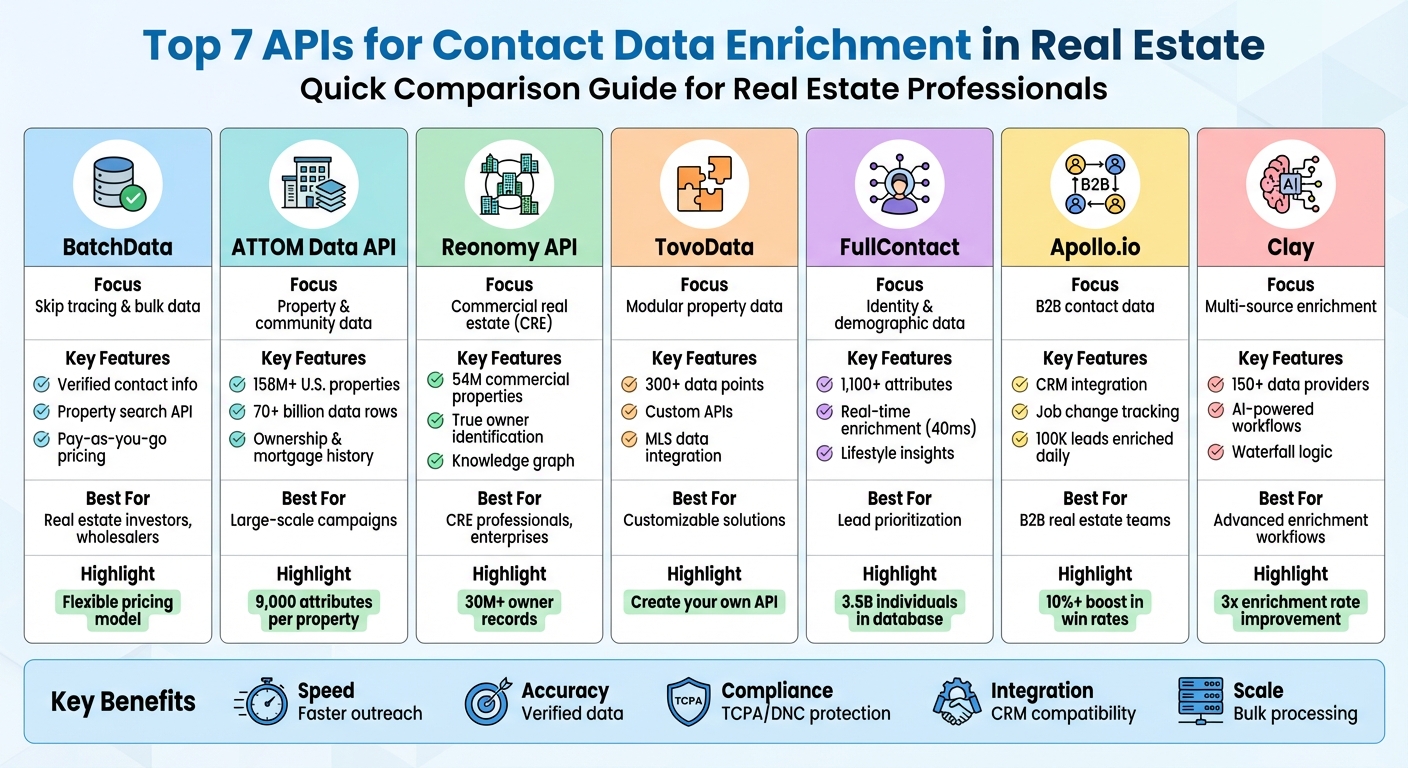
Top 7 Real Estate Contact Data Enrichment APIs Comparison Chart
1. BatchData
Contact Data Enrichment Capabilities
BatchData focuses on enriching contact information specifically for the real estate industry. By merging property records with verified contact details, it helps streamline outreach efforts. The platform’s skip tracing feature retrieves up-to-date phone numbers, email addresses, and mailing addresses for property owners. To ensure accuracy, it includes built-in phone and address verification, reducing the chances of bounced mail or failed deliveries.
Real Estate-Specific Integrations
Beyond contact enrichment, BatchData seamlessly incorporates essential property details. Its property search API allows real estate professionals to access both contact and property data from one platform. Designed with developers in mind, the API is easy to integrate with CRMs, marketing tools, or custom applications, ensuring a smooth workflow.
Bulk Data Processing Support
For real estate investors and wholesalers managing extensive property lists, BatchData simplifies bulk data processing. You can submit large lists for enrichment and receive detailed, comprehensive results. The platform supports various delivery methods, including API responses, file uploads, and custom data pipelines. Additionally, dedicated professional services are available to ensure smooth integration into your existing systems.
Customization and Scalability Options
BatchData offers a flexible pay-as-you-go model, allowing you to only pay for the data you need. This makes it a practical option for small, targeted campaigns as well as large-scale operations handling thousands of records. Custom datasets and professional services are also available to create tailored solutions that suit your specific needs.
sbb-itb-8058745
2. ATTOM Data API
Contact Data Enrichment Capabilities
The ATTOM Data API provides access to ownership, borrower, and consumer details from a database of over 158 million U.S. property records. Each property can include up to 9,000 attributes, such as mortgage history, NMLS IDs, and taxpayer data. Additionally, nearly 400 community-related data points – like demographics, crime statistics, and school ratings – help create comprehensive profiles that go beyond basic contact information.
The API’s Enterprise Data Management Program (EDMP) ensures data consistency by standardizing information from assessor offices and MLS sources. With over 70 billion rows of data covering 99% of the U.S. population, ATTOM’s data warehouse supports both nationwide and region-specific campaigns. This extensive dataset integrates smoothly with mapping tools and CRM systems, making it highly versatile.
Real Estate-Specific Integrations
ATTOM offers tools and resources tailored for real estate professionals. For example, it provides guides and sample code to integrate property data with Google Maps, enabling features like school pins, attendance zones, and neighborhood boundaries. The API also works with Google Places Autocomplete, allowing you to validate addresses before querying, which reduces errors and enhances data accuracy.
Developers can take advantage of sample code and Postman collections in various programming languages to streamline integration. The REST-based API supports JSON and XML formats, ensuring compatibility with most CRM platforms and marketing tools. To help users get started, ATTOM offers a 30-day free trial, allowing you to test endpoints and integration features before committing to a production key.
Bulk Data Processing Support
For businesses with extensive data needs, ATTOM provides Bulk Data Licensing options. These are delivered via FTP as .csv files and include a Match & Append service that links your input data to ATTOM’s unique property IDs, adding detailed real estate data points. This approach allows companies to host expansive datasets on their own servers, bypassing the 24-hour caching limit.
Bulk data files can be customized to include specific states or data fields, and delivery schedules are flexible – offered weekly, monthly, quarterly, or annually. This customization ensures you only receive the data you need, avoiding unnecessary overload. For instance, LendingTree uses ATTOM’s bulk property data to refine its digital mortgage application process.
How to Get Zillow Agent Contact Information | Python Tutorial
3. Reonomy API
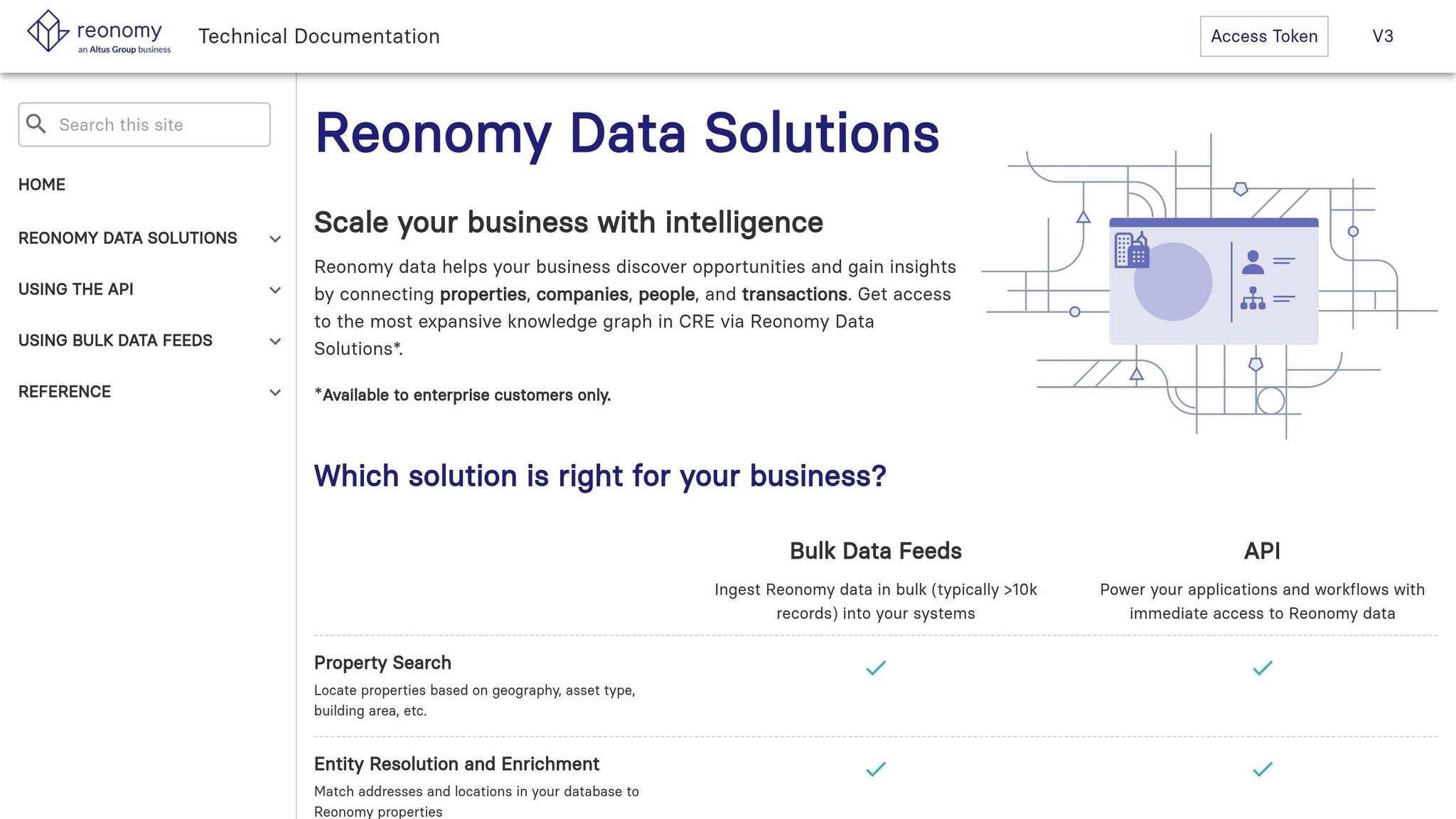
Improving commercial real estate (CRE) contact data requires specialized resources, and the Reonomy API is built specifically for this purpose.
Contact Data Enrichment Capabilities
The Reonomy API zeroes in on commercial real estate, offering a robust knowledge graph that links properties, companies, people, and transactions. Its database spans over 30 million owners and contact records, covering more than 54 million commercial properties and 68 million property transactions across the U.S..
With its Entity Resolution and Enrichment feature, the API matches your internal data to Reonomy properties, filling in missing details through property enrichment. The "True Owner" feature identifies the actual individuals or parent companies behind LLCs, making it easier to build precise outreach lists. Additionally, you can access complete ownership portfolios, revealing all properties and transactions tied to specific people or companies. Occupant data is also available, detailing locations for specific occupants or industries across 3,100+ counties and 385 metropolitan statistical areas (MSAs).
"We harness the Reonomy ID, a unique identifier for each commercial real estate asset and the Reonomy Knowledge Graph… to resolve and augment our property data." – JPMorgan Chase
Real Estate-Specific Integrations
At the core of Reonomy’s system is the Reonomy ID, a unique identifier for commercial assets. This ID helps organizations unify their proprietary data with public records, eliminating duplicate entries and ensuring consistency across systems. By linking all records to a single asset, the API prevents data silos and streamlines workflows.
The API also enables live data access, supporting real-time integration into internal applications and processes. With connections to over 5.2 million companies, the Knowledge Graph reveals relationships between entities, offering a deeper understanding of the commercial real estate landscape. Enterprise teams can use the API for instant property searches and data retrieval, while the platform’s weekly data pipeline ensures systems stay up-to-date.
This seamless real-time integration lays the groundwork for managing large-scale datasets, which is further explored in the Bulk Data Processing Support section.
Bulk Data Processing Support
For handling datasets exceeding 10,000 records, Reonomy provides Bulk Data Feeds (BDF). These feeds allow for offline analysis, supporting complex data aggregation and processing across large datasets. While the web application limits exports to 2,000 property records per month, Bulk Data Feeds cater to businesses with larger needs.
Key distinctions between live API workflows and Bulk Data Feeds include:
- Best for: Real-time workflows vs. offline analysis
- Data Volume: Immediate requests vs. datasets exceeding 10,000 records
- Update Frequency: Instant updates vs. weekly scheduled updates
- Capabilities: Property search vs. large-scale aggregations
These bulk data options are ideal for enterprises requiring scalable solutions for extensive data analysis and integration.
Customization and Scalability Options
Reonomy Data Solutions, including the API and Bulk Data Feeds, are tailored for enterprise customers, with pricing available through direct consultation with their sales team. The Reonomy ID ensures consistent data integration across systems, making it easier to scale operations.
For businesses managing large-scale data ingestion, Bulk Data Feeds provide regularly updated datasets through scheduled deliveries. The platform’s scalability is designed with enterprise needs in mind, leveraging the Reonomy Knowledge Graph to connect vast amounts of CRE data – properties, companies, people, and transactions. This setup equips real estate professionals with the verified contact details and property insights they need to engage decision-makers effectively.
4. TovoData
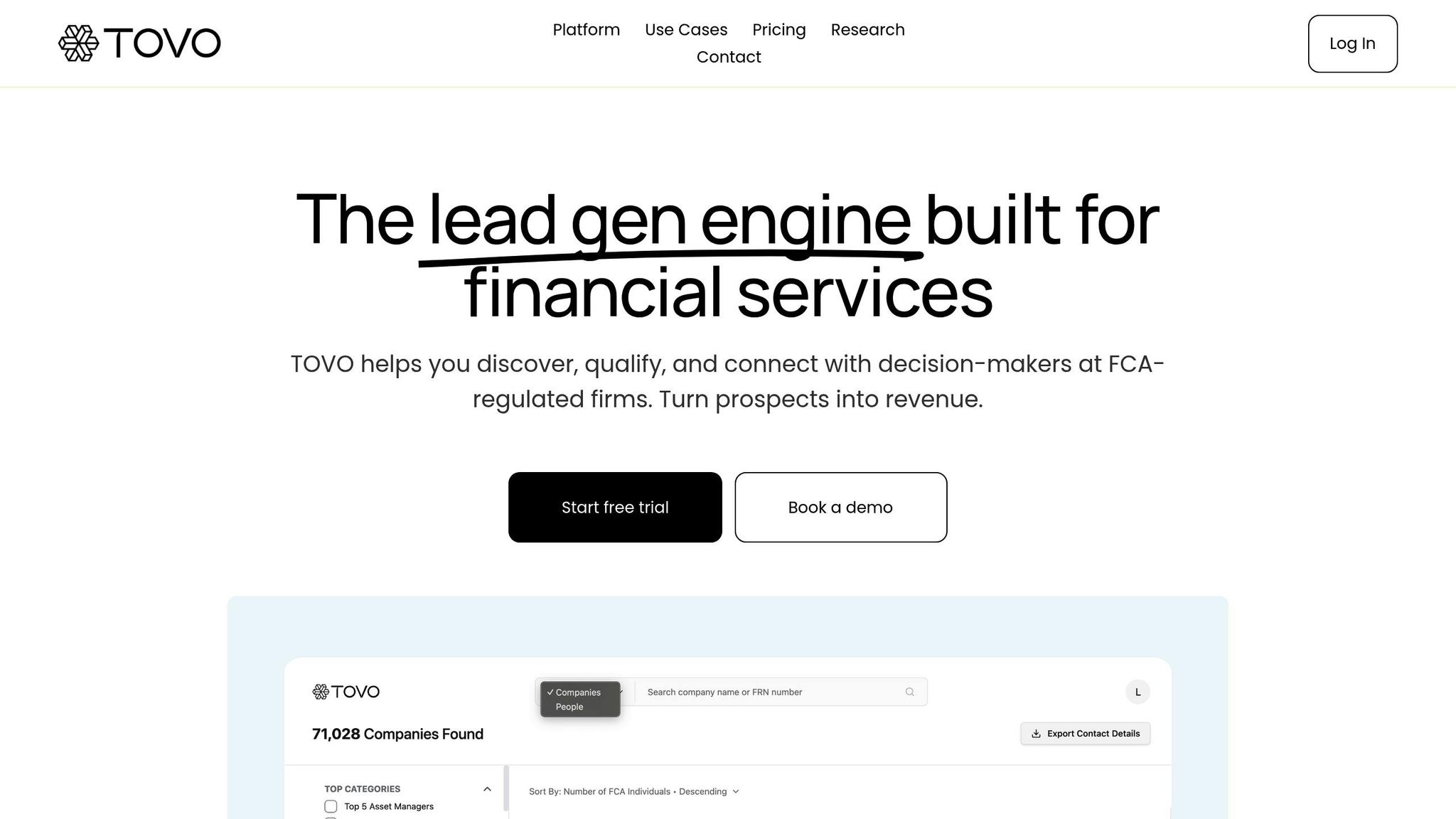
TovoData uses a modular design to provide contact data enrichment, making it easier for real estate professionals to create API solutions tailored to their specific needs. Like other leading platforms, TovoData focuses on delivering flexible, user-centric data solutions for contact enrichment.
Contact Data Enrichment Capabilities
The Property Spring API is a major highlight, offering up to 300 data points per property. This includes ownership details, property characteristics, mortgage data, and valuations, covering over 150 million properties across the U.S.. With billions of data points available, the platform supports comprehensive data enrichment.
TovoData also provides specialized APIs for unique use cases:
- The Legal & Vesting API delivers fully typed legal descriptions and vesting details, catering to home equity lenders.
- The Comparables API identifies nearby properties and market activity, aiding in valuation and market analysis workflows.
- The MLS API offers realtor-contributed listing data, available as either an add-on or a standalone service.
"Our data experts are ready to customize a real estate API solution complete with the exact property data you need to know about an address: ownership, characteristics, valuation, mortgage, liens, market data." – TovoData
One standout feature is the "Create Your Own Real Estate API", which allows businesses to work with TovoData’s experts to build tailored solutions. These custom APIs can include specific data points like liens, ownership information, or market data, helping businesses save on costs by only paying for the data they need. This modular approach ensures cost-effective and scalable integrations.
Customization and Scalability Options
TovoData caters to businesses of all sizes, offering flexible delivery methods and update schedules. Covering all U.S. homes, data is delivered through various channels such as REST, SOAP, Streaming, S3, SFTP, Email, Feed API, or UI Export.
Update frequencies are highly adaptable, ranging from real-time or secondly intervals to daily, monthly, or yearly schedules. This allows organizations to balance data freshness with processing needs. For high-volume operations, bulk data delivery through S3 or SFTP is far more efficient than standard API calls. Supported file formats include .json, .xml, .csv, .sql, .bin, .xls, and .txt.
TovoData offers custom pricing based on the specific data required and the volume, instead of fixed pricing tiers. Real estate professionals can even preview property data and reports for free through the API Store before committing to a full integration. The platform is designed for rapid setup, allowing data streaming integration within minutes.
5. FullContact
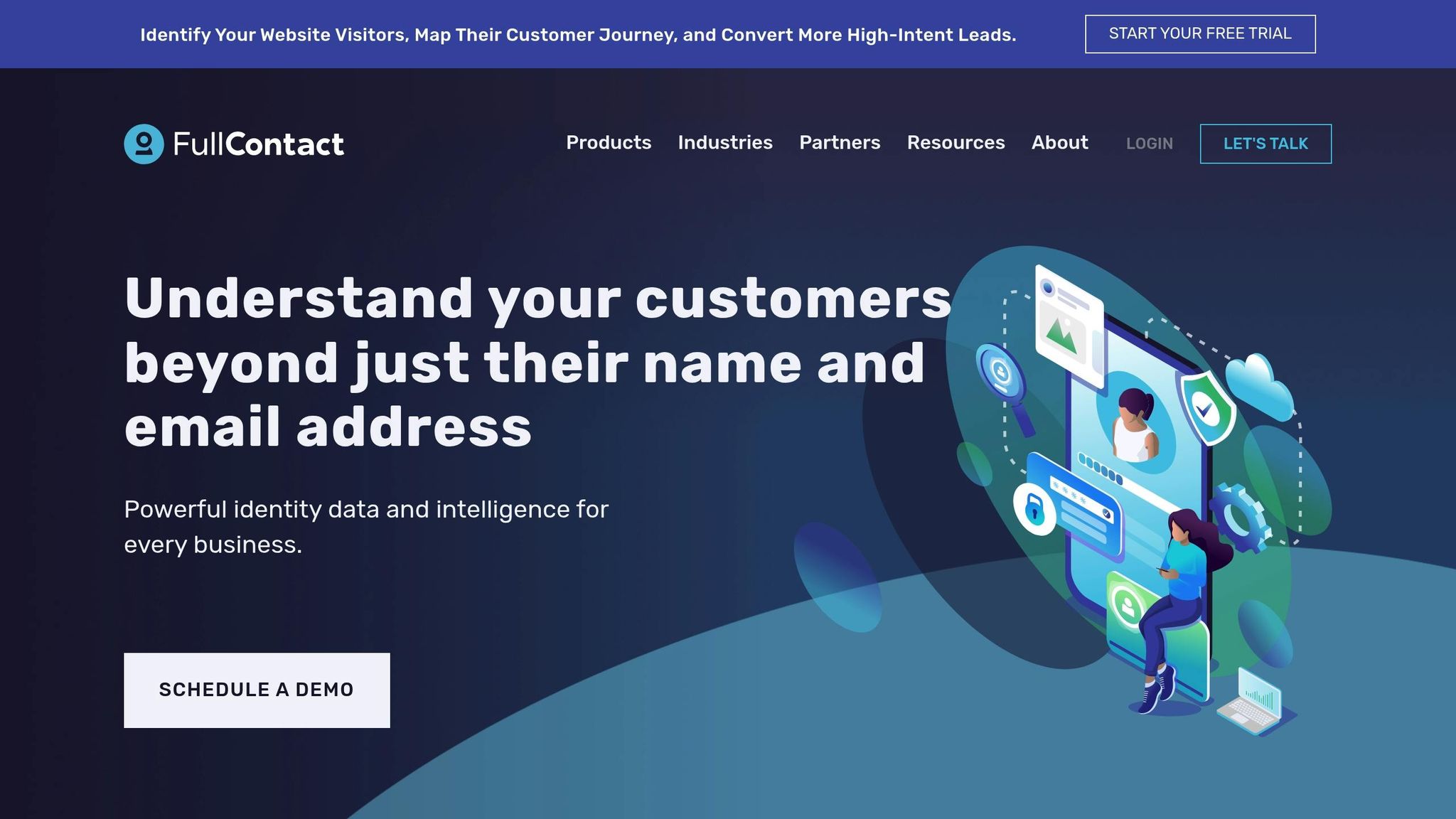
FullContact focuses on identity resolution and demographic data enrichment, helping unify scattered contact records. Its patented Identity Graph includes data on 3.5 billion individuals and over 100 billion identity observations, with 30 million updates processed daily to keep information fresh and accurate. Real estate professionals can tap into more than 1,100 ethically sourced attributes to create highly detailed prospect profiles.
Contact Data Enrichment Capabilities
FullContact offers a demographic bundle featuring 16+ core elements like age, gender, income, education, marital status, and net worth. Beyond that, it provides access to over 900 insights, including full names, locations, social media profiles, career history, and job titles. Using deterministic identity resolution – based on actual observations – the platform ensures precision, even with large datasets.
The real-time API delivers data lightning-fast, with a response time of just 40 milliseconds, enabling users to access complete profiles instantly. Additionally, FullContact offers "Data Affinity" insights, which add a personal touch by including lifestyle details such as favorite sports teams, news preferences, and travel habits. This feature allows real estate marketers to tailor their outreach to align with individual interests.
Real Estate-Specific Integrations
FullContact can identify potential homebuyers in real time as they browse a website. By analyzing behaviors like frequent visits or extended time spent on pages, agents can prioritize leads with high purchase intent. Its portable "PersonID" ensures a unified view of prospects across platforms, enabling consistent messaging. The platform also supports appending specific identifiers like Hashed Emails and Mobile Ad IDs (MAIDs), enhancing targeting accuracy. These tools give real estate professionals the confidence to zero in on high-intent leads effectively.
Bulk Data Processing Support
The platform supports large-scale CRM database enhancement by appending high-quality demographic data to existing records. Its "Data Subscription" service keeps records updated in real time as databases expand. For bulk operations, FullContact’s demographic data bundle costs around $0.10 per match, based on a tier of 5,000 matches per month. Fully compliant with SOC2 Type II standards, the platform also offers privacy and permission management at the individual level. These features make it easier for real estate professionals to integrate enriched profiles seamlessly into their CRM systems, improving the efficiency and precision of outreach efforts.
6. Apollo.io

Apollo.io combines a vast B2B database with automated tools to keep real estate professionals’ contact and company records up to date. It enriches contact profiles with verified details like accurate contact info, job titles, company size, and technographic data. Its Job Change Tracking feature helps users re-engage contacts when they switch roles, ensuring timely communication.
Contact Data Enrichment Capabilities
Apollo.io integrates seamlessly with platforms like Salesforce and HubSpot, automatically updating contacts and accounts to ensure information stays current. The platform’s database is tailored for real estate professionals, offering filters for brokerage, location (city/state), and roles or seniority levels. While its email data accuracy is highly dependable, some enterprise users note occasional inconsistencies with phone data. Impressively, Apollo.io enriches 100,000 leads daily, helping users achieve over a 10% boost in win rates and average contract value. This real-time precision makes it an excellent tool for managing large-scale data.
Bulk Data Processing Support
Apollo.io’s bulk processing capabilities are designed for efficiency and scale. Users can choose from three methods: a dedicated API endpoint for bulk enrichment, manual CSV uploads for one-time updates, or scheduled enrichment jobs directly within their CRM. The system handles high volumes with ease, with pricing based on API usage. Mark Turner, VP of Revenue Operations at Built In, praised the platform:
Apollo enriches everything we have: contacts, leads, accounts…And we don’t really have to touch it, it just works.
To ensure data quality, the platform includes a Data Health Center that tracks data decay, merges duplicate records, and identifies gaps in the total addressable market.
Customization and Scalability Options
Apollo.io offers flexibility alongside its enrichment and bulk processing tools. Users can customize deduplication and merging rules, either within Apollo or their CRM. Its open API supports tailored workflows, enabling tasks like modifying outreach sequences, updating CRM fields in real time, or syncing tasks and opportunities across external systems. For real estate firms with unique tech setups, this adaptability ensures smooth integration with tools like Salesforce and HubSpot while maintaining automated enrichment at scale. The platform is GDPR compliant and holds an impressive 4.7/5 rating from over 9,000 reviews.
7. Clay
Contact Data Enrichment Capabilities
Clay takes contact enrichment to another level with its API-driven approach and a clever orchestration system. By connecting to more than 150 data providers – like Apollo, RocketReach, and PeopleDataLabs – it ensures contact records are enriched efficiently. Its waterfall logic is a standout feature: it queries data sources sequentially until valid information is found, and credits are only used when successful results are delivered. For instance, OpenAI reportedly doubled its enrichment coverage with Clay’s system.
Another powerful tool in Clay’s arsenal is Claygent, an AI-powered web-scraping agent. It’s designed to dig deep into niche sources such as local government portals, brokerage websites, or LinkedIn to pinpoint property owners and decision-makers.
"We have 3x our enrichment rate with Clay’s combination of data providers vs. our previous solution."
Real Estate-Specific Integrations
Clay caters specifically to the real estate sector with integrations that make data gathering seamless. It connects with Google Maps to locate real estate contacts, Lob for verifying mailing addresses, and Mapbox to normalize location data. Additionally, its Chrome extension can scrape property listings and LinkedIn profiles, making it a versatile tool for real estate professionals.
Bulk Data Processing Support
Managing large-scale data is a breeze with Clay’s table-based interface. It allows syncing of millions of CRM records and supports manual re-enrichment for up to 50,000 records at once. The platform also handles bulk lookups, deduplication, and data imports through webhooks or Google Sheets. Plus, its two-way CRM sync – compatible with platforms like Salesforce and HubSpot – ensures data updates every 24 hours, giving enterprises the ability to handle go-to-market data efficiently.
Customization and Scalability Options
Clay offers a range of customization options to suit specific business needs. For example, conditional workflows can be set to trigger enrichment tasks, like searching for mobile numbers only when an email is missing. Users can also integrate their own API keys (BYOK) without additional costs. For advanced use cases, Sculptor can help with go-to-market strategies, and Claygent can be configured to scrape public databases.
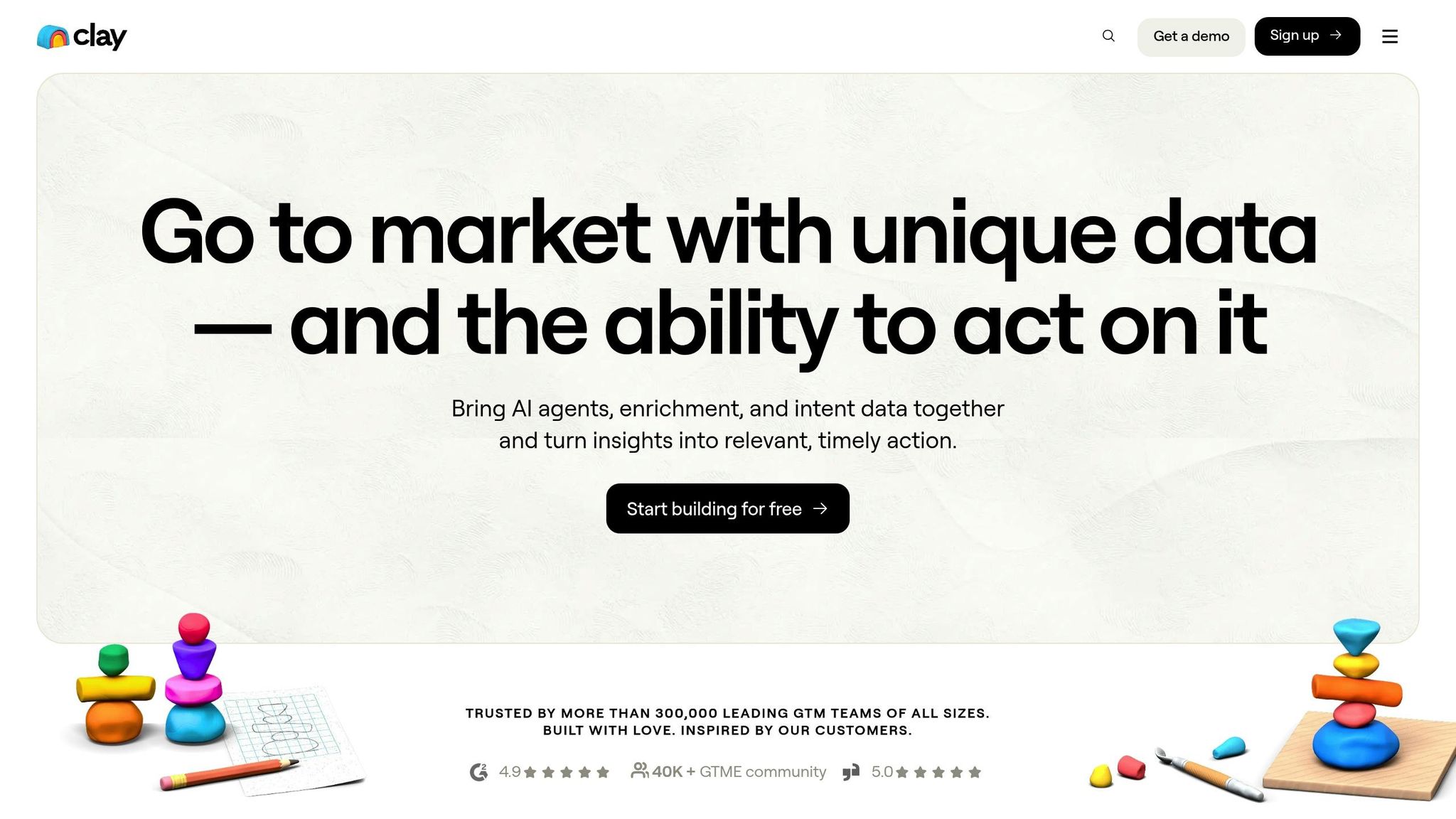
Security and compliance are also top priorities. Clay adheres to SOC 2 Type II, GDPR, CCPA, and ISO 27001 standards, making it a trusted choice for over 300,000 teams, as reflected in its 4.9/5 rating. Pricing starts at $149/month, while the Pro Plan at $800/month includes a 14-day free trial with 1,000 credits.
Conclusion
Contact data enrichment APIs have become essential for real estate professionals aiming to optimize their workflows and close deals more effectively. These tools revolutionize contact management by quickly appending verified details, which helps reduce wasted outreach and significantly improves connection rates with the right decision-makers.
What sets these APIs apart is their focus on accuracy. With advanced validation techniques, professionals can avoid unnecessary effort and focus on genuine leads. Features like identifying individuals behind LLCs and trusts add another layer of precision, while real-time compliance tools – such as scrubbing against National DNC registries and TCPA litigator lists – help mitigate legal risks without compromising efficiency.
These APIs also elevate client service by enabling personalization and smarter lead prioritization. By combining enriched contact data with property details like equity levels, ownership history, and distress indicators, professionals can pinpoint motivated sellers and craft more targeted messaging. With seamless CRM integration and bulk processing capabilities, managing large portfolios becomes faster and more accurate.
The operational benefits translate directly into measurable ROI. Whether you’re part of a small team or overseeing enterprise-level operations, these APIs reduce manual tasks, boost conversion rates, and support data-driven strategies. Flexible pricing options, including pay-as-you-go and subscription models, ensure there’s a solution to fit any budget or workflow. Choosing a provider that prioritizes data freshness, multi-source validation, and easy integration is key to staying competitive in the real estate investing market.
FAQs
How can I choose the right enrichment API for real estate?
To pick the right enrichment API, focus on a few essential aspects: data scope and accuracy, how well it integrates with your existing workflows, and its ability to grow with your needs. For instance, BatchData provides highly accurate U.S. property and contact data, complete with real-time validation. Check if the API can handle tasks like skip tracing or lead scoring and whether its pricing model allows flexibility as your requirements evolve. Match these features to your business objectives to get the best results.
What should I check to stay compliant when enriching phone numbers and emails?
When handling phone numbers and emails, compliance with privacy laws like the CCPA, CPRA, and GDPR is non-negotiable. Here’s how to ensure your processes align with these regulations:
- Obtain proper consent: Always secure explicit permission before collecting or using personal data.
- Be transparent: Clearly communicate how the data will be used and stored.
- Honor consumer rights: Support requests for data deletion and other rights outlined in privacy laws.
It’s crucial to collaborate only with vendors who adhere to these standards. Failing to comply can lead to hefty fines, legal troubles, and damage to your reputation. Plus, working with accurate, verified data minimizes regulatory risks and ensures smoother operations.
What data fields are most important for identifying motivated sellers?
To identify motivated sellers, certain data fields are particularly useful. These include:
- Ownership details: Information about who owns the property can indicate if it’s an individual, a company, or even an absentee owner – often a sign of potential motivation to sell.
- Transaction history: Patterns in past sales, such as frequent buying and selling, can hint at a seller’s urgency or intent.
- Property characteristics: Factors like the property’s size, condition, and location can help assess its marketability and the owner’s likelihood of selling.
- Lien data: Outstanding liens or debts attached to the property might signal financial strain, which could push the owner to sell.
- Tax assessments: High or overdue property taxes can indicate financial challenges, another potential motivator.
- Mortgage information: Knowing the mortgage status – like whether the owner is underwater or nearing foreclosure – can reveal a seller’s financial position.
These fields collectively provide insights into ownership status, financial health, and transaction behavior, helping you gauge how motivated a seller might be.