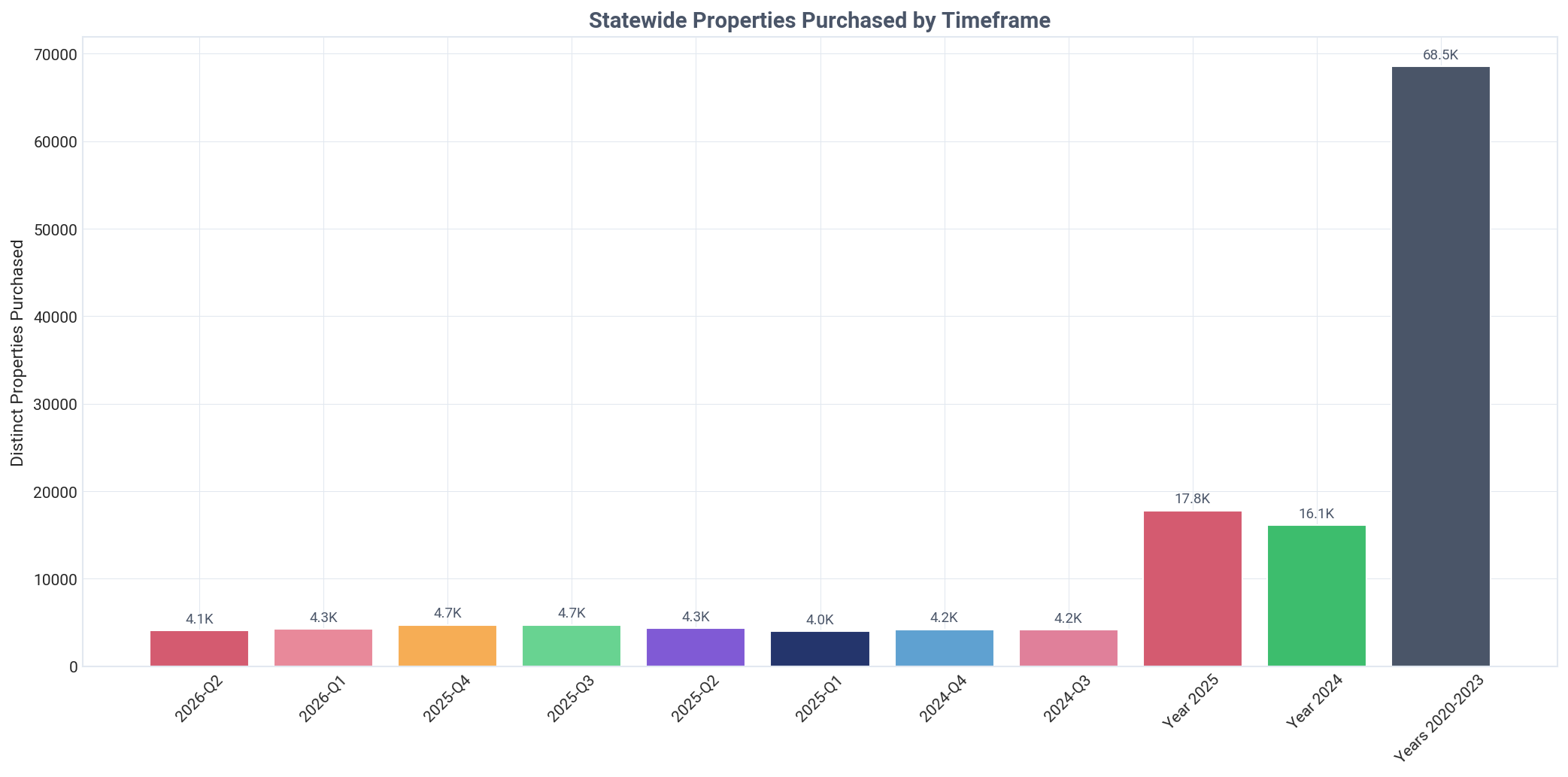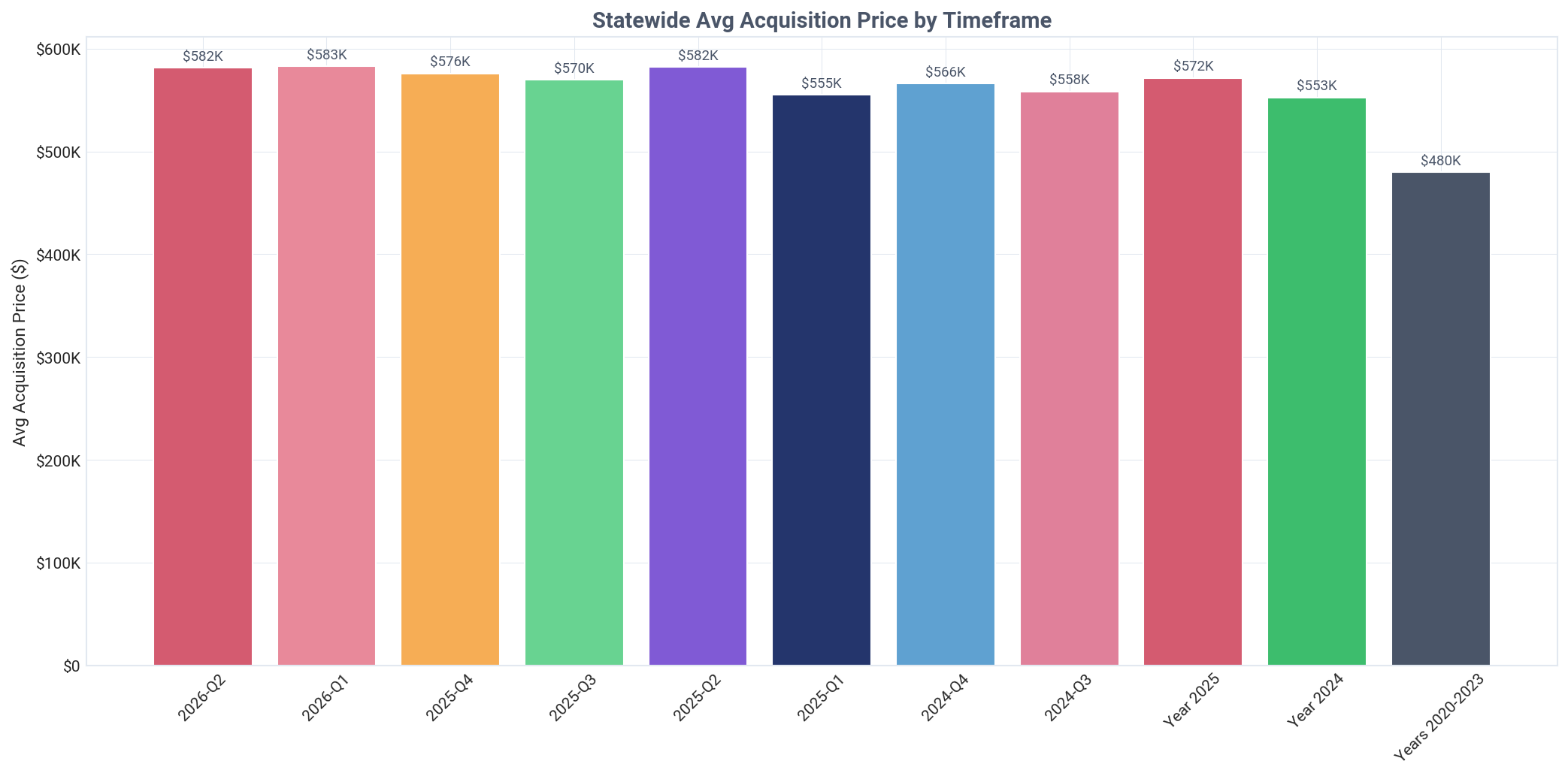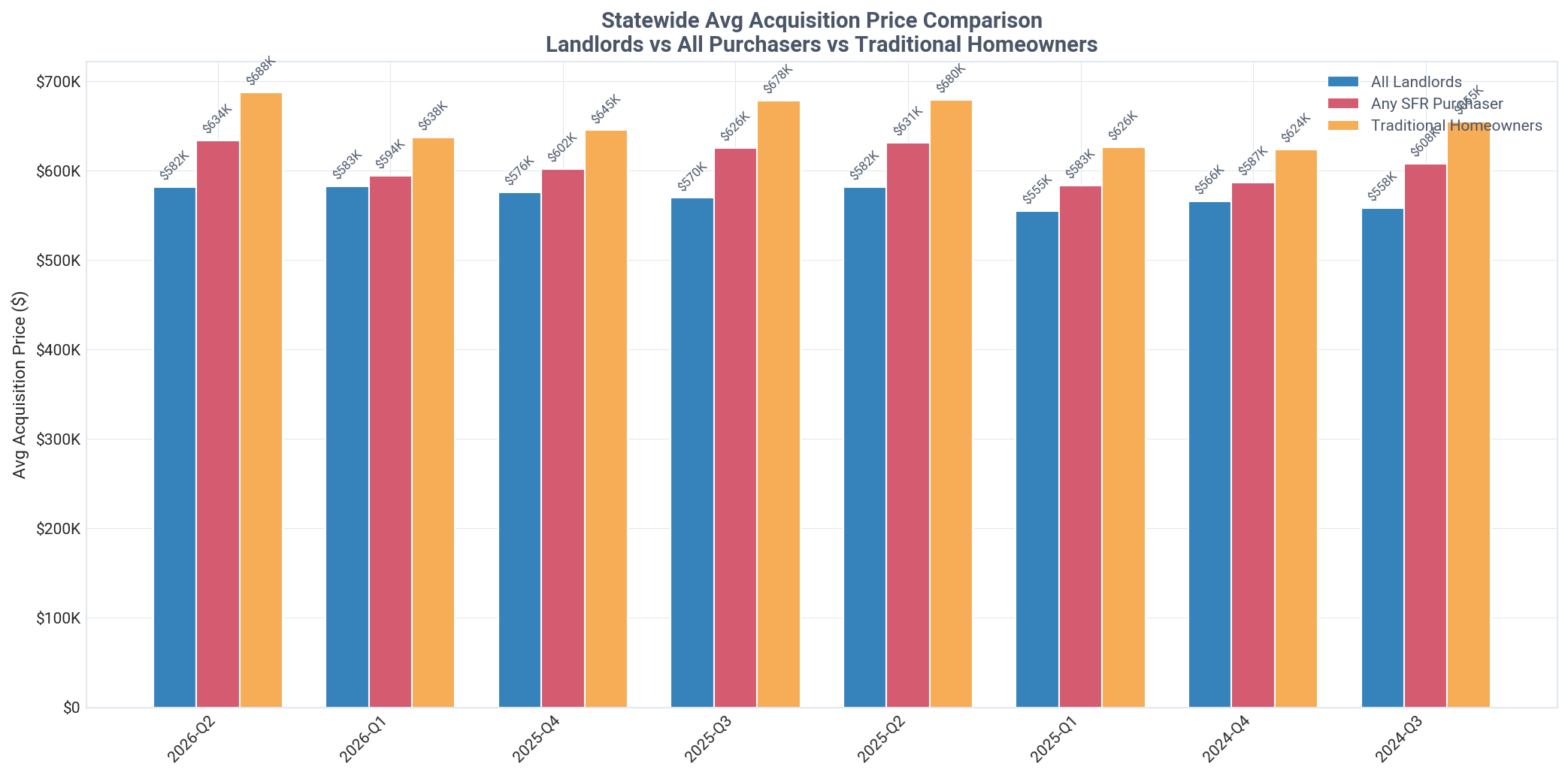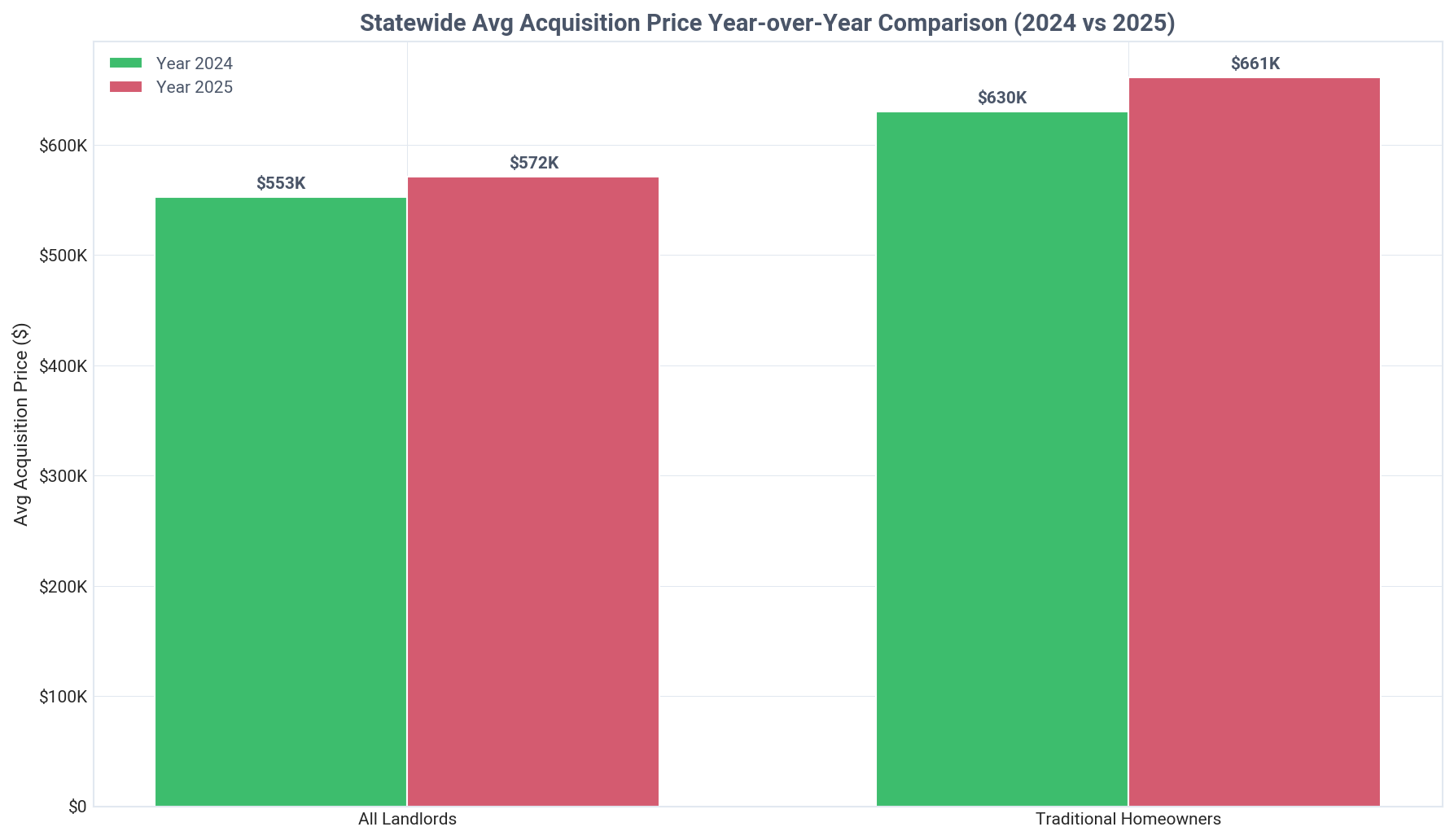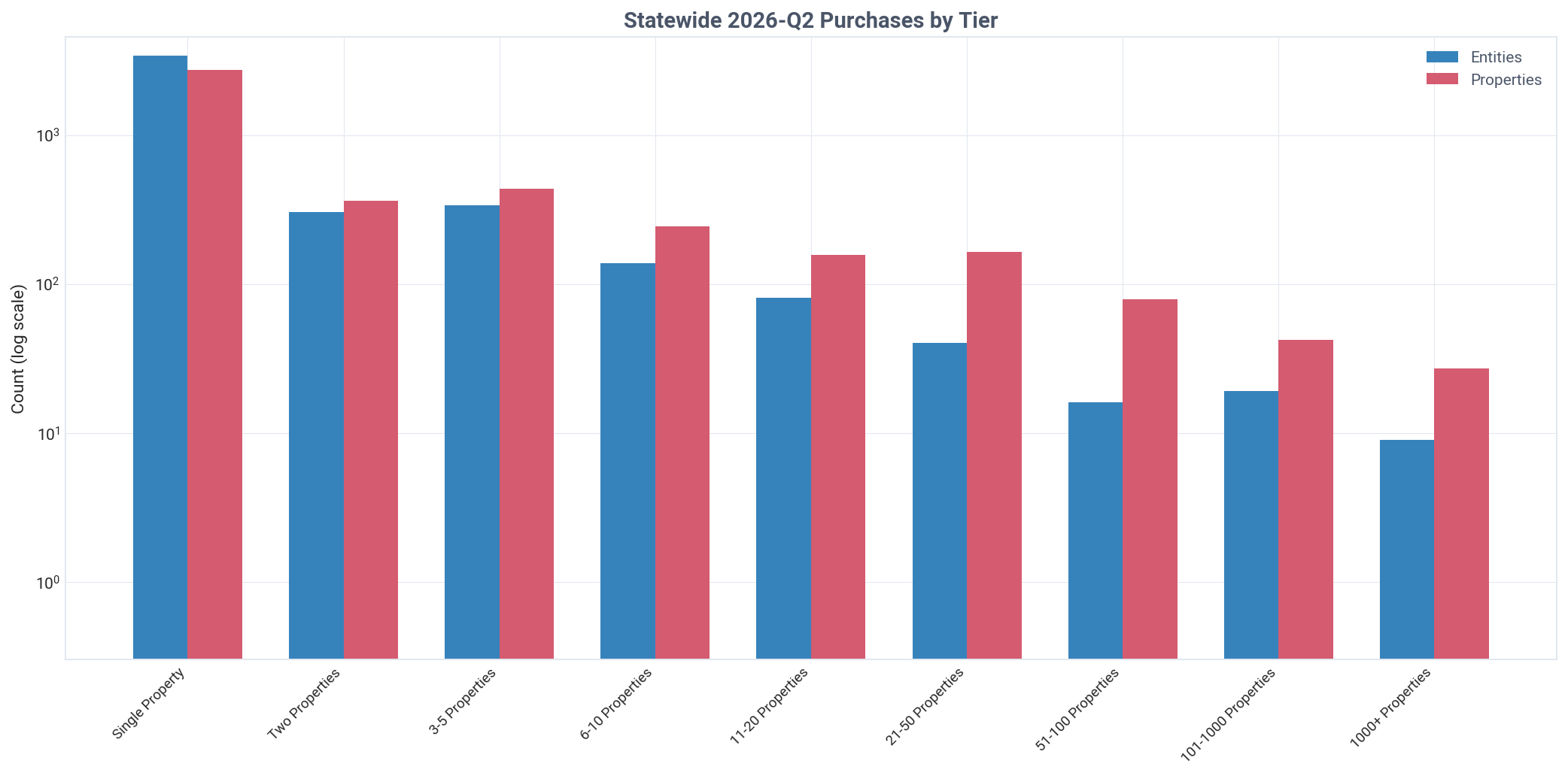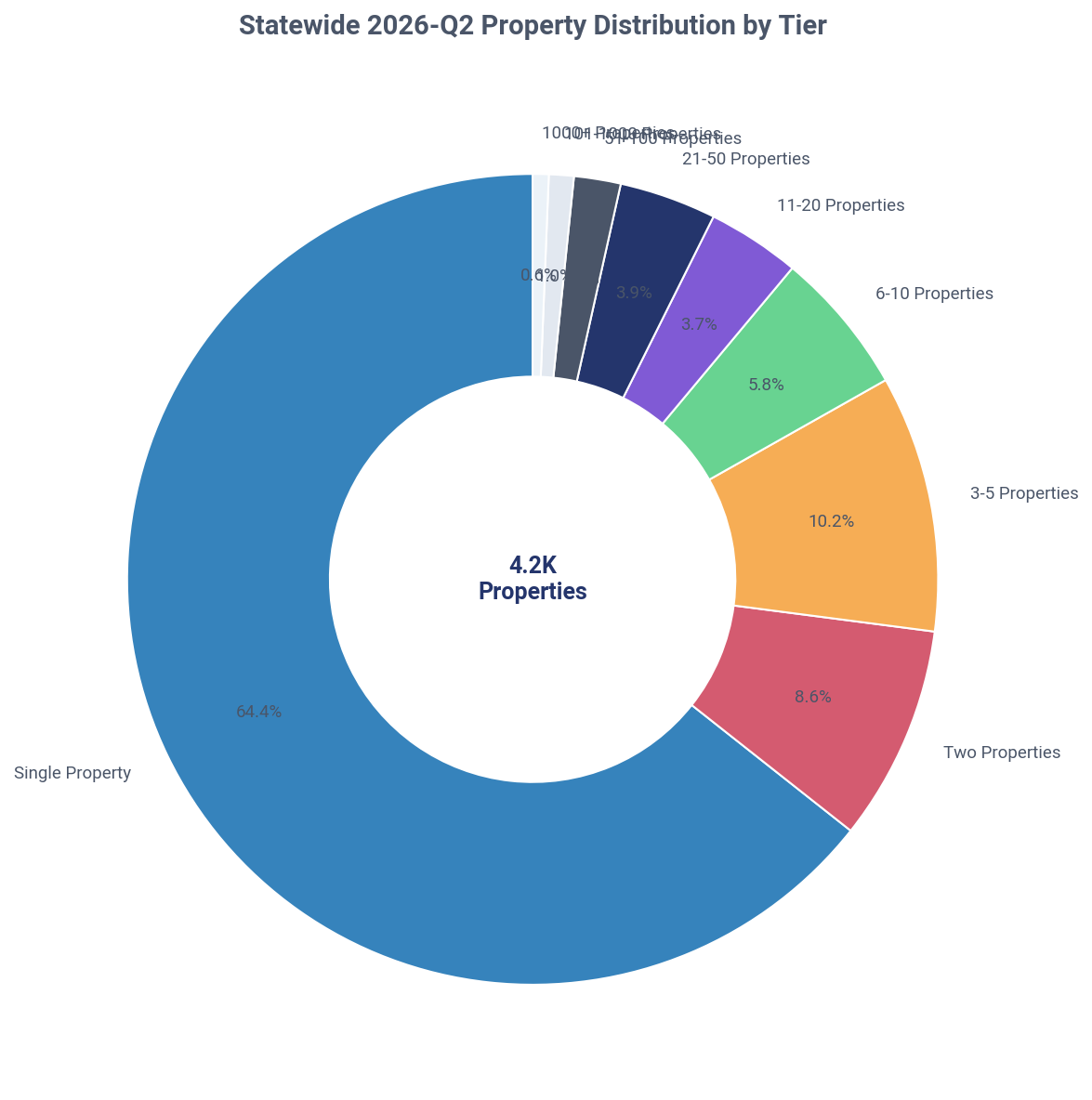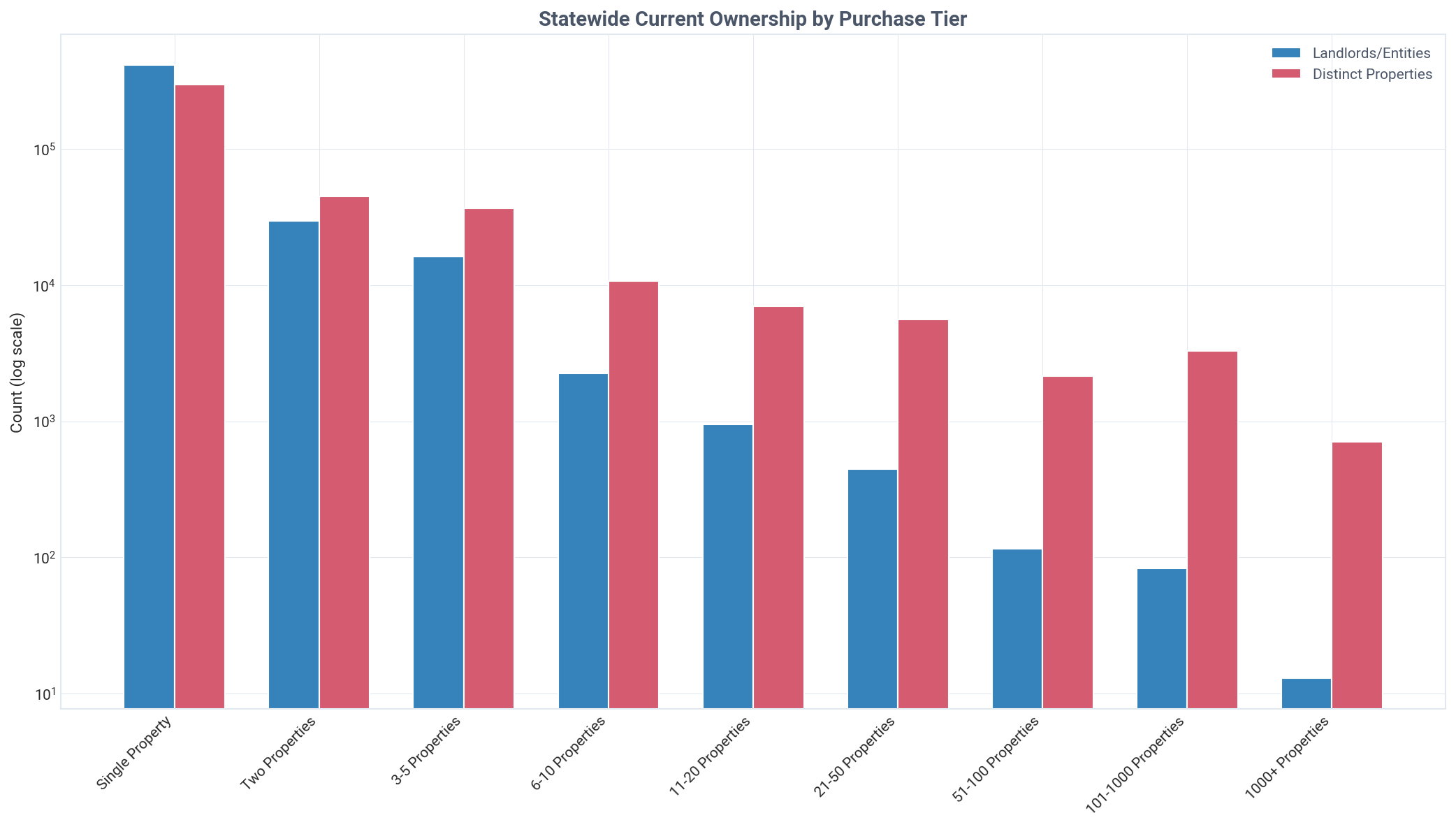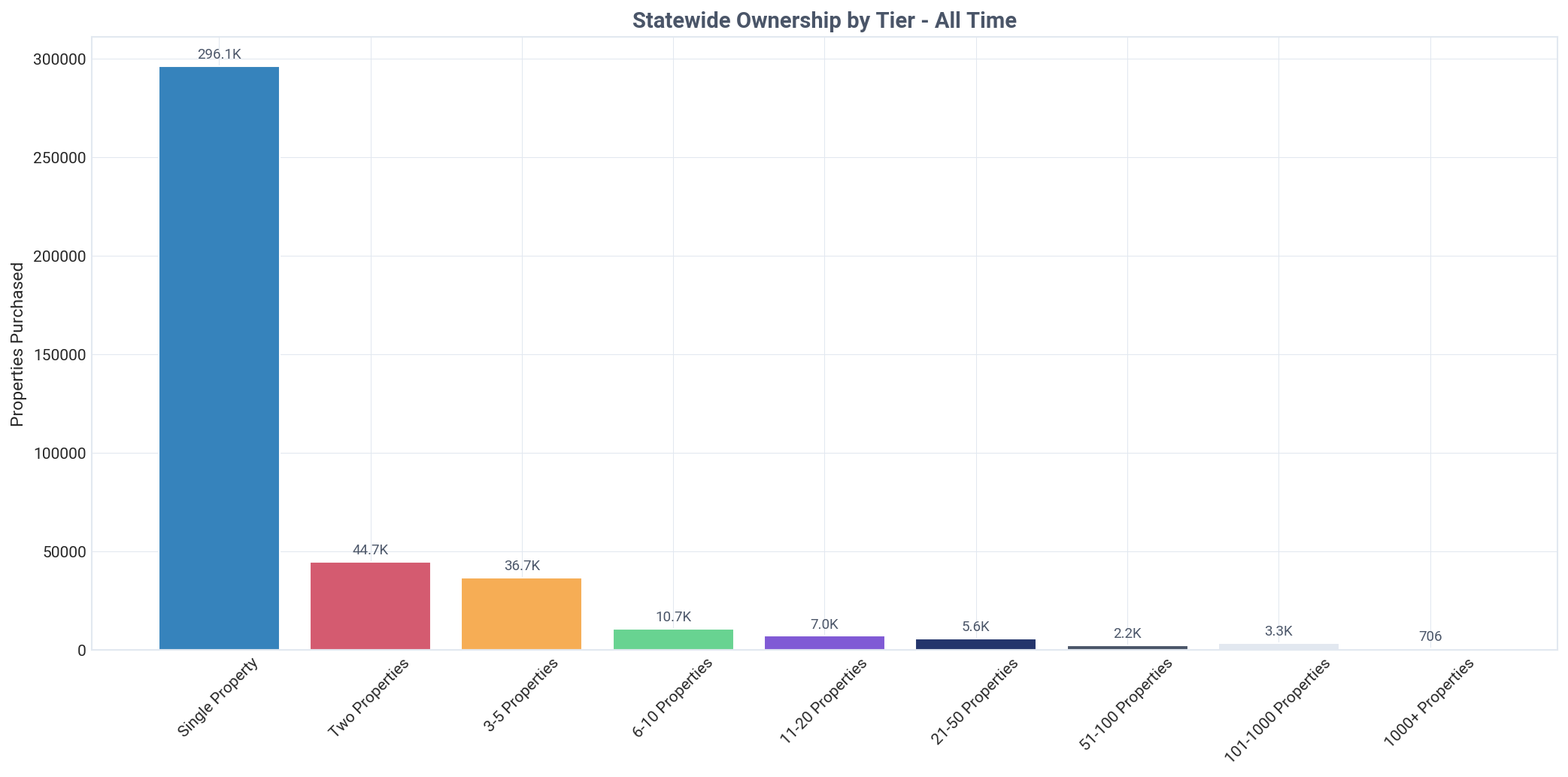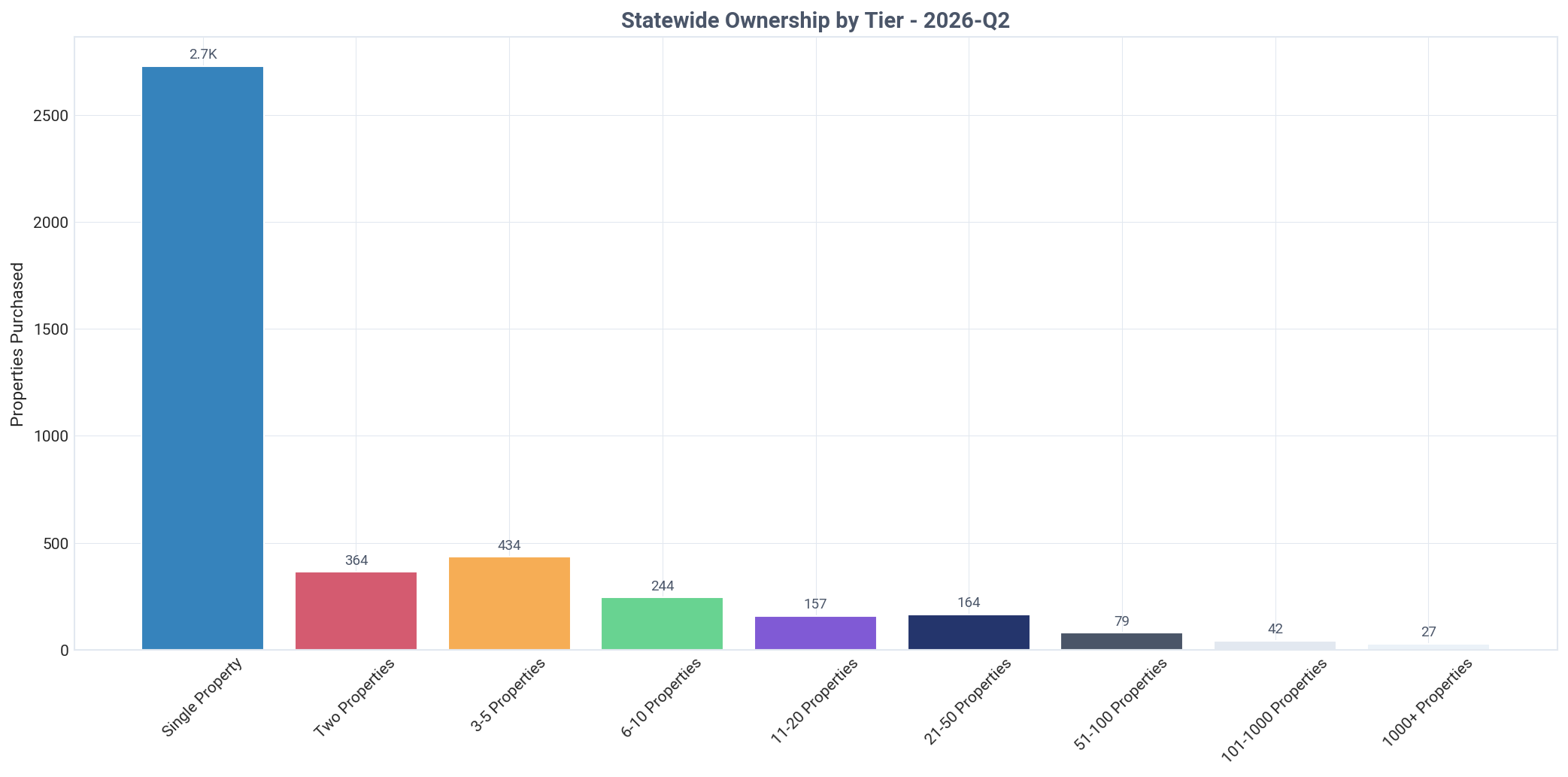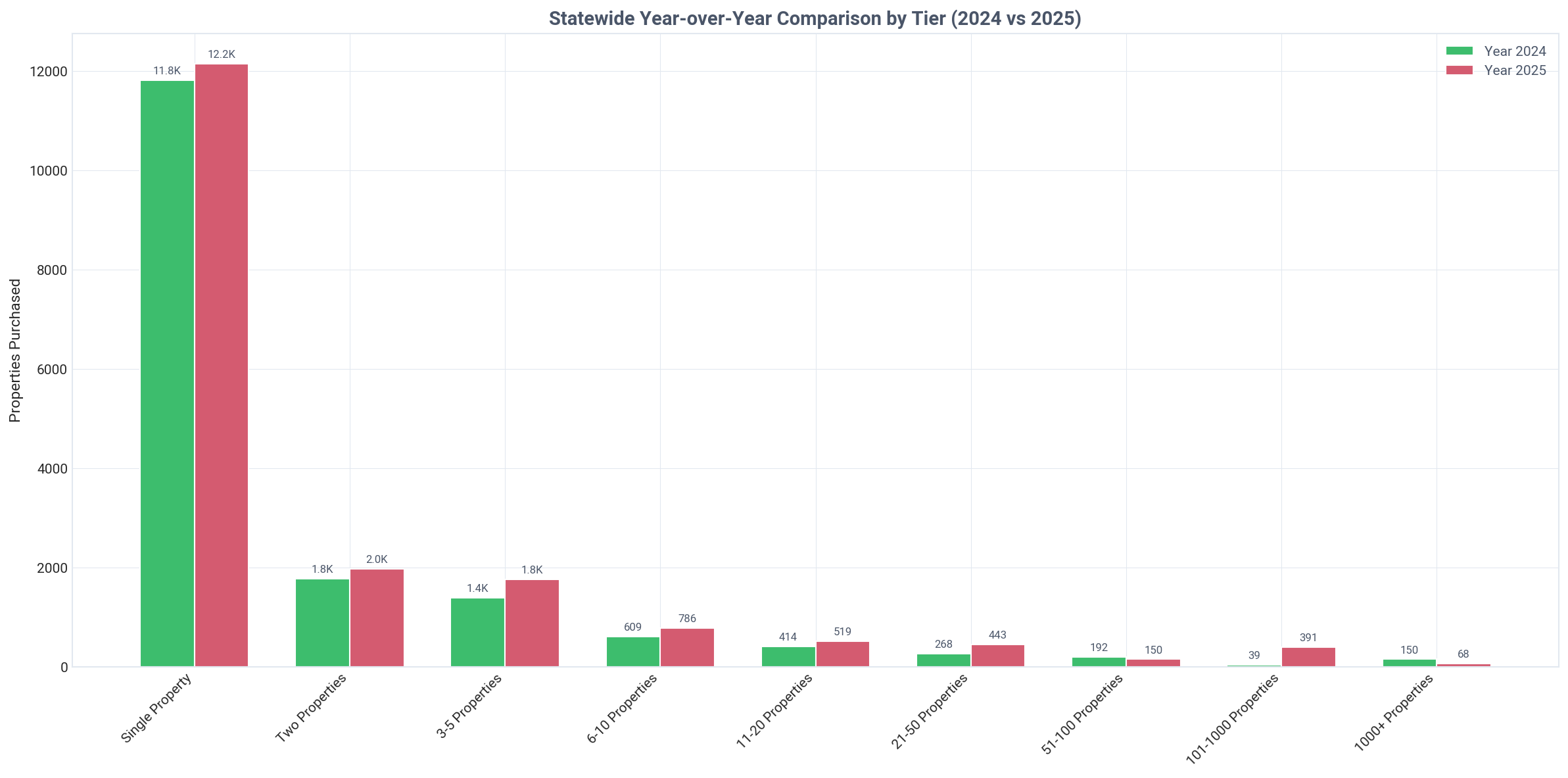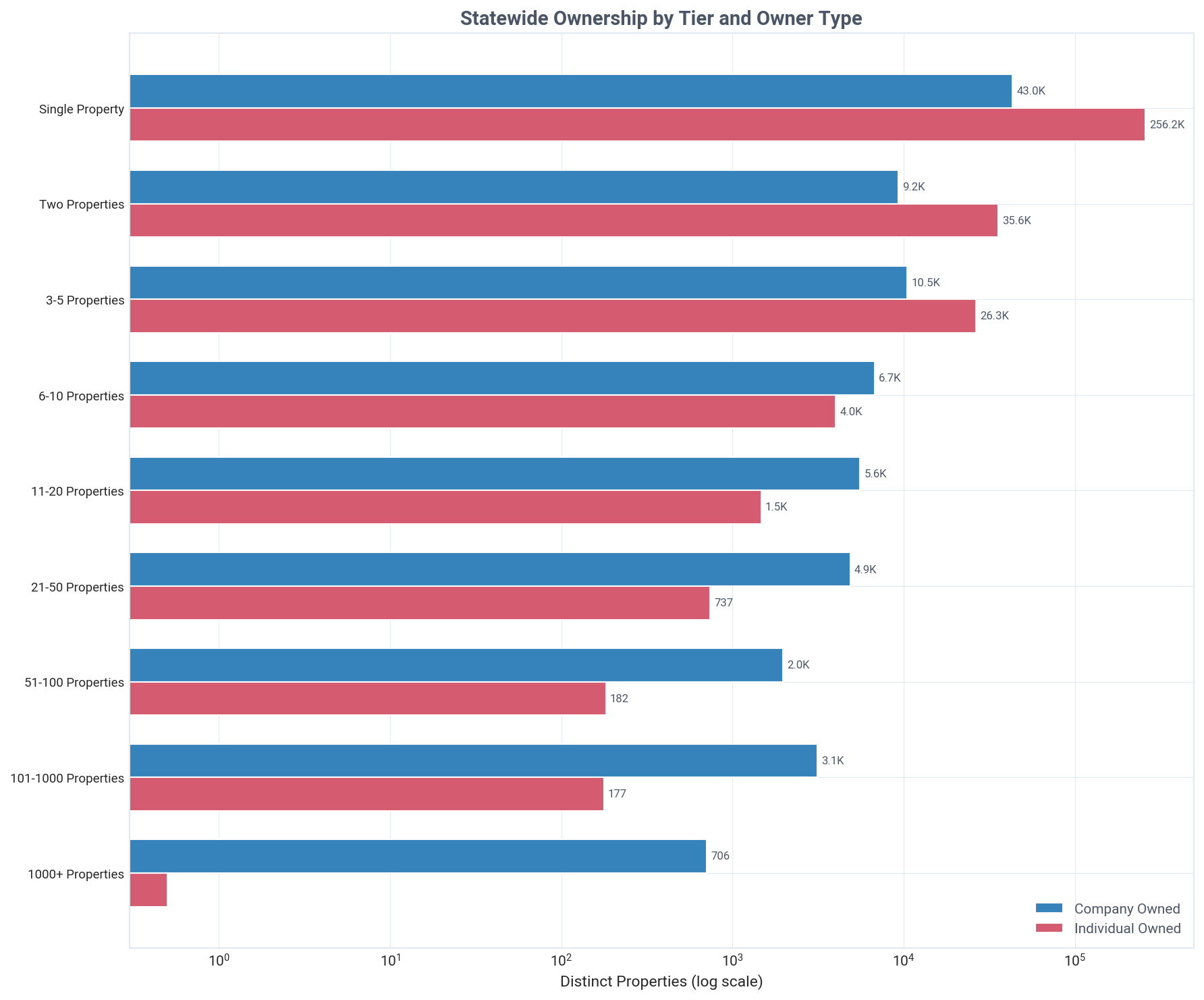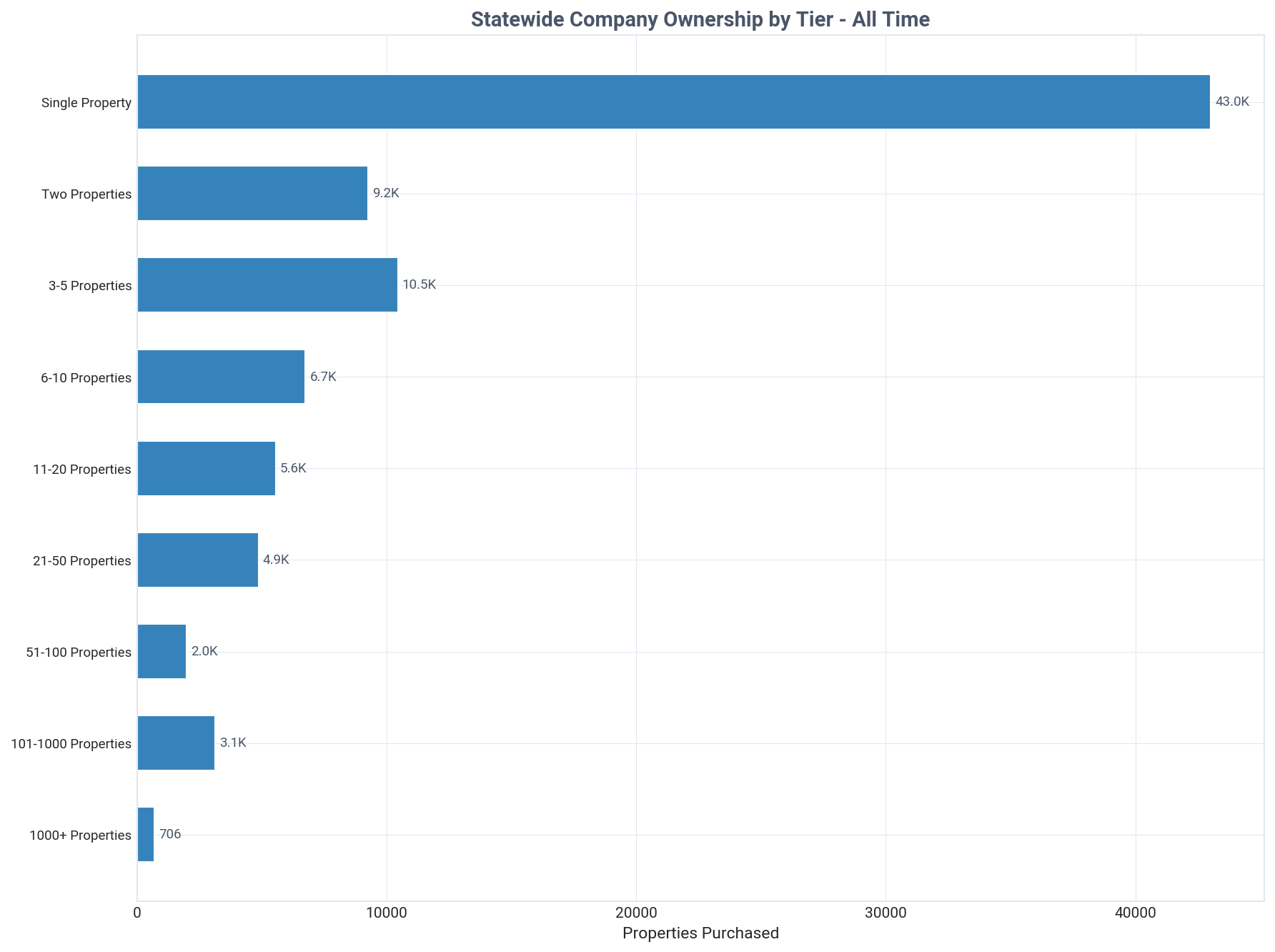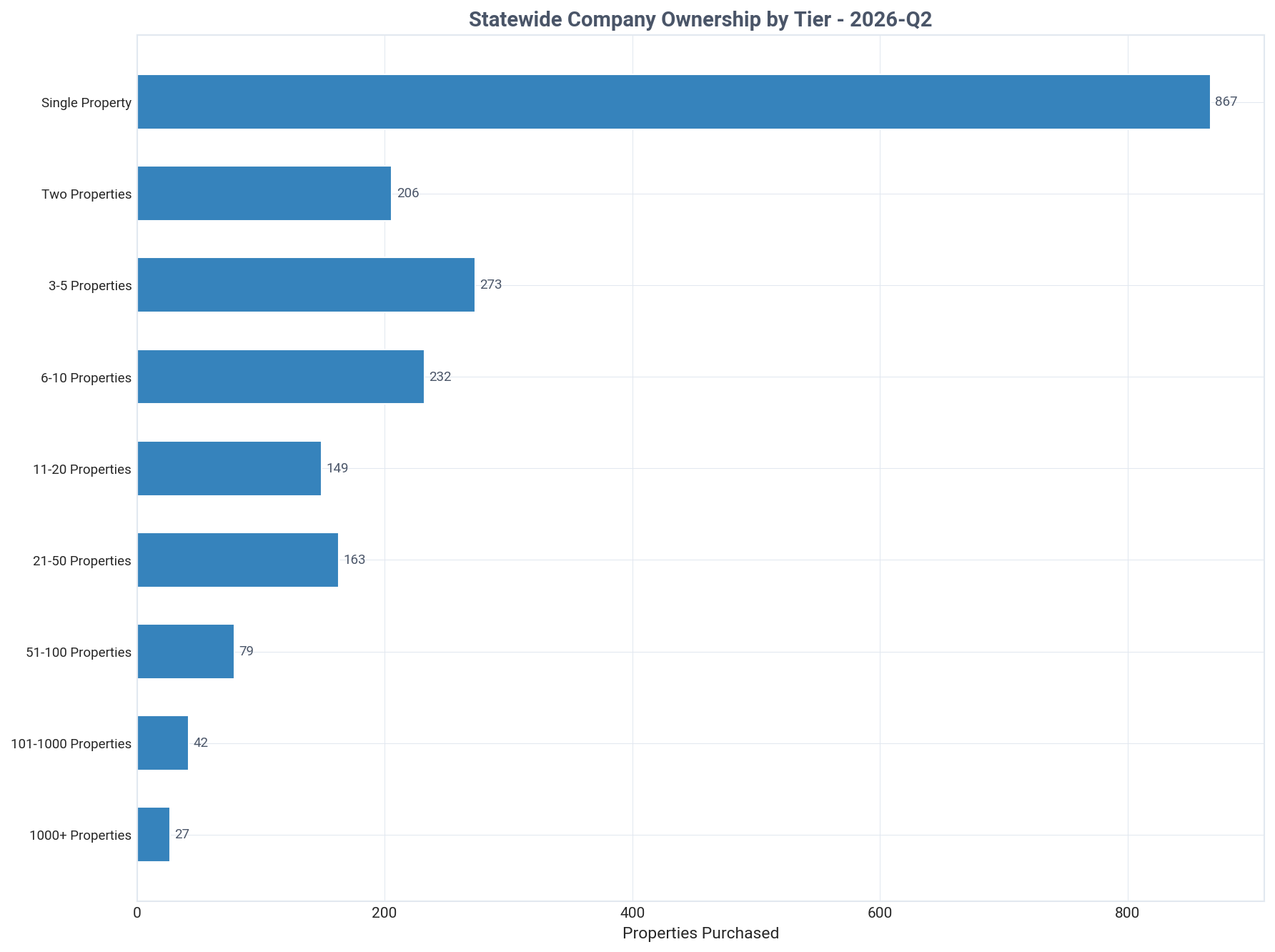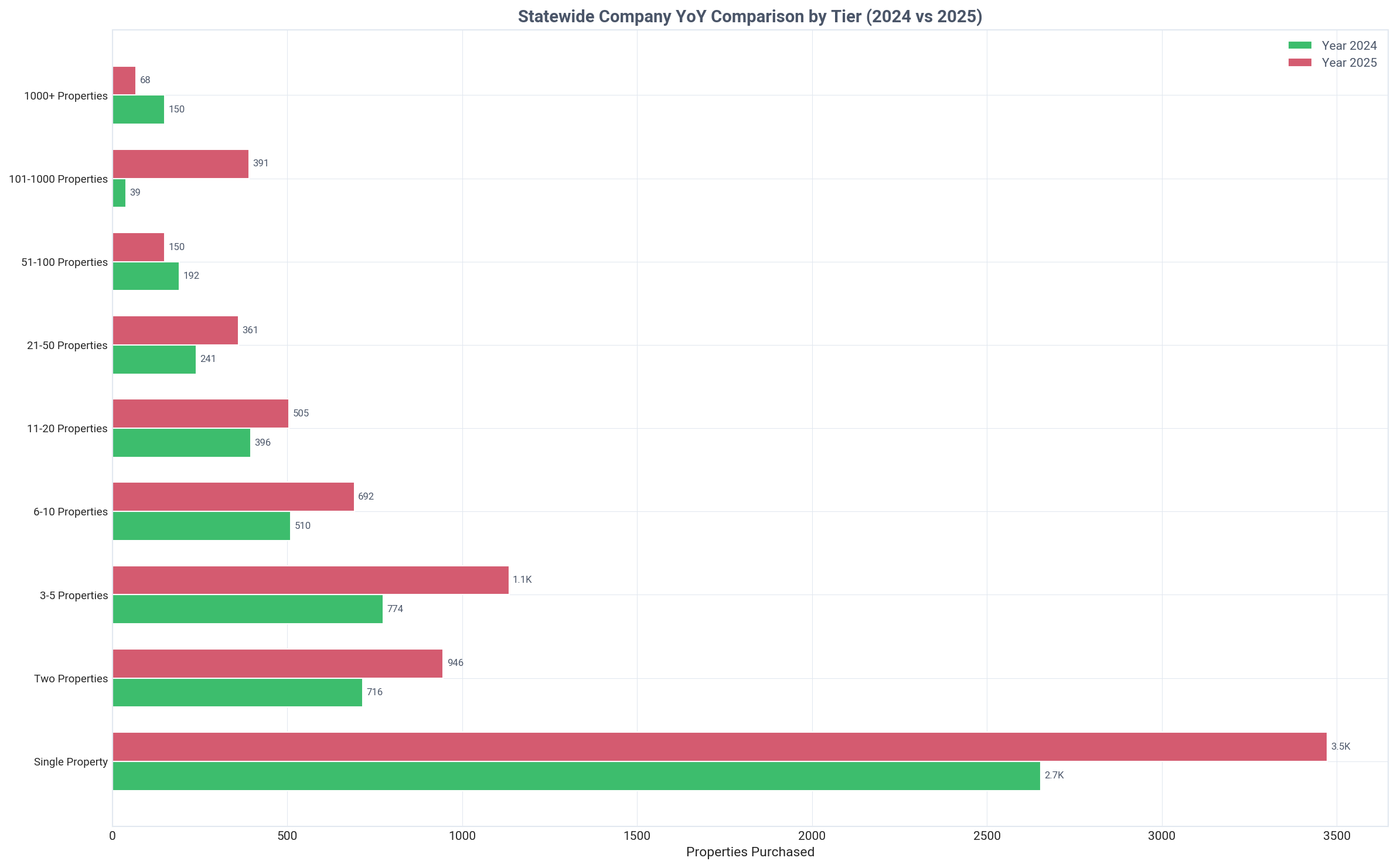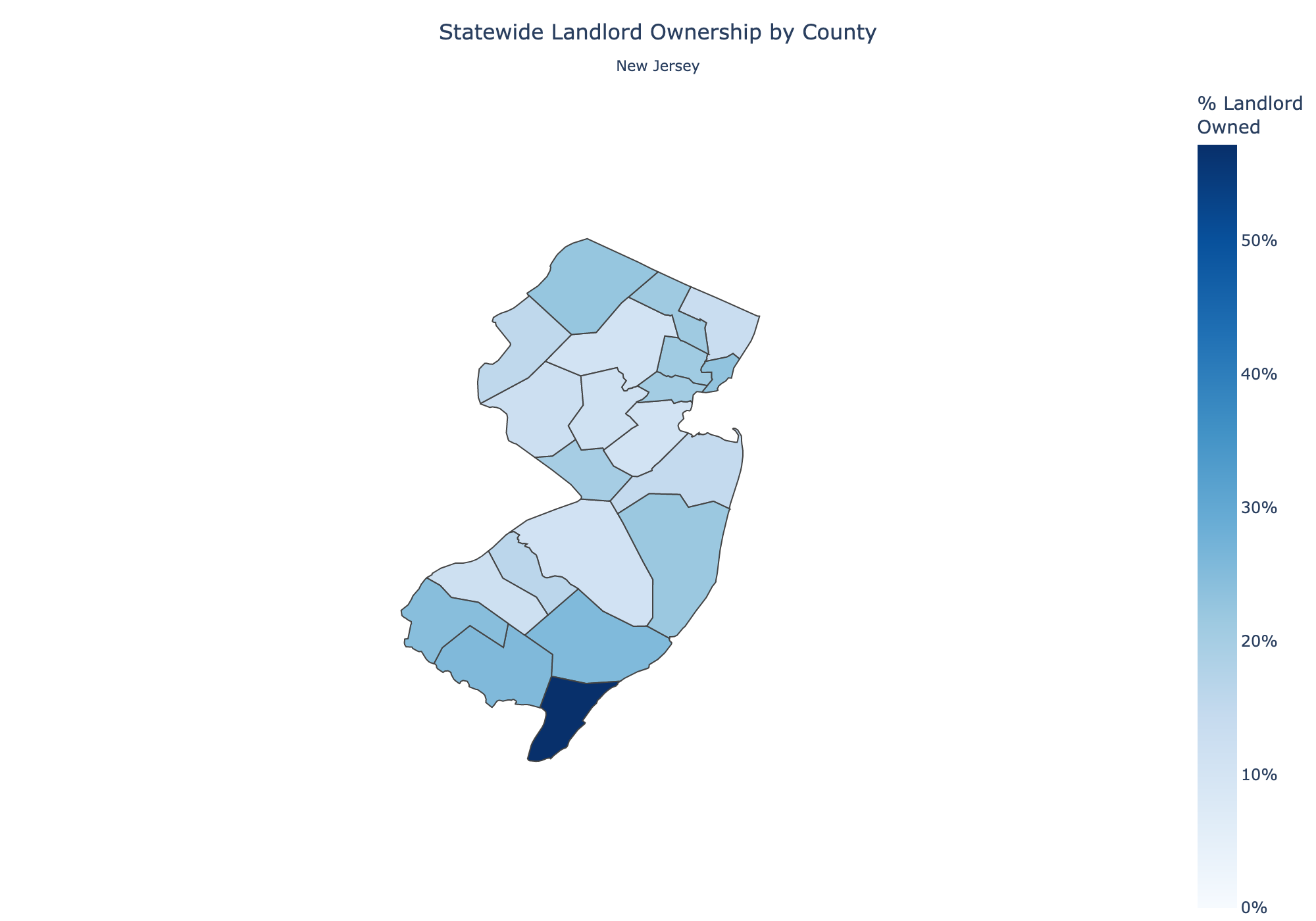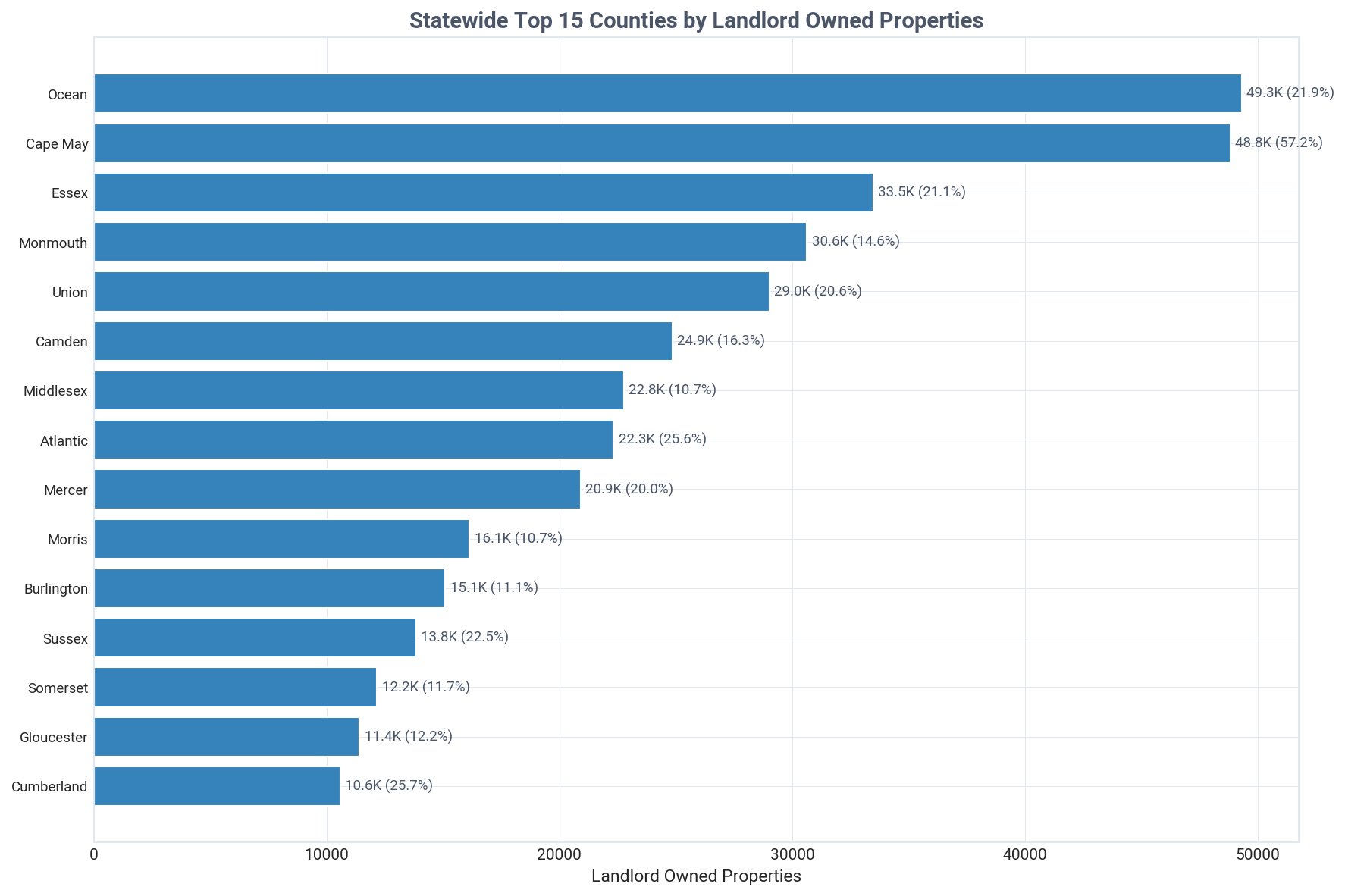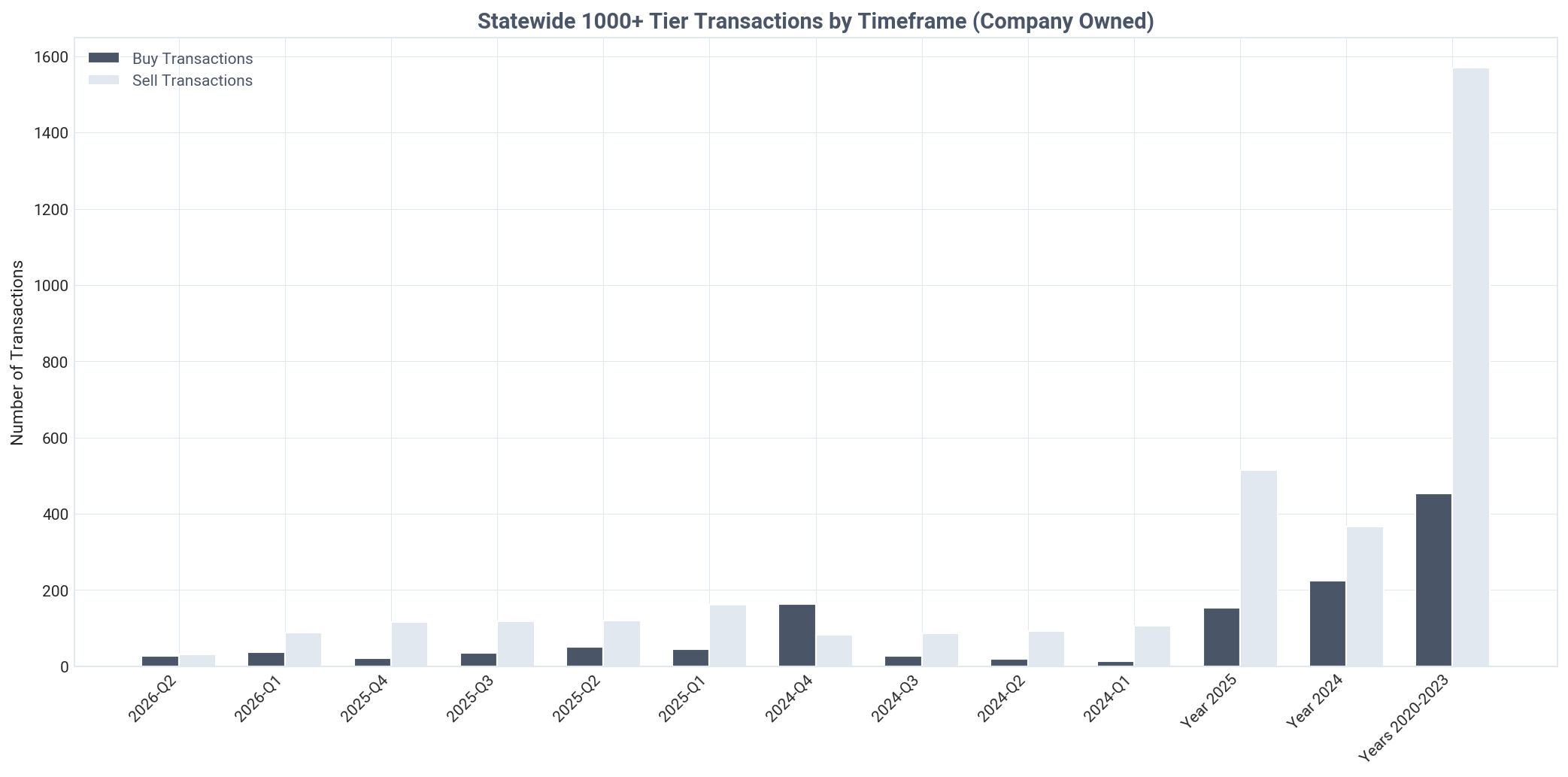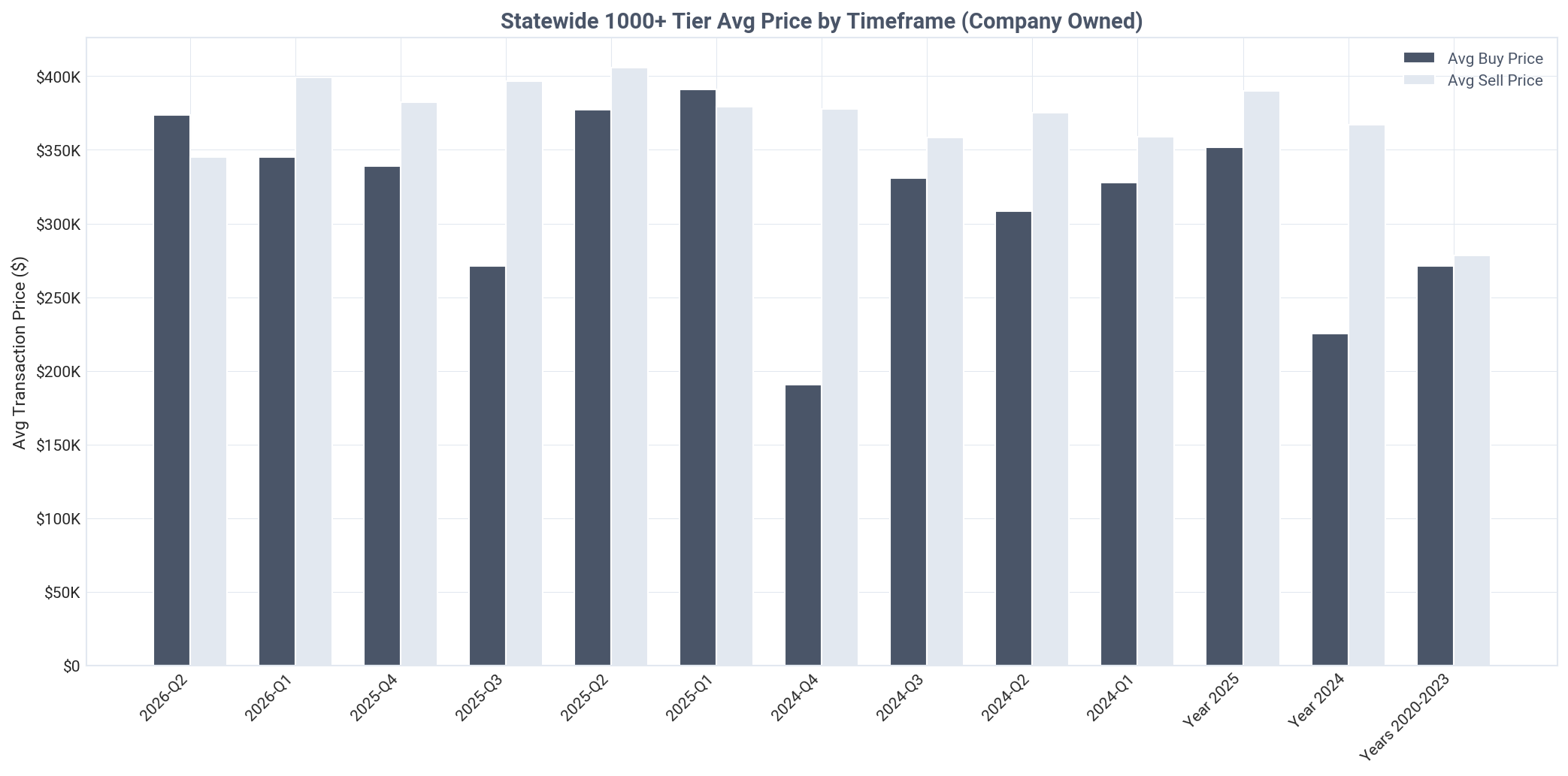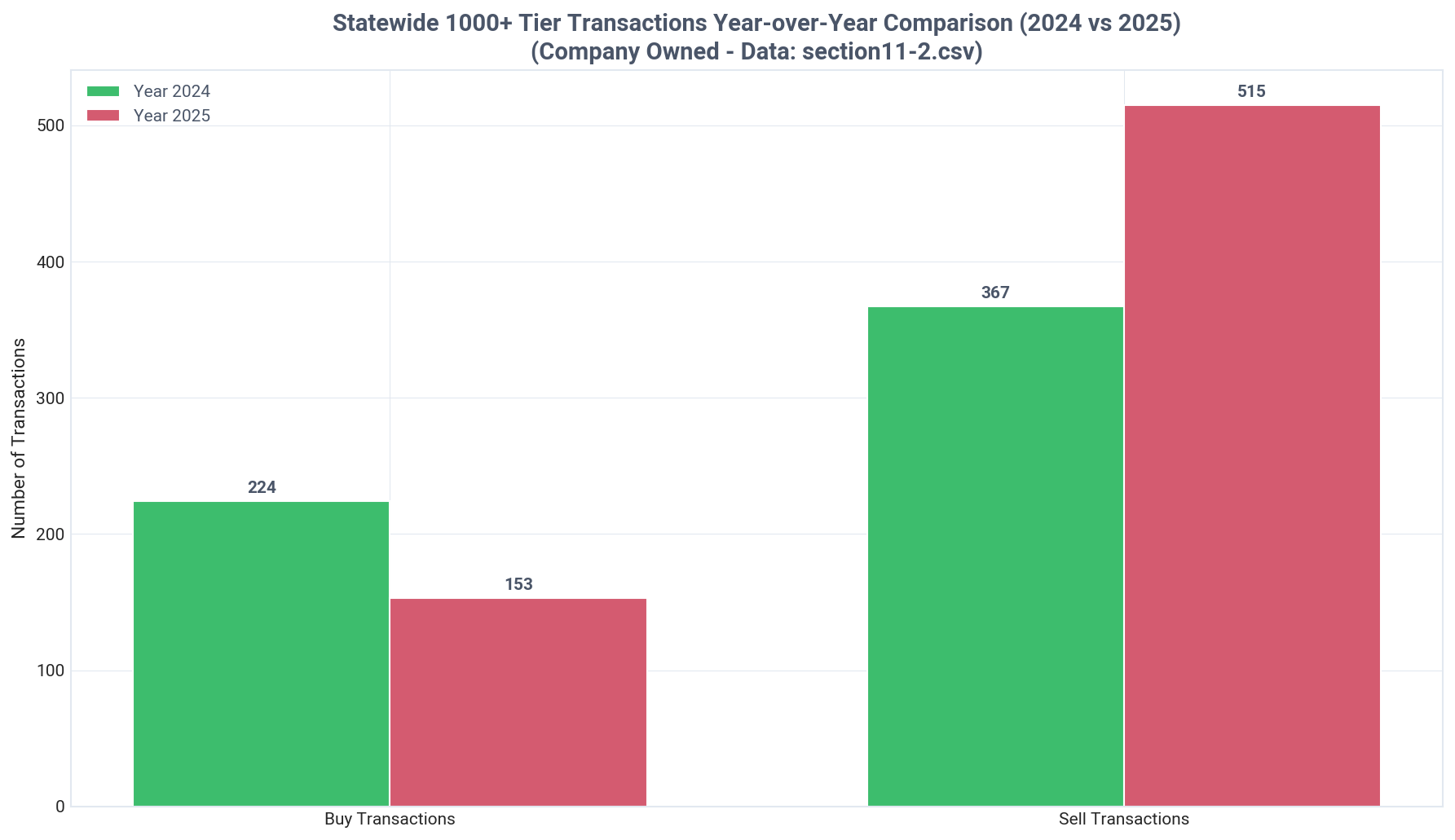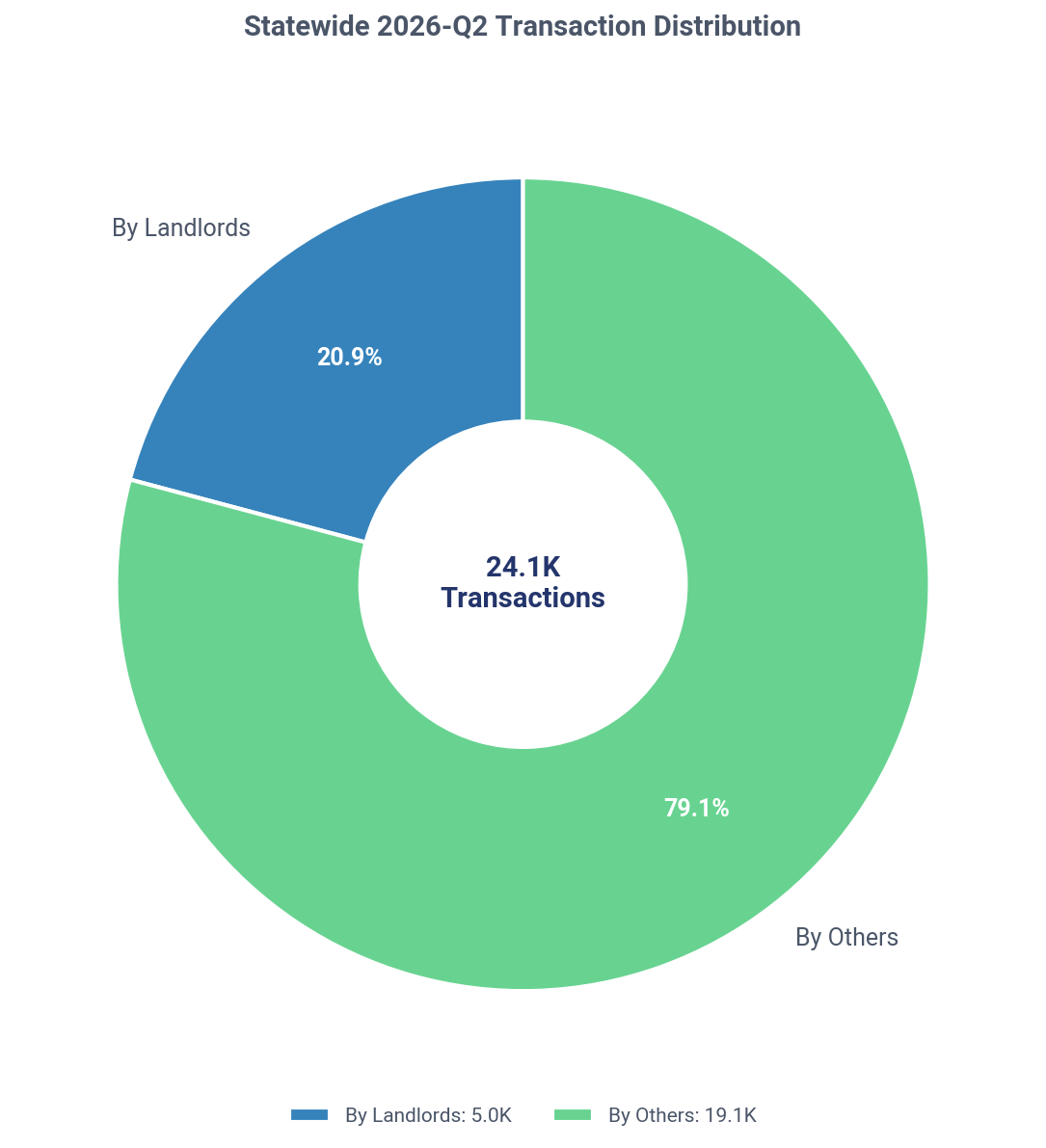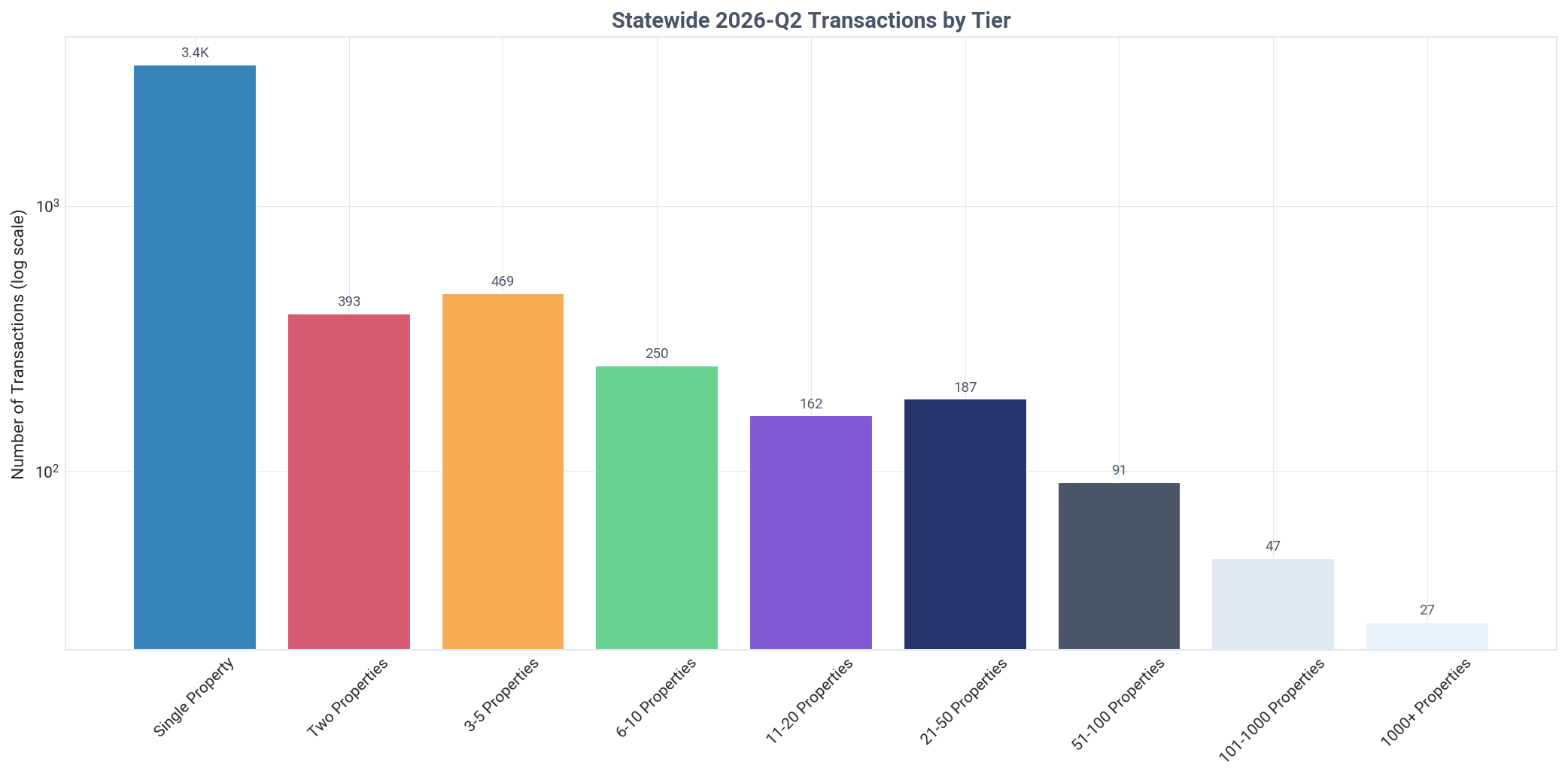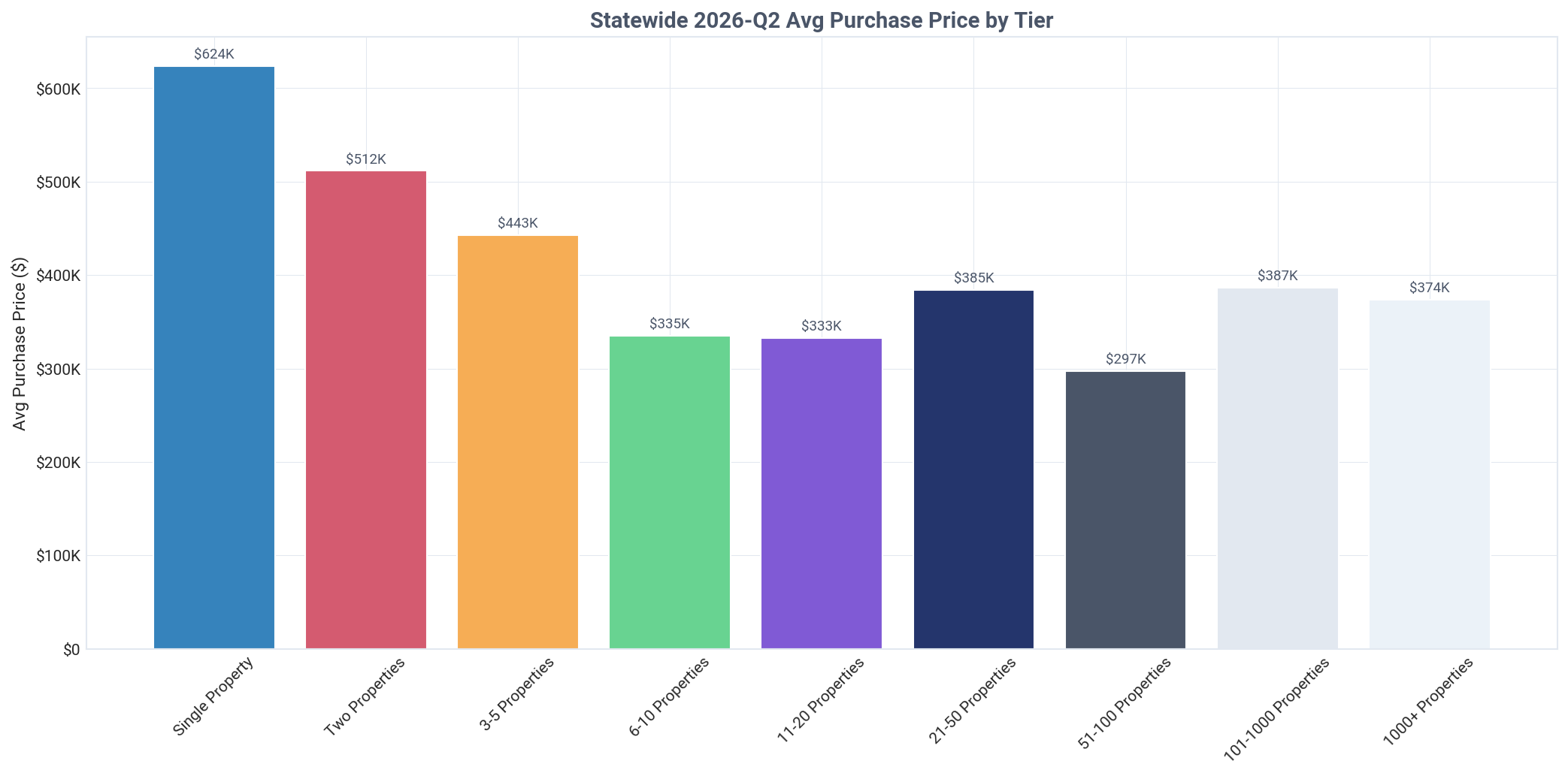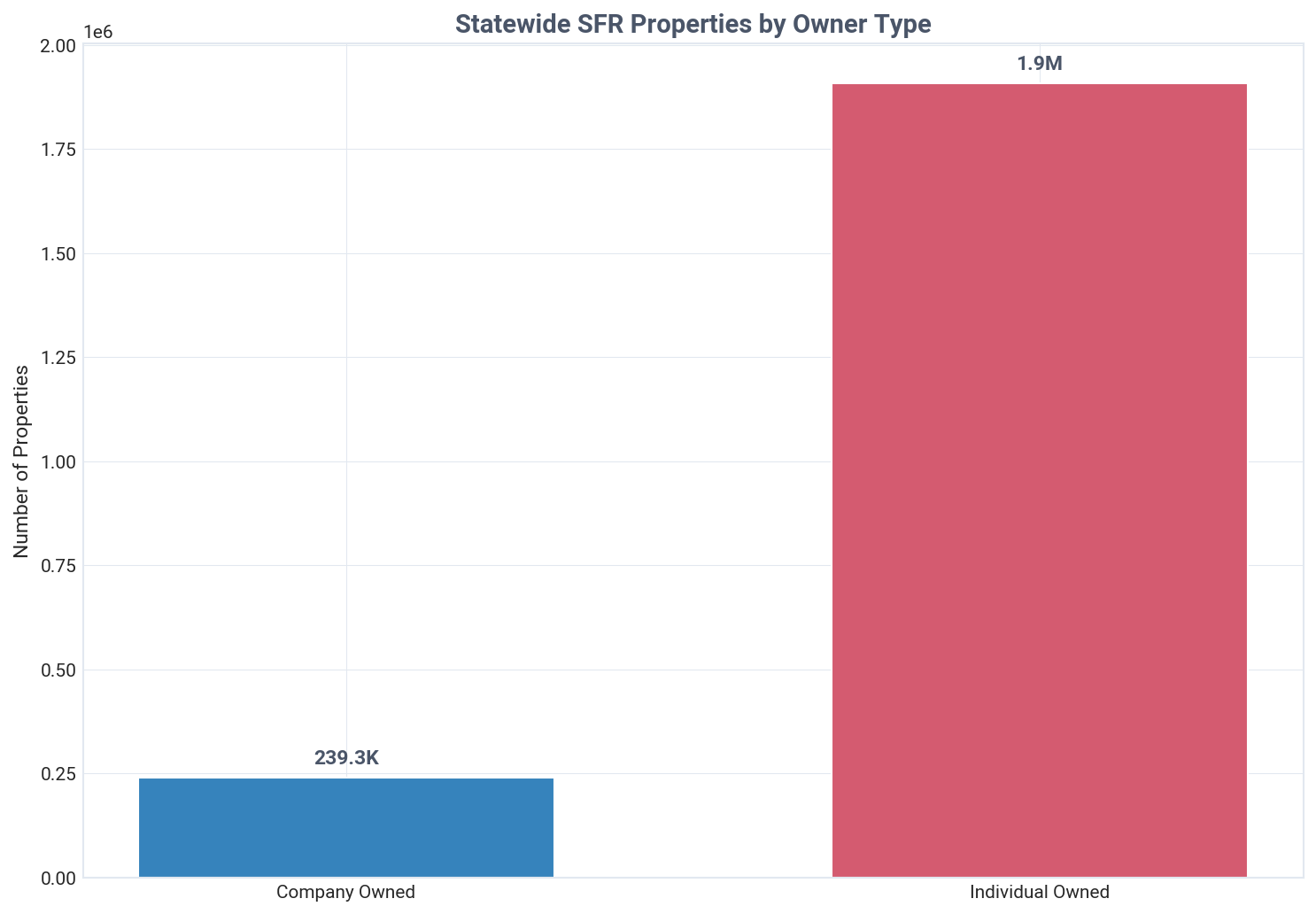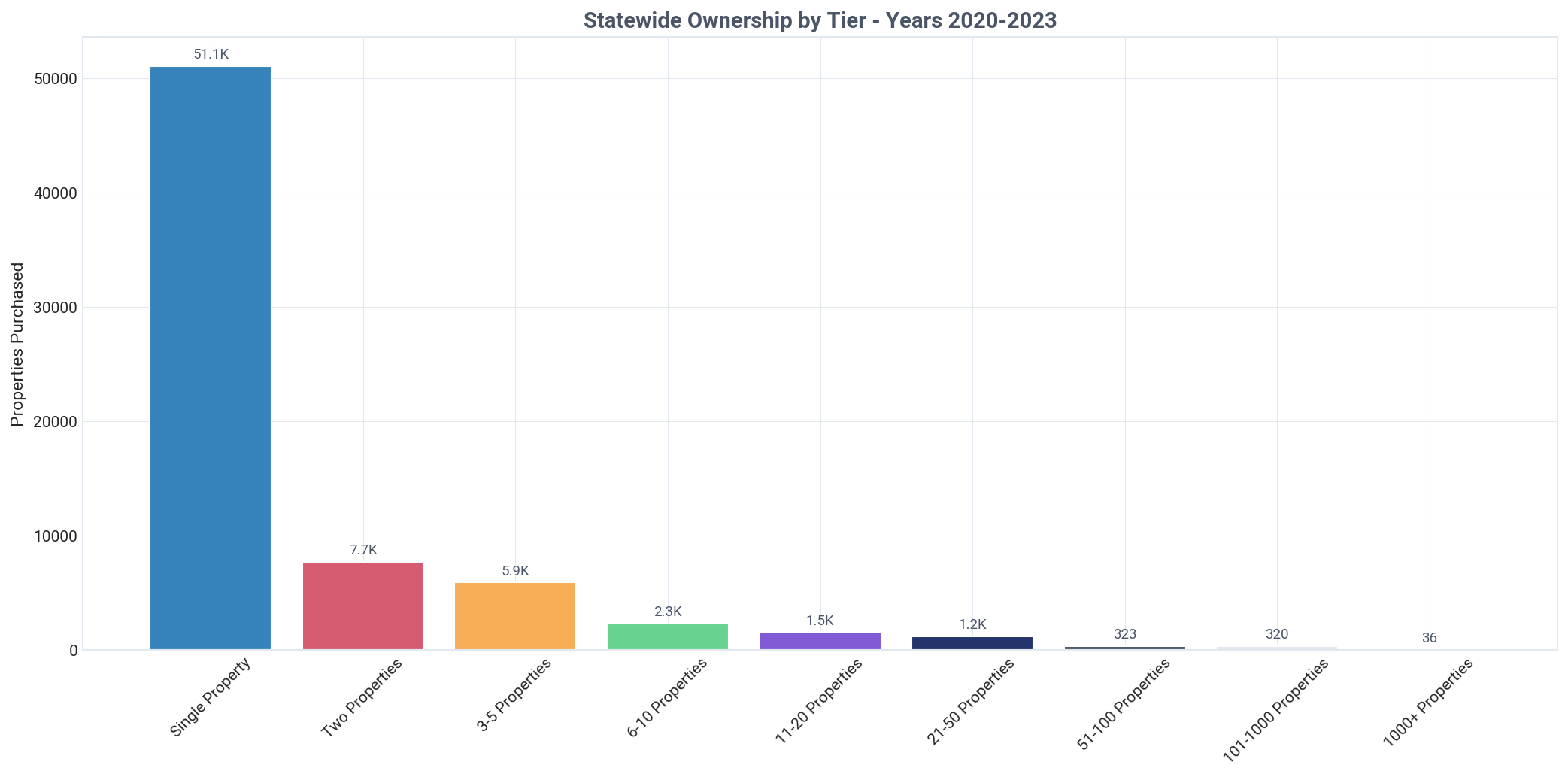
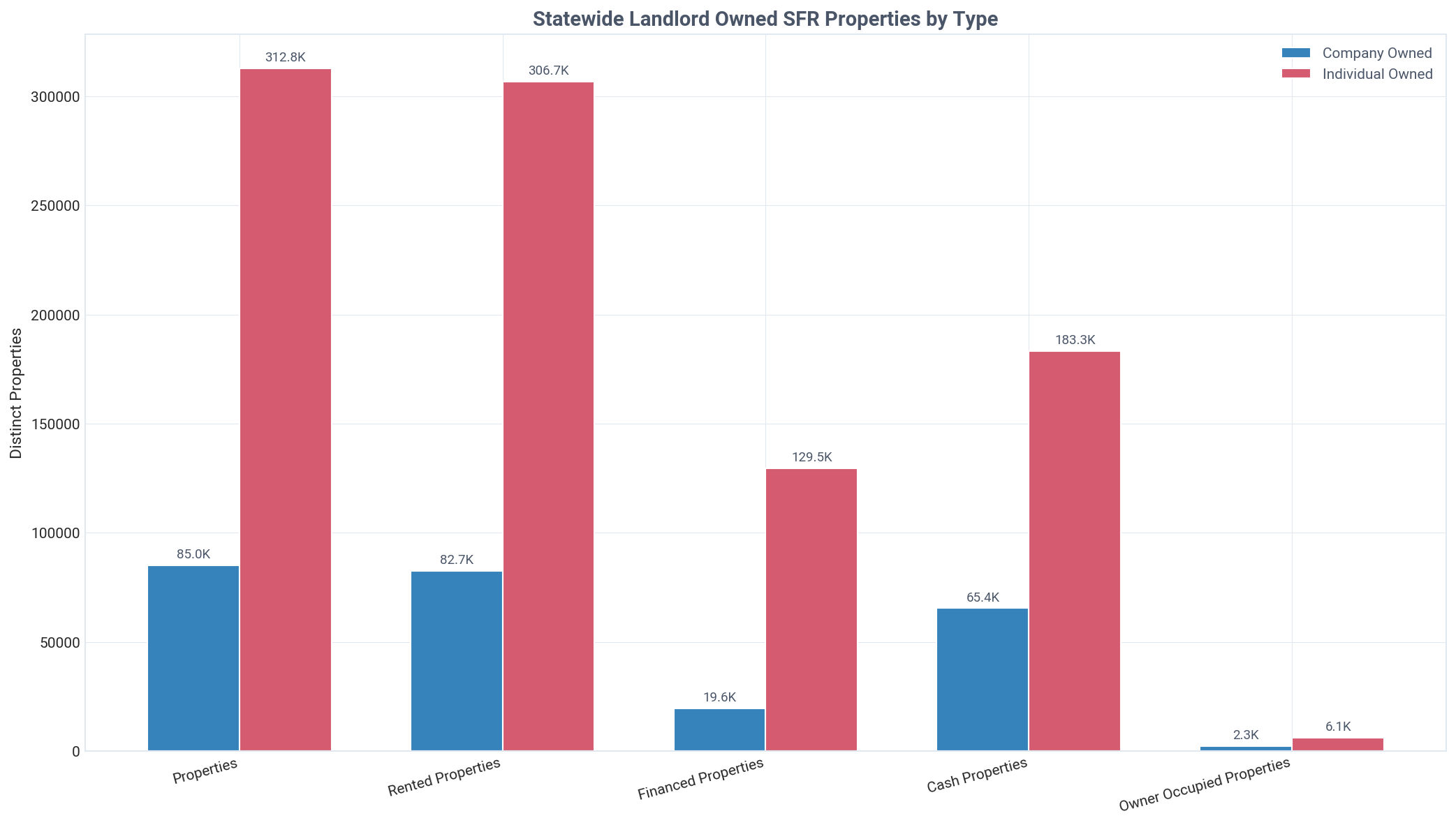
In New Jersey, the real estate investor landscape is dominated by individuals, who own 312,797 single-family residential properties, accounting for 79.4% of the total investor portfolio. Companies hold the remaining 84,976 properties, or 21.6%. This highlights a market primarily driven by smaller-scale participants rather than large corporations.
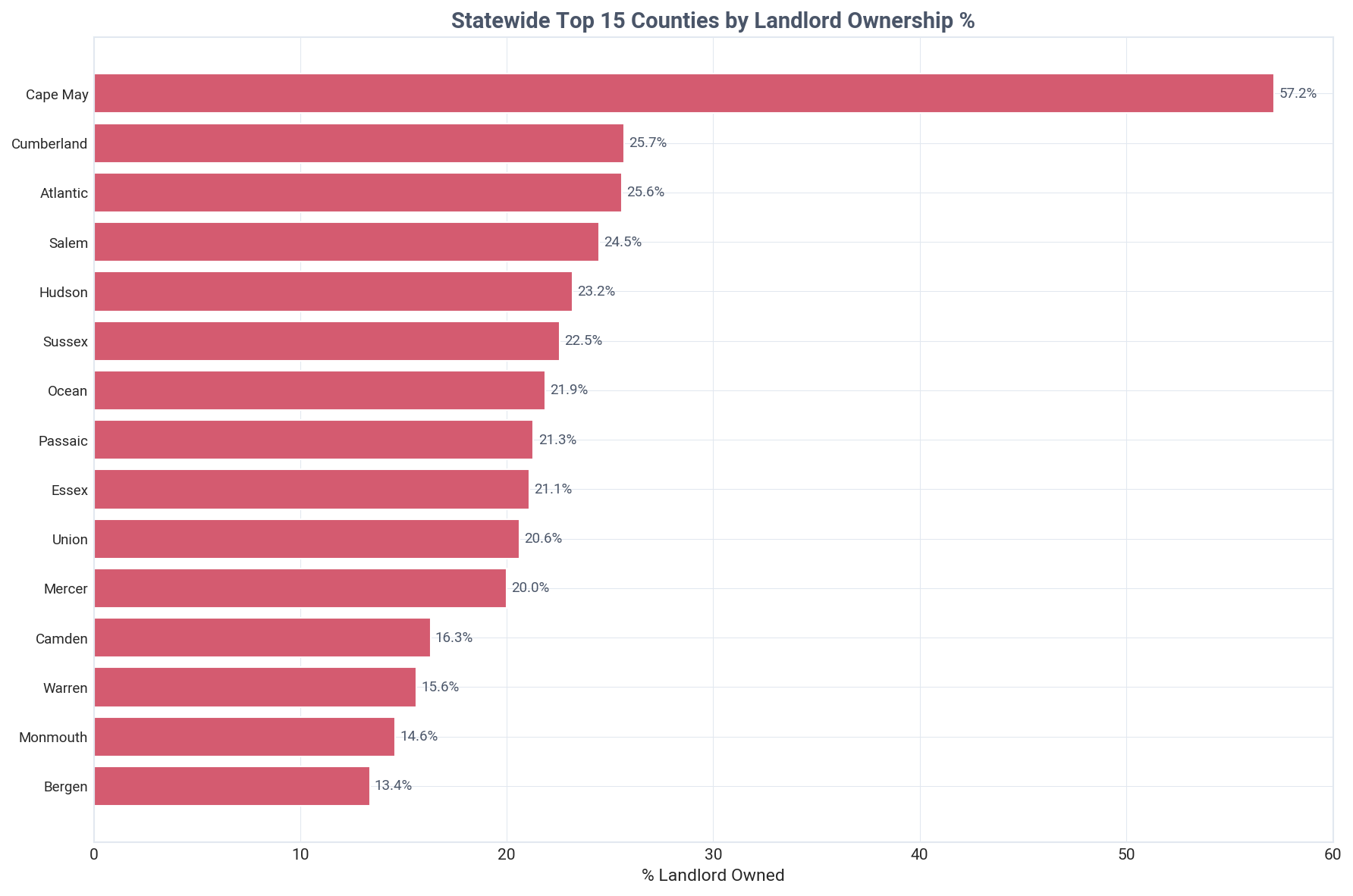
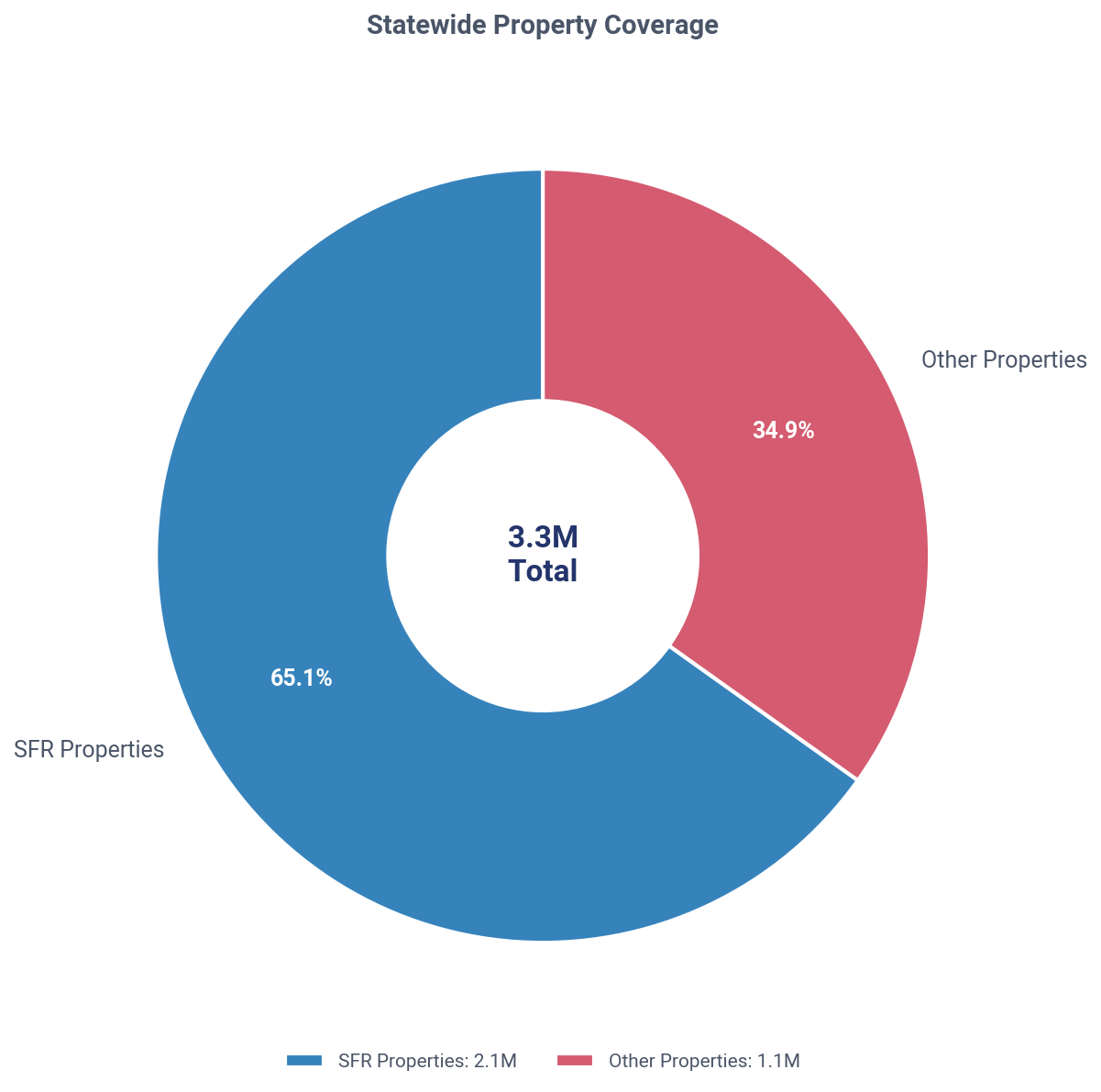
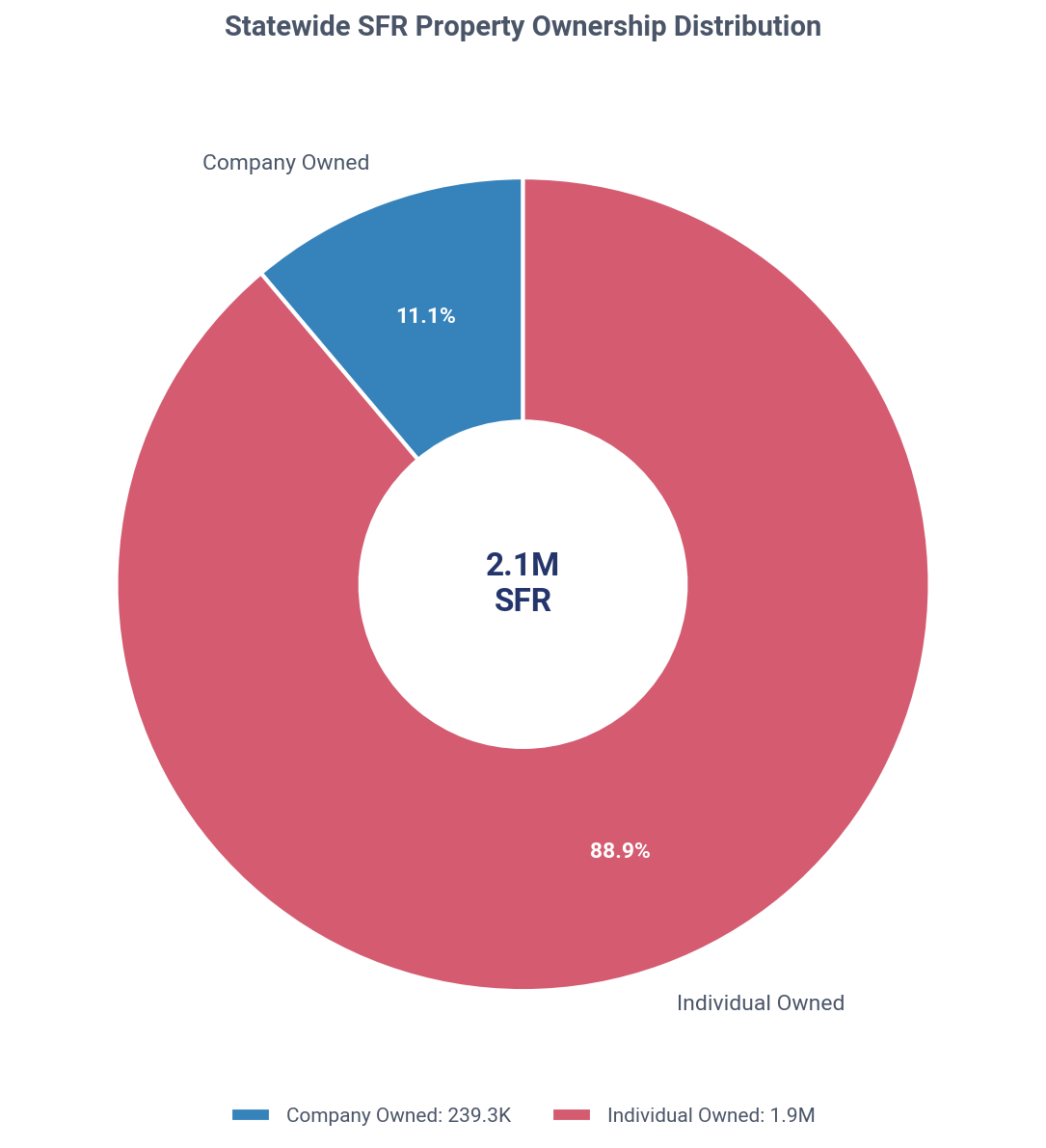
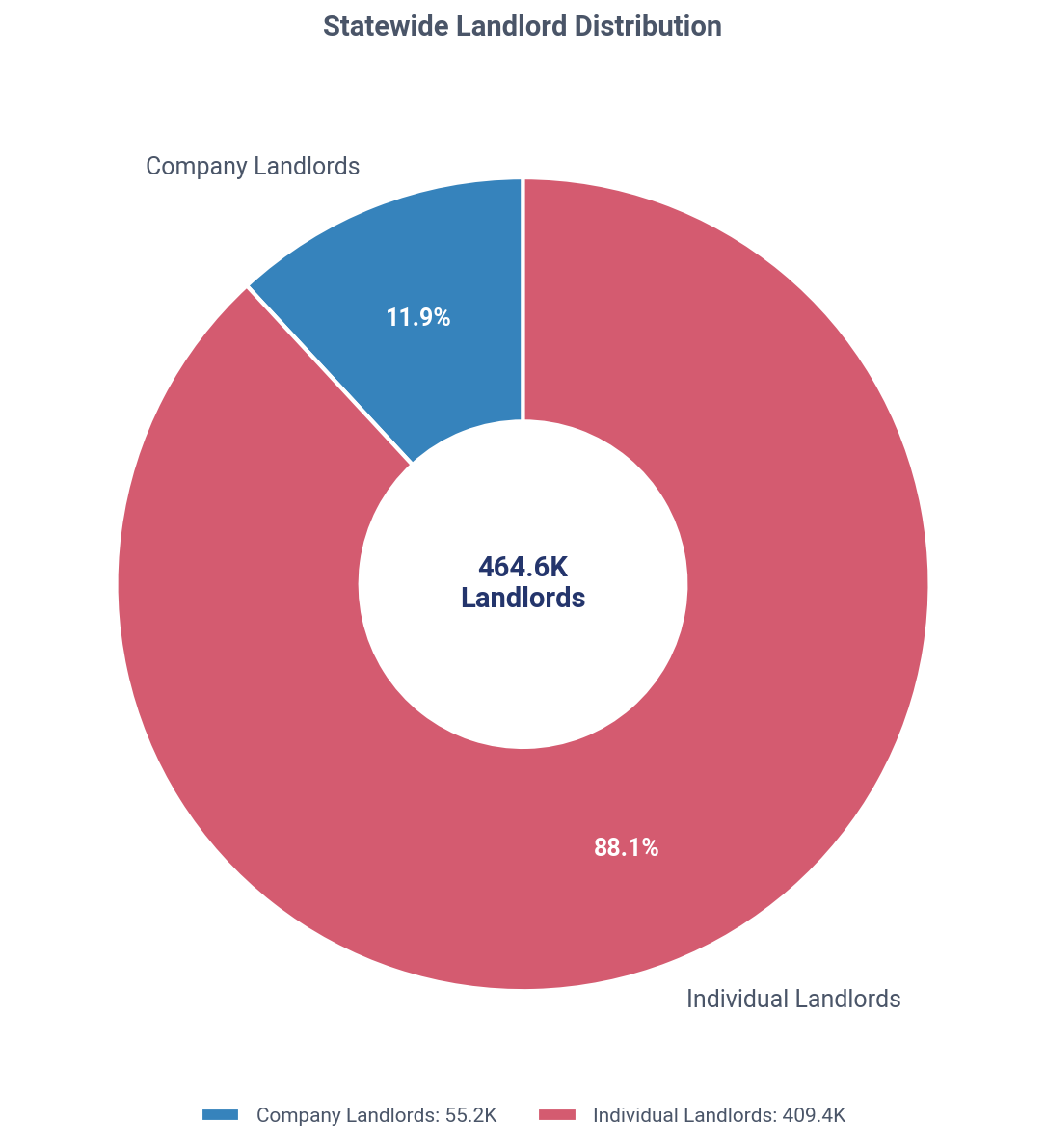
Across the state, investors hold 393,891 SFR properties, which constitutes 18.3% of the total 2,148,044 SFRs. This significant market share underscores the role investors play in New Jersey's housing ecosystem. The total number of unique landlord entities is 464,639, with individuals (409,428) outnumbering companies (55,211) by a factor of more than seven to one.
A strong preference for all-cash acquisitions is evident, with 245,414 properties (62.3% of the investor portfolio) held free of financing. In contrast, 148,477 properties are financed, suggesting that while leverage is used, a majority of the portfolio is owned outright. This cash-heavy position indicates significant capital deployment within the market.
The portfolio is overwhelmingly geared towards rental income, with 385,495 properties actively rented. This demonstrates the primary strategy for the vast majority of SFR investors in New Jersey is generating rental revenue. The composition of these holdings can be further understood by analyzing the underlying assessor data for each property.
The financing methods behind these properties, often detailed in mortgage transaction data, show a clear split between cash and financed purchases. This distinction is crucial for understanding investor strategy, risk tolerance, and the overall liquidity within the New Jersey real estate market.